Algorithmic Sovereignty: Deconstructing the DAO Paradox in On-Chain Governance
-
 Zeynep Kaya
 - 25 Sep, 2026 21:37
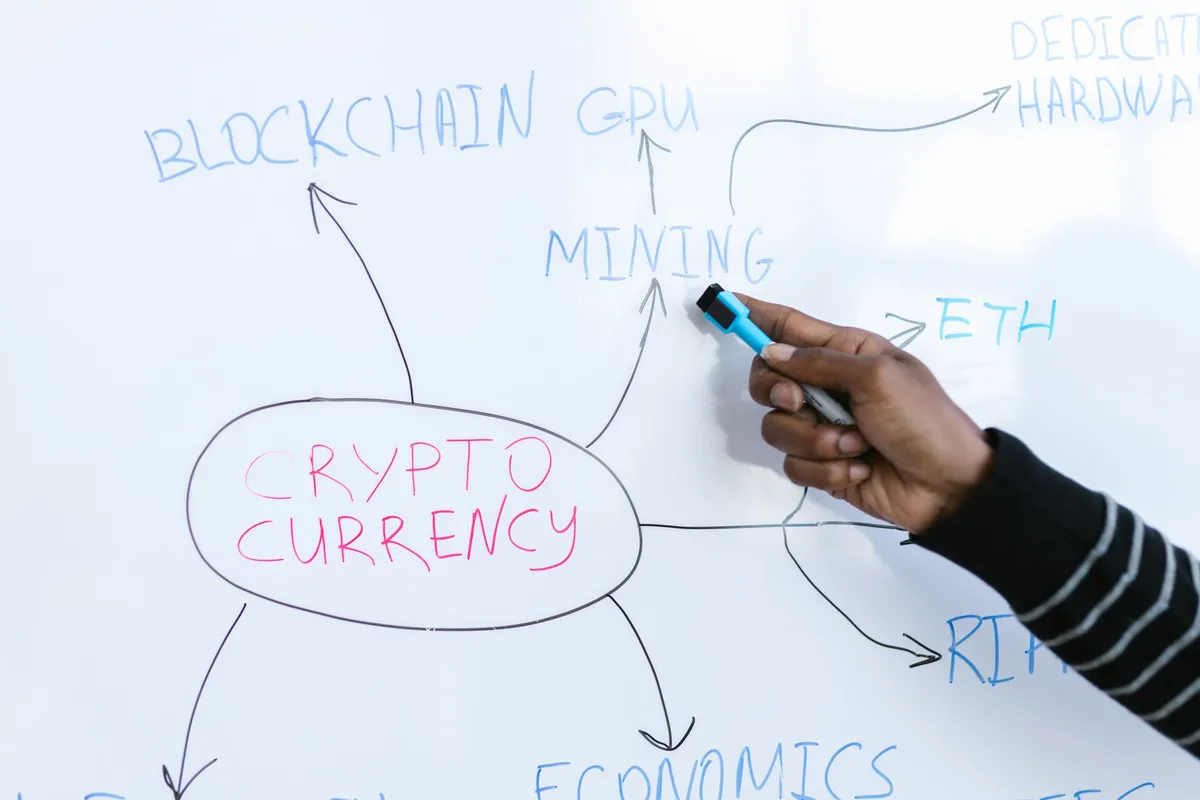
The Genesis Block of Collective Intelligence
The promise of Decentralized Autonomous Organizations (DAOs) has always been seductive: a coordination layer where code replaces bureaucracy, where stake aligns with voice, and where the “principal-agent problem” is solved not by regulation, but by immutable logic. Yet, as we stand in late 2026, the landscape is littered with the wreckage of governance attacks, voter apathy spirals, and the ironic recentralization of “decentralized” protocols. The theoretical elegance of a DAO—essentially a state machine transitioning based on weighted token votes—collides violently with the messy reality of human coordination, MEV (Maximal Extractable Value) predation, and the computational limits of the EVM (Ethereum Virtual Machine).
We are witnessing a shift from “DAO 1.0” (simple token voting on treasury spending) to “DAO 2.0” (modular governance frameworks, ZK-proof verification, and optimistic execution). This evolution demands we treat governance not as a feature, but as a critical infrastructure layer requiring the same rigor as consensus mechanisms. The arXiv literature on quantum cryptographic primitives—specifically the impossibility results surrounding pseudorandom state generation without one-way functions—offers a surprising metaphor: just as quantum cryptography cannot easily escape complexity-theoretic assumptions, on-chain governance cannot escape the sociological and economic assumptions of its participants. You cannot “code away” politics; you can only constrain its attack surface.
Cryptoeconomic Attack Vectors and the Cost of Corruption
The fundamental security model of a token-weighted DAO rests on the Cost of Corruption (CoC) exceeding the Profit from Corruption (PfC). In a naive implementation—if (votesFor > votesAgainst) execute()—the CoC is simply the market price of 51% of the governance token supply. This model is catastrophically fragile. It ignores vote buying markets (like those facilitated by protocols such as Hidden Hand or Votium), where the CoC drops to the rental cost of tokens for a single block height, not the purchase price. It ignores flash loan governance attacks, where an attacker borrows millions in governance tokens, votes maliciously, executes, and repays the loan in a single atomic transaction.

Modern DAO frameworks (OpenZeppelin Governor, Compound Bravo, Aragon OSx) mitigate this via Vote Escrowing (veTokenomics) and Time-Weighted Voting. The Curve Finance veCRV model pioneered this: locking tokens for up to 4 years grants voting power proportional to lock duration and amount. This raises the CoC significantly because the attacker must lock capital long-term, exposing them to market risk (slashing via price drop) and opportunity cost. However, this introduces Liquidity Fragmentation and Governance Capture by Whales. Entities like Convex Finance and Yearn aggregated veCRV, effectively becoming “meta-governors,” recentralizing the very layer designed to prevent it.
The technical solution space is moving toward Quadratic Voting (QV) and Conviction Voting. QV (cost = votes^2) makes buying marginal votes exponentially expensive, aligning cost with preference intensity. Conviction Voting (used by 1Hive/Gardens) allows voting power to accumulate over time on a specific proposal, decaying if support is withdrawn. This resists flash loans entirely—you cannot “flash” conviction. Implementing QV on-chain requires identity verification (Sybil resistance) via Proof-of-Humanity, Gitcoin Passport, or ZK-SBTs (Soulbound Tokens), moving the trust assumption from “capital” to “unique humanity.”
Modular Governance Architecture: The Separation of Powers
Monolithic governor contracts are anti-patterns. The current best practice, championed by DAOhaus, Tally, and the Optimism Collective, is Modular Governance. This decomposes the governance lifecycle into swappable, auditable modules:
- Proposal Module: Defines who can propose and what is proposable (parameter changes, code upgrades, treasury transfers).
- Voting Module: Implements the decision rule (Token Weighted, Quadratic, Holographic Consensus).
- Execution Module: Handles the
execute()logic (TimelockController, Safe Multi-sig, ZK-Timelock). - Dispute/Resolution Module: Kleros courts, Optimistic Oracle (UMA), or Aragon Court for subjective disputes.
This modularity allows a DAO to upgrade its voting mechanism without migrating treasury or contracts. For example, a protocol can start with Token Voting for speed, migrate to Holographic Consensus (where predictors stake on proposal outcomes to filter spam) for scaling, and finally settle on ZK-Quadratic Voting for credentialed democracy.

The Optimism Collective implements a bicameral structure: the Token House (OP token weighted) and the Citizens’ House (Soulbound NFT / Attestation based). This separates capital allocation (Token House) from public goods funding/retroactive rewards (Citizens’ House). It is a sophisticated admission that “one token, one vote” is optimal for capital efficiency but toxic for public goods provision. The technical implementation relies heavily on the AttestationStation contract (EAS - Ethereum Attestation Service) to verify citizenship criteria off-chain and submit proofs on-chain.
Execution Latency, Optimism, and the ZK-Timelock
The “Timelock” is the final safety valve. After a proposal passes, a mandatory delay (e.g., 48 hours) allows users to exit (ragequit) or developers to audit the calldata. But 48 hours is an eternity in DeFi; it freezes capital and prevents rapid response to critical bugs. Optimistic Execution flips this: proposals execute immediately after passing, but can be vetoed during a challenge window by a designated Security Council or a ZK-Proof of Maliciousness.
Consider a ZK-Timelock design. The execution calldata is committed to a Merkle root. A ZK-SNARK circuit verifies that the calldata only interacts with an allowlist of safe functions (e.g., setFeeBps, updateOracle) and does not call selfdestruct, delegatecall, or transfer treasury assets. If the proof verifies, execution is instant (Optimistic). If the proposal involves arbitrary calldata (high risk), it falls back to the standard Timelock. This requires a Recursive ZK-VM (like RISC Zero or SP1) or a specialized circuit (like those written in Circom/Rust for SP1) to verify EVM execution traces.
// SPDX-License-Identifier: MIT
pragma solidity ^0.8.24;

interface IZKTimelock {
    struct Proposal {
        bytes calldata;
        bytes32 calldataHash;
        uint256 executionDelay; // 0 for optimistic/zk-verified
        bool isOptimistic;
    }

    function propose(Proposal calldata proposal) external returns (uint256 proposalId);
    function execute(uint256 proposalId, bytes calldata zkProof) external;
    function veto(uint256 proposalId, bytes calldata fraudProof) external;
}

contract ZKGovernor is IZKTimelock {
    mapping(uint256 => Proposal) public proposals;
    address public verifierContract; // Verifies SP1/RISC0 receipts
    address public securityCouncil;
    uint256 public constant OPTIMISTIC_WINDOW = 2 hours;

    function execute(uint256 proposalId, bytes calldata zkProof) external {
        Proposal storage prop = proposals[proposalId];
        require(block.timestamp >= prop.proposedAt + prop.executionDelay, "Delay not met");

        if (prop.isOptimistic) {
            // Verify ZK Proof that calldata is safe (allowlisted targets/selectors)
            require(IZKVerifier(verifierContract).verify(prop.calldataHash, zkProof), "Invalid ZK Proof");
            // Optimistic execution: immediate, but vetoable
            _executeCalldata(prop.calldata);
            prop.executedAt = block.timestamp;
            prop.status = Status.OptimisticExecuted;
        } else {
            // Standard Timelock execution
            _executeCalldata(prop.calldata);
            prop.status = Status.Executed;
        }
    }

    function veto(uint256 proposalId, bytes calldata fraudProof) external {
        Proposal storage prop = proposals[proposalId];
        require(prop.status == Status.OptimisticExecuted, "Not optimistic");
        require(block.timestamp < prop.executedAt + OPTIMISTIC_WINDOW, "Window closed");
        // Fraud proof could be a trace showing state mutation violating invariants
        require(ISecurityCouncil(securityCouncil).validateVeto(fraudProof), "Invalid Veto");
        // Revert logic requires a "Safety Module" pattern (e.g., MakerDAO End)
        // Usually implemented via a proxy upgrade to a "paused" implementation
        // or a pre-signed "cancel" transaction by the timelock admin.
    }

    function _executeCalldata(bytes memory data) internal {
        // Low-level call execution logic
        (bool success, ) = address(this).call(data);
        require(success, "Execution failed");
    }
}
Data Availability, Voter Apathy, and the Participation Paradox
A DAO is only as decentralized as its active participant set. Voter Apathy is the silent killer. In major DAOs (Uniswap, ENS, Aave), participation rates often hover below 5-10% of circulating supply. This creates a Participation Paradox: low turnout lowers the CoC for attackers, which discourages honest participation further.
Solutions are converging on Delegation Markets and Incentivized Participation.
- Delegation: Token holders delegate voting power to active “Delegates” (professional governance actors). Protocols like Tally and Boardroom provide analytics on delegate performance (voting consistency, rationale quality, conflict of interest disclosure).
- Gasless Voting / Off-chain Signaling (Snapshot): Using EIP-712 signed messages verified off-chain (Snapshot) or via ERC-20 Votes / ERC-6372 (Clock extension) for historical balance lookups. This removes the gas friction.
- Vote Incentives (Gauge Weights / Bribes): Protocols like Hidden Hand allow protocols to bribe voters for specific gauge weights (Curve) or proposals. While effective for turnout, it re-introduces plutocracy.
The technical frontier is ZK-Delegation. A delegate proves they voted according to their published mandate (e.g., “Always vote against treasury diversification > 10%”) without revealing their specific vote on every proposal, using ZK-SNARKs over the voting history. This preserves delegate privacy while enforcing accountability.
The Legal Entity Wrapper: Bridging Code and Law
Code is not law; jurisdiction is law. A DAO without a legal wrapper is a General Partnership in most jurisdictions (Wyoming, Marshall Islands, Cayman, Panama, Switzerland being exceptions). This means unlimited joint and several liability for every member for the DAO’s debts and actions. The DAO LLC (Wyoming, Tennessee, Utah) and UNA (Unincorporated Nonprofit Association) structures are the current standard for on-chain entities needing off-chain bank accounts, IP ownership, and limited liability.
The technical implementation of the “Legal Wrapper” requires Oracle Bridges between on-chain governance and off-chain legal execution.
- Signer Selection: The DAO elects a Service Provider / Registered Agent via on-chain vote.
- Action Proposals: Proposals requiring off-chain action (signing a lease, hiring counsel) emit events.
- Attestation: The Service Provider uses an EAS Schema to attest “Action X completed per Proposal Y”.
- Accountability: If the Provider fails, the DAO triggers a slashing mechanism on their bonded stake (held in a
TimelockControllerorSafe).
# docker-compose.yml for a DAO Infrastructure Stack
# Runs: Snapshot Sequencer, Governance Indexer (Subgraph), ZK-VM Prover, Legal Oracle Bridge
version: '3.8'

services:
  snapshot-sequencer:
    image: snapshotlabs/sequencer:v0.4.0
    environment:
      - NODE_ENV=production
      - RPC_URL=${MAINNET_RPC}
      - DB_URL=postgres://user:pass@db:5432/snapshot
      - SIGNER_PK=${SEQ_PK}
    ports: ["3000:3000"]
    depends_on: [db, redis]
    restart: unless-stopped

  governance-subgraph:
    image: graphprotocol/graph-node:v0.30.0
    environment:
      - postgres_host=db
      - postgres_user=user
      - postgres_pass=pass
      - postgres_db=governance
      - ethereum_rpc_mainnet=${MAINNET_RPC}
      - IPFS_ENDPOINT=http://ipfs:5001
    ports: ["8000:8000", "8001:8001", "8020:8020"]
    volumes:
      - ./subgraph-manifest.yaml:/manifest.yaml
    command: ["--config", "/manifest.yaml"]
    depends_on: [db, ipfs]
    restart: unless-stopped

  zk-prover-sp1:
    image: succinctlabs/sp1-prover:latest
    # Requires GPU for performant proving (CUDA)
    deploy:
      resources:
        reservations:
          devices:
            - driver: nvidia
              count: 1
              capabilities: [gpu]
    environment:
      - SP1_PROVER_PRIVATE_KEY=${PROVER_PK}
      - RUST_LOG=info
    volumes:
      - ./circuits:/circuits
    restart: on-failure

  legal-oracle-bridge:
    build: ./legal-bridge
    environment:
      - DAO_ADDRESS=${DAO_GOVERNOR}
      - EAS_SCHEMA_UID=${LEGAL_ACTION_SCHEMA}
      - PRIVATE_KEY=${ORACLE_SIGNER_PK}
      - RPC_URL=${MAINNET_RPC}
    depends_on: [governance-subgraph]
    restart: unless-stopped

  db:
    image: postgres:16-alpine
    environment:
      - POSTGRES_DB=governance
      - POSTGRES_USER=user
      - POSTGRES_PASSWORD=pass
    volumes: [pgdata:/var/lib/postgresql/data]

  redis:
    image: redis:7-alpine
    volumes: [redisdata:/data]

  ipfs:
    image: ipfs/kubo:latest
    ports: ["4001:4001", "5001:5001", "8080:8080"]
    volumes: [ipfsdata:/data/ipfs]

volumes:
  pgdata:
  redisdata:
  ipfsdata:
This stack represents the minimum viable infrastructure for a serious DAO in 2026: off-chain voting (Snapshot), on-chain indexing (Subgraph), ZK-proving for optimistic execution (SP1), and a legal bridge. Running this requires DevOps maturity equivalent to a Layer