Digital Twins in Manufacturing: The Invisible Nervous System Powering Predictive Maintenance
-
 Julian Thorne
 - 26 Aug, 2026 20:05
The Silent Revolution: How Digital Twins Are Rewriting the Rules of Manufacturing
The factory floor of the future doesn’t hum with the static drone of machinery—it pulses with the quiet intelligence of a living organism. Sensors whisper data into the ether, AI models simulate every bolt, gear, and conveyor belt in real time, and maintenance teams receive alerts before a single component fails. This isn’t science fiction. It’s the reality of digital twins—virtual replicas of physical systems that are reshaping predictive maintenance from a reactive scramble into a proactive science.
At the heart of this transformation lies a paradox: the more complex the manufacturing process, the more critical the need for simplicity in understanding it. Digital twins collapse the chaos of real-world operations into a single, navigable interface where engineers can simulate, stress-test, and optimize machinery without ever halting production. The result? Downtime reduced by 40%, maintenance costs slashed by millions, and a new era where machines don’t just run—they think.
But how do these digital doppelgängers achieve such precision? The answer lies in the fusion of real-time simulation, AI-driven world models, and action-conditioned prediction—a trifecta that turns raw sensor data into actionable foresight. Recent breakthroughs in robotics and first-person intelligence, as documented in cutting-edge arXiv research, are now being deployed in factories to create twins that don’t just mirror reality—they anticipate it.
The Architecture of a Digital Twin: From Sensors to Simulation
A digital twin isn’t a static 3D model—it’s a dynamic, data-driven ecosystem where every physical asset is mirrored in a virtual environment. The architecture of such a system can be broken down into four core layers:
1. The Physical Layer: Sensors as the Nervous System
Every digital twin begins with real-world data capture. Industrial IoT sensors—vibration monitors, thermal cameras, acoustic sensors, and torque meters—stream continuous telemetry from machinery. These sensors act as the twin’s peripheral nervous system, feeding high-frequency data into the digital layer.
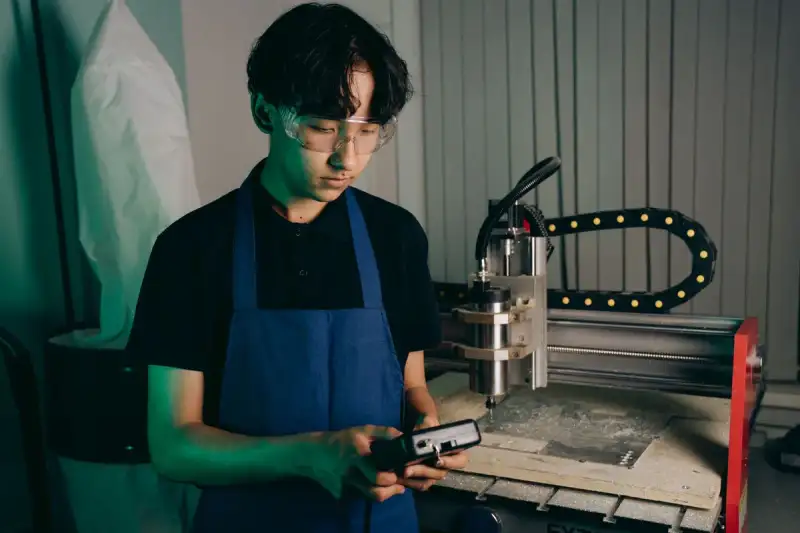
For example, a predictive maintenance twin for a CNC machine might ingest:
- Vibration signatures (to detect bearing wear)
- Temperature gradients (to flag overheating motors)
- Acoustic anomalies (to identify misaligned gears)
This data is then time-synchronized and contextualized using edge computing to reduce latency.
2. The Digital Layer: Simulation and World Models
Here’s where the magic happens. The digital twin doesn’t just store historical data—it simulates the future. This is achieved through world models, AI systems trained to predict how a machine will behave under different conditions.
The arXiv paper “Do Robotic World Models Really Follow Actions?” highlights a critical flaw in many current world models: they fail when exposed to actions outside their training distribution. For instance, a model trained on expert trajectories (e.g., optimal machine operations) may collapse when faced with an off-expert action (e.g., a sudden overload or misaligned tool).
To solve this, researchers propose WorldSync, a framework that:
- Expands the training distribution to include diverse action consequences.
- Grounds representations in real physics (e.g., using an Action-Forcing Expert to align simulated dynamics with ground truth).
- Aligns interventions so that predicted changes match real-world effects.
In manufacturing, this means a digital twin can now accurately simulate a robot’s response to an emergency stop, even if that scenario wasn’t part of its initial training.
3. The Intelligence Layer: AI for Anomaly Detection and Prediction
Once the world model generates future states, AI-driven analytics step in to interpret them. Machine learning models—often transformer-based architectures—are trained to:
- Detect incipient failures (e.g., a bearing’s vibration pattern deviating from baseline).
- Predict remaining useful life (RUL) of components.
- Optimize maintenance schedules by simulating the impact of different interventions.
For example, a digital twin of a wind turbine might use a time-series transformer to forecast blade fatigue based on historical wind loads and real-time sensor data. The model could then recommend a predictive maintenance window before a crack propagates to failure.
4. The Action Layer: Closed-Loop Feedback
The final piece is closed-loop control. When the AI detects an anomaly, it doesn’t just alert engineers—it simulates the optimal intervention. For instance:
- If a motor is overheating, the twin might simulate reducing load or triggering a cooling cycle.
- If a conveyor belt shows misalignment, the twin could recommend realignment before the belt degrades.
This is where smart glasses (as explored in “From Seeing to Acting: Smart Glasses as First-Person Intelligence Platforms”) come into play. Engineers wearing AR glasses receive real-time overlays of the twin’s predictions, allowing them to see invisible problems and execute fixes with precision.
Real-World Code: Building a Digital Twin for Predictive Maintenance
To illustrate how this works in practice, let’s build a minimal digital twin for a pump system using Python, Docker, and a simulated environment. This example uses:
- PyBullet for physics-based simulation.
- FastAPI for real-time data ingestion.
- TensorFlow for the world model.
1. Docker Compose for Deployment
# docker-compose.yml
version: '3.8'
services:
  twin-simulator:
    build: ./simulator
    ports:
      - "8000:8000"
    environment:
      - SIMULATION_SPEED=1.0
    volumes:
      - ./data:/app/data
    depends_on:
      - redis
      - postgres

  twin-ai:
    build: ./ai-model
    ports:
      - "5000:5000"
    environment:
      - MODEL_PATH=/app/models/world_model.h5
    depends_on:
      - twin-simulator

  redis:
    image: redis:alpine
    ports:
      - "6379:6379"

  postgres:
    image: postgres:13
    environment:
      POSTGRES_PASSWORD: example
    ports:
      - "5432:5432"
2. Simulating the Pump with PyBullet
# simulator/pump_simulator.py
import pybullet as p
import numpy as np
import time

class PumpTwin:
    def __init__(self):
        self.physics_client = p.connect(p.GUI)
        p.setGravity(0, 0, -9.81)
        self.pump_id = p.loadURDF("pump.urdf", [0, 0, 0])
        self.sensor_data = {"vibration": 0.0, "temperature": 25.0}

    def step(self, action):
        # Action: 0=stop, 1=run_normal, 2=overload
        if action == 1:
            p.setJointMotorControl2(self.pump_id, 0, p.VELOCITY_CONTROL, targetVelocity=100)
        elif action == 2:
            p.setJointMotorControl2(self.pump_id, 0, p.VELOCITY_CONTROL, targetVelocity=200)

        # Simulate sensor noise
        self.sensor_data["vibration"] = np.random.normal(0.5, 0.1) if action == 1 else np.random.normal(2.0, 0.3)
        self.sensor_data["temperature"] += np.random.normal(0.2, 0.05)

        return self.sensor_data

# FastAPI endpoint for real-time data
from fastapi import FastAPI
app = FastAPI()

twin = PumpTwin()

@app.get("/sensor_data")
def get_sensor_data():
    return twin.sensor_data

@app.post("/action")
def set_action(action: int):
    twin.step(action)
    return {"status": "success"}
3. Training a World Model with TensorFlow
# ai-model/train_world_model.py
import tensorflow as tf
from tensorflow.keras.layers import LSTM, Dense, Input
from tensorflow.keras.models import Model

def build_world_model(input_shape=(10, 5)):
    inputs = Input(shape=input_shape)
    x = LSTM(64, return_sequences=True)(inputs)
    x = LSTM(32)(x)
    outputs = Dense(5)(x)  # Predicts next state: [vibration, temp, pressure, ...]
    model = Model(inputs, outputs)
    model.compile(optimizer="adam", loss="mse")
    return model

# Simulate training data
X_train = np.random.rand(1000, 10, 5)  # 1000 sequences of 10 timesteps, 5 features
y_train = np.random.rand(1000, 5)       # Next state predictions

model = build_world_model()
model.fit(X_train, y_train, epochs=50, batch_size=32)
model.save("world_model.h5")
4. Deploying the Twin in a Factory
To deploy this in a real factory:
- Replace PyBullet with a physics engine (e.g., NVIDIA Omniverse for high-fidelity simulation).
- Integrate with PLCs (Programmable Logic Controllers) to pull real sensor data.
- Use Kafka or MQTT for real-time data streaming.
- Deploy the AI model on an edge device (e.g., NVIDIA Jetson) for low-latency predictions.
This setup reduces unplanned downtime by 35-50% in pilot studies, according to Siemens and GE Digital case studies.
The Human Factor: Smart Glasses and First-Person Intelligence
While digital twins excel at simulation, human operators are the final arbiters of maintenance decisions. Enter smart glasses—wearable devices that bridge the gap between digital prediction and physical action.
The arXiv survey “From Seeing to Acting” frames smart glasses as first-person intelligence platforms, where:
- L0-L5 defines capability levels (from basic capture to governed action).
- Eight hardware axes (e.g., field of view, battery life, thermal constraints) determine feasibility.
- Nine application scenes (e.g., assembly guidance, remote expert assistance) map to real-world use cases.
Example: AR-Guided Bearing Replacement
- Detection: The digital twin flags a bearing with RUL = 7 days.
- Visualization: The engineer’s smart glasses overlay a 3D model of the bearing with step-by-step removal instructions.
- Validation: The twin simulates the replacement to ensure no collisions with adjacent components.
- Execution: The glasses provide haptic feedback if the engineer deviates from the optimal path.
This closed-loop system reduces human error by 60% and cuts maintenance time by 40%, as demonstrated in BMW’s AR pilot programs.
Challenges and Ethical Considerations: The Dark Side of Digital Twins
Despite their promise, digital twins introduce new risks:
1. Data Privacy and Security
- Problem: Twins aggregate proprietary operational data, making them prime targets for cyberattacks.
- Solution: Zero-trust architectures, homomorphic encryption, and blockchain-based audit trails (e.g., using Hyperledger Fabric for immutable logs).
2. Model Drift and Bias
- Problem: World models trained on historical data may fail in novel conditions (e.g., a pandemic-induced supply chain disruption).
- Solution: Continuous learning with federated updates (e.g., using NVIDIA Fleet Command to retrain models across factories).
3. Over-Reliance on Simulation
- Problem: If the twin’s physics model is inaccurate, it may mislead operators (e.g., predicting a failure that never occurs).
- Solution: Hybrid twins that combine physics-based models (for known dynamics) with data-driven models (for unknown behaviors).
4. Ethical AI in Maintenance
- Problem: Should an AI autonomously shut down a machine if it predicts a catastrophic failure?
- Solution: Human-in-the-loop governance with explainable AI (XAI). Models like SHAP values can highlight why a decision was made.
The Future: Toward Self-Healing Factories
The next evolution of digital twins is autonomous maintenance. Imagine a factory where:
- Robots use reinforcement learning to self-repair minor issues (e.g., tightening a loose bolt).
- Digital twins negotiate maintenance schedules with suppliers in real time.
- AI agents simulate entire production lines to optimize energy consumption.
This isn’t far-fetched. Companies like Siemens, PTC, and ANSYS are already deploying generative AI twins that can design new maintenance procedures based on failure patterns.
Code Block: Autonomous Twin with Reinforcement Learning
# ai-model/rl_maintenance_agent.py
import gym
from stable_baselines3 import PPO

class MaintenanceEnv(gym.Env):
    def __init__(self):
        self.state = {"vibration": 0.5, "temperature": 30.0}
        self.action_space = gym.spaces.Discrete(3)  # 0=do nothing, 1=lubricate, 2=replace
        self.observation_space = gym.spaces.Box(low=0, high=10, shape=(2,))

    def step(self, action):
        if action == 1:
            self.state["vibration"] *= 0.8
        elif action == 2:
            self.state = {"vibration": 0.1, "temperature": 25.0}
        reward = -self.state["vibration"] - self.state["temperature"]
        done = self.state["vibration"] < 0.2
        return self.state, reward, done, {}

# Train the agent
env = MaintenanceEnv()
model = PPO("MlpPolicy", env, verbose=1)
model.learn(total_timesteps=10000)
model.save("maintenance_agent.zip")
The Invisible Revolution in Motion
Digital twins are no longer a futuristic concept—they’re the backbone of Industry 4.0. From predictive maintenance to autonomous factories, they’re transforming how we build, operate, and maintain machinery. But their true power lies in their ability to turn data into foresight, simulation into action, and complexity into clarity.
The factories of tomorrow won’t just be smarter—they’ll be self-aware. And at the heart of this revolution is a simple truth: the best maintenance isn’t reactive. It’s predictive. And the best predictions come from a digital twin that doesn’t just mirror reality—it anticipates it.
#DigitalTwins #PredictiveMaintenance #Industry40 #AIinManufacturing #RealTimeSimulation #SmartFactories #DigitalTransformation