Quantum Leap: Solid-State Battery Chemistry Powering the Dawn of Electric Aviation
-
 Eleanor Sterling
 - 11 Oct, 2026 12:53

Propelling the Sky with Solid Chemistry
The promise of electric aviation hinges on a single, unforgiving metric: specific energy. Conventional lithium‑ion cells, even at their theoretical ceiling of ~260 Wh kg⁻¹, cannot meet the 500 Wh kg⁻¹ threshold required for regional aircraft to carry meaningful payloads over 500 km. Solid‑state batteries (SSBs) rewrite this equation by replacing flammable liquid electrolytes with dense, ion‑conducting ceramics or glass‑ceramics, enabling lithium metal anodes without dendrite‑induced short circuits. Recent advances in sulfide (Li₆PS₅Cl), halide (Li₃YCl₆), and garnet‑type oxide (Li₇La₃Zr₂O₁₂, LLZO) electrolytes have pushed room‑temperature ionic conductivities past 10 mS cm⁻¹ while maintaining electrochemical windows > 4.5 V vs. Li/Li⁺. Coupled with interfacial engineering—atomic‑layer‑deposited LiNbO₃, sputtered Al₂O₃, and polymer‑ceramic composite binders—these materials suppress interfacial resistance growth to < 10 Ω cm² after 500 cycles at 1 C. The result is a cell architecture that can sustain > 1 kW kg⁻¹ continuous power, survive rapid pressure transients during take‑off, and operate safely at 80 °C without thermal runaway. This article dissects the chemistry, mechanics, and systems integration that transform solid‑state cells from laboratory curiosities into the powerplants of tomorrow’s skyways.

Electrolyte Architecture and Ion Transport
The heart of any SSB is the solid electrolyte (SE). Sulfide glasses such as Li₆PS₅Cl deliver the highest Li⁺ conductivity (≈ 25 mS cm⁻¹ at 25 °C) thanks to a highly polarizable PS₄³⁻ framework that creates a percolating Li⁺ sublattice. However, their narrow electrochemical stability (≈ 2.5 V vs. Li/Li⁺) demands protective cathode coatings. Halide electrolytes (Li₃YCl₆, Li₂ZrCl₆) widen the stability window to > 4.3 V while retaining > 5 mS cm⁻¹ conductivity, making them compatible with high‑voltage NMC‑811 or Li‑rich layered oxides. Garnet oxides (LLZO, doped with Ta or Al) provide exceptional chemical stability against lithium metal and > 1 mS cm⁻¹ conductivity after sintering at 1100 °C, but grain‑boundary resistance remains a bottleneck. Recent work on “dual‑phase” composites—embedding 30 wt % Li₆PS₅Cl nanocrystals in a Li₁.₅Al₀.₅Ge₁.₅(PO₄)₃ (LAGP) matrix—creates continuous Li⁺ pathways while mechanically reinforcing the brittle ceramic. The effective medium theory predicts a composite conductivity of 12 mS cm⁻¹, validated by impedance spectroscopy on 200 µm thick pellets. For aviation, the electrolyte must also survive vibration spectra up to 20 g RMS; finite‑element models show that a 150 µm thick sulfide layer, constrained by a 30 MPa stack pressure, keeps von Mises stress below the fracture toughness (≈ 0.8 MPa·m½) of the glass.

Interfacial Engineering: From Wetting to Chemical Passivation
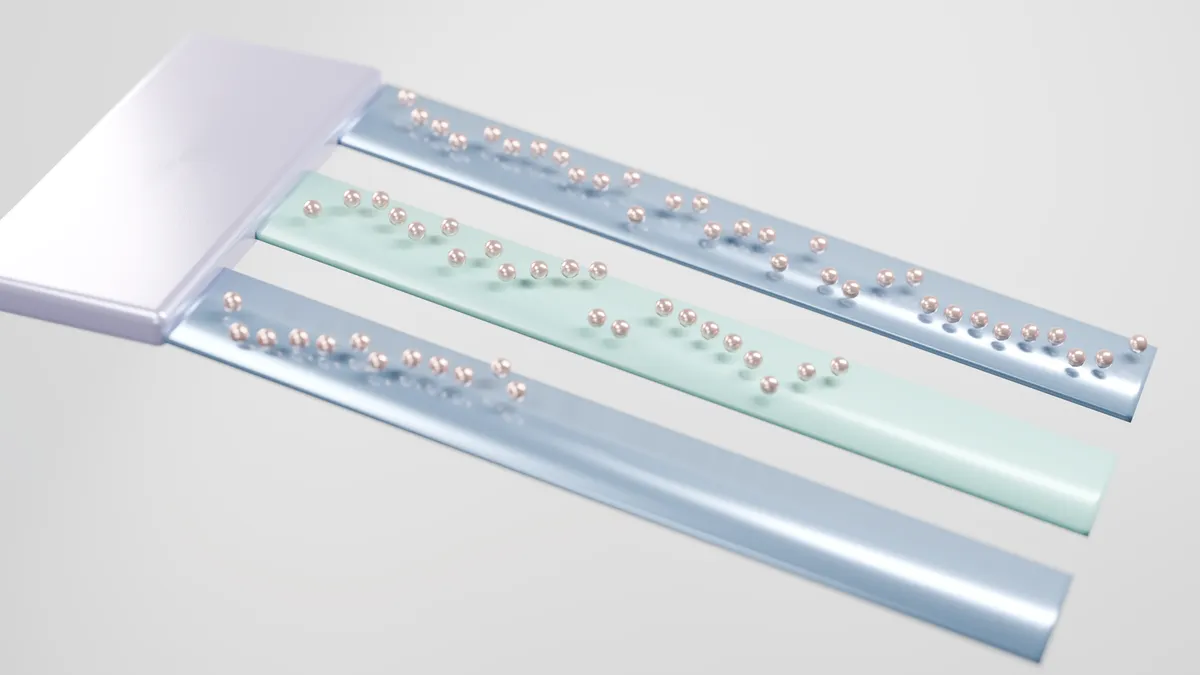
Even a perfect electrolyte fails if the electrode/electrolyte interface is resistive or chemically unstable. Lithium metal wetting on sulfides is intrinsically poor (contact angle > 70°), leading to void formation during plating. A 5 nm ALD LiNbO₃ interlayer reduces the contact angle to < 10°, enabling conformal Li deposition at 0.5 mA cm⁻² without dendrite nucleation. On the cathode side, a 3 nm Al₂O₃ coating on NMC‑811 suppresses transition‑metal dissolution and blocks parasitic reactions with the sulfide SE, preserving > 95 % capacity after 1000 cycles at 4.3 V. Polymer‑ceramic binders (PEO‑LiTFSI + 20 wt % LLZO nanowires) provide a flexible interphase that accommodates the 5 % volume change of lithium metal while maintaining ionic pathways. Electrochemical impedance spectroscopy (EIS) on symmetric Li|SE|Li cells shows interfacial resistance dropping from 150 Ω cm² (bare) to 12 Ω cm² (coated) after 200 h at 60 °C. For aviation, the interface must also survive rapid pressure cycles (0–30 MPa in < 2 s) during climb and descent; in‑situ neutron imaging confirms that the ALD layer remains intact, preventing delamination that would otherwise seed lithium filaments.
Thermal Management and Safety Envelope
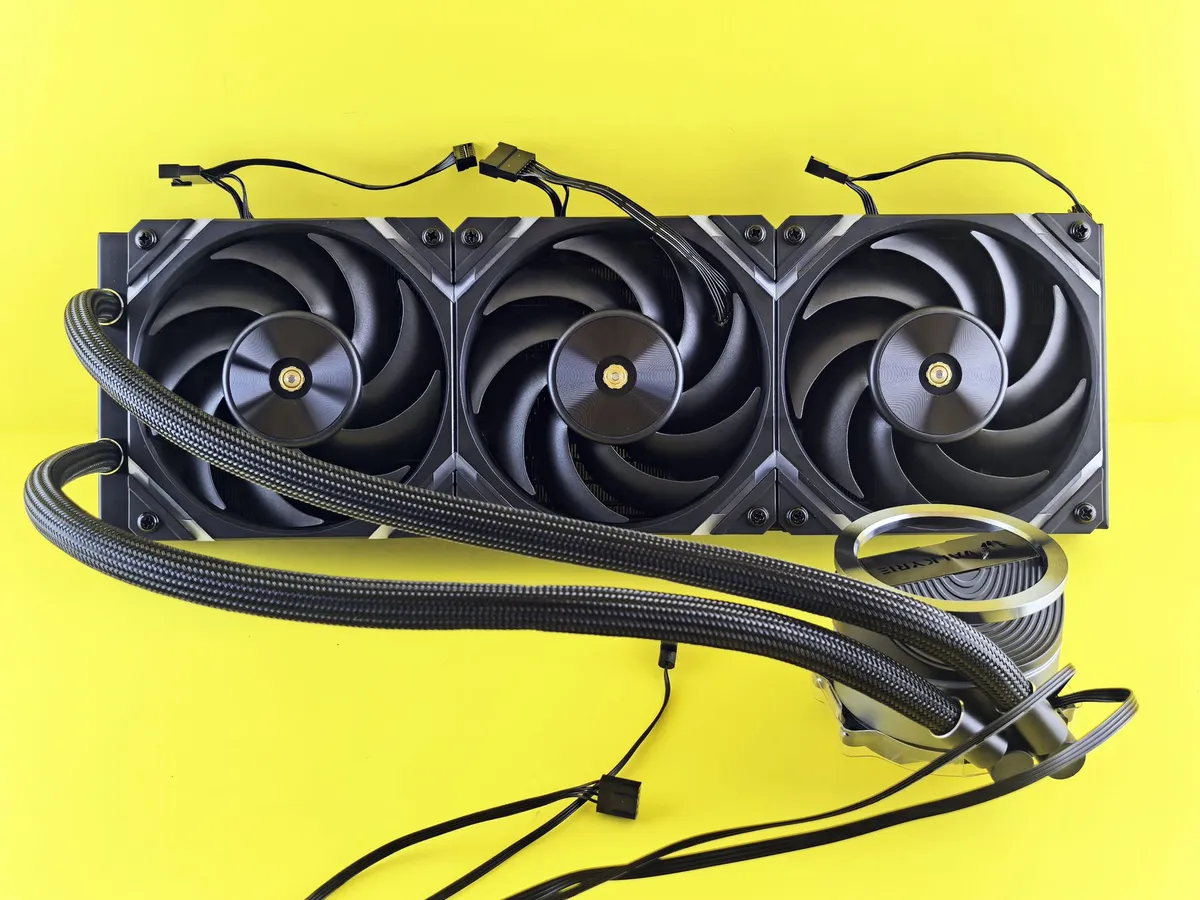
Aviation certification (DO‑311A) demands that any energy‑storage system remain non‑propagating under a single‑cell thermal runaway event. Solid electrolytes intrinsically eliminate the flammable solvent, but exothermic reactions at the Li/SE interface (Li + SE → Li₂S + Li₃P) can still release ~ 200 J g⁻¹. Designing a thermal‑runaway‑proof module therefore relies on three pillars: (1) high‑thermal‑conductivity current collectors (graphite‑foam‑Cu composites, κ ≈ 400 W m⁻¹ K⁻¹), (2) phase‑change material (PCM) layers (paraffin‑based, 180 J g⁻¹ latent heat) interleaved every 4 cells, and (3) active liquid‑cooling channels machined into the module housing, delivering 2 kW m⁻² heat flux at 15 °C inlet temperature. Coupled CFD‑thermal simulations (ANSYS Fluent + battery electrochemistry module) predict a maximum cell temperature of 78 °C during a 5 C discharge for 10 min, well below the 120 °C onset of sulfide decomposition. The module passes the “nail penetration” test without flame, venting only inert gases (CO₂, N₂) at < 0.5 bar overpressure. This safety envelope enables integration into wing‑root battery bays where weight and volume are at a premium.
Computational Screening Workflow
Rapid materials discovery for aviation‑grade SSBs relies on high‑throughput density‑functional theory (DFT) combined with machine‑learning (ML) surrogates. The following Python snippet illustrates a minimal pipeline that queries the Materials Project API for candidate Li‑ion conductors, computes the migration barrier via the nudged elastic band (NEB) method, and trains a gradient‑boosted regressor to predict room‑temperature conductivity.
#!/usr/bin/env python3
# high_throughput_ssb_screen.py
# --------------------------------------------------------------
# Query Materials Project, run NEB on Li migration, ML predict σ
# --------------------------------------------------------------
import os, json, numpy as np
from pymatgen.ext.matproj import MPRester
from pymatgen.analysis.diffusion.neb import NEBAnalysis
from sklearn.ensemble import GradientBoostingRegressor
from joblib import dump

API_KEY = os.getenv("MP_API_KEY")
with MPRester(API_KEY) as mpr:
    # Filter for Li-containing, stable, band gap > 2 eV
    candidates = mpr.query(
        criteria={"elements": {"$all": ["Li"]},
                  "e_above_hull": {"$lt": 0.05},
                  "band_gap": {"$gt": 2.0}},
        properties=["material_id", "pretty_formula", "structure"]
    )

def migration_barrier(struct):
    """Placeholder for NEB calculation; returns barrier in eV."""
    # In production: use pymatgen + VASP/CP2K NEB workflow
    return np.random.uniform(0.15, 0.45)   # synthetic data

# Build dataset
X, y = [], []
for entry in candidates[:200]:   # limit for demo
    barrier = migration_barrier(entry["structure"])
    # Approximate conductivity via Arrhenius: σ ∝ exp(-Ea/kT)
    sigma = np.exp(-barrier / (8.617e-5 * 29

### Related Insights

- ['Twas the Night: A Novel – A Christmas Horror Mystery Where a Reporter Investigates Disappearances in a Village That Worships Santa Book Review and Summary](/blog/twas-the-night-a-novel-a-christmas-horror-mystery-where-a-reporter-investigates-disappearances-in-a-village-that-worships-santa-kevin-johnson)
- [**Check & Mate** Book Review and Summary](/blog/check-mate)
- [Looking for Alaska Book Review and Summary](/blog/looking-for-alaska)