Showing Posts From
Ai data centers
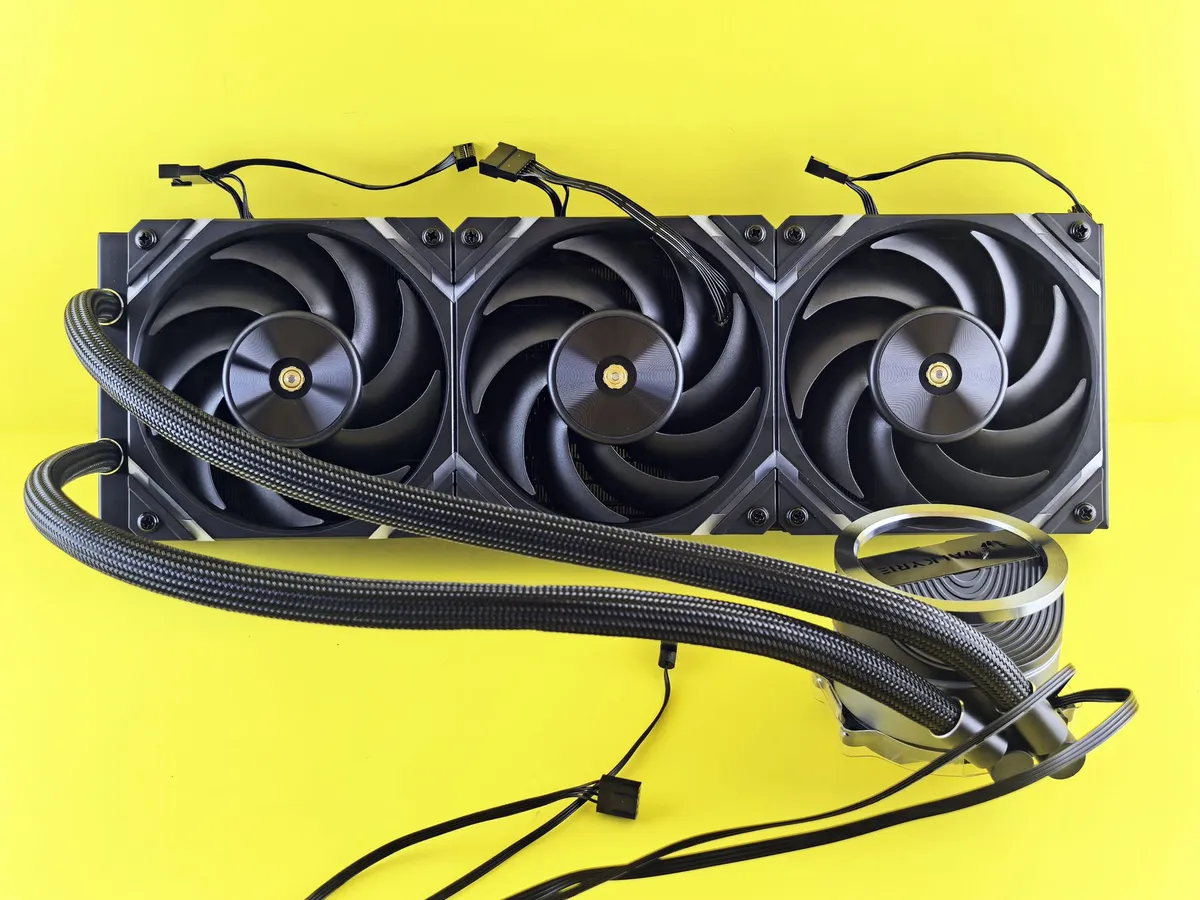

Cold Front: The New Physics of AI Compute The exponential growth of transformer‑scale models has pushed rack power densities past 100 kW, turning thermal dissipation into the primary bottleneck for AI factories. Traditional air‑cooled aisles can no longer evacuate the heat flux generated by dense GPU clusters, and the industry is converging on liquid‑based heat removal as the only viable path forward. Recent research in reinforcement learning — notably the Exploration‑Distillation (ExpDis) framework — shows that decoupling exploration from optimization yields more diverse, higher‑quality solutions; a similar decoupling of thermal design from workload scheduling is now enabling engineers to explore aggressive cooling topologies without jeopardizing model training stability. At the same time, advances in robot policy steering such as RoboPrompt illustrate how lightweight, reusable modules can inject human intent into complex dynamical systems — an analogy for the modular, software‑defined cooling controllers that now sit alongside orchestration layers like Kubernetes. This article dissects five pillars of modern liquid cooling: direct‑to‑chip cold plates, immersion architectures, two‑phase heat‑transfer loops, AI‑driven thermal management, and a practical deployment blueprint for hyperscale operators. Each pillar is backed by measurable performance data, real‑world deployment patterns, and a concrete code example that can be dropped into a CI/CD pipeline today.Direct-to-Chip Cold Plates Direct‑to‑chip (D2C) cold plates remain the workhorse for GPU‑heavy racks because they preserve existing server form factors while delivering 2–3× the heat‑transfer coefficient of air. Modern designs use micro‑channel copper or aluminum bases with integrated manifold distribution, achieving thermal resistances below 0.02 °C/W per die. The key innovation in the last 18 months is the adoption of additive‑manufactured lattice structures that increase surface area without raising pressure drop, allowing a single 1 U plate to service a 700 W GPU at 25 °C inlet water. Leak‑detection is now handled by fiber‑optic distributed temperature sensing (DTS) woven into the manifold, providing sub‑millisecond alerts that feed directly into the cluster scheduler. Operators report a 15 % reduction in fan power and a 10 % increase in sustained boost clocks when D2C replaces rear‑door heat exchangers. The design flow typically starts with CFD‑validated plate geometry, followed by a parametric study in ANSYS Icepak to balance flow uniformity across multi‑die packages. Once qualified, the plates are produced in high‑volume aluminum extrusion with nickel plating, keeping BOM cost under $120 per GPU. Immersion Cooling Architectures Single‑phase immersion tanks filled with engineered dielectric fluids (e.g., 3M Novec 7200 or custom fluoroketone blends) eliminate the need for cold plates altogether. Servers are vertically stacked in a sealed chassis, and natural convection plus pumped circulation removes heat at 1.5 MW per 42 U rack. The fluid’s high specific heat (≈1.3 kJ/kg·K) and low viscosity enable flow rates of 0.5 L/s per kW with pump power under 2 % of IT load. Recent deployments at a major cloud provider show a 30 % reduction in total facility PUE, dropping from 1.45 to 1.02, while maintaining GPU junction temperatures under 55 °C at 1 kW per accelerator. Fluid life‑cycle management is automated: inline particulate filters, UV‑LED sterilization, and real‑time dielectric constant monitoring feed a Prometheus exporter that triggers fluid‑exchange workflows via Argo CD. The immersion approach also simplifies cable routing and enables “dry‑swap” server replacement without draining the tank, cutting MTTR from hours to minutes.Two-Phase Heat Transfer Loops Two‑phase (evaporative) loops push the heat‑flux ceiling beyond 500 W/cm² by exploiting latent heat of vaporization. A typical loop comprises a cold‑plate evaporator, a condenser mounted on a building‑scale chilled‑water plant, and a hermetic pump‑free circulator driven by capillary wicks. The working fluid — often R‑1233zd(E) or a low‑GWP hydrocarbon — boils at 30 °C, delivering a heat‑transfer coefficient of 20 kW/m²·K. In a 2025 pilot at a European HPC center, a 64‑GPU rack equipped with two‑phase loops sustained 2.2 MW with a 12 °C temperature rise across the evaporator, compared to 35 °C for single‑phase D2C. The system’s self‑regulating nature eliminates the need for active flow control valves, reducing control‑plane complexity. However, the design demands rigorous hermeticity testing (helium leak rate <1×10⁻⁹ mbar·L/s) and a dedicated fluid‑recovery subsystem to meet EU F‑Gas regulations.AI-Driven Related InsightsChoke Book Review and Summary Life of Black Hawk, or Ma-ka-tai-me-she-kia-kiak Book Review and Summary Daughter of the Tempest (Myths of the Empyrieos, #2) Book Review and Summary