Showing Posts From
Edge robotics
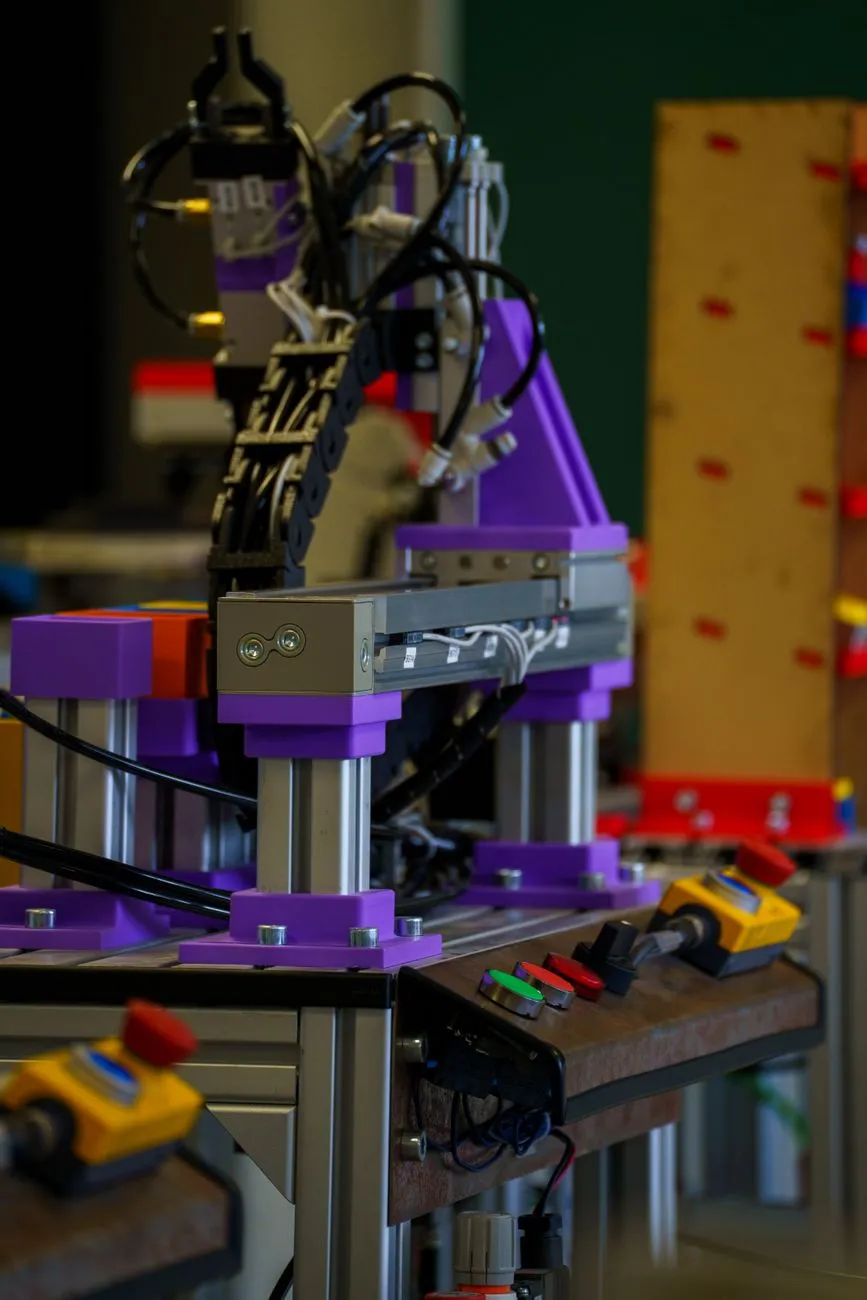

The Convergence of Neuromorphic Hardware and Edge Robotics The field of edge robotics has witnessed significant advancements in recent years, driven by the increasing demand for intelligent, autonomous systems that can operate in real-time. One key technology that has been instrumental in driving this growth is neuromorphic hardware. By mimicking the structure and function of biological neurons, neuromorphic hardware has enabled the development of efficient, adaptive, and scalable edge robotics systems. In this article, we will delve into the implementation of neuromorphic hardware in edge robotics, exploring the benefits, challenges, and potential applications of this technology. We will also examine the role of perception-aware control-barrier functions (CBF-RL) in enabling whole-body safety in humanoid robots. Perception-Aware CBF-RL for Whole-Body Safety Recent research has focused on developing perception-aware CBF-RL frameworks that can ensure whole-body safety in humanoid robots. One notable example is the PAC-MAN framework, which couples control-barrier safety with deployment-realistic onboard sensing for whole-body humanoid dodgeball. import numpy as np from scipy.optimize import minimizedef cbf_rl_policy(observation, action_dim): # Define the CBF function def cbf(x, u): return x[0] + x[1] * u # Define the reward function def reward(x, u): return -np.linalg.norm(x) # Define the constraints constraints = [{'type': 'ineq', 'fun': lambda x: cbf(x, u)}] # Optimize the action using the CBF-RL policy result = minimize(lambda u: -reward(observation, u), np.zeros(action_dim), method='SLSQP', constraints=constraints) return result.xThis framework has been evaluated on a controlled any-link contact benchmark with seeded throws in two regimes: single throws and a deployment loop in which the robot walks back to its station and recovers between throws. The results demonstrate that the policy comes within a few points of a privileged state oracle, highlighting the effectiveness of perception-aware CBF-RL in enabling whole-body safety. Secure Design Principles for Neuromorphic Edge Robotics When designing neuromorphic edge robotics systems, several secure design principles must be considered:Data encryption: Ensure that all data transmitted between the robot and the cloud is encrypted using secure protocols such as TLS. Access control: Implement role-based access control to restrict access to sensitive data and functionality. Secure boot: Ensure that the robot's firmware is securely bootstrapped to prevent tampering. Regular updates: Regularly update the robot's software and firmware to patch vulnerabilities.# Docker Compose file for secure neuromorphic edge robotics version: '3' services: robot: build: . ports: - "8080:8080" environment: - DATA_ENCRYPTION=true - ACCESS_CONTROL=true - SECURE_BOOT=true - REGULAR_UPDATES=trueNeuromorphic Hardware Implementation Neuromorphic hardware can be implemented using a variety of technologies, including:Spiking Neural Networks (SNNs): SNNs are a type of neural network that mimic the behavior of biological neurons. Memristor-based synapses: Memristors are two-terminal devices that can store data and perform computations. Quantum error correction: Quantum error correction is a technique used to mitigate errors in quantum computations.# Python code for implementing a simple SNN import numpy as npclass SNN: def __init__(self, num_inputs, num_outputs): self.num_inputs = num_inputs self.num_outputs = num_outputs self.weights = np.random.rand(num_inputs, num_outputs) def forward(self, inputs): outputs = np.dot(inputs, self.weights) return outputssnn = SNN(10, 5) inputs = np.random.rand(10) outputs = snn.forward(inputs) print(outputs)Applications of Neuromorphic Edge Robotics Neuromorphic edge robotics has a wide range of applications, including:Autonomous vehicles: Neuromorphic edge robotics can be used to enable autonomous vehicles to make decisions in real-time. Robotics: Neuromorphic edge robotics can be used to enable robots to perform tasks that require real-time decision-making. Healthcare: Neuromorphic edge robotics can be used to enable healthcare robots to perform tasks that require real-time decision-making.Conclusion: The Future of Neuromorphic Edge Robotics Neuromorphic edge robotics is a rapidly growing field that has the potential to revolutionize the way we approach autonomous systems. By leveraging the benefits of neuromorphic hardware and perception-aware CBF-RL, we can create systems that are efficient, adaptive, and scalable. As we move forward, it is essential to consider secure design principles and implement neuromorphic hardware using a variety of technologies. #AI #EdgeRobotics #NeuromorphicHardware #AutonomousSystems Related InsightsThe Fabric of Entanglement: Architecture, Cosmology, and the Next Frontier of Quantum Interconnectivity Quantum Singularity: How Post-Quantum Crypto Will Reshape Our Digital Destiny Forever Rust in Production: Why Developers Are Embracing Memory Safety and Performance{ "@context": "https://schema.org", "@type": "FAQPage", "mainEntity": [ { "@type": "Question", "name": "What is the main focus of Neuromorphic Hardware - Part 02: Implementation in Edge Robotics?", "acceptedAnswer": { "@type": "Answer", "text": "Unlocking the potential of neuromorphic hardware in edge robotics applications." } }, { "@type": "Question", "name": "Who authored the comprehensive guide on Neuromorphic Hardware - Part 02: Implementation in Edge Robotics?", "acceptedAnswer": { "@type": "Answer", "text": "This detailed article and its insights were carefully researched and authored by Hiroshi Tanaka." } }, { "@type": "Question", "name": "Where can I find more related content about Technology?", "acceptedAnswer": { "@type": "Answer", "text": "You can explore more articles, detailed reviews, and similar insights by browsing the Related Insights section at the bottom of this article or visiting our dedicated Technology category page." } } ] }