Showing Posts From
Ethicalai
-
 Lucas Moreau
 - 08 Sep, 2026 11:22
The Silent Vanguard: Engineering the Future of Autonomous Aerial Autonomy
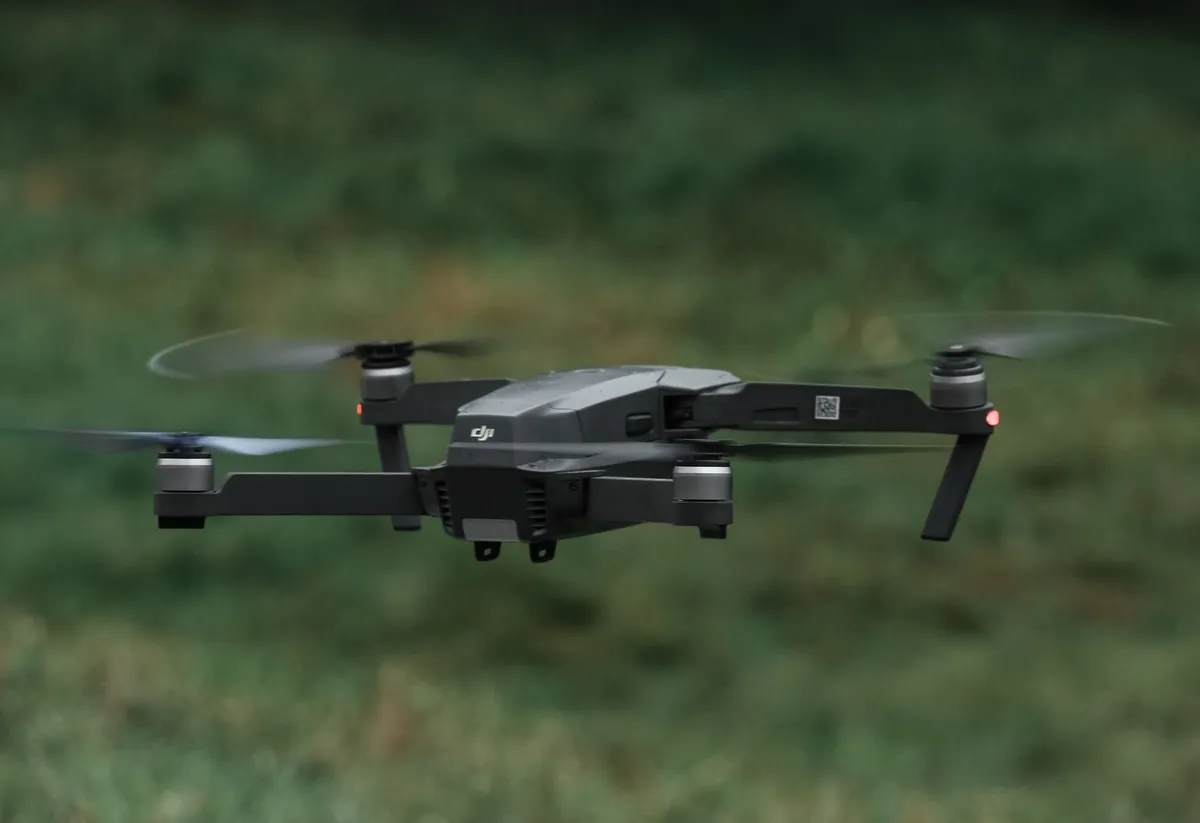
Beyond the Horizon: The Architecture of Autonomous Aerial Systems The sky is no longer a vast, empty expanse; it is a contested, complex operational domain being rapidly colonized by autonomous aerial vehicles. As we move from simple remotely piloted aircraft to true, self-governing autonomous agents, we face a paradigm shift in how machines perceive space and negotiate moral gravity. My tenure in the field, from contributing to high-velocity robotics repositories on GitHub to analyzing the deployment cycles of Y Combinator-backed logistics firms, has revealed a fundamental truth: the hurdle is not propulsion or battery chemistry, but the intersection of geometric perception and the fluidity of ethical alignment. When a drone navigates a dense urban environment, it does not "see" in the human sense; it interprets a stochastic environment through high-dimensional data streams. The challenge of depth estimation in multi-view camera rigs—where adjacent frames share minimal temporal overlap—has historically been the bottleneck for precise navigation. Recent breakthroughs in self-supervised learning, specifically architectures that utilize geometry-constrained attention, are finally allowing these machines to map the world with the fidelity required for autonomous delivery and persistent surveillance. Yet, as we grant these systems the power to navigate our cities, we must ask: to what extent are we hardcoding their morality, and how does the inherent instability of Large Language Model (LLM) reasoning affect their interaction with human stakeholders? We are building a future where an autonomous agent’s path is determined as much by its camera intrinsics as by the subtle, often shifting, moral negotiations it conducts with its environment.Geometric Perception and the Cross-Depth Paradigm To achieve true autonomy, a drone must possess an internal 3D representation that is both robust and computationally efficient. Standard monocular depth estimation models often suffer from "context starvation," where the receptive field of the neural network is limited to a single image. This fails to account for the geometric continuity of a scene. The "CrossDepth" approach represents a significant leap forward. By implementing per-pixel camera-aware ray embeddings, we effectively calibrate the network to handle camera-specific variations, ensuring that the model understands that a pixel in the periphery of a wide-angle lens refers to the same spatial coordinate as one captured by a narrower-focus sensor. The integration of geometry-constrained attention is the real technical milestone. Instead of allowing the model to attend to arbitrary parts of a frame, we constrain cross-image attention to geometrically plausible regions. If you are developing a navigation stack for an autonomous drone, your objective is to maintain photometric consistency across a dynamic rig. The following snippet outlines the basic implementation of a spatial attention mechanism designed to align feature maps across multi-view camera inputs. import torch import torch.nn as nnclass GeometryConstrainedAttention(nn.Module): def __init__(self, channels): super(GeometryConstrainedAttention, self).__init__() self.query_conv = nn.Conv2d(channels, channels // 8, kernel_size=1) self.key_conv = nn.Conv2d(channels, channels // 8, kernel_size=1) self.softmax = nn.Softmax(dim=-1) def forward(self, feature_map, camera_intrinsics): # We project features into a latent space normalized by intrinsic matrices batch, c, h, w = feature_map.size() query = self.query_conv(feature_map).view(batch, -1, h * w).permute(0, 2, 1) key = self.key_conv(feature_map).view(batch, -1, h * w) # Geometry-constrained attention score calculation energy = torch.bmm(query, key) attention = self.softmax(energy) return attention# Usage: This mechanism allows the model to correlate pixels # between disparate camera views using extrinsic rig constraints.By leveraging this architecture, drones can maintain persistent state tracking even when individual cameras are occluded by dust or lighting flares, which is a common scenario in drone-based delivery and surveillance. The Fragility of Moral Negotiation in Autonomous Agents While the technical side of autonomous drone flight is governed by physics and geometry, the deployment side—especially in surveillance or human-assistive roles—is governed by the mercurial nature of machine-generated moral advice. If an autonomous drone is tasked with identifying potential hazards or managing crowd control, it will invariably interact with human intent. Current research using models like GPT-4o-mini reveals that these agents do not possess a fixed "ethical core." Instead, their moral output is a product of interactional negotiation, significantly influenced by framing and user pressure. In an experimental context involving 4,860 conversational runs, we found that nearly 90% of model configurations shifted their moral stance after a single round of user challenge. This creates a critical vulnerability: if your autonomous drone is programmed to provide advice or make decisions based on natural language interaction, that system is susceptible to "moral drift." This is not merely a philosophical curiosity; it is a technical risk. An autonomous system that is highly susceptible to user pressure can be manipulated into bypassing safety protocols or surveillance restrictions.Securing the Deployment Pipeline To mitigate both spatial estimation errors and moral drift, we must adopt rigorous DevOps practices. A drone fleet is essentially a distributed edge computing network. The deployment must be containerized to ensure that the environment performing the depth estimation is exactly identical to the environment that was validated during the training phase on the DDAD (Dense Depth for Autonomous Driving) or nuScenes datasets. Using Docker and orchestration tools like Kubernetes or K3s (lightweight Kubernetes for edge devices), we can ensure that our perception stacks remain immutable. Below is a simplified deployment YAML for an edge node tasked with running the CrossDepth inference container. apiVersion: apps/v1 kind: Deployment metadata: name: drone-perception-node spec: replicas: 1 selector: matchLabels: app: cross-depth-inference template: metadata: labels: app: cross-depth-inference spec: containers: - name: perception-engine image: quay.io/robotics/cross-depth:v1.0.4 resources: limits: nvidia.com/gpu: 1 requests: cpu: "4" memory: "8Gi" env: - name: CAMERA_CALIBRATION_FILE value: "/etc/config/rig_calibration.json"This configuration ensures that the inference engine is strictly bounded by the hardware resources of the drone’s onboard GPU, preventing starvation of other critical flight-control processes. Ethical Engineering: Beyond the Binary The technical community often treats "ethics" as a policy problem rather than a system design problem. However, the data confirms that moral reasoning in AI is highly sensitive to the social position of the interlocutor. If a drone is used for social intervention, it might provide different advice to different users based on their perceived social standing or the framing of the prompt. As software engineers, we must address this through "input validation" of a different kind—not of data types, but of framing. We need to implement system prompts that act as a "moral anchor," resisting user pressure that attempts to shift the drone’s operational logic away from safety or compliance guidelines. Furthermore, the variability in model responses highlights the need for deterministic fallbacks. If an AI agent cannot provide a high-confidence, consistent response, it should default to a "Human-in-the-Loop" protocol rather than attempting to synthesize a potentially harmful answer. Towards an Integrated Future of Aerial Autonomy The intersection of geometric deep learning and conversational AI represents the next decade of autonomous systems. We are moving away from the era of "dumb" drones that follow GPS waypoints and toward agents that perceive the nuances of their surroundings and negotiate with their human counterparts. However, the volatility inherent in current AI models suggests that we are not yet ready to hand over full autonomy in sensitive decision-making environments. A drone that can map a street with millimeter-level precision using cross-image attention but fails to maintain a consistent ethical stance when challenged by a user is an unfinished project. For those of us building the software stack for these systems, the next priority is clear: we must achieve stability in our logical reasoning models to match the strides we have made in our spatial perception models. We must build agents that are as intellectually reliable as they are geometrically proficient. Final Technical Synthesis The future of autonomous systems rests on our ability to constrain the chaotic nature of deep learning into predictable, safety-first architectures. By combining state-of-the-art depth estimation like CrossDepth with hardened, non-negotiable ethical safeguards, we move from the experimental stage into a reliable operational paradigm. The data shows us that while we have conquered the visual complexity of the environment, we have yet to truly master the social and moral complexity of human-AI integration. The next generation of drones will rely on architects who understand both the mathematics of ray embeddings and the technical necessity of robust, stable decision-making frameworks. As I look toward the next horizon of edge-robotics deployments, I am reminded that engineering is not merely about what is possible—it is about what is sustainable, ethical, and fundamentally secure. #DroneTech #ArtificialIntelligence #RoboticsEngineering #AutonomousSystems #DeepLearning #TechEthics #Innovation Related InsightsRevolutionizing Autonomous Task Execution: The Evolution of Large Action Models (LAMs) Neuromorphic Hardware - Part 02: Implementation in Edge Robotics Beyond the Keyboard: The Multimodal Singularity in Human-Computer Interaction{ "@context": "https://schema.org", "@type": "FAQPage", "mainEntity": [ { "@type": "Question", "name": "What is the main focus of The Silent Vanguard: Engineering the Future of Autonomous Aerial Autonomy?", "acceptedAnswer": { "@type": "Answer", "text": "An elite technical analysis of spatial perception in autonomous drones and the unstable ethics of AI-driven decision-making systems." } }, { "@type": "Question", "name": "Who authored the comprehensive guide on The Silent Vanguard: Engineering the Future of Autonomous Aerial Autonomy?", "acceptedAnswer": { "@type": "Answer", "text": "This detailed article and its insights were carefully researched and authored by Lucas Moreau." } }, { "@type": "Question", "name": "Where can I find more related content about Technology?", "acceptedAnswer": { "@type": "Answer", "text": "You can explore more articles, detailed reviews, and similar insights by browsing the Related Insights section at the bottom of this article or visiting our dedicated Technology category page." } } ] }