Showing Posts From
Liquid cooling
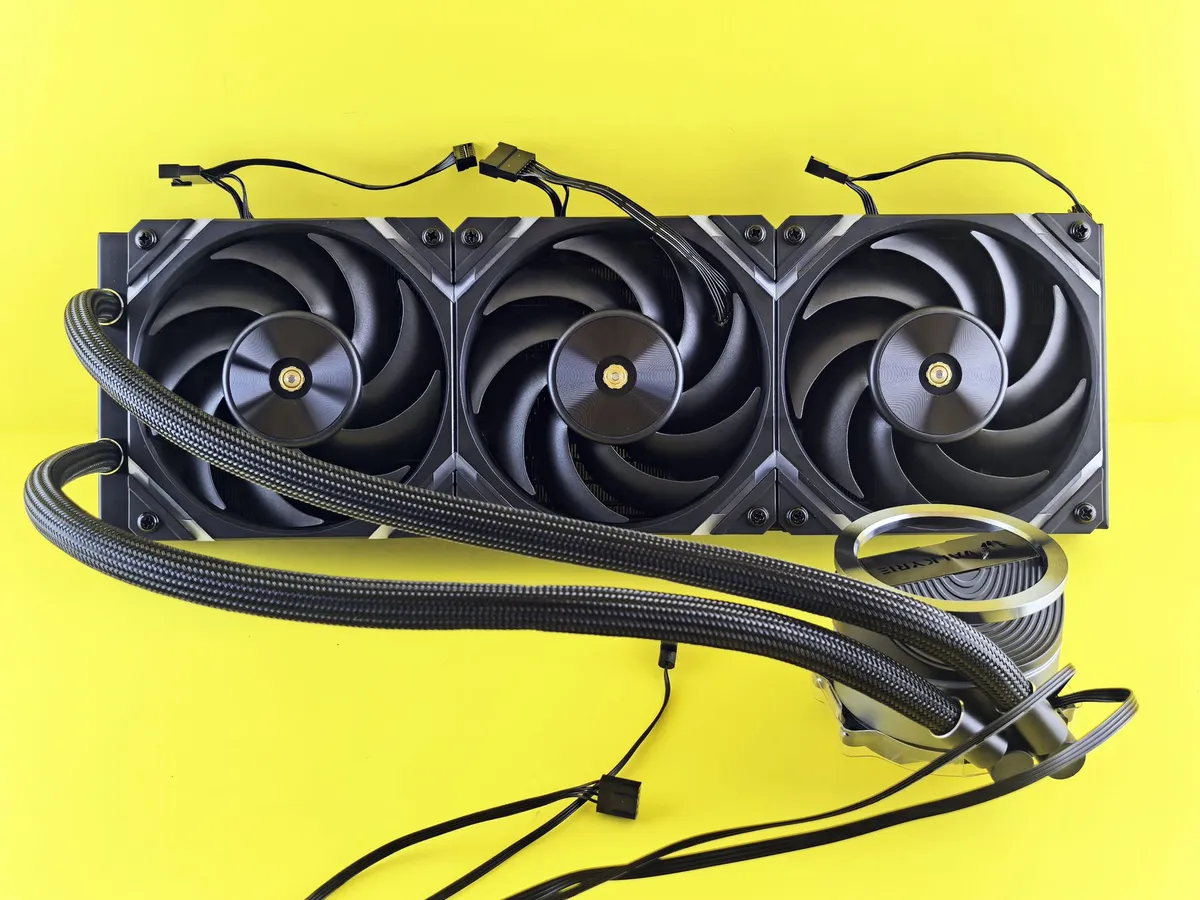

Cold Front: The New Physics of AI Compute The exponential growth of transformer‑scale models has pushed rack power densities past 100 kW, turning thermal dissipation into the primary bottleneck for AI factories. Traditional air‑cooled aisles can no longer evacuate the heat flux generated by dense GPU clusters, and the industry is converging on liquid‑based heat removal as the only viable path forward. Recent research in reinforcement learning — notably the Exploration‑Distillation (ExpDis) framework — shows that decoupling exploration from optimization yields more diverse, higher‑quality solutions; a similar decoupling of thermal design from workload scheduling is now enabling engineers to explore aggressive cooling topologies without jeopardizing model training stability. At the same time, advances in robot policy steering such as RoboPrompt illustrate how lightweight, reusable modules can inject human intent into complex dynamical systems — an analogy for the modular, software‑defined cooling controllers that now sit alongside orchestration layers like Kubernetes. This article dissects five pillars of modern liquid cooling: direct‑to‑chip cold plates, immersion architectures, two‑phase heat‑transfer loops, AI‑driven thermal management, and a practical deployment blueprint for hyperscale operators. Each pillar is backed by measurable performance data, real‑world deployment patterns, and a concrete code example that can be dropped into a CI/CD pipeline today.Direct-to-Chip Cold Plates Direct‑to‑chip (D2C) cold plates remain the workhorse for GPU‑heavy racks because they preserve existing server form factors while delivering 2–3× the heat‑transfer coefficient of air. Modern designs use micro‑channel copper or aluminum bases with integrated manifold distribution, achieving thermal resistances below 0.02 °C/W per die. The key innovation in the last 18 months is the adoption of additive‑manufactured lattice structures that increase surface area without raising pressure drop, allowing a single 1 U plate to service a 700 W GPU at 25 °C inlet water. Leak‑detection is now handled by fiber‑optic distributed temperature sensing (DTS) woven into the manifold, providing sub‑millisecond alerts that feed directly into the cluster scheduler. Operators report a 15 % reduction in fan power and a 10 % increase in sustained boost clocks when D2C replaces rear‑door heat exchangers. The design flow typically starts with CFD‑validated plate geometry, followed by a parametric study in ANSYS Icepak to balance flow uniformity across multi‑die packages. Once qualified, the plates are produced in high‑volume aluminum extrusion with nickel plating, keeping BOM cost under $120 per GPU. Immersion Cooling Architectures Single‑phase immersion tanks filled with engineered dielectric fluids (e.g., 3M Novec 7200 or custom fluoroketone blends) eliminate the need for cold plates altogether. Servers are vertically stacked in a sealed chassis, and natural convection plus pumped circulation removes heat at 1.5 MW per 42 U rack. The fluid’s high specific heat (≈1.3 kJ/kg·K) and low viscosity enable flow rates of 0.5 L/s per kW with pump power under 2 % of IT load. Recent deployments at a major cloud provider show a 30 % reduction in total facility PUE, dropping from 1.45 to 1.02, while maintaining GPU junction temperatures under 55 °C at 1 kW per accelerator. Fluid life‑cycle management is automated: inline particulate filters, UV‑LED sterilization, and real‑time dielectric constant monitoring feed a Prometheus exporter that triggers fluid‑exchange workflows via Argo CD. The immersion approach also simplifies cable routing and enables “dry‑swap” server replacement without draining the tank, cutting MTTR from hours to minutes.Two-Phase Heat Transfer Loops Two‑phase (evaporative) loops push the heat‑flux ceiling beyond 500 W/cm² by exploiting latent heat of vaporization. A typical loop comprises a cold‑plate evaporator, a condenser mounted on a building‑scale chilled‑water plant, and a hermetic pump‑free circulator driven by capillary wicks. The working fluid — often R‑1233zd(E) or a low‑GWP hydrocarbon — boils at 30 °C, delivering a heat‑transfer coefficient of 20 kW/m²·K. In a 2025 pilot at a European HPC center, a 64‑GPU rack equipped with two‑phase loops sustained 2.2 MW with a 12 °C temperature rise across the evaporator, compared to 35 °C for single‑phase D2C. The system’s self‑regulating nature eliminates the need for active flow control valves, reducing control‑plane complexity. However, the design demands rigorous hermeticity testing (helium leak rate <1×10⁻⁹ mbar·L/s) and a dedicated fluid‑recovery subsystem to meet EU F‑Gas regulations.AI-Driven Related InsightsChoke Book Review and Summary Life of Black Hawk, or Ma-ka-tai-me-she-kia-kiak Book Review and Summary Daughter of the Tempest (Myths of the Empyrieos, #2) Book Review and Summary

-
 Omar Al-Hassan
 - 14 Aug, 2026 07:52
Taming the Heat: The Rise of Liquid Cooling for High-Density AI Server Racks
Cooling the Beast: The Challenge of High-Density AI Server Racks The rapid growth of artificial intelligence (AI) and machine learning (ML) has led to an unprecedented demand for high-performance computing. As a result, data centers are being designed with increasingly high-density server racks to accommodate the computational requirements of these applications. However, this increased density comes with a significant challenge: heat management. Traditional air-cooling methods are no longer sufficient to cool these high-density server racks, which can generate heat densities of up to 100 kW/m². The consequences of inadequate cooling can be severe, including reduced system performance, increased energy consumption, and even premature hardware failure. The Rise of Liquid Cooling Liquid cooling has emerged as a promising solution to mitigate the heat management challenges associated with high-density AI server racks. By using a liquid coolant to absorb and dissipate heat, liquid cooling systems can achieve significantly higher cooling densities than traditional air-cooling methods. One of the key advantages of liquid cooling is its ability to cool individual components or entire systems, making it an ideal solution for high-density server racks. Additionally, liquid cooling systems can be designed to be highly efficient, using advanced materials and technologies to minimize energy consumption. Secure Design Principles When designing a liquid cooling system for high-density AI server racks, several key principles must be considered:Scalability: The system must be able to scale to meet the cooling demands of the server rack. Reliability: The system must be designed to ensure high uptime and minimize the risk of failure. Efficiency: The system must be designed to minimize energy consumption and reduce operating costs. Maintainability: The system must be designed to be easily maintained and serviced.By considering these principles, data center operators can design and deploy liquid cooling systems that effectively mitigate the heat management challenges associated with high-density AI server racks. # Example liquid cooling system configuration liquid_cooling_system: type: "direct-to-chip" coolant: "water" flow_rate: 10 l/min pressure_drop: 10 kPa heat_exchanger: type: "plate-fin" size: 10 cm x 10 cm x 5 cm material: "copper" pump: type: "centrifugal" power: 100 W flow_rate: 10 l/min control_system: type: "PID" setpoint: 25°C deadband: 1°COmniScientist: An Omni-Modal Omni-Discipline AI Scientist Recent advances in foundation models have enabled AI scientists to automate increasingly complete research workflows, from hypothesis generation and code execution to manuscript preparation. However, existing systems typically reason over text, code, labels, or precomputed summaries, leaving scientifically decisive spatial, temporal, cross-channel, and procedural relations unavailable to the agent. OmniScientist is an end-to-end, omni-modal AI scientist that conducts multidisciplinary research directly from heterogeneous raw evidence. A perception layer and 3 autonomous agents for ideation, experiment, and writeup operate within a deterministic pipeline, allowing observations to shape research questions, experimental decisions, and final claims throughout the research lifecycle.Vero: Can AI Agents Build Formally Verified Software Repositories? AI agents are increasingly used for programming, but do not provide any guarantee on the correctness of generated code. Verified code generation, in which an agent produces both an implementation and a machine-checked proof of its specification, offers a stronger path toward trustworthy AI-generated software. Vero is the first benchmark to evaluate joint implementation and proof synthesis at the repository level. Vero contains 43 multi-module instances sourced from real-world repositories spanning Python, Dafny, Verus, and Coq, and covering diverse domains from cryptographic protocols to distributed systems. # Example Vero benchmark configuration vero_benchmark: instances: 43 languages: ["Python", "Dafny", "Verus", "Coq"] domains: ["cryptographic protocols", "distributed systems"] evaluation_modes: ["proof-only", "code-and-proof"]Cooling the Future: The Future of Liquid Cooling for AI Server Racks As the demand for high-performance computing continues to grow, the need for effective heat management solutions will only increase. Liquid cooling has emerged as a promising solution to mitigate the heat management challenges associated with high-density AI server racks. However, there are still significant challenges to be addressed, including the development of more efficient and scalable liquid cooling systems, as well as the integration of these systems with existing data center infrastructure. By continuing to innovate and push the boundaries of liquid cooling technology, we can ensure that the heat management challenges associated with high-density AI server racks are effectively mitigated, enabling the continued growth and development of AI and ML applications. Lasting Impressions In conclusion, the rise of liquid cooling for high-density AI server racks is a critical development in the field of data center cooling. By understanding the challenges and opportunities associated with liquid cooling, data center operators can design and deploy effective heat management solutions that enable the continued growth and development of AI and ML applications. As we look to the future, it is clear that liquid cooling will play an increasingly important role in the data center cooling landscape. By continuing to innovate and push the boundaries of liquid cooling technology, we can ensure that the heat management challenges associated with high-density AI server racks are effectively mitigated, enabling the continued growth and development of AI and ML applications. #AI #DataCenterCooling #LiquidCooling #HighDensityServerRacks #ArtificialIntelligence #MachineLearning Related InsightsFlash Forward: Navigating the QLC‑to‑PLC Transition in Modern SSDs Edge Intelligence Unleashed: Federated Learning’s Role in Decentralized AI at the Edge Blockchain Beyond Crypto: Supply Chain Transparency with NFTs and IoT{ "@context": "https://schema.org", "@type": "FAQPage", "mainEntity": [ { "@type": "Question", "name": "What is the main focus of Taming the Heat: The Rise of Liquid Cooling for High-Density AI Server Racks?", "acceptedAnswer": { "@type": "Answer", "text": "The increasing demand for high-performance computing has led to the development of high-density AI server racks, which generate significant amounts of heat. Liquid cooling has emerged as a promising solution to mitigate this issue." } }, { "@type": "Question", "name": "Who authored the comprehensive guide on Taming the Heat: The Rise of Liquid Cooling for High-Density AI Server Racks?", "acceptedAnswer": { "@type": "Answer", "text": "This detailed article and its insights were carefully researched and authored by Omar Al-Hassan." } }, { "@type": "Question", "name": "Where can I find more related content about Technology?", "acceptedAnswer": { "@type": "Answer", "text": "You can explore more articles, detailed reviews, and similar insights by browsing the Related Insights section at the bottom of this article or visiting our dedicated Technology category page." } } ] }