Showing Posts From
Sustainability

-
 Nandini Patel
 - 19 Sep, 2026 11:02
Graphene's Quantum Sieve: Rewriting the Thermodynamics of Planetary Hydration
The Atomically Thin Frontier of Hydration Security The global water crisis is not merely a volumetric deficit; it is an entropy management failure. We possess vast oceans, yet the thermodynamic cost of separating solute from solvent—overcoming the Gibbs free energy of mixing—has historically anchored desalination to energy-intensive phase-change or high-pressure reverse osmosis (RO) paradigms. For decades, the polymer thin-film composite (TFC) membrane represented the ceiling of materials science: a dense, amorphous active layer where water transport follows the solution-diffusion model, inherently coupling permeability and selectivity in a rigid trade-off governed by the Robeson upper bound. Enter graphene. Not the defective, oxidized flakes of early literature, but monolayer, defect-engineered, pore-functionalized graphene (PG) and its vertically aligned laminar assemblies. This material class does not merely increment the permeability coefficient; it fundamentally alters the transport physics. By confining water to sub-nanometer capillaries—channels with heights approaching the van der Waals diameter of a water molecule (~2.75 Å)—we invoke quantum confinement effects and single-file transport regimes where classical Hagen-Poiseuille hydrodynamics collapse. Here, the friction coefficient drops by orders of magnitude, enabling water fluxes that defy the permeability-selectivity trade-off, while the steric and electrostatic exclusion mechanisms achieve near-perfect ion rejection. This article dissects the convergence of quantum materials engineering, non-equilibrium molecular dynamics (NEMD), and scalable roll-to-roll (R2R) chemical vapor deposition (CVD) that is transitioning graphene from a laboratory curiosity to a municipal infrastructure asset. We will examine the precise atomic architecture of ion sieving, the thermal management of concentration polarization at the membrane interface, and the deployment architectures—containerized microservices orchestrating sensor fleets—that make this viable at the edge of the grid.Quantum Confinement and the Steric-Electrostatic Exclusion Matrix The defining characteristic of a graphene sieve is not its thinness (0.34 nm), but the precision of its aperture distribution. In a pristine monolayer, graphene is impermeable to all gases and liquids. Permeability is engineered via controlled defect nucleation—typically oxygen plasma etching, focused ion beam (FIB) milling, or block copolymer lithography—to create a high-density array of sub-nanometer pores. The magic resides in the pore chemistry: the termination atoms (hydrogen, hydroxyl, fluorine, nitrogen) dictate the effective pore diameter and the electrostatic potential landscape. When a pore diameter is tuned to ~6–8 Å, we enter the regime of steric exclusion for hydrated ions. A sodium cation (Na⁺) carries a hydration shell of ~3.6 Å radius (7.2 Å diameter); a chloride anion (Cl⁻) ~3.3 Å radius. A 7 Å pore physically blocks the hydrated ion while permitting the passage of water molecules (kinetic diameter ~2.65 Å) which shed partial hydration shells to traverse the hydrophobic channel in a single-file chain. This is not simple size exclusion; it is a dehydration energy barrier. The energy penalty for stripping the hydration shell (~70–100 kJ/mol for Na⁺) becomes the rejection mechanism. Simultaneously, electrostatic exclusion (Donnan effect) is amplified by the 2D confinement. Functionalizing pore rims with negative charges (e.g., carboxyl groups) creates a high surface charge density (> 1 C/m²) within the atomic thickness. The resulting electric double layers (EDLs) from opposite pore walls overlap completely, creating a potential well that repels co-ions (anions) and attracts counter-ions (cations), but the steric barrier prevents the counter-ions from entering. This dual-mechanism—steric blockade of hydrated radii combined with dielectric exclusion in a low-dielectric medium (ε ~ 2–3 inside the pore vs 78 in bulk)—yields theoretical salt rejections > 99.9% at water permeances exceeding 100 L m⁻² h⁻¹ bar⁻¹ (LMH/bar), shattering the ~2–5 LMH/bar of commercial TFC polyamide. The transport physics inside these capillaries is governed by quantum friction. Molecular dynamics simulations reveal that water molecules in sub-1nm channels exhibit ballistic transport over tens of nanometers. The hydrogen-bond network reorganizes into a highly ordered, ice-like structure (square ice or hexagonal ice nanotubes) with suppressed librational modes. This reduces the momentum transfer to the carbon lattice (phonon coupling), effectively decoupling the fluid velocity from the no-slip boundary condition. The slip length can exceed 100 nm, rendering the membrane effectively "frictionless" for water while remaining a brick wall for salts.Laminar Architecture: Mitigating the Defect Percolation Threshold Monolayer membranes are mechanically fragile and statistically prone to catastrophic defects (tears, grain boundaries, unetched regions). A single micron-scale pinhole in a 1 m² module destroys selectivity. The engineering solution is the Vertically Aligned Graphene Laminate (VAGL) or Graphene Oxide (GO) Lamellar Membrane. Here, thousands of nanosheets are stacked with controlled interlayer spacing (d-spacing), creating a tortuous nanofluidic maze. The critical parameter is the interlayer gallery height (d). In dry state, GO stacks at ~0.7–0.9 nm. Upon hydration, it swells to > 1.3 nm, destroying ion selectivity. Cross-linking strategies—diamine covalent bridging, metal-organic framework (MOF) nanoparticle intercalation, or reduced graphene oxide (rGO) "spacers" with defined thickness—lock the d-spacing at the magic number: ~0.8–0.9 nm. This accommodates a monolayer of water (effective diameter ~0.7 nm) but excludes hydrated ions. However, laminar membranes introduce a new transport resistance: the in-plane vs. through-plane anisotropy. Water must enter the membrane edge, travel laterally through the nanochannels (low resistance), and exit. If the lateral dimension (flake size) is large (microns to mm), the entry/exit resistance dominates. The optimal architecture uses isoporous graphene flakes (laser-patterned or lithographically defined) stacked with alignment, creating straight-through nanopores. Alternatively, interconnected 3D graphene aerogels or foam-supported monolayers provide mechanical scaffolding while exposing the basal plane pores directly to feed flow. Recent advances in interfacial polymerization on graphene allow the growth of a sub-10nm polyamide selective layer directly on a porous graphene support. This hybrid leverages graphene's mechanical strength (Young's modulus ~1 TPa) to withstand > 80 bar operating pressures without compaction, while the ultra-thin polyamide provides the chemical selectivity. The support layer resistance (structural parameter S) approaches zero, eliminating internal concentration polarization (ICP)—the Achilles' heel of forward osmosis (FO) and pressure-retarded osmosis (PRO). Thermal Management of Concentration Polarization: The Entropy Tax No membrane operates at intrinsic permeability. Concentration Polarization (CP)—the accumulation of rejected solutes at the feed-membrane interface—creates a local salinity spike, increasing osmotic pressure (π) and reducing the effective driving force (ΔP - Δπ). In RO, CP is mitigated by high cross-flow velocity (Re > 2000), consuming 30–50% of plant energy in pumping. Graphene's thermal conductivity (~5000 W/m·K in-plane) offers a radical alternative: Photothermal Desalination / Solar-Driven Interfacial Evaporation. By integrating a broadband light absorber (e.g., polydopamine, carbon nanotubes, or the graphene itself via defect engineering) onto the feed-side surface, incident solar irradiance (1 kW/m²) is converted to localized heat exclusively at the evaporation interface. This creates a steep thermal gradient, driving vapor generation without heating the bulk feed. The physics is described by the Stefan-Maxwell equations coupled with energy balance: $$ J_w = \frac{B}{\delta} \ln \left( \frac{P_{sat}(T_m) - P_{v,f}}{P_{sat}(T_m) - P_{v,p}} \right) $$ Where $J_w$ is flux, $B$ is permeability, $\delta$ is boundary layer thickness, $P_{sat}$ is saturation pressure at membrane surface temperature $T_m$. By raising $T_m$ 10–20°C above bulk via photothermal conversion, $P_{sat}$ increases exponentially (Clausius-Clapeyron), driving massive flux at ambient pressure. Crucially, the salt remains in the bulk feed (crystallizing for zero-liquid discharge), bypassing CP entirely. This enables Off-Grid Membrane Distillation (MD) modules. A graphene-coated hydrophobic membrane (PTFE/PVDF) acts as the vapor transport medium. The graphene layer serves triple duty: photothermal absorber, thermal conductor (lateral heat spreading to mitigate "cold spots"), and fouling-resistant surface (superhydrophilic underwater oleophobicity). Pilot units in Saudi Arabia (NEOM) and Australia (CSIRO) demonstrate > 20 L/m²/day yield under 1-sun illumination, with zero electrical input for the separation step—only low-power circulation pumps.Deployment Architecture: Containerized Edge Orchestration for Decentralized Plants A breakthrough material demands a breakthrough deployment model. Centralized 100,000 m³/day plants require massive civil works and grid connections. Graphene's modularity enables Containerized Desalination Units (CDUs)—20ft ISO containers housing 50–200 m³/day capacity. These are not static skids; they are Software-Defined Water Assets. The control plane runs on Kubernetes (K3s) at the edge, orchestrating a microservices mesh:Sensor Fusion Service: Ingests data from MEMS pressure transducers, conductivity cells (4-electrode), optical turbidity, and in-situ Raman spectroscopy probes monitoring membrane fouling layer thickness in real-time. Digital Twin Engine: A reduced-order model (ROM) of the NEMD transport physics, calibrated via Bayesian inference on streaming sensor data. It predicts flux decline, scaling propensity (CaCO₃, SiO₂), and optimal backwash/chemical cleaning intervals. Actuation Controller: Drives variable frequency drives (VFDs) on high-pressure pumps, electrodialysis reversal (EDR) polarity switching, and automated valve manifolds for forward-flush/backwash sequences. Fleet Manager: A GitOps (ArgoCD) managed fleet controller allowing OTA (Over-The-Air) updates to control logic, membrane performance models, and security patches across 10,000+ global units.This architecture treats water production as a CI/CD pipeline. The "artifact" is potable water meeting WHO standards; the "tests" are real-time water quality KPIs; the "rollback" is automatic bypass to redundant train or safe shutdown. The infrastructure-as-code (Terraform/Pulumi) provisions the cloud-side data lake (TimescaleDB/InfluxDB) and the edge k3s clusters identically, ensuring reproducibility from a pilot in Bengaluru to a deployment in the Atacama. # docker-compose.edge.yml: CDU Edge Stack Definition version: '3.8'services: sensor-gateway: image: nandini/patel-water-gateway:v4.2.1 deploy: resources: limits: cpus: '0.5' memory: 512M volumes: - /dev/ttyUSB0:/dev/ttyUSB0 # Modbus RTU sensors - /sys/bus/w1:/sys/bus/w1 # 1-Wire temp probes environment: - MQTT_BROKER=tcp://mosquitto:1883 - SCHEMA_REGISTRY=http://schema-registry:8081 restart: unless-stopped digital-twin-engine: image: nandini/patel-graphene-rom:v1.0.0 deploy: resources: limits: cpus: '2.0' memory: 4G # Requires GPU for ONNX Runtime inference # reservations: # devices: # - driver: nvidia # count: 1 # capabilities: [gpu] environment: - MODEL_PATH=/models/graphene_transport_v3.onnx - KALMAN_PROCESS_NOISE=1e-4 - KALMAN_MEAS_NOISE=1e-2 volumes: - model-store:/models:ro depends_on: - sensor-gateway restart: unless-stopped actuation-controller: image: nandini/patel-plc-bridge:v2.1.0 privileged: true # GPIO/VFD access cap_add: - SYS_RAWIO environment: - SAFETY_PLC_IP=192.168.10.10 - MAX_PRESSURE_BAR=70 - CLEANING_CYCLE_HOURS=24 depends_on: - digital-twin-engine restart: unless-stopped fleet-agent: image: rancher/klipper-agent:v0.7.0 environment: - K3S_URL=https://fleet-control.plane.water:6443 - K3S_TOKEN_FILE=/var/lib/rancher/k3s/agent/token volumes: - /var/lib/rancher/k3s/agent:/var/lib/rancher/k3s/agent - /run/k3s:/run/k3s pid: host restart: alwaysvolumes: model-store: driver: local driver_opts: type: nfs o: addr=10.0.0.5,nolock,soft,rw device: ":/mnt/models/graphene"networks: default: name: cdu-mesh driver: bridge ipam: config: - subnet: 172.28.0.0/16This stack runs on an NVIDIA Jetson Orin NX (100 TOPS) or Advantech UNO-260 per container. The digital-twin-engine executes a quantized ONNX model (INT8) derived from LAMMPS NEMD simulations of water/ion transport through the specific pore architecture of the installed membrane batch. This closes the loop: atomic-scale simulation → reduced-order model → edge inference → pump actuation. Economic Viability and the Levelized Cost of Water (LCOW) Trajectory The ultimate metric is LCOW ($/m³). Current SWRO: $0.50–$1.00/m³ (energy ~3.5 kWh/m³). Graphene targets ** Related InsightsSpace Debris Mitigation: The Race to Clean Up Earth's Orbit Metaverse as a Service: Architecting Scalable Virtual Worlds for the Enterprise Deciphering Complex Relationships: Graph Neural Networks in Social and Biological Data{ "@context": "https://schema.org", "@type": "FAQPage", "mainEntity": [ { "@type": "Question", "name": "What is the main focus of Graphene's Quantum Sieve: Rewriting the Thermodynamics of Planetary Hydration?", "acceptedAnswer": { "@type": "Answer", "text": "Exploring how atomically precise graphene membranes leverage quantum confinement and non-equilibrium thermodynamics to solve global water scarcity at industrial scale." } }, { "@type": "Question", "name": "Who authored the comprehensive guide on Graphene's Quantum Sieve: Rewriting the Thermodynamics of Planetary Hydration?", "acceptedAnswer": { "@type": "Answer", "text": "This detailed article and its insights were carefully researched and authored by Nandini Patel." } }, { "@type": "Question", "name": "Where can I find more related content about Technology?", "acceptedAnswer": { "@type": "Answer", "text": "You can explore more articles, detailed reviews, and similar insights by browsing the Related Insights section at the bottom of this article or visiting our dedicated Technology category page." } } ] }
-
 Aisha Rahman
 - 09 Sep, 2026 11:26
The Thermodynamic Horizon: Decoding the Convergence of AI-Driven Fusion and Kinetic Energy Grids
The Architecture of Infinite Flux We stand at the precipice of a second industrial revolution, one defined not by the extraction of carbon, but by the orchestration of subatomic forces and the algorithmic stabilization of our global power fabric. As a researcher peering into the intersection of machine learning and large-scale utility systems, I see a clear path toward a post-scarcity energy reality. The challenge is no longer purely physical; it is computational. How do we stabilize plasma at 150 million degrees, manage the stochastic volatility of high-capacity solar arrays, and ensure the grid remains resilient under the weight of an AI-augmented civilization? The answer lies in our ability to model long-term temporal dependencies in physical systems. Just as recent breakthroughs in "Learning Length-Extrapolatable Recurrent Models" have allowed us to extend the context horizon for sequence prediction by 128x through Credit Stabilization through Time (CST), we are applying similar paradigms to the control loops of magnetic confinement fusion reactors. The future of energy is an exercise in state-credit—the ability to trace the impact of a magnetic pulse back to its stabilizing origin in a plasma flow that existed seconds ago. By moving away from brittle, similarity-based control systems toward agentic reasoning frameworks like ReCite, we are building energy management agents capable of verifying their own logical consistency before committing to grid-balancing maneuvers. We are moving from the era of "predict and react" to a realm of "reason and stabilize," where the grid anticipates the energy pulse of an entire city with the precision of a controlled fusion core. ![] The Algorithmic Heart of Magnetic Confinement Fusion power is the "holy grail" of physics, yet its practical realization has long been thwarted by turbulence and the inability of control systems to predict chaotic states across long temporal paths. In recurrent neural models, we have long struggled with the vanishing gradient problem. However, the introduction of CST—specifically the intervention on state credit—is revolutionary. In a tokamak, the state-credit signal represents the influence of current magnetic fields on future plasma stability. By applying the principles of CST, we can now stabilize these signals without rotating the components, allowing us to maintain a stable plasma equilibrium far beyond the limits of previous experimental architectures. The integration of these models into control systems allows for real-time adjustments to neutral beam injection and radio-frequency heating, effectively dampening plasma instabilities before they occur. This isn't merely a theoretical application; it is the implementation of a long-context, recurrent architecture that treats the tokamak as a sequence-modeling problem rather than a traditional control-theory problem. Below is a conceptual implementation of how we might structure a CST-inspired feedback loop for a plasma control unit using Python. import torch import torch.nn as nnclass PlasmaStabilizer(nn.Module): """ Implements a CST-inspired recurrent layer for high-frequency plasma oscillation modeling. """ def __init__(self, input_dim, hidden_dim): super(PlasmaStabilizer, self).__init__() self.rnn = nn.LSTMCell(input_dim, hidden_dim) self.credit_scale = nn.Parameter(torch.ones(hidden_dim)) def forward(self, x, hx): # Forward pass remains identical to traditional RNN return self.rnn(x, hx) def stabilize_credit(self, grad_output): # Applying CST to rescale the state-credit signal # Rescaling the norm without rotating the vector return grad_output * self.credit_scale# Usage in a control simulation loop def control_step(input_tensor, hidden_state, model): h_t, c_t = model(input_tensor, hidden_state) # Intervention logic for temporal credit return h_t, c_tNext-Generation Solar and The Decentralized Nexus While fusion promises a baseline of near-infinite, carbon-free energy, the immediate transition of our global infrastructure relies on next-gen solar technologies—specifically perovskite-silicon tandem cells and bifacial tracking arrays. However, the true innovation is not just in the hardware, but in the "ReCite" paradigm of agentic grid management. Current power grids are static, reactive beasts; the future grid must be a sentient agentic ecosystem. Using the reasoning trajectories outlined in the ReCite framework, we can build agents that verify the logical consistency of decentralized microgrid claims. When a neighborhood solar array claims "excess supply," the agentive reasoning system performs a self-correction loop to verify if the local distribution transformer has the capacity to ingest that load. If the retrieved candidate (the grid state data) fails to logically support the claim of transmission feasibility, the agent re-plans its query, routing energy through alternative paths. This decoupled reasoning framework, when applied to thousands of localized microgrids, eliminates the need for massive, centralized super-grids, fostering a modular, resilient, and self-correcting power fabric. ![] Securing the Intelligent Utility Infrastructure Transitioning to a decentralized, AI-managed power grid introduces a critical attack surface: the integrity of the data inputs that feed our control agents. As we move away from standard retrieval to active, claim-level reasoning, the "source of truth" becomes the primary objective for malicious actors. We must adopt a Zero-Trust architecture for energy telemetry. Every sensor reading from a photovoltaic inverter or a wind turbine must be cryptographically signed and verified by a reasoning agent that checks for anomalies in the telemetry stream. This requires a robust YAML-based orchestration layer that defines the security posture of these agents. By utilizing a configuration that enforces immutable logs and attestation for all energy data, we ensure that the agents described in the ReCite methodology are operating on verifiable, untampered evidence. This is the bedrock of a secure, modern energy grid. # Grid Agent Security Policy agents: - name: "PrimaryGridBalancer" version: "2.4.0-stable" reasoning_engine: "ReCite-v3" security: verify_telemetry_signatures: true strict_logical_consistency: true anomaly_threshold: 0.05 data_sources: - node: "SolarMicrogrid_A" protocol: "TLS_1.3_Mutual" attestation: "TPM_Verified" - node: "FusionCore_Link_01" protocol: "Quantum_Key_Dist" attestation: "Hardened_HSM"deploy_strategy: retry_on_logical_inconsistency: true max_correction_loops: 3 backup_mode: "Island_Offline"Bridging the Gap: Fusion to Consumer The scaling problem of fusion power is not the temperature; it is the containment of that energy into a format consumable by modern electrical grids. The intermittency of renewable energy—the "duck curve"—is the primary inhibitor to widespread grid modernization. By combining fusion as a high-frequency, responsive baseload with AI-managed solar arrays, we can flatten the curve. Technologically, this requires a shift toward hardware-agnostic energy controllers. Using Python-based interfaces that bridge the high-level reasoning agents with low-level power electronics, we can dynamically adjust the frequency output of inverters in milliseconds. This is where the synthesis of our academic research occurs: CST allows us to maintain a stable long-term energy model, while the ReCite framework allows us to perform "reflection" on the validity of that model against real-time demand signals. We are not just building a grid; we are building a cyber-physical brain for the planet’s thermodynamic health. Advancing the State-Credit of Global Sustainability The future of energy is defined by the convergence of these two vectors: the extreme mastery of plasma state-credit stabilization and the agentic, logical rigor of decentralized grid control. We are moving toward a world where energy scarcity becomes an antiquated concept, provided we continue to push the boundaries of how models perceive temporal flow and logical truth. The code snippets and frameworks discussed represent the bleeding edge of current research, bridging the gap between theoretical physics and industrial application. We have the computational tools—the recurrent models that don't fail beyond their training horizon, and the agentic systems that verify their own actions. The next decade will not be defined by the discovery of new energy sources, but by our mastery over the ones we already possess. By embedding intelligence directly into the hardware of the grid, we secure a transition to a sustainable, hyper-efficient, and truly infinite power architecture. It is an ambitious mandate, but the data—and the physics—are unequivocally on our side. #AI #FusionEnergy #CleanTech #GridModernization #FutureOfEnergy #MachineLearning #TechResearch Related InsightsHyper-Automation - Part 01: Integrating RPA with Generative AI Unlocking the Future of Intelligent Computing: A Comprehensive Guide to Quantum Computing & AI Quantum Supremacy’s Shadow: How Post-Quantum Cryptography is Becoming the Armor Against the Coming Encryption Apocalypse{ "@context": "https://schema.org", "@type": "FAQPage", "mainEntity": [ { "@type": "Question", "name": "What is the main focus of The Thermodynamic Horizon: Decoding the Convergence of AI-Driven Fusion and Kinetic Energy Grids?", "acceptedAnswer": { "@type": "Answer", "text": "Aisha Rahman explores the intersection of state-credit AI, fusion breakthroughs, and the next generation of decentralized energy infrastructure." } }, { "@type": "Question", "name": "Who authored the comprehensive guide on The Thermodynamic Horizon: Decoding the Convergence of AI-Driven Fusion and Kinetic Energy Grids?", "acceptedAnswer": { "@type": "Answer", "text": "This detailed article and its insights were carefully researched and authored by Aisha Rahman." } }, { "@type": "Question", "name": "Where can I find more related content about Technology?", "acceptedAnswer": { "@type": "Answer", "text": "You can explore more articles, detailed reviews, and similar insights by browsing the Related Insights section at the bottom of this article or visiting our dedicated Technology category page." } } ] }
-
 Elena Rostova
 - 21 Jul, 2026 10:34
Sustainable Tech - Part 01: Circular Economy in Electronics Manufacturing
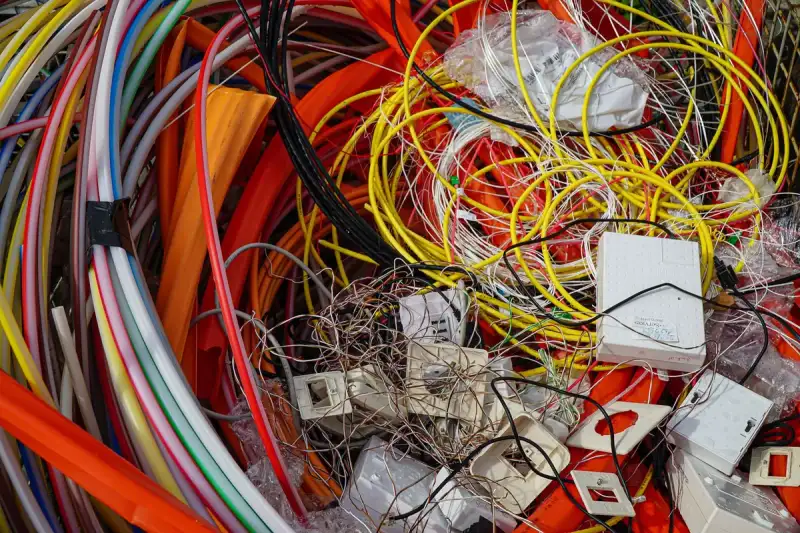
Embracing a New Era in Electronics Manufacturing The electronics industry has long been plagued by concerns over sustainability, with the production and disposal of electronic devices contributing significantly to global waste and pollution. However, a growing movement towards a circular economy is poised to revolutionize the way we manufacture and consume electronics. By adopting sustainable practices and closed-loop production systems, the industry can reduce waste, promote eco-friendly manufacturing processes, and create a more environmentally conscious future. Secure Design Principles for Sustainable Electronics To achieve a circular economy in electronics manufacturing, it is essential to adopt secure design principles that prioritize sustainability and recyclability. This can be achieved through the implementation of design for recyclability (DfR) and design for disassembly (DfD) principles. By designing products with recyclability and disassembly in mind, manufacturers can reduce waste and promote the reuse of materials. # Python script to calculate the recyclability of electronic components def calculate_recyclability(component): # Define the recyclability score for each component type recyclability_scores = { 'copper': 0.8, 'aluminum': 0.7, 'steel': 0.6, 'plastic': 0.4 } # Calculate the recyclability score for the component recyclability_score = recyclability_scores.get(component, 0) return recyclability_score# Example usage: component = 'copper' recyclability_score = calculate_recyclability(component) print(f'The recyclability score for {component} is {recyclability_score:.2f}')Implementing Closed-Loop Production Systems Closed-loop production systems involve the continuous recycling and reuse of materials, minimizing waste and the demand for virgin materials. By implementing closed-loop production systems, electronics manufacturers can reduce their environmental footprint and promote sustainability. # YAML configuration for a closed-loop production system closed_loop_production: materials: - copper - aluminum - steel - plastic recycling_rates: copper: 0.8 aluminum: 0.7 steel: 0.6 plastic: 0.4 production_capacity: 1000 recycling_capacity: 500The Role of Graphene in Sustainable Electronics Graphene, a highly conductive and flexible material, is poised to play a significant role in the development of sustainable electronics. By leveraging graphene's unique properties, manufacturers can create more efficient and environmentally friendly electronic devices.Moiré Physics in Twisted Monolayer/Bilayer WSe2 Recent research has highlighted the potential of moiré physics in twisted monolayer/bilayer WSe2 for the development of sustainable electronics. By exploiting the unique properties of moiré systems, researchers can create more efficient and environmentally friendly electronic devices. # Docker Compose file for a moiré physics simulation version: '3' services: simulation: build: . environment: - MATERIAL=twisted_monolayer_bilayer_WSe2 - MOIRE_PATTERN=hexagonal volumes: - ./simulation:/app ports: - "8080:8080"A Brighter Future for Electronics Manufacturing As the electronics industry continues to evolve, it is clear that sustainability will play an increasingly important role in shaping the future of manufacturing. By embracing a circular economy and adopting sustainable practices, manufacturers can reduce waste, promote eco-friendly manufacturing processes, and create a more environmentally conscious future.A New Era in Electronics Manufacturing The adoption of a circular economy in electronics manufacturing marks the beginning of a new era in sustainable production. As manufacturers continue to innovate and adopt eco-friendly practices, we can expect to see significant reductions in waste and pollution, as well as the creation of more environmentally conscious products. Hashtags #CircularEconomy #ElectronicsManufacturing #Sustainability #Graphene #MoiréPhysics #TwistedMonolayerBilayerWSe2 Related InsightsThe Silicon Sentinel: Architecting Predictive AI for Proactive Cyber Defense The Future is Illuminating: A Deep Dive into OLED Technology Beyond the Browser: How WebAssembly (Wasm) is Revolutionizing Server-Side and Edge Computing{ "@context": "https://schema.org", "@type": "FAQPage", "mainEntity": [ { "@type": "Question", "name": "What is the main focus of Sustainable Tech - Part 01: Circular Economy in Electronics Manufacturing?", "acceptedAnswer": { "@type": "Answer", "text": "Discover how the electronics industry can adopt sustainable practices through the implementation of a circular economy, reducing waste and promoting eco-friendly manufacturing processes." } }, { "@type": "Question", "name": "Who authored the comprehensive guide on Sustainable Tech - Part 01: Circular Economy in Electronics Manufacturing?", "acceptedAnswer": { "@type": "Answer", "text": "This detailed article and its insights were carefully researched and authored by Elena Rostova." } }, { "@type": "Question", "name": "Where can I find more related content about Technology?", "acceptedAnswer": { "@type": "Answer", "text": "You can explore more articles, detailed reviews, and similar insights by browsing the Related Insights section at the bottom of this article or visiting our dedicated Technology category page." } } ] }