Showing Posts From
Warehouse logistics
-
 Zeynep Kaya
 - 07 Aug, 2026 07:43
Swarm Intelligence in Warehouse Logistics: A New Era of Advanced Robotics
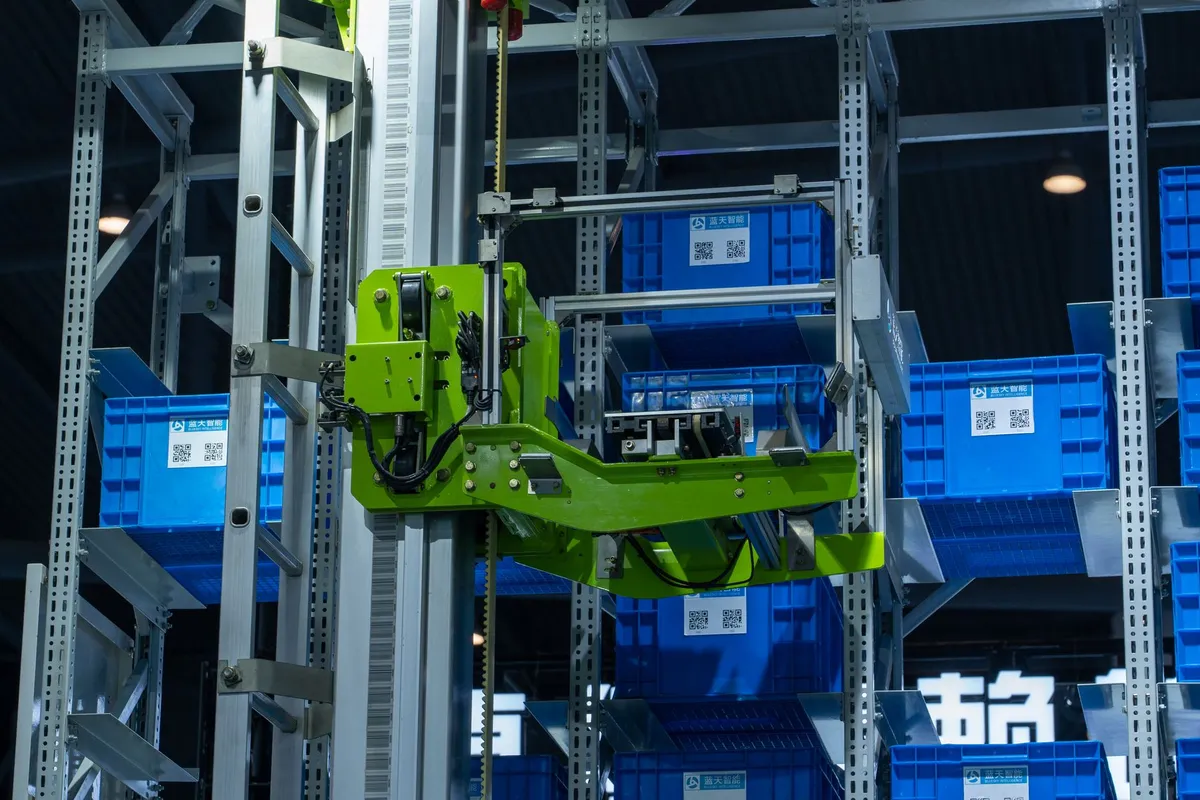
The Rise of Swarm Intelligence in Warehouse Logistics Swarm intelligence, a subfield of artificial intelligence, is inspired by the collective behavior of biological systems, such as flocks of birds, schools of fish, and colonies of insects. In the context of warehouse logistics, swarm intelligence enables robots to work together seamlessly, increasing efficiency and reducing costs. This article will explore the concept of swarm intelligence in warehouse logistics, its benefits, and the technical aspects of implementing such systems.Secure Design Principles for Swarm Intelligence Systems When designing swarm intelligence systems for warehouse logistics, several secure design principles must be considered:Decentralization: Swarm intelligence systems should be decentralized, allowing robots to make decisions independently and adapt to changing environments. Autonomy: Robots should be autonomous, able to navigate and interact with their environment without human intervention. Flexibility: Swarm intelligence systems should be flexible, allowing for the addition or removal of robots as needed. Scalability: Systems should be scalable, able to handle increasing volumes of data and robot interactions.import numpy as npclass Robot: def __init__(self, x, y): self.x = x self.y = y def move(self, dx, dy): self.x += dx self.y += dyclass Swarm: def __init__(self, robots): self.robots = robots def update(self): for robot in self.robots: # Update robot position based on swarm intelligence algorithm robot.move(np.random.uniform(-1, 1), np.random.uniform(-1, 1))# Create a swarm of 10 robots robots = [Robot(np.random.uniform(0, 10), np.random.uniform(0, 10)) for _ in range(10)] swarm = Swarm(robots)# Update the swarm swarm.update()Technical Aspects of Swarm Intelligence Systems Swarm intelligence systems rely on complex algorithms and data structures to manage robot interactions and decision-making. Some key technical aspects include:Communication protocols: Robots must be able to communicate with each other and the central system to exchange information and coordinate actions. Data structures: Efficient data structures, such as graphs and matrices, are necessary to represent robot interactions and environment data. Algorithms: Swarm intelligence algorithms, such as ant colony optimization and particle swarm optimization, are used to manage robot decision-making and interactions.# Example YAML configuration file for a swarm intelligence system robots: - id: 1 x: 0.0 y: 0.0 - id: 2 x: 1.0 y: 1.0 - id: 3 x: 2.0 y: 2.0communication: protocol: TCP/IP port: 8080environment: width: 10.0 height: 10.0Case Study: Implementing Swarm Intelligence in a Warehouse A large e-commerce company implemented a swarm intelligence system in their warehouse to improve efficiency and reduce costs. The system consisted of 20 robots that worked together to pick and pack orders. The robots used a decentralized algorithm to coordinate their actions and adapt to changing environment conditions. The results were impressive, with a 30% increase in efficiency and a 25% reduction in costs. The company was able to handle increased volumes of orders without adding more staff or equipment. Future Directions for Swarm Intelligence in Warehouse Logistics Swarm intelligence is a rapidly evolving field, and its applications in warehouse logistics are expected to grow in the coming years. Some future directions include:Integration with other technologies: Swarm intelligence systems will be integrated with other technologies, such as computer vision and machine learning, to improve their capabilities. Increased autonomy: Robots will become more autonomous, able to navigate and interact with their environment without human intervention. Improved scalability: Swarm intelligence systems will be designed to handle larger volumes of data and robot interactions, enabling them to be used in larger warehouses.Closing Thoughts: The Future of Warehouse Logistics Swarm intelligence is revolutionizing warehouse logistics by enabling robots to work together seamlessly, increasing efficiency and reducing costs. As the field continues to evolve, we can expect to see more widespread adoption of swarm intelligence systems in warehouses around the world.#AI #Robotics #WarehouseLogistics #SwarmIntelligence Related InsightsRevolutionizing Archival Systems: The Future of DNA Data Storage Merging Pixels and Physics: How Extended Reality Rewrites Industrial Prototyping AI Agents in Cybersecurity: The Silent Revolution of Automated Patch Management{ "@context": "https://schema.org", "@type": "FAQPage", "mainEntity": [ { "@type": "Question", "name": "What is the main focus of Swarm Intelligence in Warehouse Logistics: A New Era of Advanced Robotics?", "acceptedAnswer": { "@type": "Answer", "text": "Swarm intelligence is revolutionizing warehouse logistics by enabling robots to work together seamlessly, increasing efficiency and reducing costs." } }, { "@type": "Question", "name": "Who authored the comprehensive guide on Swarm Intelligence in Warehouse Logistics: A New Era of Advanced Robotics?", "acceptedAnswer": { "@type": "Answer", "text": "This detailed article and its insights were carefully researched and authored by Zeynep Kaya." } }, { "@type": "Question", "name": "Where can I find more related content about Technology?", "acceptedAnswer": { "@type": "Answer", "text": "You can explore more articles, detailed reviews, and similar insights by browsing the Related Insights section at the bottom of this article or visiting our dedicated Technology category page." } } ] }