Chasing the Endless Day: A Photographer’s Manual for Lofoten’s Midnight Sun
-
 Chloe Tremblay
 - 26 Sep, 2026 21:26
Awakening to the Arctic Glow
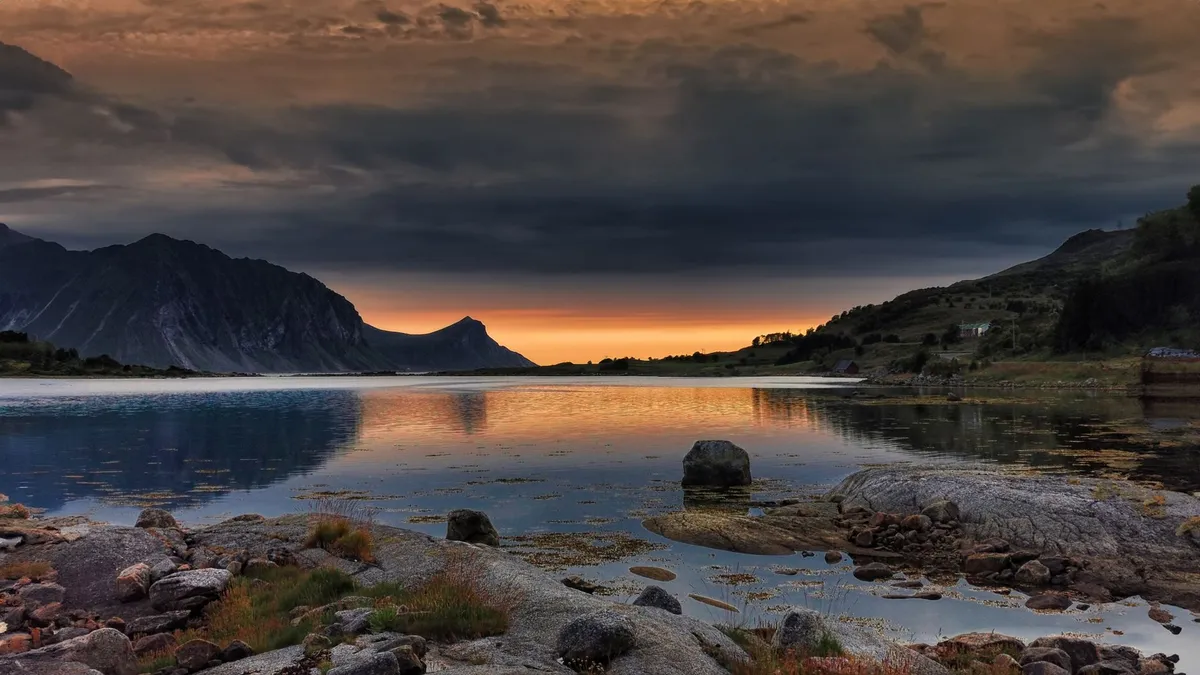
The Lofoten archipelago, perched above the Arctic Circle at roughly 68° N, offers a rare window from late May through mid‑July when the sun never fully sets. During this period the horizon glows with a soft, golden‑blue light that can last for 24 hours, turning every fjord, village, and mountain ridge into a natural studio. Planning an expedition begins with locking in the exact dates of the midnight sun for your target year; the Norwegian Meteorological Institute publishes precise sunrise‑sunset tables that show the sun’s lowest elevation barely dipping below 0° around 21 June.
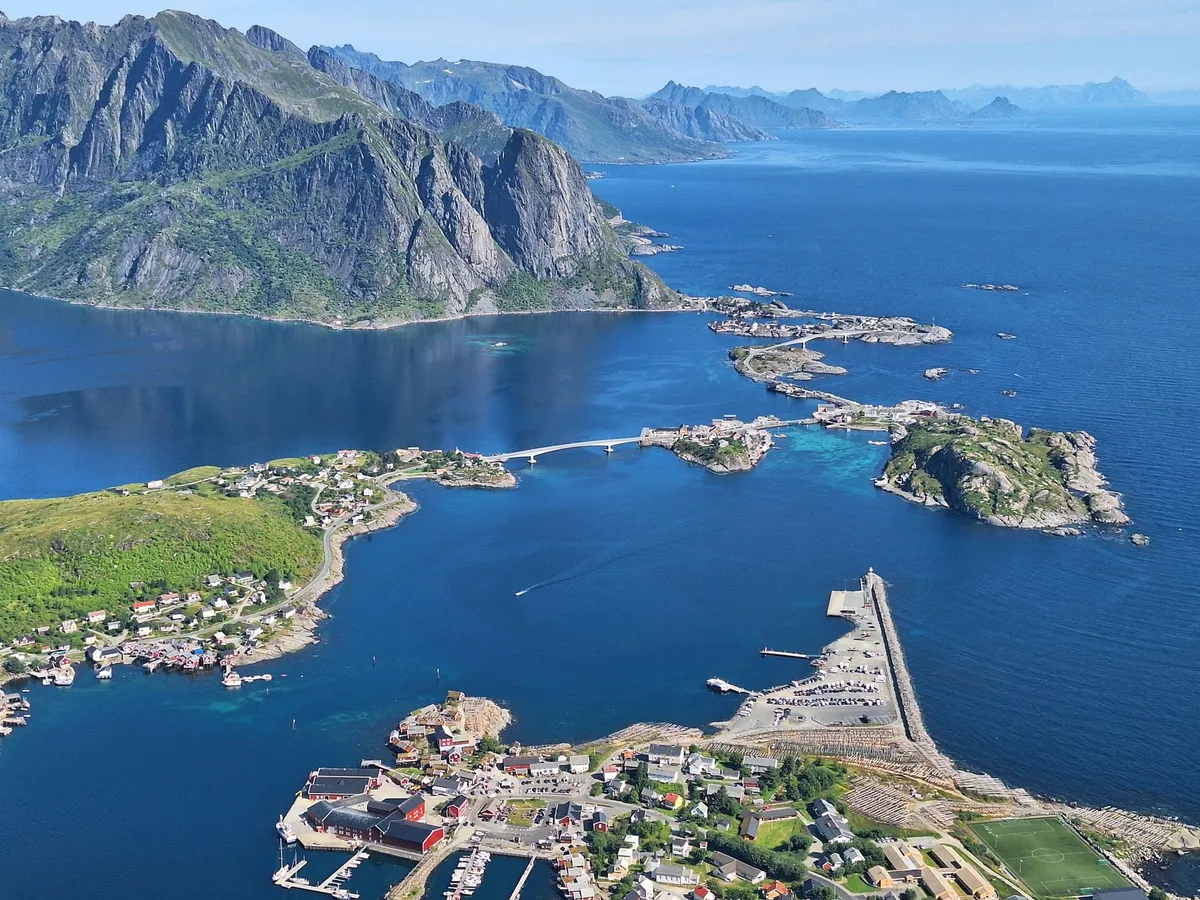
Travel logistics are straightforward but require early booking. Most photographers fly into Bodø (BOO) and catch the 3‑hour ferry to Moskenes, or they opt for the faster 30‑minute flight to Leknes (LKN) followed by a rental car. A compact 4×4 is advisable because many prime locations—such as the dramatic cliffs of Uttakleiv Beach or the remote hamlet of Å—are reached via narrow, winding roads that can become slick with sea spray. Accommodation ranges from traditional rorbuer (fishermen’s cabins) in Reine to modern boutique hotels in Svolvær; prices in July hover around 1,200 NOK per night for a double room, so budgeting 10,000–12,000 NOK for a five‑night stay is realistic.
Permits are another critical piece. Drone flights over the islands fall under the Norwegian Civil Aviation Authority (Luftfartstilsynet) regulations: any UAV over 250 g must be registered, and pilots need an A1/A3 certificate plus a specific “flight zone” approval for protected bird cliffs like those at Røst. The application can be submitted online and typically processes within five business days. Failure to secure permission can result in fines up to 15,000 NOK and confiscation of equipment.
Weather in the high north is notoriously fickle. Even in midsummer, temperatures swing between 8 °C and 15 °C, and sudden fog banks can roll in from the Vestfjorden, reducing visibility to a few metres. Checking the Norwegian Weather Service (yr.no) hourly forecasts and the “Mountain Weather” app for localized alerts becomes a daily ritual. A flexible itinerary that allows you to chase clear skies—perhaps moving from the western coast to the inner fjords—maximises shooting opportunities.
Finally, respect the fragile ecosystem. The Lofoten Islands host breeding colonies of puffins, sea eagles, and Arctic terns. Stick to marked paths, keep a minimum 50 m distance from nesting sites, and carry out all waste. The “Leave No Trace” principle is not just etiquette; it is enforced by local rangers who can issue on‑the‑spot penalties.
Gear That Survives the Polar Night
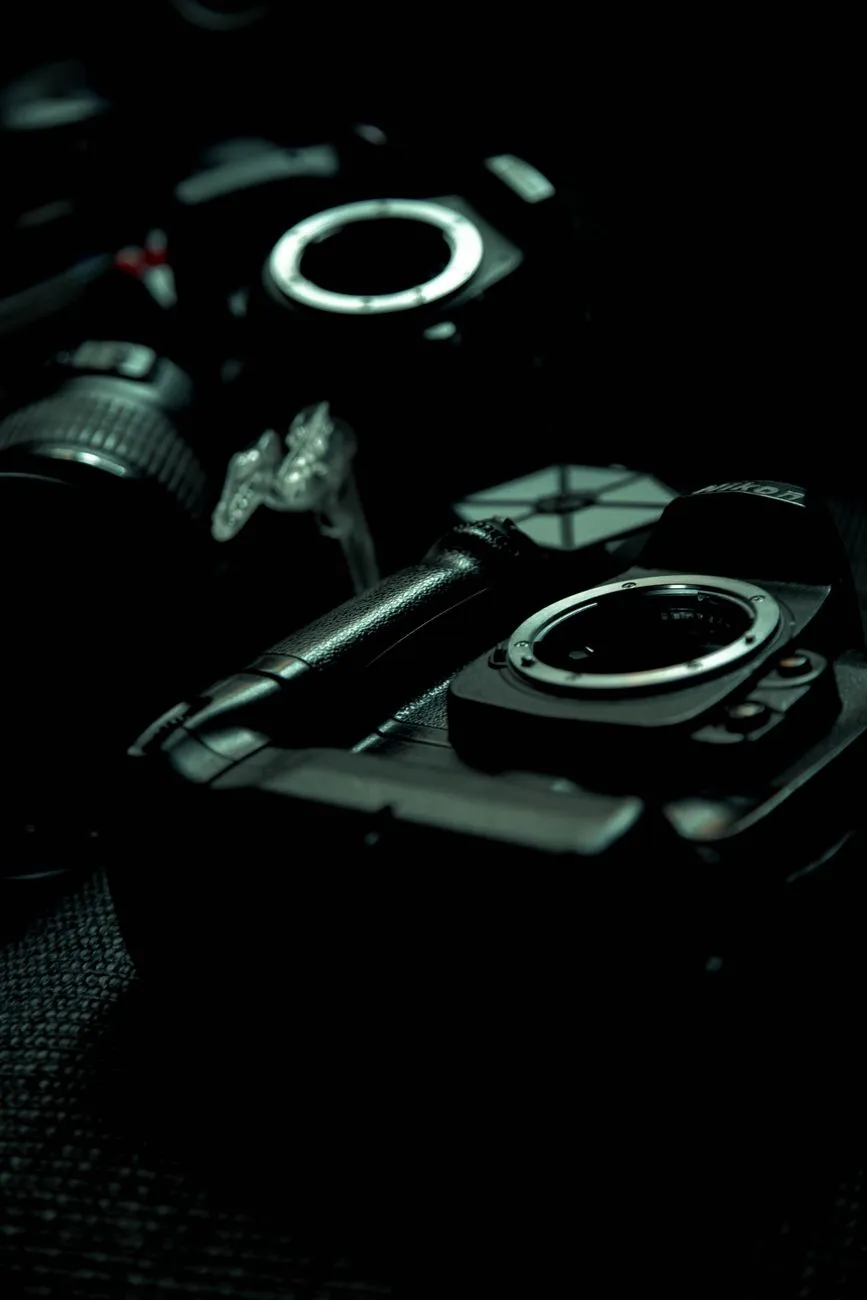
Choosing equipment that endures cold, damp, and wind is as important as mastering composition. A weather‑sealed full‑frame body—such as the Nikon Z9, Sony A1, or Canon EOS R3—offers high‑resolution files and reliable autofocus in low‑contrast light. Pair it with a versatile wide‑angle zoom (14‑24 mm f/2.8) for expansive fjord vistas and a fast prime (24 mm f/1.4) for intimate village scenes. A sturdy carbon‑fiber tripod (e.g., Gitzo GT3543LS) with a ball head that locks solidly prevents micro‑vibrations during long exposures of the never‑setting sun.
Battery performance drops roughly 30 % at 5 °C, so carry at least four spare LP‑E6NH or NP‑FZ100 cells, stored in an insulated pouch close to your body. A portable solar charger (30 W) can top up power banks during the endless daylight, but remember that the sun’s low angle reduces panel efficiency; a 20,000 mAh power bank is a safer backup.
Filters are indispensable. A 6‑stop circular ND (e.g., B+W 110) lets you stretch exposures to 30 seconds even at midday, smoothing the sea and rendering the sky with silky gradients. A graduated ND (GND) helps balance the bright horizon against darker foregrounds, especially when shooting from elevated viewpoints like the Reinebringen trail.
Protection against moisture is non‑negotiable. A rain‑cover for the camera (Think Tank Photo Hydrophobia) and a dry‑bag for lenses keep condensation at bay when moving between the chilly outdoors and heated interiors. Silica gel packets in each bag absorb residual humidity.
Below is a concise cost‑weight breakdown for a core kit tailored to a two‑week midnight‑sun expedition.
| Item | Weight (g) | Approx. Cost (USD) | Notes |
|---|---|---|---|
| Nikon Z9 body | 1,340 | 5,500 | 45 MP, 20 fps, weather‑sealed |
| NIKKOR Z 14‑24 mm f/2.8 S | 650 | 2,300 | Edge‑to‑edge sharpness |
| NIKKOR Z 24 mm f/1.4 S | 420 | 1,800 | Low‑light village work |
| Gitzo GT3543LS tripod | 1,850 | 950 | Carbon‑fiber, 3‑section |
| B+W 110 6‑stop ND | 85 | 180 | 77 mm thread |
| Lee GND 0.9 (100 mm) | 120 | 210 | Slide‑in holder |
| 4× LP‑E6NH batteries | 280 | 240 | Keep warm in inner pocket |
| 20,000 mAh power bank | 350 | 70 | USB‑C PD 30 W |
| Think Tank Hydrophobia cover | 210 | 130 | Full‑body rain protection |
| Total | 5,305 | 11,380 |
Investing in redundancy—duplicate batteries, a second tripod leg, and a spare ND—pays off when a sudden gust sends a leg into a tide pool.
Composition Secrets Under the Midnight Sun
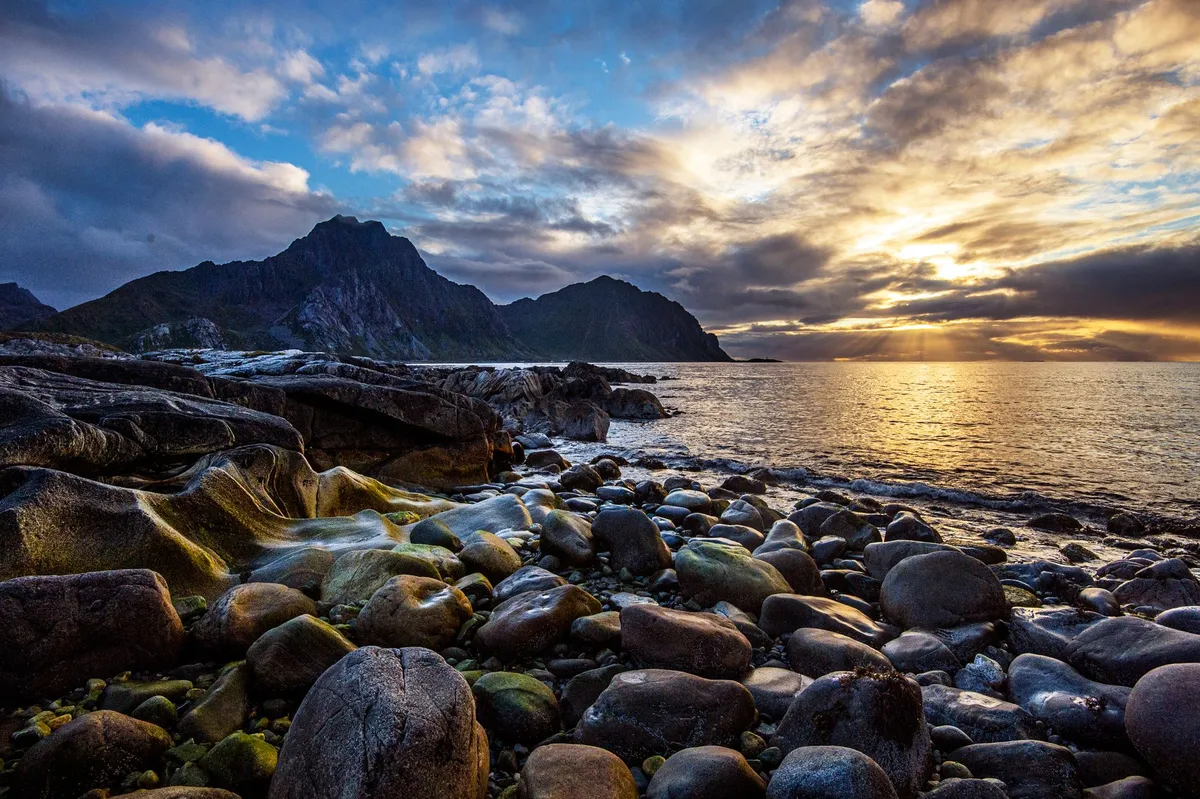
The perpetual daylight reshapes every compositional rule. With the sun circling the horizon, shadows stretch long and soft, offering a natural “golden hour” that never ends. Use this to your advantage by positioning foreground elements—weathered wooden racks, rusted fish‑drying frames, or the iconic red rorbuer—against the luminous sky. The rule of thirds still applies, but the horizon often sits higher (around the upper third) to showcase the expansive water and the subtle colour gradient from amber to teal.
Leading lines become more pronounced when the light is low. The wooden pier at Henningsvær, the serpentine road hugging the coastline, or the jagged ridge of the Lofoten Wall guide the eye toward the glowing horizon. A low tripod height (≈30 cm) exaggerates these lines and adds a sense of immersion.
Reflections are a hallmark of Lofoten’s glassy fjords. Early morning (around 02:00 local time) often yields the calmest water, turning mountains into perfect mirrors. To capture this, set the camera to a 2‑second timer, use a 10‑stop ND, and expose for 15‑20 seconds at f/11, ISO 64. The resulting image balances the bright sky with the dark foreground, preserving detail in both.
Human elements add scale and narrative. A lone kayaker paddling beneath the midnight sun, a fisherman hauling nets, or a hiker silhouetted on Reinebringen provide a story anchor. When including people, obtain verbal consent and respect privacy; many locals are accustomed to photographers but appreciate a friendly greeting in Norwegian (“Hei, kan jeg ta et bilde?”).
Panoramas stitch together the vastness that a single frame cannot contain. Shoot a 7‑frame horizontal panorama at 24 mm, overlapping 30 % each frame, then merge in Lightroom’s “Panorama” module with “Boundary Warp” set to 30 % to correct edge distortion. The final file can exceed 150 MP, ideal for large‑format prints.
Finally, experiment with intentional camera movement (ICM). A slow vertical pan (1/4 s) while the shutter remains open paints the sky into abstract streaks, turning the midnight sun into a brushstroke of colour. This technique works best on a sturdy tripod with a fluid head, and the resulting images convey the surreal, timeless quality of the Arctic summer.
Navigating Light and Weather on the Edge
Understanding the quality of light at each “hour” of the midnight sun is essential for scheduling shoots. The sun’s azimuth shifts roughly 15° per hour, meaning the direction of illumination rotates continuously. Use a smartphone app like PhotoPills to plot the sun’s path for your exact coordinates; it shows the elevation angle (often 5‑10° above the horizon) and the exact bearing for any given minute. This allows you to pre‑visualise which side of a mountain will be lit at 03:00 versus 15:00.
Cloud cover is the photographer’s wildcard. The Norwegian Climate Service reports that July averages 12 days of measurable precipitation in Lofoten, but cloud layers can be thin enough to act as a giant diffuser, softening