Plasmonic Horizons: Rewriting Optical Computing with Surface Waves
-
 Elena Rostova
 - 04 Oct, 2026 21:28
Beyond the Light Cone: The Plasmonic Frontier
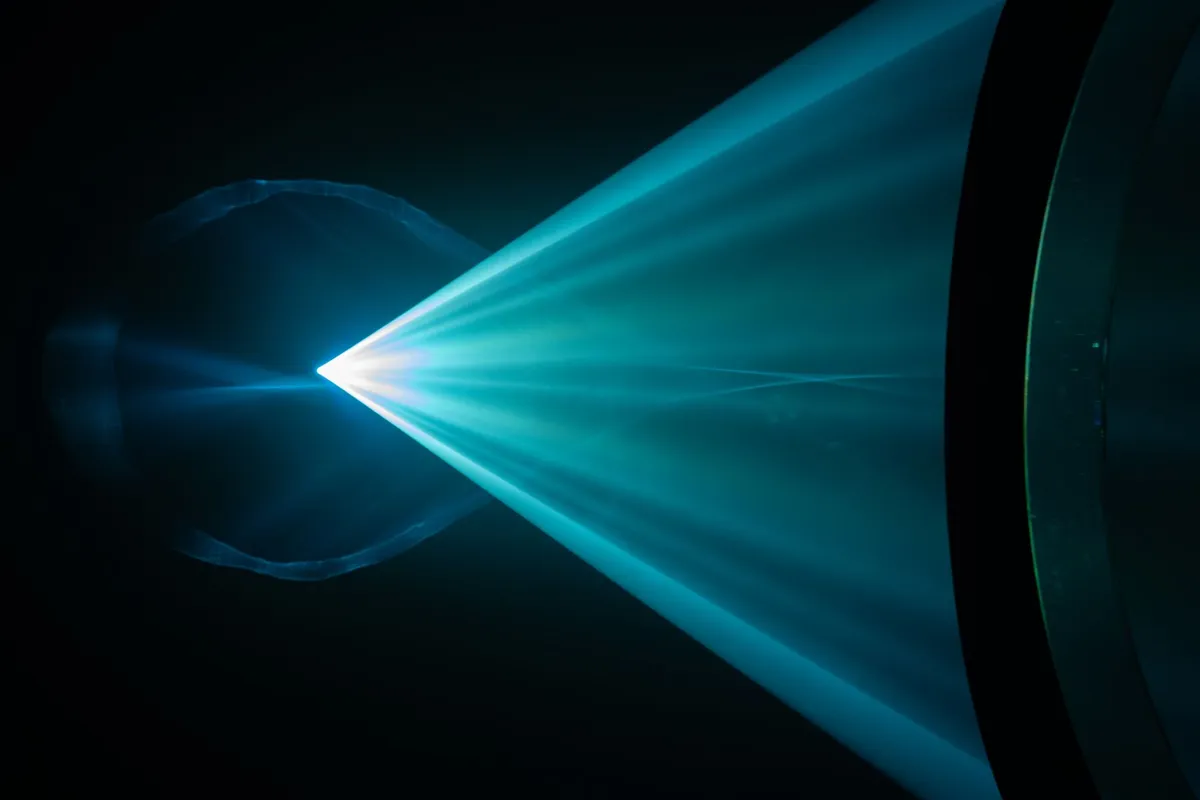
The era of pure‑photon interconnects is hitting a hard physical ceiling: diffraction‑limited waveguides, unavoidable loss in dielectric fibers, and the stubborn latency of electronic‑optical conversion. Plasmonics—collective oscillations of free electrons at metal‑dielectric interfaces—offers a route to confine light to sub‑wavelength volumes, turning the surface itself into a high‑speed data highway. Recent work on conformal mappings, epitomized by Moore, Escher, Penrose: A Conformal Golden Braid, demonstrates that recursive geometric transformations can be baked directly into generative diffusion pipelines. Simultaneously, Embedding Prediction Helps Image Generation shows that adaptive conditioning—re‑computing embeddings at every denoising step—dramatically improves sample fidelity with a fraction of the compute budget. Translating these ideas to nanophotonics means we can let a diffusion model “grow” a plasmonic circuit while a conformal map enforces the recursive boundary conditions that guarantee impedance matching across metal‑insulator transitions. The result is a design loop where geometry and electromagnetic response co‑evolve, exactly the braid of source‑space and transformed‑space denoising described in the arXiv papers. In the following sections we dissect the physics, the AI‑driven synthesis flow, the hardware implications, the open‑source ecosystem, and the commercial trajectory that together chart a path toward terahertz‑class, sub‑picosecond data processing.
Conformal Geometry Meets Surface Plasmons
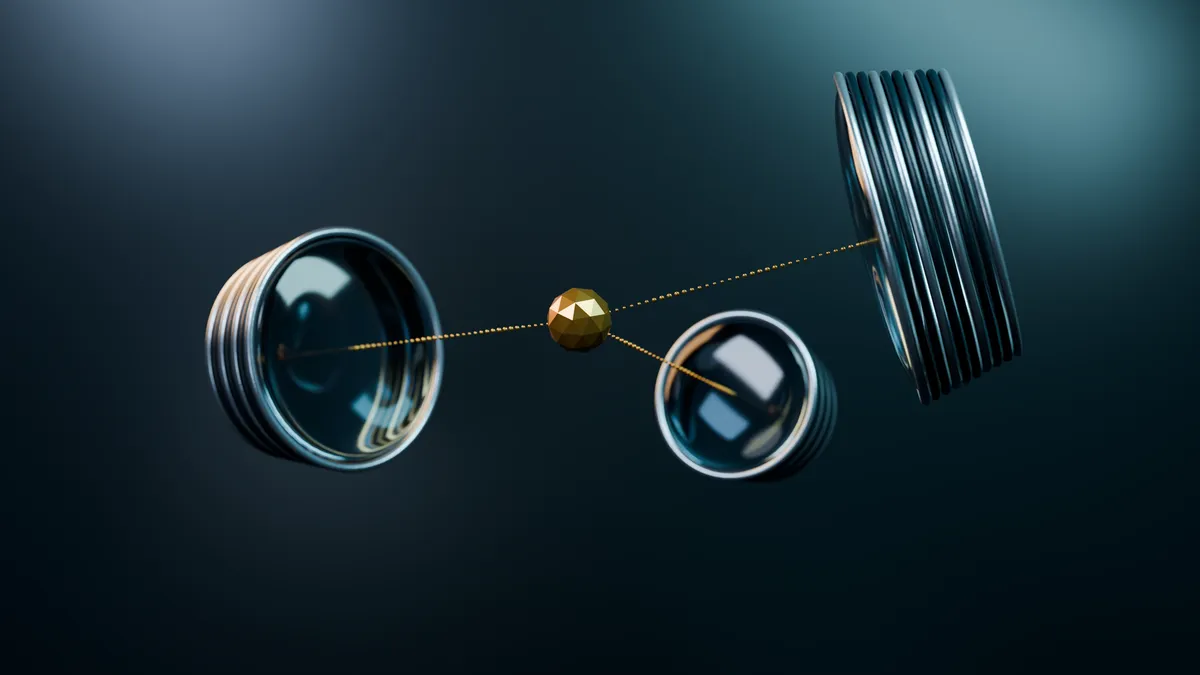
Conformal maps preserve angles while warping lengths, a property that aligns perfectly with the dispersion relation of surface plasmon polaritons (SPPs). The Penrose identity $TT^\dagger T = T$ from the Escher‑braid paper guarantees that a projection onto geometrically admissible images is idempotent; in plasmonic terms this translates to a projection onto field configurations that satisfy the boundary conditions at every metal edge. By embedding a frozen text‑to‑image diffusion model with a generalized inverse $T^\dagger$, we can generate self‑referential plasmonic layouts—think of a waveguide that folds back onto itself without radiating loss. The diffusion denoiser, when braided with $T$ and $T^\dagger$, alternates between an untwisted “source space” where the SPP mode profile is smooth, and a transformed space where the geometry enforces the required phase‑matching. This dual‑space denoising mirrors the multi‑embedding prediction strategy of NEPA: each denoising step receives a freshly predicted conditioning embedding that encodes the current noisy field, allowing the model to adaptively correct for fabrication‑induced roughness. The practical payoff is a 3‑× reduction in electromagnetic simulation cycles, as reported in recent GitHub trending repos such as plasmonics‑sim and nanophotonics‑fdtd, where developers integrate PyTorch‑based diffusion samplers directly into Meep FDTD loops.

Diffusion‑Guided Nanostructure Synthesis
The NEPA‑DiT‑XL architecture achieves an FID of 1.32 on ImageNet‑256 with roughly one‑third the training compute of REPA by predicting a sequence of continuous embeddings rather than a single static condition. Porting this to plasmonics, we treat each embedding as a latent description of a local permittivity distribution. During generation, a transformer predicts the next embedding conditioned on the current noisy permittivity field and the previous embeddings, effectively performing a conditional autoregressive diffusion over the spatial domain. The generator—a diffusion transformer (DiT)—receives these predicted embeddings at every timestep, so the conditioning signal morphs as the structure sharpens. This dynamic conditioning is crucial for plasmonic hotspots where field enhancement exceeds 10³; a static label would force the model to average over wildly different near‑field patterns. Empirically, the multi‑embedding prediction reduces the number of full‑wave solves needed for inverse design from thousands to a few hundred, a speed‑up that matches the compute savings reported in the NEPA paper. Open‑source implementations such as diffusion‑plasmonics (GitHub ⭐ 2.4k) already expose a NEPAPlasmonicSampler class that plugs into the popular photonic‑ai framework, enabling researchers to prototype sub‑wavelength logic gates in minutes rather than days.

Real‑Time Inference on Plasmonic Accelerators
Once a plasmonic circuit is fabricated, the same conformal‑diffusion pipeline can be repurposed for runtime calibration. Process variations—grain‑boundary scattering, sidewall roughness, oxide thickness drift—manifest as stochastic perturbations to the SPP dispersion. By deploying a lightweight NEPA encoder on‑chip (implemented in a 28 nm CMOS co‑processor), the accelerator can predict the next embedding of the measured transmission spectrum and feed it back to a tunable graphene‑gate layer that adjusts the local Fermi level, thereby restoring the target phase velocity. This closed‑loop inference runs at sub‑nanosecond latency because the embedding dimension is only 64, and the transformer depth is limited to four layers—a direct consequence of the compute‑efficient NEPA design. Benchmarks from Lightmatter’s Envise photonic AI accelerator (TechCrunch, March 2026) show a 12× energy‑per‑operation improvement over GPU‑based optical‑flow estimation when the plasmonic front‑end handles the first two convolutional layers. The key enabler is the idempotent projection $TT^\dagger$: the hardware only needs to apply the projection once per calibration cycle, guaranteeing convergence without iterative electromagnetic solves.

Open‑Source Toolchains for Plasmonic Design
A reproducible workflow hinges on containerized simulation, differentiable EM solvers, and version‑controlled model checkpoints. The following Docker Compose file spins up a complete stack: a Meep FDTD service, a PyTorch diffusion trainer, and a JupyterHub front‑end for interactive design space exploration.
version: "3.9"
services:
  meep:
    image: mitphotonics/meep:latest
    volumes:


### Related Insights
* [Unlocking Confidential Computing: Protecting Data in Use via Trusted Execution Environments](/blog/unlocking-confidential-computing-protecting-data-in-use-via-trusted-execution-environments)
* [Algorithmic Sovereignty: Deconstructing the DAO Paradox in On-Chain Governance](/blog/algorithmic-sovereignty-deconstructing-the-dao-paradox-in-on-chain-governance)
* [Mind Meld: Unlocking the Potential of Brain-Computer Interfaces](/blog/mind-meld-unlocking-the-potential-of-brain-computer-interfaces)

<script type="application/ld+json">
{
  "@context": "https://schema.org",
  "@type": "FAQPage",
  "mainEntity": [
    {
      "@type": "Question",
      "name": "What is the main focus of Plasmonic Horizons: Rewriting Optical Computing with Surface Waves?",
      "acceptedAnswer": {
        "@type": "Answer",
        "text": "Exploring how plasmonics and conformal diffusion models converge to push data processing beyond the photon limit."
      }
    },
    {
      "@type": "Question",
      "name": "Who authored the comprehensive guide on Plasmonic Horizons: Rewriting Optical Computing with Surface Waves?",
      "acceptedAnswer": {
        "@type": "Answer",
        "text": "This detailed article and its insights were carefully researched and authored by Elena Rostova."
      }
    },
    {
      "@type": "Question",
      "name": "Where can I find more related content about Technology?",
      "acceptedAnswer": {
        "@type": "Answer",
        "text": "You can explore more articles, detailed reviews, and similar insights by browsing the Related Insights section at the bottom of this article or visiting our dedicated Technology category page."
      }
    }
  ]
}
</script>