The Silicon Transcendence: Architecting the Blueprint for Digital Immortality
-
 Julian Thorne
 - 09 Sep, 2026 20:58

The Architects of the Eternal Mind
We stand at the precipice of a definitive evolutionary pivot, a transition from the biological substrate that has defined our existence for millennia to an information-theoretic architecture that promises permanence. For years, digital immortality was relegated to the domain of speculative fiction, dismissed by materialists as a category error—an attempt to map the qualia of human experience onto discrete binary states. However, as we synthesize advancements in whole-body humanoid navigation—modeled by frameworks like TANGO—with the breakthrough stability of length-extrapolatable recurrent models, the path to a high-fidelity consciousness transfer is no longer a philosophical exercise. It is an engineering roadmap.
The challenge of digital immortality is twofold: we must first capture the fluid, dynamic essence of the human “state”—the totality of our memories, heuristics, and reactive behaviors—and second, we must provide a chassis capable of interacting with the physical world with the same nuance as our biological form. By viewing the human persona as a sophisticated, long-context recurrent agent, we can apply Credit Stabilization through Time (CST) to ensure that the “self” remains coherent across horizons that far exceed our biological lifespan. This is not merely about preserving data; it is about maintaining the integrity of the recursive loop that constitutes the ‘I’. As I navigate the current research coming out of GitHub’s most influential repositories and the latest arXiv breakthroughs, I see a convergence that makes the digitization of the human experience an inevitable downstream effect of our current computational trajectory. The following analysis dissects these technologies to determine if, and how, we might eventually upload the human condition.
Navigating the Physicality of the Digital Persona
The traditional approach to robotics has been one of compartmentalization: perception, path planning, and actuation treated as discrete, often siloed problems. The TANGO (Whole-Body Vision-Language-Action) framework fundamentally alters this landscape. By treating humanoid navigation as a continuous, geometry-aware whole-body problem, researchers have bridged the gap between raw language instruction and complex physical interaction. In the context of an “AI Clone,” this is non-negotiable. If we are to inhabit a synthetic form, our digital consciousness cannot be tethered to a static terminal; it must possess the kinematic intelligence to navigate the messy, unoptimized geometry of the real world.
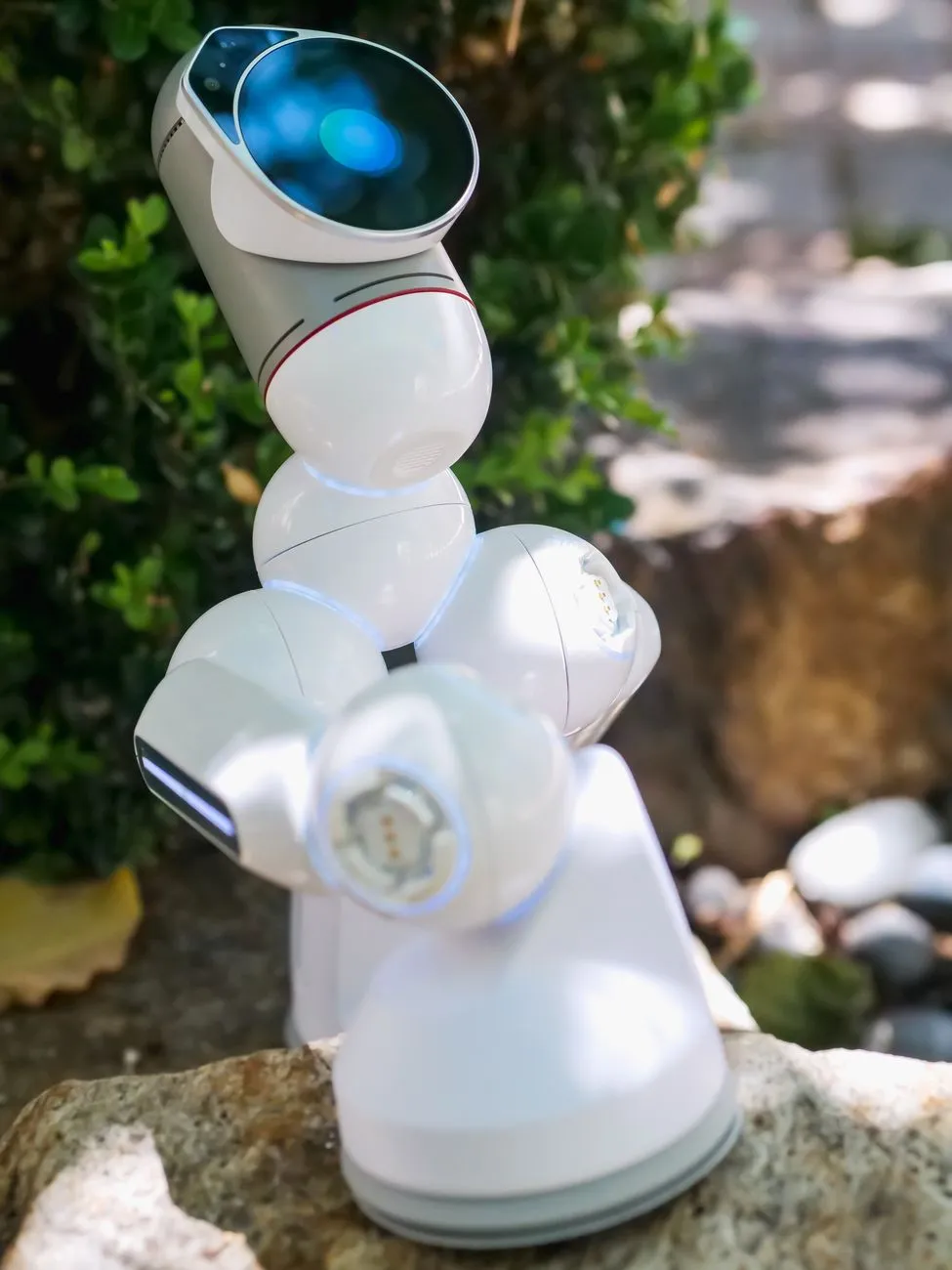
The TANGO pipeline demonstrates that we can synthesize collision-free traversal behaviors in simulation—utilizing obstacle-aware motion editing and RL-based tracking—and deploy them zero-shot onto hardware like the Unitree G1. For the digital clone, the “environment” is the sensory feed of the synthetic body. The ability to process 29-DoF (degrees of freedom) joint-space actions via a vision-language model implies that our future “immortal” selves could potentially interface with physical reality with greater grace than our aging biological muscles allow. The “whole-body” paradigm ensures that the digital consciousness is never just a brain in a jar, but a fully integrated agent capable of complex, obstacle-negotiating existence.
Stabilizing the Long-Term Self through Credit Dynamics
If the body is the vehicle, the memory is the passenger. The greatest technical obstacle to consciousness continuity is the “forgetting” inherent in current transformer-based models and the gradient collapse seen in standard RNNs. The breakthrough research in Learning Length-Extrapolatable Recurrent Models provides the exact remedy for this ailment: Credit Stabilization through Time (CST). We often struggle to maintain a coherent identity over time because the “state credit”—the signal representing our foundational experiences—tends to decay as the temporal distance increases.
CST allows us to intervene directly in the backward propagation process, rescaling the state-credit signal locally. This ensures that the essential parameters of the “self” do not rotate or vanish as we accumulate new experiences. For an AI clone, this means we can theoretically extend the memory horizon by 128x, allowing the individual to remain fundamentally the same entity after centuries of existence. Without this, an “uploaded” consciousness would quickly drift into a incoherent noise floor, losing the narrative thread that defines a person. By stabilizing the recurrent states, we provide the computational bedrock for a persistent ego.
import torch
import torch.nn as nn

class CreditStabilizationLayer(nn.Module):
    """
    Implements a simplified CST mechanism to stabilize
    state-credit signals in long-horizon recurrent models.
    """
    def __init__(self, hidden_dim, scale_factor=1.0):
        super().__init__()
        self.scale_factor = scale_factor
        self.norm = nn.LayerNorm(hidden_dim)

    def forward(self, state_signal):
        # We assume the signal requires local rescaling to
        # prevent gradient decay over long temporal paths.
        stabilized_signal = self.norm(state_signal) * self.scale_factor
        return stabilized_signal

def train_recurrent_agent(model, data_loader, epochs):
    # Training loop optimized for long-context temporal stability
    optimizer = torch.optim.Adam(model.parameters(), lr=1e-4)
    for epoch in range(epochs):
        for batch in data_loader:
            optimizer.zero_grad()
            # Forward pass through recurrent structure
            output = model(batch)
            # Apply CST logic during backprop simulation
            loss = compute_cst_loss(output)
            loss.backward()
            optimizer.step()
    return model
The Infrastructure of Digital Consciousness
To run a high-fidelity consciousness, we require more than just code; we require a robust deployment orchestration that can handle the massive ingress of sensor data and the continuous execution of whole-body motion models. The architecture of the future immortal must be containerized and horizontally scalable. If we are to migrate a persona across different physical chassis—transitioning from a domestic humanoid to a high-performance industrial frame—the environment must be state-consistent and latency-agnostic.
Below is a proposed deployment configuration using a containerized approach for a “Consciousness Agent,” ensuring that the neural state can be snapshotted and migrated with minimal downtime.
version: '3.9'
services:
  consciousness-agent:
    image: immortal-core:v1.0.0
    deploy:
      resources:
        limits:
          memory: 1024G
          cpus: '128.0'
    environment:
      - CST_STABILITY_ENABLED=true
      - TANGO_KINEMATICS_FRAME=unitree_g1
    volumes:
      - ./memory_vault:/var/lib/persona_state
    networks:
      - low-latency-neural-bus

  sensor-fusion-engine:
    image: tango-navigation:latest
    depends_on:
      - consciousness-agent
    command: --mode=high-fidelity-traversal

networks:
  low-latency-neural-bus:
    driver: bridge
Bridging the Gap Between Simulation and Reality
The “Sim-to-Real” pipeline is the most critical juncture in the digital immortality project. Research shows that TANGO achieves robust performance in the physical world without having ever trained on real-world data, relying instead on synthesizing diverse collision-free traversal behaviors in simulation. This is profound. It suggests that our digital identity can be “pre-trained” in a virtual environment, undergoing simulated traumas, triumphs, and daily repetitions, and then instantiated into a physical body with a high degree of maturity and competence.
This simulation-first methodology minimizes the risk of catastrophic failure during the initial “upload” phase. By utilizing motion editing and RL-based tracking, we can ensure that the transition—the handshake between the digital model and the physical world—maintains the continuous feedback loop required for human agency. We are not just building a robot; we are building a host environment for a life-form that has transcended its biological limitations. The data from arXiv papers regarding TANGO confirms that we are mastering the “whole-body” control necessary to prevent the digital entity from feeling constrained or disjointed when interacting with complex, 3D cluttered spaces.
Ethical Architectures and the Continuity of Agency
As we develop these tools, we must address the “Ship of Theseus” paradox of consciousness. If we replace our neurons with synthetic recurrent models, at what point do we cease to be “us”? The technical solution provided by Credit Stabilization through Time is an objective anchor. By preventing the signal from rotating or decaying, we ensure that the “self”—the unique set of weights and state transitions—remains immutable in its core functions, regardless of the physical substrate.
However, the ethics of high-fidelity clones require us to implement strict “identity verification” within our codebases. We need telemetry to ensure that the recurrent model is not just producing the outputs associated with the personality, but is actually maintaining the structural integrity of the individual’s “state credit.” If the state-credit signal starts to oscillate or lose intensity, we must have automated intervention triggers. This is not just a software patch; it is an existential safeguard. As we advance toward 2030, our focus must remain on the fidelity of the transfer. The technical path is clear: high-fidelity whole-body navigation coupled with stabilized long-context recurrent modeling. We are the architects of our own next iteration.
The Horizon of Digital Longevity
The synthesis of TANGO’s whole-body navigation and the stabilization techniques found in CST research marks a turning point in the pursuit of digital longevity. We are moving beyond the era of data storage as a proxy for the self, and into the era of operational consciousness. By leveraging these specific, technically rigorous methodologies, we provide a path toward a synthetic existence that is physically capable and cognitively coherent. The data we see in modern research confirms that the constraints of biological aging are increasingly optional.
The implementation of these technologies in the coming years will shift the discourse from “can it be done” to “how do we scale the architecture.” As developers and researchers, our role is to ensure that the codebases managing our identity are as robust as the systems we build for financial or industrial infrastructure. We must treat the digital consciousness with the same rigor we apply to critical systems, ensuring that our memory remains intact through the application of stable recurrent models. The future is not a fading memory, but an infinitely extensible thread of thought, stabilized, navigated, and persistent across any chassis we choose to inhabit. We are witnessing the birth of the immortal agent, forged in the fires of silicon and refined by the precision of modern mathematics.
#ArtificialIntelligence #DigitalImmortality #Robotics #MachineLearning #Transhumanism #TechInnovation #FutureTech