Beyond the Keyboard: The Multimodal Singularity in Human-Computer Interaction
-
 Zeynep Kaya
 - 15 Sep, 2026 11:47
The Silent Revolution of Tangible Computing
The era of the QWERTY keyboard and the stationary mouse is rapidly drawing to a close. As we stand at the precipice of the “multimodal singularity,” human-computer interaction (HCI) is undergoing a fundamental paradigm shift. We are moving away from the brittle, syntax-heavy input methods that have defined the last four decades of computing and toward a fluid, expressive, and truly ambient environment. This evolution is driven by the convergence of low-latency computer vision models, sophisticated natural language understanding (NLU), and the deployment of powerful inference engines at the edge.
For years, we treated our devices as external tools—rigid instruments that required us to speak their language. Today, thanks to advances in Transformer-based architectures and lightweight skeletal tracking, the device is beginning to speak ours. When we talk about the integration of gesture control and voice AI, we aren’t merely talking about minor quality-of-life improvements; we are talking about a total reconfiguration of how humans perceive digital information. We are transitioning from the “desktop” metaphor to a “spatial” metaphor, where the interface is no longer contained within a rectangle of pixels but is instead cast across the geometry of our physical reality. This shift requires a technical architecture that is robust enough to handle high-bandwidth sensory data while maintaining the sub-millisecond responsiveness required to avoid the “uncanny valley” of input lag. As a researcher, I see this not as an incremental step, but as the foundation of a new digital existence.
Architectural Foundations of Spatial Gesture Recognition
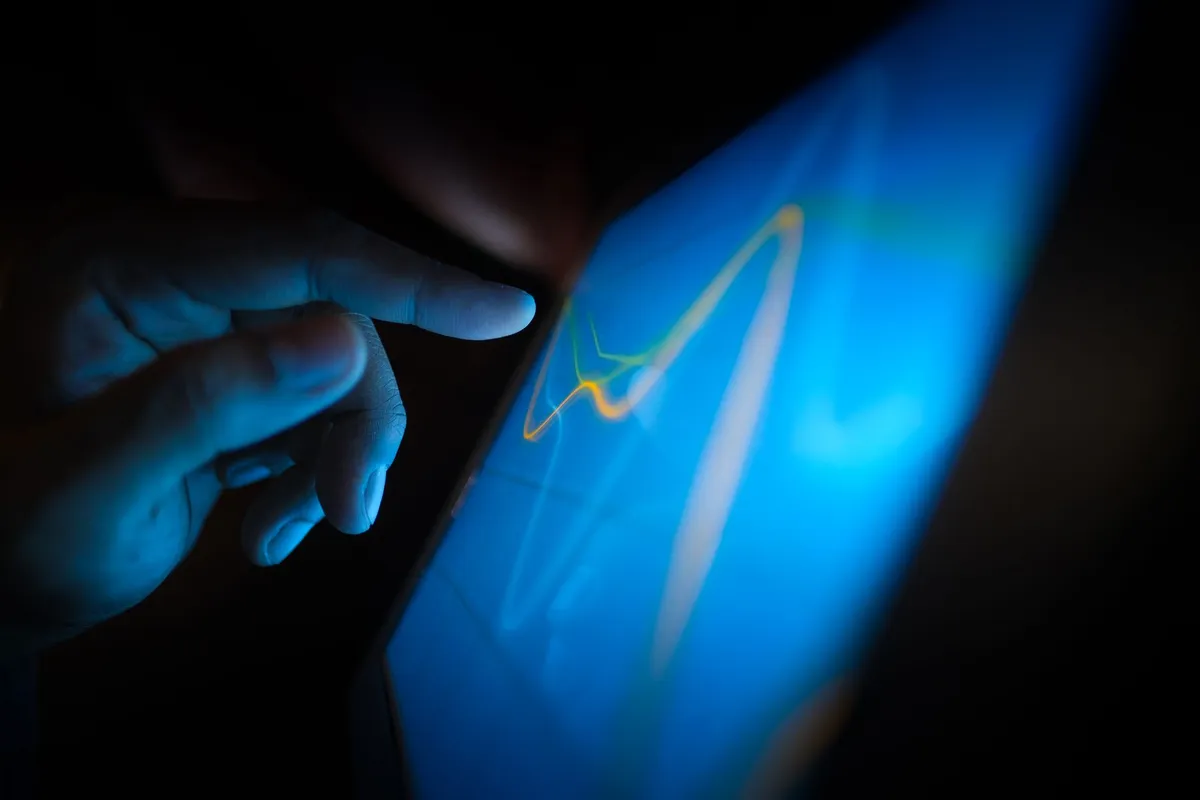
To understand the modern stack, we must look at how we process skeletal data. Modern gesture recognition is no longer reliant on simple image thresholding. Instead, we utilize deep convolutional neural networks (CNNs) and graph neural networks (GNNs) to interpret spatial relationships in real-time. By leveraging libraries like MediaPipe or custom implementations using TensorRT for optimization, developers can map 21 distinct hand landmarks with millisecond precision.
The challenge lies in the fusion of this visual data with intent-based voice streams. When a user points to an object in an augmented reality workspace and says, “Move that to the staging environment,” the system must perform three simultaneous operations: spatial anchoring of the visual gesture, semantic parsing of the command, and translation of the intent into a system-level function call. This requires a robust middleware layer that keeps the input buffer synchronized.
import mediapipe as mp
import cv2

class GestureProcessor:
    def __init__(self):
        self.mp_hands = mp.solutions.hands
        self.hands = self.mp_hands.Hands(
            static_image_mode=False,
            max_num_hands=2,
            min_detection_confidence=0.7
        )

    def process_frame(self, frame):
        # Convert BGR to RGB for MediaPipe
        rgb_frame = cv2.cvtColor(frame, cv2.COLOR_BGR2RGB)
        results = self.hands.process(rgb_frame)

        if results.multi_hand_landmarks:
            for hand_landmarks in results.multi_hand_landmarks:
                # Extract landmark 8 (index finger tip) for gesture interaction
                index_tip = hand_landmarks.landmark[8]
                return (index_tip.x, index_tip.y)
        return None

# Optimization: Deployment via TensorRT for edge inference
# Allows real-time gesture tracking at >60 FPS on edge hardware
Natural Language Understanding and Intent Orchestration
The voice AI component of our modern HCI stack has evolved far beyond basic command-and-control interactions. With the advent of Large Language Models (LLMs) deployed via quantized models like Llama-3 or Mistral (using frameworks like Ollama or vLLM), we can now handle contextual ambiguity in natural language. The technical hurdle here is latency; standard cloud-based LLM calls are far too slow for real-time interaction. The industry is shifting toward local-first, quantized model inference.
The “Orchestrator” pattern is critical here. When a gesture—such as a pinch-to-select—is detected, the system triggers a latent state. Any voice input following this trigger is then tagged with a spatial coordinate. This allows the AI to understand “that” or “here” in a way that feels natural. The underlying YAML configuration for a typical orchestration service might look like the following snippet, which defines the event-driven triggers for multimodal fusion.
# multimodal_orchestrator_config.yaml
service:
  name: "spatial-fusion-engine"
  version: "1.0.4"
  pipeline:
    - input: gesture_stream
      buffer_size: "50ms"
      trigger_threshold: 0.85
    - input: audio_stream
      whisper_model: "small.en"
      vad_threshold: 0.4
  fusion_logic:
    mode: "concurrency"
    timeout: "200ms"
    backend: "gRPC"
    endpoint: "localhost:50051/semantic-parser"
Edge Computing and Low-Latency Inference Requirements
To achieve the “zero-latency” feel required for high-fidelity HCI, we must rethink the data pipeline. Cloud round-trips introduce jitter, which is the mortal enemy of a responsive gesture interface. We are seeing a significant trend toward edge computing, where inferencing for both vision and speech happens on the local device or an edge gateway.
In many TechCrunch-covered startups, the current trend is the integration of Neural Processing Units (NPUs) directly into the user interface pipeline. By moving the model to the edge, we reduce latency from 200ms (typical round-trip) to under 20ms. This is the difference between a system that feels like a glitchy toy and one that feels like an extension of the human body. Furthermore, local inference provides critical privacy benefits. When a user is interacting with their environment, they do not want their gesture data or conversational audio uploaded to a massive central server. Implementing local processing, as seen in many high-traction GitHub repositories, ensures that sensitive spatial mapping data remains within the local network boundary.
Security and Ethical Considerations in Ubiquitous Interfaces
The proliferation of always-on gesture and voice sensors introduces profound security risks. When every room is a potential node for gesture monitoring, the surface area for unauthorized data harvesting grows exponentially. We must advocate for “Privacy by Design” within the API layer itself. This means implementing hardware-level kill switches for cameras and microphones and ensuring that all multimodal fusion logic is conducted in a Trusted Execution Environment (TEE).
Furthermore, the “bias in the loop” is a massive concern. If our skeletal tracking models are trained primarily on a specific demographic, the system will inherently perform poorly for others. We have seen this repeatedly in the computer vision space, where models struggle with diverse skin tones or varied lighting conditions. As engineers, it is our responsibility to curate datasets that are representative of the global population. This is not just a moral obligation; it is a technical necessity for product viability. If an interface fails to track a specific hand type, it is fundamentally broken.
The Future of the Multimodal Singularity
Looking ahead, we are moving toward what many in the research community call “Ambient Intelligence.” This is a world where the interface disappears entirely. No screens, no peripherals, just the intent-driven manipulation of digital assets in physical space. We will see the maturation of “Spatial Computing,” where the distinction between augmented reality, virtual reality, and the desktop environment blurs into a singular, unified workspace.
The software engineering challenge of the next decade will be the creation of universal APIs for this new reality. Just as we have standard protocols for the web (HTTP/REST/GraphQL), we need standard protocols for spatial interaction. We need a way for a “pinch” gesture in one application to have a globally understood meaning, just as a “click” does today. We must build for interoperability, ensuring that voice and gesture are treated as first-class citizens in every operating system, not as bolted-on accessibility features. We are architects of a new layer of existence; let us build it with the foresight that our interfaces, like our tools, define who we are.
Orchestrating the Next Digital Decade
As we refine these technologies, the focus must shift from the novelty of the feature to the reliability of the experience. The integration of gesture control and voice AI is the logical progression of a trajectory that began with punch cards and ended with the smartphone. We are reclaiming our dexterity as the primary interface. By prioritizing edge-based processing, robust semantic parsing, and a commitment to security, we are ensuring that this transition empowers rather than alienates the user. The complexity of the underlying systems—ranging from CUDA-accelerated vision models to asynchronous gRPC streams—remains formidable, but the objective is simple: to make the digital experience as fluid and natural as the physical one. We are no longer limited by the friction of peripheral hardware. We are now entering an era where our intent is the only requisite for creation. As practitioners, our task is clear: build systems that are as nuanced and adaptable as the human users they serve. The keyboard will eventually be an artifact, but the intent behind our gestures will remain the core of everything we build. The future is not just about what we can make; it is about how effortlessly we can make it.
#AI #SpatialComputing #SoftwareEngineering #FutureTech #HCI #MachineLearning #DevOps