Showing Posts From
Photography
-
 John Doe
 - 18 Jun, 2026 10:00
The Evolution and Impact of the Smartphone Camera: How a Pocket Device Revolutionized Photography
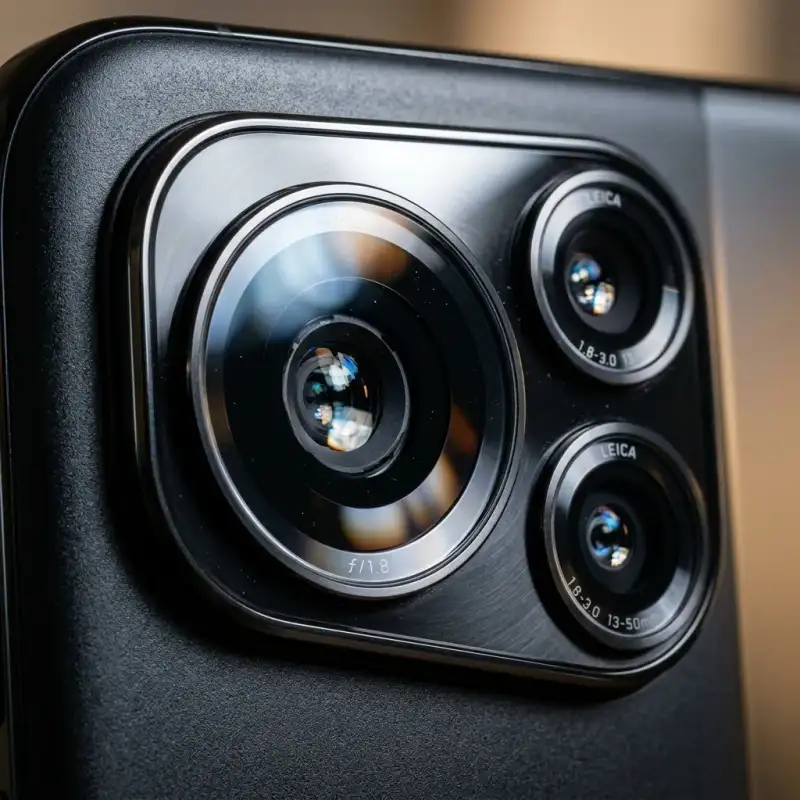
In the grand tapestry of technological advancements over the last three decades, few innovations have reshaped human behavior, culture, and communication as profoundly as the smartphone camera. Once considered a mere novelty—a grainy, low-resolution gimmick tacked onto the back of early mobile phones—the integrated camera has evolved into a formidable imaging powerhouse. It has decimated the point-and-shoot camera market, challenged professional-grade DSLR and mirrorless systems, and democratized the art of photography for billions of people around the globe. Today, the question is no longer whether you have a camera on you, but rather how many lenses and neural processing algorithms your current device boasts. This article delves deep into the fascinating history, the relentless technological leaps, and the profound societal impacts of the smartphone camera, tracing its journey from a pixelated experiment to a pocket-sized studio. #SmartphoneCamera #TechRevolution #PhotographyDemocratized A Blurry Beginning: The Genesis of the Camera Phone To truly appreciate the multi-lens marvels we carry today, we must look back to the late 1990s and the dawn of the new millennium. The concept of marrying a digital camera with a cellular phone was not born overnight. One of the earliest and most famous instances of a camera phone in action was in 1997, when tech entrepreneur Philippe Kahn jury-rigged a digital camera to a Motorola StarTAC mobile phone. While his wife was in the maternity ward, Kahn wrote a few lines of code on his laptop to synchronize the devices, capturing and instantly sharing a photo of his newborn daughter, Sophie, with over 2,000 family members and friends. This makeshift contraption proved a concept that would soon ignite a multi-billion-dollar industry: the profound human desire for instant, wireless visual communication. #TechHistory #PhilippeKahn #Innovation Commercially, the race to bring a camera phone to the masses began in earnest in Japan and South Korea. In 1999, Kyocera launched the Visual Phone VP-210 in Japan, a device featuring a 0.11-megapixel front-facing camera designed primarily for video calls. Shortly after, in 2000, Samsung introduced the SCH-V200 in South Korea, which could store up to 20 photos at a 0.35-megapixel resolution. However, these photos had to be transferred to a computer via a cable to be viewed and shared properly. The true breakthrough in mobile photography integration came later in 2000 with the Sharp J-SH04, released by J-Phone (now SoftBank Mobile) in Japan. The J-SH04 allowed users to snap photos and, crucially, send them electronically to other users directly from the device. This was the birth of the modern Multimedia Messaging Service (MMS) era. #RetroTech #MobileInnovation #Early2000s These early devices produced images that were, by today's standards, comically poor. Resolutions were often sub-VGA (Video Graphics Array, usually 640x480 pixels or less), colors were washed out, dynamic range was practically nonexistent, and low-light performance was an exercise in futility. Yet, the appeal was never about replacing a dedicated camera; it was about spontaneity. The camera phone capitalized on the simple truth that the best camera is the one you have with you. This philosophical shift marked the beginning of photography not just as a means of memory preservation, but as a language of immediate, everyday communication. The Megapixel Race: Chasing Numbers and Sensor Sizes As camera phones gained traction in the early to mid-2000s, manufacturers engaged in a fierce marketing war known as the "Megapixel Race." Companies like Nokia, Sony Ericsson, Samsung, and Motorola vied for consumer attention by slapping increasingly higher megapixel counts on their devices. The logic was simple to market to consumers: more pixels logically equated to a better camera. #MegapixelWars #MobileTech #SonyEricsson #Nokia Sony Ericsson leveraged its established Cyber-shot branding from its standalone camera division to produce phones that looked and felt like digital cameras on one side and mobile phones on the other. Devices like the Sony Ericsson K800i brought features like dedicated shutter buttons, Xenon flashes, and active sliding lens covers, dramatically improving image quality and the shooting experience. Nokia, arguably the absolute king of the mobile phone era at the time, introduced the N-Series to flex its photographic muscles. The iconic Nokia N95, launched in 2006, featured a 5-megapixel sensor equipped with high-quality Carl Zeiss optics, recording video that was remarkably high quality for its time. It became a status symbol and a testament to how far mobile optics had come. Nokia would later push the boundaries even further with the PureView 808 in 2012 and the Lumia 1020 in 2013, which introduced massive 41-megapixel sensors. #CarlZeiss #NokiaLumia #MobilePhotography However, the industry soon realized a fundamental limitation of physics. Squeezing more pixels onto a tiny mobile sensor meant that each individual pixel (photosite) had to be physically smaller. Smaller pixels capture less light, leading to increased digital noise, artifacting, and incredibly poor performance in dim environments. The challenge for engineers became a delicate balancing act: increasing resolution while simultaneously increasing the physical sensor size, all without making the phone too thick or cumbersome. This realization paved the way for more sophisticated engineering. Manufacturers started utilizing a technique called "pixel binning" (or oversampling), where the data from multiple adjacent small pixels is combined into one larger "super pixel." This allowed for high-resolution sensors that could still perform admirably in low light. Yet, engineers knew that hardware alone would not win the mobile photography war in the long run. The true revolution was waiting in the software. #SensorSize #CameraPhysics #PixelBinning The Touchscreen Era and the App Ecosystem: Software Eats Photography The launch of the Apple iPhone in 2007 and the subsequent rise of the Android operating system marked a massive paradigm shift in mobile technology. Interestingly, the initial iPhone did not have the best camera on the market—it was a humble 2-megapixel fixed-focus shooter lacking a flash and video recording capabilities. However, what modern smartphones lacked in raw optical power compared to Nokia's behemoths, they made up for with their large, high-resolution multi-touch screens, intuitive interfaces, and constant internet connectivity. #iPhoneLaunch #AndroidOS #SmartphoneEra The true revolution of this era was the advent of the app ecosystem. Developers suddenly had unprecedented access to the camera hardware and the device's processing power, leading to an explosion of third-party photography applications. Apps like Hipstamatic and early Instagram capitalized on the limitations of mobile sensors by applying heavy, vintage-style filters that masked digital noise and optical imperfections, turning flaws into stylized, artistic choices. Photography became hyper-social and instantly malleable. The cycle of shooting, editing, and sharing, which once took hours or days using a computer, was compressed into mere seconds. #MobileApps #AppEcosystem #PhotoEditing Instagram, launched in 2010, transformed the cultural landscape entirely. It created a continuous visual feed of human existence, turning everyday users into amateur photographers and paving the way for the multi-billion-dollar influencer economy. The smartphone camera was no longer just a tool for capturing memories; it was a primary instrument for personal branding, status projection, and social validation. Furthermore, front-facing cameras—initially introduced for video calling services like Apple's FaceTime and Skype—birthed the cultural phenomenon of the "selfie." This fundamentally altered modern self-representation and identity, turning the lens inward and allowing users to curate their own image with unprecedented frequency and control. #SocialMedia #InstagramCulture #SelfieGeneration #DigitalIdentity The Dawn of Computational Photography: Breaking the Laws of Physics As smartphones became thinner and screens pushed closer to the edges, the physical space available for bulky camera modules shrank. Traditional camera manufacturers like Canon, Nikon, and Sony rely on large glass lenses and massive image sensors to capture light and create a natural depth of field. Smartphone manufacturers did not have this physical luxury. To compete, they had to turn to the realm of mathematics, computer science, and complex algorithms. Welcome to the era of computational photography. #ComputationalPhotography #Algorithms #AIPhotography Computational photography uses digital computation instead of traditional optical processes to improve or create images. One of the earliest and most impactful implementations of this was High Dynamic Range (HDR) imaging. In a traditional setup, capturing a scene with bright skies and dark shadows often results in blown-out highlights or crushed, pitch-black shadows. With computational HDR, when a user presses the shutter button, the camera doesn't just take one photo; it takes a rapid burst of several photos at varying exposure levels in a fraction of a second. The software then seamlessly aligns and merges these images together, taking the rich details from the shadows of the overexposed shots and the crisp details from the highlights of the underexposed shots to create a single, perfectly balanced image. The application of computational photography accelerated dramatically with the integration of Artificial Intelligence (AI) and specialized Neural Processing Units (NPUs) inside smartphone chipsets. Companies like Google, with its Pixel lineup, and Apple, with its Deep Fusion and Smart HDR technologies, led the charge. Night Mode is perhaps the most magical iteration of this technology. By combining long exposure techniques, machine learning to detect and align hand motion, and AI-driven noise reduction, modern smartphones can capture bright, detailed, and colorful images in near-pitch-black conditions—a feat that would require a heavy tripod, a fast lens, and significant technical expertise on a traditional DSLR. #NightMode #MachineLearning #TechInnovation Portrait Mode is another triumph of algorithmic engineering. To simulate the "bokeh" effect (the aesthetically pleasing blur of out-of-focus background areas) natively produced by large DSLR lenses, smartphones use depth-sensing cameras, Time-of-Flight (ToF) sensors, or dual-pixel autofocus to create a precise 3D depth map of the scene. Advanced AI then painstakingly segments the subject from the background, keeping the subject sharp while applying a synthetic, mathematically calculated blur to the rest of the image. What was once the exclusive domain of expensive, heavy portrait lenses was now available to anyone at the tap of a screen. #PortraitMode #BokehEffect #AItech Multiple Lenses and Advanced Sensors: A Studio in Your Pocket While algorithms can work wonders, there are some immutable optical realities that cannot be entirely faked or simulated without looking artificial. To provide users with greater optical versatility and pristine quality, manufacturers began adding multiple lenses to the back of their devices. What started as a dual-camera setup (usually a standard wide lens paired with a telephoto lens or a monochrome sensor for capturing better detail and contrast) quickly escalated into complex triple, quad, and even penta-camera arrays. #MultiLens #UltraWide #Telephoto The standard setup on premium flagship smartphones today typically includes three distinct focal lengths. The Primary Wide Lens is the workhorse; it boasts the largest physical sensor, the widest aperture (often f/1.5 or f/1.8 to let in massive amounts of light), and the most advanced optical image stabilization (OIS). It handles everyday shooting and demanding low-light scenarios. The Ultrawide Lens expands the field of view dramatically, often reaching 120 degrees or more. It allows users to capture sweeping landscapes, tight architectural interiors, and dramatic, exaggerated perspectives without having to physically step back. #WideAngle #LandscapePhotography #MobileOptics Finally, the Telephoto Lens allows for true optical zoom, bringing distant subjects closer without the severe pixelation and loss of quality associated with digital zoom. To overcome the physical thickness limitations of a phone—since a long focal length normally requires a long lens barrel—engineers developed the ingenious "periscope" telephoto lens. By using a prism to reflect light 90 degrees inward, the lens elements can be laid out horizontally within the phone's chassis. This optical ingenuity has enabled 5x, 10x, and even incredible 100x hybrid zoom capabilities, effectively putting a full bag of professional camera lenses into the pockets of the masses. #PeriscopeLens #OpticalZoom #EngineeringMarvel Furthermore, the inclusion of LiDAR (Light Detection and Ranging) scanners has pushed mobile photography further. By shooting invisible lasers to measure depth instantly and accurately, smartphones can now focus instantly in absolute darkness and map out rooms for advanced augmented reality (AR) applications. For the professionals, the ability to shoot in RAW formats (like Apple ProRAW or Expert RAW) retains all the uncompressed sensor data, allowing photographers to pull incredible detail out of the files in professional editing software like Adobe Lightroom. #LiDAR #RAWPhotography #ProCamera Video Capabilities and the Rise of Content Creation The evolution of the smartphone camera is not strictly limited to still photography; its impact on videography has been equally, if not more, revolutionary. Early camera phones could barely record choppy, stamp-sized videos at 15 frames per second. Today, they are highly sophisticated cinema cameras capable of recording in stunning 4K and 8K resolutions at high frame rates, complete with 10-bit HDR color science. #MobileVideography #4KVideo #ContentCreation The implementation of advanced hardware-based Optical Image Stabilization (OIS) combined with Electronic Image Stabilization (EIS) means that users can capture buttery-smooth, gimbal-like footage while walking, running, or shooting from moving vehicles. Features like Apple's Cinematic Mode utilize computational algorithms to shift focus smoothly from one subject to another in real-time, simulating the rack-focus work of a professional focus puller on a Hollywood movie set. This democratization of high-quality video production has been the primary fuel for the modern creator economy. Platforms like YouTube, TikTok, and Instagram Reels thrive entirely on the fact that anyone with a smartphone can shoot, edit, color-grade, and publish high-definition content to a global audience in minutes. Independent filmmakers, journalists, and vloggers rely heavily on smartphones to document stories that would be impossible, too expensive, or too intrusive to capture with a massive, traditional camera rig. The smartphone has lowered the financial and technical barrier to entry for visual storytelling to near zero. #CreatorEconomy #TikTokGeneration #VloggingLife #Filmmaking The Cultural Impact: A Society Remade Beyond the impressive specifications, the megapixels, and the hardware engineering, the sheer ubiquity of the smartphone camera has profoundly reshaped human society and culture at large. We now live in an aggressively visual, always-on culture. The camera has effectively become an external extension of our memory; we habitually document what we eat, where we travel, the concerts we attend, and who we spend our time with. While some sociologists and critics argue that viewing life primarily through a screen detaches us from the raw, present moment—leading to an "experience economy" where things are only done so they can be photographed—others highlight how it allows us to curate, celebrate, and share our diverse human experiences on an unprecedented global scale. #VisualCulture #DigitalSociety #ModernLife #PhilosophyOfTech One of the most critical and universally acknowledged societal impacts has been the rise of citizen journalism. With billions of high-definition cameras distributed globally, virtually every major public event, natural disaster, and instance of social injustice is now recorded and broadcasted in real-time. The smartphone camera has become an indispensable tool for accountability. It has been used to expose police brutality, political corruption, and human rights abuses that might otherwise have gone completely undocumented or covered up. Videos captured by ordinary citizens on their phones have sparked global protests, influenced elections, and shifted the course of modern history. #CitizenJournalism #SocialJustice #PowerToThePeople #HumanRights Conversely, this constant presence of cameras has raised severe, ongoing privacy concerns. We navigate a world where anyone can be recorded, photographed, and broadcasted at any time, often without their knowledge or consent. The integration of facial recognition technology and AI analysis into camera systems and social media platforms poses profound questions about mass surveillance and the fundamental right to anonymity in public spaces. The very tool that empowers citizens is also a potent instrument for data collection by corporations and governments. #PrivacyConcerns #SurveillanceState #DigitalEthics Professional Photography vs. Smartphones: An Ongoing Debate With smartphones consistently producing such stunning, ready-to-share images, the question inevitably arises: is the traditional, dedicated camera dead? For the average consumer and the casual vacationer, the answer is a resounding yes. The compact point-and-shoot camera market, which once dominated retail shelves, has been effectively eradicated by the smartphone. However, in the professional and enthusiast realms, the debate is much more nuanced. #DSLRvsSmartphone #ProPhotography #CameraDebate Professional DSLR and mirrorless cameras still hold distinct, physically unalterable advantages. Their image sensors are massively larger—a full-frame sensor is roughly 10 to 30 times larger than a typical smartphone sensor. This immense size advantage allows them to capture significantly more light naturally, yielding vastly superior dynamic range, authentic and buttery depth of field, and immaculate, noise-free detail that holds up when printed on massive billboards. Professional cameras also offer tactile, physical controls, an ecosystem of specialized interchangeable lenses, and the essential ability to seamlessly trigger and sync with complex external studio lighting systems. Yet, the gap is rapidly narrowing every year. Smartphones excel in point-and-shoot convenience, aggressive weight reduction, immediate internet connectivity for client delivery, and intelligent software that corrects complex lighting errors instantly. For many commercial applications today—ranging from social media marketing campaigns and influencer sponsorships to real estate photography and photojournalism—a high-end smartphone is more than sufficient. The professional camera is slowly evolving into a niche tool for highly specialized artistic, sports, wildlife, and high-end commercial endeavors, while the smartphone capably handles the vast bulk of the world's daily photographic needs. #PhotographyTrends #TechEvolution #GearTalk The Future of Smartphone Cameras: What Lies Ahead As we look to the horizon, the smartphone camera shows absolutely no signs of stagnation. Hardware and software will continue to converge in fascinating, previously unimaginable ways. We are already seeing the integration of massive 1-inch type sensors into flagship smartphones from manufacturers like Sony, Xiaomi, and Vivo. This pushes the physical limits of mobile optics to their absolute maximum, capturing DSLR-like light and natural depth without relying as heavily on software processing. #FutureTech #NextGenCameras #MobileOptics Under-display cameras are also poised to become the new industry standard. By hiding the front-facing selfie camera completely beneath the screen's active pixels, manufacturers can finally eliminate the need for distracting notches and hole-punches, resulting in true, uninterrupted edge-to-edge displays. We will also likely see the refinement of continuous optical zoom lenses, where the internal lens elements physically move within the phone's body to provide a smooth, variable optical zoom range (e.g., smoothly zooming from 3x to 5x optically), rather than relying on digitally cropping between multiple fixed-focal-length lenses. The most transformative and disruptive changes, however, will undoubtedly come from Generative Artificial Intelligence. We are rapidly moving beyond the era of computational photography and entering the realm of computational creation. Future smartphone cameras won't just passively capture what is there; they will intuitively understand what the user wants to be there. Generative AI will allow users to seamlessly remove photobombers, drastically alter lighting conditions and weather after the fact, and perhaps even generate completely new details that were never present in the original physical scene. This looming technological leap raises profound philosophical questions about the authenticity of a photograph. If a smartphone camera generates parts of an image using an AI model trained on millions of other photos, is it still a photograph, or has it become a piece of digital art? Can it still be trusted as a documentary tool? As the technology evolves, our very definition of what constitutes a "photograph" will be forced to evolve alongside it. #GenerativeAI #FutureOfPhotography #AIArt #TechPhilosophy #Authenticity Conclusion The spectacular journey of the smartphone camera is a towering testament to the relentless pace of human innovation and engineering. From the grainy, 0.1-megapixel novelties of the late 1990s to the AI-powered, multi-lens, 8K-recording behemoths of today, the pocket camera has fundamentally changed the way we interact with the world, the way we remember our lives, and the way we communicate with each other. It has democratized the art of visual storytelling, empowered a new generation of citizen journalists, fueled entirely new global digital economies, and fundamentally altered our universal visual language. The smartphone camera is far more than just a convenient feature on a communication device; it is arguably the most ubiquitous, powerful, and culturally influential imaging tool in the history of humanity. As we continue to blur the boundary lines between optical reality and algorithmic enhancement, one timeless truth remains absolutely certain: the best camera in the world is still the one you have with you, and that camera is only getting smarter, faster, and more capable with every passing day. #SmartphonePhotography #EndOfAnEra #DigitalRevolution #FinalThoughts Related InsightsEdge Cloud Continuum - Part 01: Architecture and Deployment Strategies Smart Materials Rewired: From Self‑Healing Concrete to Adaptive Textiles Rust in Production: Why Developers Are Embracing Memory Safety and Performance{ "@context": "https://schema.org", "@type": "FAQPage", "mainEntity": [ { "@type": "Question", "name": "What is the main focus of The Evolution and Impact of the Smartphone Camera: How a Pocket Device Revolutionized Photography?", "acceptedAnswer": { "@type": "Answer", "text": "An in-depth look at how the smartphone camera evolved from a low-resolution gimmick to a revolutionary tool that changed photography, society, and human connection forever." } }, { "@type": "Question", "name": "Who authored the comprehensive guide on The Evolution and Impact of the Smartphone Camera: How a Pocket Device Revolutionized Photography?", "acceptedAnswer": { "@type": "Answer", "text": "This detailed article and its insights were carefully researched and authored by John Doe." } }, { "@type": "Question", "name": "Where can I find more related content about Technology?", "acceptedAnswer": { "@type": "Answer", "text": "You can explore more articles, detailed reviews, and similar insights by browsing the Related Insights section at the bottom of this article or visiting our dedicated Technology category page." } } ] }