Showing Posts From
A portrait of the ar
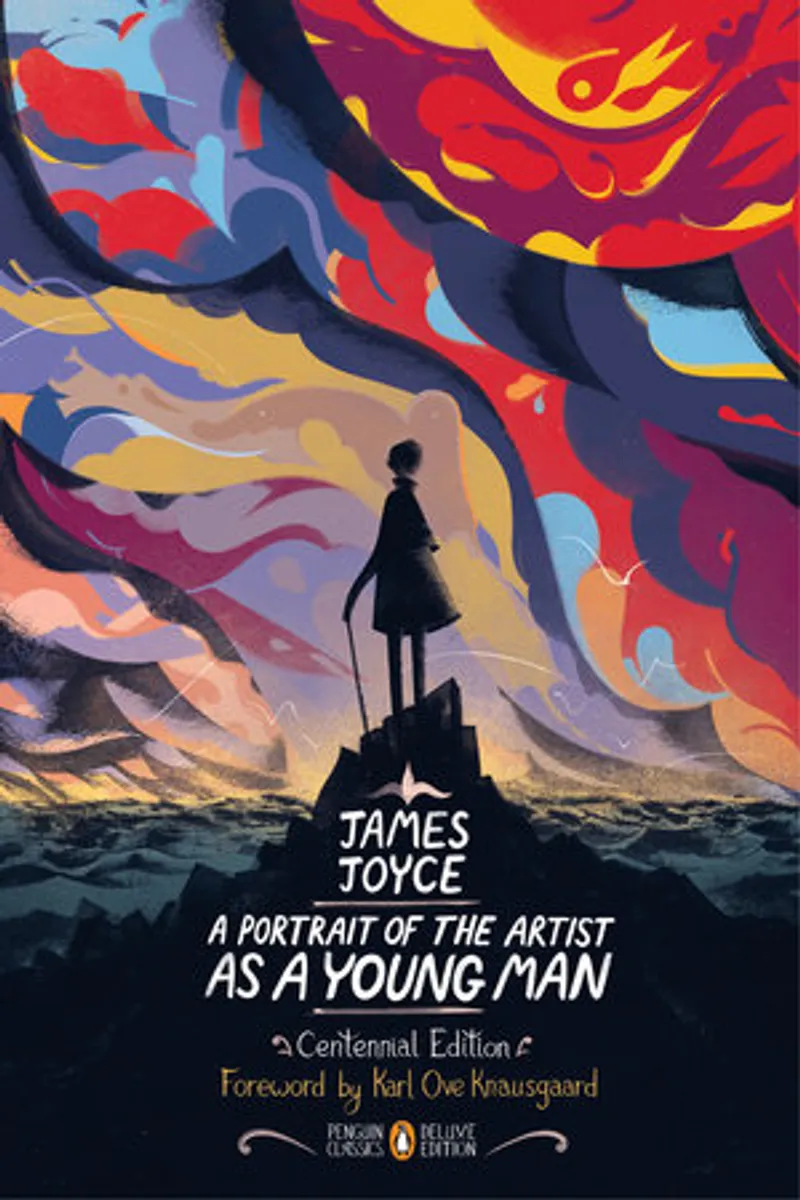
A Portrait of the Artist as a Young Man Author: James JoycePage Count: UnknownPublication Date: 2016-PRH James Joyce’s A Portrait of the Artist as a Young Man is a masterclass in literary evolution—a novel that begins with the hesitant steps of a child and ends with the defiant declaration of an artist. First published in 1916, this semi-autobiographical work traces the intellectual and emotional awakening of Stephen Dedalus, a young man navigating the rigid confines of Irish Catholic society while grappling with his own creative destiny. For its centennial edition, Penguin Classics has delivered a definitive text, enriched by Karl Ove Knausgaard’s insightful foreword, which draws a fascinating parallel between Stephen’s journey and his own monumental My Struggle. The result is not just a celebration of Joyce’s genius but an invitation to witness the birth of modernist literature itself. At its core, Portrait is a novel about the artist’s struggle for self-definition. Stephen Dedalus is Joyce’s alter ego, a figure caught between the expectations of family, church, and nation and his own burgeoning desire to forge an independent identity. The book’s central question—what does it mean to be an artist?—is not posed in grand declarations but in the quiet, almost imperceptible shifts of a young mind. Joyce’s genius lies in his ability to capture the fluidity of consciousness, where thoughts, memories, and sensory impressions blend seamlessly. The novel’s style evolves alongside Stephen, shifting from the simple, childlike prose of his early years to the dense, lyrical stream-of-consciousness that would later define Ulysses. This stylistic progression mirrors Stephen’s own intellectual maturation, making Portrait not just a story but an experience. Joyce’s prose is deceptively accessible, yet it is layered with meaning. The opening pages, with their childlike syntax and limited vocabulary, evoke the innocence of youth, while later sections—particularly Stephen’s feverish, guilt-ridden confessions and his philosophical musings—demonstrate Joyce’s mastery of linguistic complexity. The famous final lines, where Stephen vows to “forge in the smithy of my soul the uncreated conscience of my race,” encapsulate the novel’s central tension: the artist’s duty to both his heritage and his own vision. Joyce does not offer easy resolutions; instead, he presents Stephen’s journey as a series of conflicts—between sin and salvation, conformity and rebellion, silence and expression. The novel’s power lies in its refusal to simplify these struggles, instead immersing the reader in the messy, contradictory process of becoming. One of the most striking aspects of Portrait is its exploration of language as both a prison and a liberation. Stephen’s awakening is, in many ways, a linguistic one. His early encounters with the harsh realities of school life—bullying, punishment, and the oppressive authority of priests—are mediated through his perception of language. The novel’s famous scene where Stephen is caned for a minor infraction is a masterstroke of psychological insight, where the physical pain is inseparable from the humiliation of being forced to repeat the word “fool” in front of his classmates. Language, here, is an instrument of control, but it is also the medium through which Stephen will eventually assert his independence. His decision to leave Ireland and “encounter for the millionth time the reality of experience” is, in part, a rejection of the linguistic and cultural constraints that have shaped him. Joyce’s use of free indirect discourse—a technique where the narrator’s voice merges with the protagonist’s thoughts—blurs the line between author and character, creating an intimacy that feels almost invasive. We are not just observers of Stephen’s life; we are inside his mind, experiencing his doubts, desires, and epiphanies in real time. This technique would later reach its zenith in Ulysses, but Portrait remains its most distilled and accessible expression. The novel’s emotional resonance comes from this proximity, from the way Joyce makes Stephen’s struggles feel universal. Who among us has not, at some point, felt the suffocating weight of expectation or the exhilaration of artistic revelation? Stephen’s journey is, in this sense, a mirror held up to the reader’s own potential. The centennial edition’s inclusion of Knausgaard’s foreword adds another layer of meaning. Knausgaard, whose own autobiographical project My Struggle has been compared to Joyce’s work, writes with a rare blend of humility and insight. He acknowledges the intimidating reputation of Joyce while making a compelling case for Portrait as a novel that transcends its time. Knausgaard’s comparison is particularly apt: both writers explore the tension between the personal and the universal, between the mundane details of life and the grand questions of existence. Where Knausgaard’s prose is raw and unfiltered, Joyce’s is polished and deliberate, but both seek to capture the essence of a life in flux. A Portrait of the Artist as a Young Man is, above all, a novel about the cost of self-creation. Stephen’s final decision to leave home is not just an act of defiance but an acknowledgment that art requires sacrifice. Joyce himself left Ireland, and his exile became the crucible in which his genius was forged. The novel’s enduring power lies in its honesty—its willingness to confront the loneliness of artistic pursuit without romanticizing it. Stephen’s journey is not one of triumph but of endurance, a testament to the fact that the artist’s path is often paved with doubt and isolation. For readers new to Joyce, Portrait is the ideal entry point. It is shorter and more linear than Ulysses or Finnegans Wake, yet it contains the seeds of everything that would follow. For those already familiar with Joyce’s work, it is a chance to revisit a foundational text with fresh eyes, particularly in this beautifully curated edition. Whether you are drawn to its psychological depth, its linguistic innovation, or its unflinching portrayal of youth, Portrait is a novel that lingers long after the last page. In an era where the artist’s role is constantly debated—between commercial success and artistic integrity, between tradition and rebellion—Stephen Dedalus’s story feels more relevant than ever. Joyce’s novel reminds us that the act of creation is, at its heart, an act of rebellion. To be an artist is to refuse the easy answers, to embrace uncertainty, and to forge one’s own path, no matter the cost. #JamesJoyce #ModernistLiterature #StephenDedalus #ArtisticJourney #LiteraryCanon #JoyceCentennial Related InsightsAngela's Ashes Book Review and Summary „Die Alchemie der Ballaststoffe: Wenn das literarische Erbe auf den vollwertigen Shepherd’s Pie trifft“ The Assassin's Blade Book Review and Summary{ "@context": "https://schema.org", "@type": "FAQPage", "mainEntity": [ { "@type": "Question", "name": "What is the main focus of A Portrait of the Artist as a Young Man Book Review and Summary?", "acceptedAnswer": { "@type": "Answer", "text": "Everything you need to know about A Portrait of the Artist as a Young Man with our detailed review." } }, { "@type": "Question", "name": "Who authored the comprehensive guide on A Portrait of the Artist as a Young Man Book Review and Summary?", "acceptedAnswer": { "@type": "Answer", "text": "This detailed article and its insights were carefully researched and authored by James Joyce." } }, { "@type": "Question", "name": "Where can I find more related content about Books?", "acceptedAnswer": { "@type": "Answer", "text": "You can explore more articles, detailed reviews, and similar insights by browsing the Related Insights section at the bottom of this article or visiting our dedicated Books category page." } } ] }