Showing Posts From
A room with a view
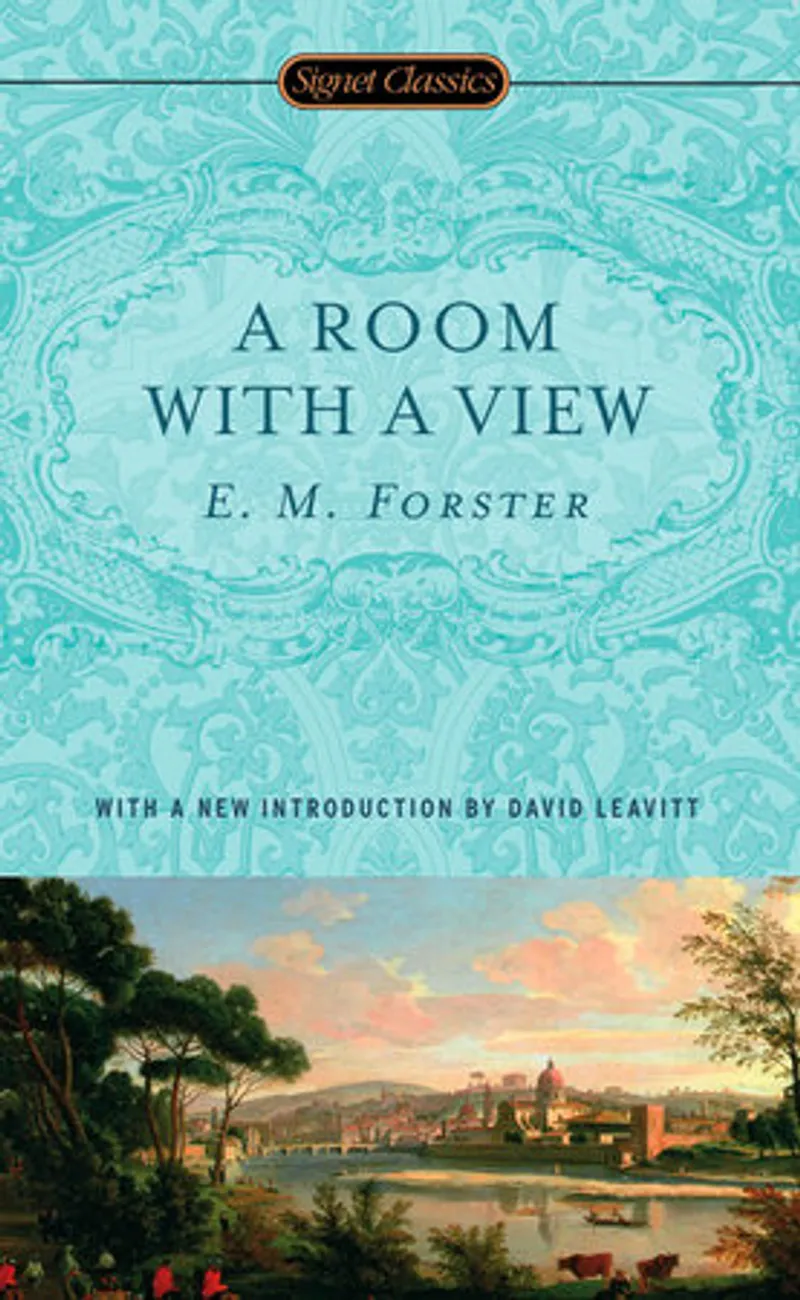
A Room with a View Author: E. M. ForsterPage Count: UnknownPublication Date: 2009-PRH E. M. Forster’s A Room with a View is a sparkling gem of early 20th-century literature, a novel that dances between satire and sincerity, between the stifling conventions of Edwardian England and the liberating pulse of Italian passion. At its heart, this is a story about the struggle between duty and desire, between the safety of social expectation and the intoxicating pull of the unknown. Forster, with his razor-sharp wit and profound empathy, crafts a tale that is as much a critique of English reserve as it is a celebration of the human heart’s capacity for change. The novel follows Lucy Honeychurch, a young woman of respectable upbringing, as she navigates the rigid expectations of her class during a trip to Italy. Accompanied by her overbearing cousin Charlotte, Lucy is initially confined by the very rules that govern her world—until she encounters the Emersons, a father and son who embody a refreshing, if unsettling, authenticity. George Emerson, in particular, disrupts Lucy’s carefully constructed worldview with his unfiltered emotions and disregard for social niceties. Their fleeting but electric connection in Florence becomes the catalyst for Lucy’s internal rebellion, setting the stage for a conflict that will define her journey. Forster’s genius lies in his ability to weave social commentary into a narrative that is both deeply personal and universally resonant. A Room with a View is, at its core, a satire of English hypocrisy, particularly the way society polices emotions and enforces conformity under the guise of propriety. The novel’s title itself is a sly jab at this—Lucy and Charlotte’s initial complaint about their Florentine lodgings (lacking a view) is less about the room itself and more about their own myopia, their inability to see beyond the narrow confines of their expectations. Italy, with its vibrant chaos and unapologetic passion, becomes the perfect foil to the repressed sterility of English life. Forster’s Italy is not just a setting but a character in its own right, a place where Lucy begins to shed the armor of her upbringing and confront her true desires. Yet Forster is no mere satirist; he is also a romantic, and his portrayal of Lucy’s awakening is tender and nuanced. The novel’s central tension—between Lucy’s engagement to the cold, calculating Cecil Vyse and her lingering feelings for George Emerson—is not just a love triangle but a clash of philosophies. Cecil represents the hollow perfection of English respectability, a man who values appearances over authenticity, while George embodies the messy, unpredictable nature of real emotion. Forster doesn’t romanticize George—he is flawed, impulsive, and at times infuriating—but his authenticity is what draws Lucy (and the reader) in. The question the novel poses is not just whom Lucy will choose, but whether she will choose at all: will she remain trapped in the gilded cage of her class, or will she dare to step into the sunlight of her own desires? Forster’s prose is a masterclass in balance—elegant yet unpretentious, witty yet never cruel. His dialogue crackles with subtext, revealing as much about the characters’ unspoken thoughts as their words do. The famous scene in which Lucy plays the piano, her emotions spilling out in a piece by Beethoven, is a perfect example of Forster’s ability to convey meaning through artistry rather than exposition. The music becomes a metaphor for Lucy’s inner life, a moment of raw expression that contrasts sharply with the stiff formality of her surroundings. Forster’s descriptions, too, are vivid without being overwrought, painting Italy as a place of both beauty and danger, where Lucy is both liberated and tested. What makes A Room with a View enduring is its timelessness. Though set in the early 1900s, its themes resonate just as strongly today: the pressure to conform, the fear of vulnerability, the tension between duty and happiness. Forster doesn’t offer easy answers—Lucy’s journey is one of gradual realization, not sudden transformation—but he leaves us with a sense of hope. The novel’s conclusion, in which Lucy finally asserts her independence, is both satisfying and bittersweet, a reminder that happiness often requires courage. In an era where social expectations still dictate so much of our lives, Forster’s novel feels like a breath of fresh air. It reminds us that life is too short to live in a room without a view, that love—real love—is worth the risk of defying convention. A Room with a View is more than a romance; it’s a manifesto for living authentically, a call to embrace the chaos of the heart over the cold order of the world. #A_Room_with_a_View #EMForster #ClassicLiterature #RomanceNovel #EdwardianFiction #LoveAndRebellion Related InsightsWhy They Stay: Sex Scandals, Deals, and Hidden Agendas of Eight Political Wives Book Review and Summary The Lord of the Rings Book Review and Summary The Pumpkin Bride Book Review and Summary{ "@context": "https://schema.org", "@type": "FAQPage", "mainEntity": [ { "@type": "Question", "name": "What is the main focus of A Room with a View Book Review and Summary?", "acceptedAnswer": { "@type": "Answer", "text": "Everything you need to know about A Room with a View with our detailed review." } }, { "@type": "Question", "name": "Who authored the comprehensive guide on A Room with a View Book Review and Summary?", "acceptedAnswer": { "@type": "Answer", "text": "This detailed article and its insights were carefully researched and authored by E.M. Forster." } }, { "@type": "Question", "name": "Where can I find more related content about Books?", "acceptedAnswer": { "@type": "Answer", "text": "You can explore more articles, detailed reviews, and similar insights by browsing the Related Insights section at the bottom of this article or visiting our dedicated Books category page." } } ] }