Showing Posts From
A short history of n
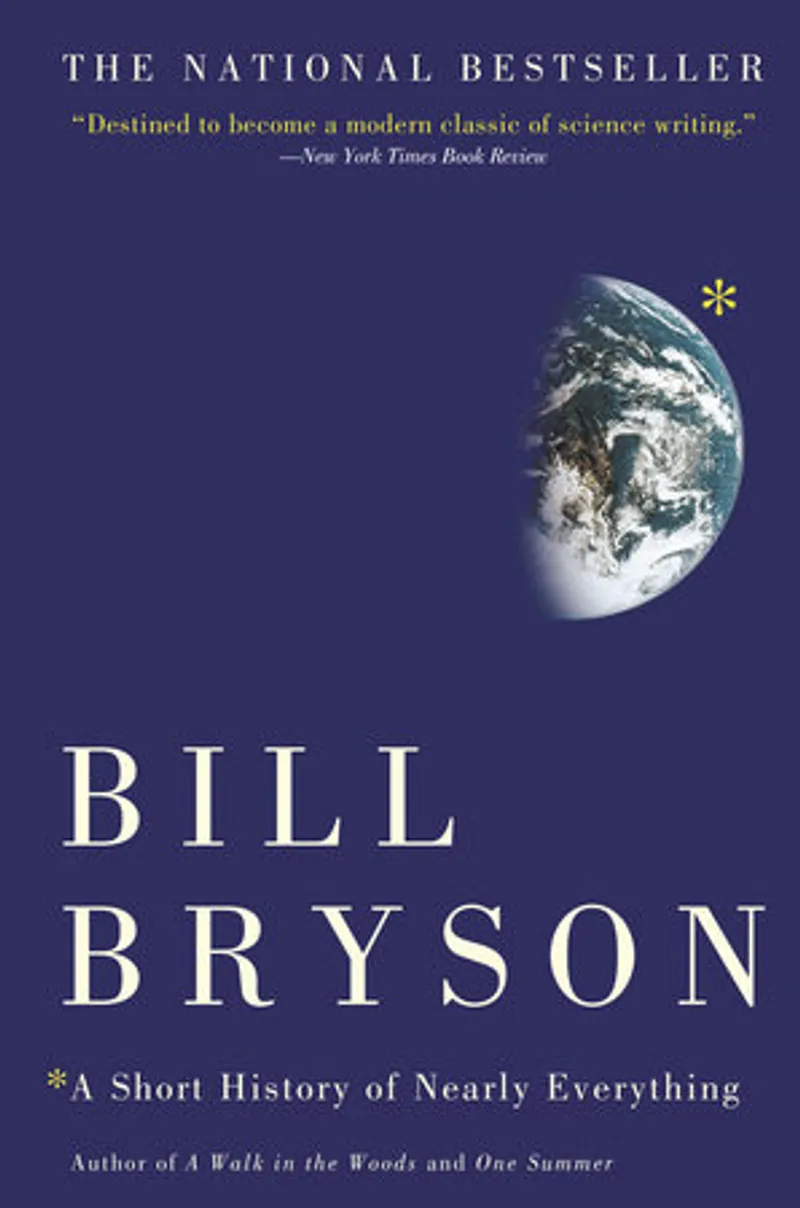
A Short History of Nearly Everything Author: Bill BrysonPage Count: UnknownPublication Date: 2004-PRH Bill Bryson’s A Short History of Nearly Everything is a masterclass in making the vast, complex, and often intimidating world of science not just accessible but downright exhilarating. Published in 2004, this book is far more than a mere overview of scientific history—it’s a grand adventure, a witty expedition through time and space that transforms the dry bones of facts into a living, breathing narrative. Bryson, the beloved chronicler of human folly and natural wonder (A Walk in the Woods, The Body), turns his keen eye and sharp wit toward the biggest questions humanity has ever asked: How did the universe begin? How did life emerge? What forces shaped our planet and, ultimately, us? At its core, A Short History of Nearly Everything is about curiosity—about the relentless human drive to understand the unknowable. Bryson doesn’t just recount the discoveries of science; he immerses himself in them, seeking out the eccentric geniuses, the obsessive researchers, and the forgotten pioneers who pieced together the puzzle of existence. From the Big Bang to the rise of civilization, he tackles topics as diverse as quantum mechanics, paleontology, and the origins of consciousness, all while maintaining a tone that is refreshingly conversational and unpretentious. This is science writing for the everyman, a book that proves you don’t need a PhD to marvel at the wonders of the cosmos—or to laugh at the absurdities of human endeavor. Bryson’s genius lies in his ability to distill complexity without dumbing it down. He doesn’t shy away from the mind-bending realities of science—like the fact that most of the universe is made of something we can’t see (dark matter) or that a single human cell contains more information than a library’s worth of books—but he presents them with a clarity that feels almost magical. His prose is a blend of erudition and humor, a style that makes even the most abstruse theories feel like a fireside chat with a brilliant, slightly mischievous friend. Whether he’s describing the violent collisions that formed the Moon or the sheer luck that allowed dinosaurs to thrive before their sudden demise, Bryson’s writing crackles with energy and wit. What sets this book apart is its humanity. Bryson doesn’t just celebrate the triumphs of science; he also highlights its failures, its blind alleys, and the often-absurd personalities behind its greatest breakthroughs. He introduces us to scientists who were wrong for decades, to researchers who stumbled upon discoveries by accident, and to the quiet, dogged persistence that finally cracked some of nature’s deepest secrets. There’s a delightful irreverence in his approach—he pokes fun at the pomposity of academia, marvels at the sheer weirdness of life, and never misses an opportunity to remind us how little we truly know. In one memorable passage, he describes the discovery of the Higgs boson as “like finding a needle in a haystack, if the needle were made of invisibility and the haystack were the size of a galaxy.” It’s this kind of vivid, playful imagery that makes the book so engaging. Yet beneath the humor and the storytelling lies a profound sense of awe. Bryson’s wonder at the universe is infectious, whether he’s describing the birth of stars, the resilience of life in extreme environments, or the fragile, fleeting nature of human existence. He reminds us that science isn’t just about cold, hard facts—it’s about the awe-inspiring, humbling reality that we are, in the grand scheme of things, a tiny speck in an incomprehensibly vast cosmos. And yet, through our curiosity and ingenuity, we’ve managed to glimpse the edges of that cosmos, to understand a little of how it works, and to appreciate the sheer improbability of our own existence. Bryson’s style is deceptively simple. He writes with the ease of someone telling a story over a pint of beer, but every sentence is carefully crafted to inform, entertain, and provoke thought. He doesn’t just present information; he invites the reader to share in the joy of discovery. Whether he’s recounting the rivalry between Isaac Newton and Robert Hooke or the accidental discovery of penicillin, he makes history feel alive, full of personalities, accidents, and breakthroughs that could have gone either way. It’s a reminder that science is not a linear march of progress but a messy, human endeavor, shaped by ego, luck, and sheer stubbornness. A Short History of Nearly Everything is also a book about humility. Bryson doesn’t shy away from the gaps in our knowledge—he revels in them. He points out how much we still don’t understand, from the nature of dark energy to the origins of consciousness, and he does so without ever sounding despairing. Instead, he leaves the reader with a sense of excitement, a feeling that the best is yet to come. In an era where science is often politicized or reduced to soundbites, Bryson’s book is a breath of fresh air—a celebration of the unending quest for knowledge, told with warmth, wit, and an infectious enthusiasm. If there’s one criticism to be leveled, it’s that Bryson occasionally glosses over complex ideas with a breeziness that might frustrate readers seeking deeper technical detail. But this is a minor quibble. The book’s purpose isn’t to turn readers into experts; it’s to ignite their curiosity, to make them see the world—and their place in it—with fresh eyes. And in that, it succeeds brilliantly. In the end, A Short History of Nearly Everything is more than a book about science. It’s a book about wonder, about the human spirit, and about the extraordinary journey that has led from the chaos of the Big Bang to the quiet contemplation of a single human mind. It’s a reminder that the universe is not just a place to be studied but a story to be marveled at—and Bill Bryson is the perfect guide. #ScienceWriting #BillBryson #PopularScience #Cosmos #HumanCuriosity #ScienceHistory Related InsightsEcho Ridge Book Review and Summary Ethical Public Leadership Book Review and Summary Girl, Interrupted Book Review and Summary{ "@context": "https://schema.org", "@type": "FAQPage", "mainEntity": [ { "@type": "Question", "name": "What is the main focus of A Short History of Nearly Everything Book Review and Summary?", "acceptedAnswer": { "@type": "Answer", "text": "Everything you need to know about A Short History of Nearly Everything with our detailed review." } }, { "@type": "Question", "name": "Who authored the comprehensive guide on A Short History of Nearly Everything Book Review and Summary?", "acceptedAnswer": { "@type": "Answer", "text": "This detailed article and its insights were carefully researched and authored by Natalia Sokolova." } }, { "@type": "Question", "name": "Where can I find more related content about Books?", "acceptedAnswer": { "@type": "Answer", "text": "You can explore more articles, detailed reviews, and similar insights by browsing the Related Insights section at the bottom of this article or visiting our dedicated Books category page." } } ] }