Showing Posts From
A thousand mornings
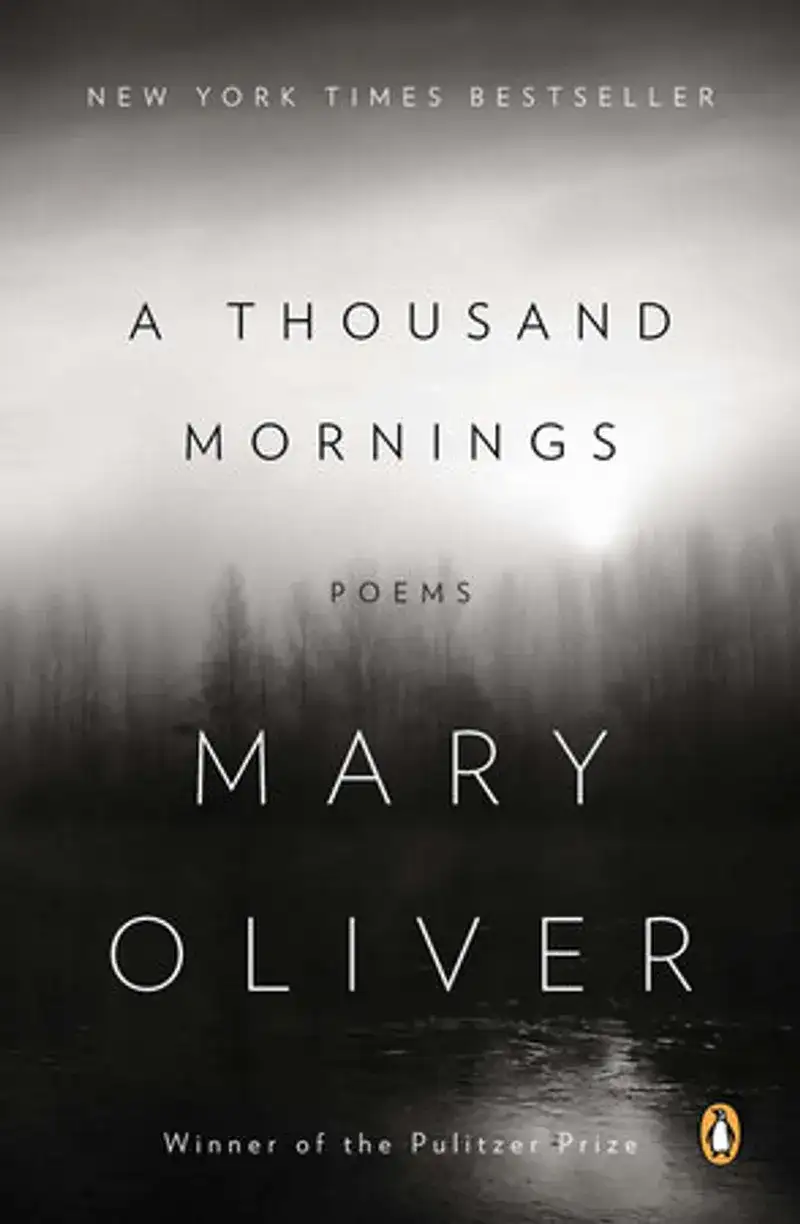

A Thousand Mornings Author: Mary OliverPage Count: UnknownPublication Date: 2013-PRH Mary Oliver’s A Thousand Mornings is a luminous meditation on presence, a quiet rebellion against the chaos of modern life. Published in 2013, this collection of poems is a testament to Oliver’s enduring genius—her ability to find the sacred in the ordinary, the divine in the overlooked. Like a seasoned guide leading us through Provincetown’s salt-kissed shores and whispering marshes, Oliver invites readers to slow down, to breathe, and to see the world as it truly is: alive, mysterious, and brimming with meaning. At its core, A Thousand Mornings is a book about attention. Oliver, a poet often compared to Whitman and Dickinson for her keen observation and spiritual depth, turns her gaze to the small, the fleeting, and the unassuming. A tree’s leaves become a lesson in patience. A dog’s death is a meditation on grief and gratitude. The sun rising over the ocean is both a daily miracle and a reminder of our own impermanence. These poems are not grand declarations but gentle nudges, urging us to notice what we’ve been too busy to see. Oliver’s style is deceptively simple. Her language is clean, unadorned, yet crackling with quiet intensity. She writes in short, unrhymed lines that feel like whispers or sighs, as if she’s sharing secrets with a close friend. There’s a humility in her approach—she never claims to have all the answers, only questions worth asking. In "Spring", she observes: "You do not have to be good. You do not have to walk on your knees for a hundred miles through the desert, repenting. You only have to let the soft animal of your body love what it loves." This is quintessential Oliver: a dismissal of performative piety in favor of raw, unapologetic tenderness. Her poetry is less about doctrine and more about lived experience, less about transcendence and more about the sacredness of the here and now. One of the collection’s most poignant themes is grief. Oliver’s beloved dog Percy, who appears in earlier works, is memorialized here in poems like "Percy Wakes Me" and "The First Snowfall". These poems are not maudlin but tender, capturing the way love lingers even in absence. In "Song for Autumn," she writes: "Now the leaves are just so much paper, but listen— the wind is still in the branches." There’s a ache in her words, but also a resilience. Oliver doesn’t flinch from sorrow, but she meets it with curiosity, as if it, too, is a teacher. Her humor is another hallmark, often surfacing in unexpected places. In "A Thousand Mornings," the title poem, she writes: "I go out to the pond in the early morning to sit on the lean-to platform and watch the sun rise. It’s a simple thing, really. But the way the light moves— it’s almost enough to make me believe in God." This blend of awe and whimsy is signature Oliver. She finds joy in the mundane, the ridiculous, the profoundly ordinary. It’s a reminder that spirituality isn’t just about cathedrals and hymns; it’s also in the way light catches dew on a spider’s web or the way a child laughs. Oliver’s Provincetown is more than a setting—it’s a character, a living, breathing entity. The salt air, the gulls crying, the dunes shifting with the wind—these are not backdrop but participants in her revelations. In "Provincetown," she writes: "The wind is a wild horse, and we are the riders, though we forget that most of the time." This is the essence of Oliver’s work: a call to remember our place in the natural world, to shed the illusions of control and step into the wildness of existence. A Thousand Mornings is a book to keep close, like a well-worn blanket or a favorite coffee mug. It doesn’t shout; it murmurs. It doesn’t demand; it invites. In a culture obsessed with noise and speed, Oliver’s poetry is a balm—a reminder that the most profound truths are often found in the spaces between thoughts, in the pauses between breaths. Mary Oliver has always been a poet of the open road, but in A Thousand Mornings, she turns inward, too, offering a kind of spiritual autobiography. She doesn’t offer easy consolations or neat resolutions. Instead, she leaves us with questions: What do you love? What do you grieve? What does the light show you today? These are the questions that linger long after the last page, like the echo of a seashell held to the ear. Oliver’s genius lies in her ability to make the familiar feel fresh, to make the ordinary feel extraordinary. She teaches us to listen—to the wind, to the trees, to the quiet voice inside that has always known the way home. #PoetryThatHeals #MaryOliver #AThousandMornings #NatureWriting #SlowLiving #PoetryForTheSoul Related InsightsCars on the Road (Disney/Pixar Cars on the Road) Book Review and Summary The Friday Night Club Book Review and Summary Start Lying to Yourself: New Truths to Manifest the Life You Want Book Review and Summary{ "@context": "https://schema.org", "@type": "FAQPage", "mainEntity": [ { "@type": "Question", "name": "What is the main focus of A Thousand Mornings Book Review and Summary?", "acceptedAnswer": { "@type": "Answer", "text": "Everything you need to know about A Thousand Mornings with our detailed review." } }, { "@type": "Question", "name": "Who authored the comprehensive guide on A Thousand Mornings Book Review and Summary?", "acceptedAnswer": { "@type": "Answer", "text": "This detailed article and its insights were carefully researched and authored by Tiago Silva." } }, { "@type": "Question", "name": "Where can I find more related content about Books?", "acceptedAnswer": { "@type": "Answer", "text": "You can explore more articles, detailed reviews, and similar insights by browsing the Related Insights section at the bottom of this article or visiting our dedicated Books category page." } } ] }