Showing Posts From
A year without home
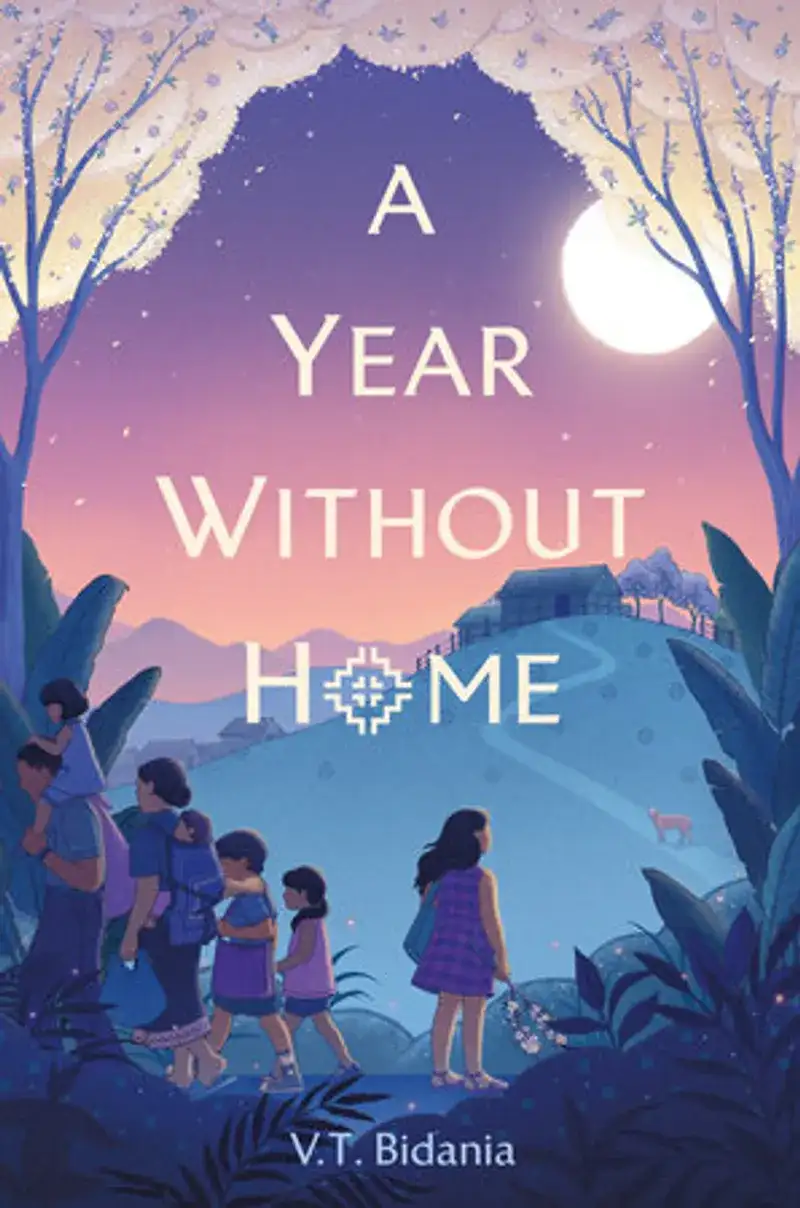
A Year Without Home Author: V. T. BidaniaPage Count: UnknownPublication Date: 2026-PRH A Year Without Home is a luminous and necessary middle-grade novel in verse that carries the weight of history with the tenderness of a child’s heart. V.T. Bidania crafts a story that is both deeply personal and universally resonant—a testament to resilience, cultural identity, and the quiet courage of those forced to flee their homes. Inspired by her own family’s journey as Hmong refugees after the Vietnam War, Bidania doesn’t just recount the past; she breathes life into it through the eyes of eleven-year-old Gao Sheng, a girl whose world unravels with terrifying speed but whose spirit refuses to break. At its core, A Year Without Home is about the meaning of home—not as a place, but as a feeling woven into memory, language, and belonging. Gao Sheng’s Laos is a sensory paradise: the scent of ripe peaches in her family’s orchard, the feel of grass beneath her when she rolls down the hill with her siblings, the sound of her mother’s voice singing in Hmong as she cooks. Home is the rhythm of her daily life, a life she takes for granted until the fall of Saigon and the withdrawal of U.S. troops threaten to erase it forever. When Gao Sheng’s father, a former Royal Lao Army captain, becomes a target of the communist regime, the family’s survival depends on a perilous escape across mountains, rivers, and refugee camps. The journey is harrowing—foot by foot, hiding from soldiers, crossing the Mekong in a flimsy canoe—but Bidania frames it not as a series of disasters, but as a slow unraveling of innocence. Gao Sheng’s quiet obedience, instilled by the expectation that a “good daughter” doesn’t complain, begins to crack under the weight of displacement. She wonders: What happens when home is gone? Who am I when I’m not where I belong? Bidania’s choice to write in verse is nothing short of revelatory. The sparse, lyrical lines mirror Gao Sheng’s internal state—her grief, her confusion, and ultimately, her reclamation of voice. There’s a haunting beauty in lines like “The river carries our fear away, but not our names,” a reminder of how easily identity can be submerged in the chaos of flight. Yet the verse also allows for moments of quiet transcendence. When Gao Sheng and her family finally reach the refugee camp in Thailand, the overcrowded tents and shared meals become a makeshift home, not because it’s safe, but because it’s shared. Here, Bidania shows how home is rebuilt through small, stubborn acts of love: a shared story, a stolen peach from a neighbor’s ration, the rediscovery of Hmong lullabies in the night. The verse form amplifies these moments, making them feel like sacred pauses in a relentless storm. What makes A Year Without Home so powerful is its refusal to romanticize refugee life. There are no easy victories here, no neat resolutions. The camp is a place of waiting—weeks, months, a year—where time stretches and hope frays. Gao Sheng’s father is consumed by guilt, her mother by exhaustion, and her younger siblings by confusion. The adults’ silence is a shield, but for Gao Sheng, it feels like a cage. It’s in the camp that she begins to find her own voice, first through whispered questions, then through small acts of defiance, and finally, in the closing pages, through the courage to speak her story aloud. Bidania’s portrayal of this transformation is subtle but seismic; it’s the kind of growth that sneaks up on you, leaving you in awe of a child’s quiet rebellion against silence. Bidania’s prose—whether in verse or sparse narration—is imbued with a deep respect for her characters’ cultural heritage. The Hmong traditions, from the significance of silver jewelry as a dowry to the oral storytelling that sustains the family through the journey, are woven seamlessly into the narrative. There’s no heavy-handed exposition; instead, Bidania trusts the reader to absorb meaning through context and repetition, much like Gao Sheng does. The result is a story that feels authentic, not appropriative—a rare feat in historical fiction about marginalized communities. A Year Without Home is more than a refugee story; it’s a story about what it means to be human in a world that constantly tries to strip you of your humanity. It’s about the Hmong experience, yes, but also about the universal longing for safety and the resilience of those who refuse to let go of their identity, even when the world tells them to. Bidania’s debut is a gift to young readers—a mirror for those who have experienced displacement and a window for those who haven’t. It’s a book that lingers, not just because of its historical importance, but because of its emotional truth. Gao Sheng’s journey is one of loss, but also of reclamation: she loses her home, but she finds her voice. And in doing so, she reminds us all that home is not just a place we leave behind—it’s something we carry, even in our darkest days. In a literary landscape where middle-grade stories about war and displacement are increasingly vital, A Year Without Home stands out for its lyrical grace, its unflinching honesty, and its unwavering hope. It’s a book that will make you laugh, cry, and—most importantly—listen. #AYearWithoutHome #HMongRefugeeStory #MiddleGradeBooks #HistoricalFiction #VTBidania #RefugeeVoices Related InsightsGenius, Illustrated: The Life and Art of Alex Toth Book Review and Summary The Little Book of Loss Rituals: 75 Practices for Grieving, Mourning, and Healing Book Review and Summary A Little Too Close - Madigan Mountain #2 Book Review and Summary{ "@context": "https://schema.org", "@type": "FAQPage", "mainEntity": [ { "@type": "Question", "name": "What is the main focus of A Year Without Home Book Review and Summary?", "acceptedAnswer": { "@type": "Answer", "text": "Everything you need to know about A Year Without Home with our detailed review." } }, { "@type": "Question", "name": "Who authored the comprehensive guide on A Year Without Home Book Review and Summary?", "acceptedAnswer": { "@type": "Answer", "text": "This detailed article and its insights were carefully researched and authored by Tiago Silva." } }, { "@type": "Question", "name": "Where can I find more related content about Books?", "acceptedAnswer": { "@type": "Answer", "text": "You can explore more articles, detailed reviews, and similar insights by browsing the Related Insights section at the bottom of this article or visiting our dedicated Books category page." } } ] }