Showing Posts From
Alarga tu esperanza
-
 Isabella Moore
 - 22 Aug, 2025 03:32
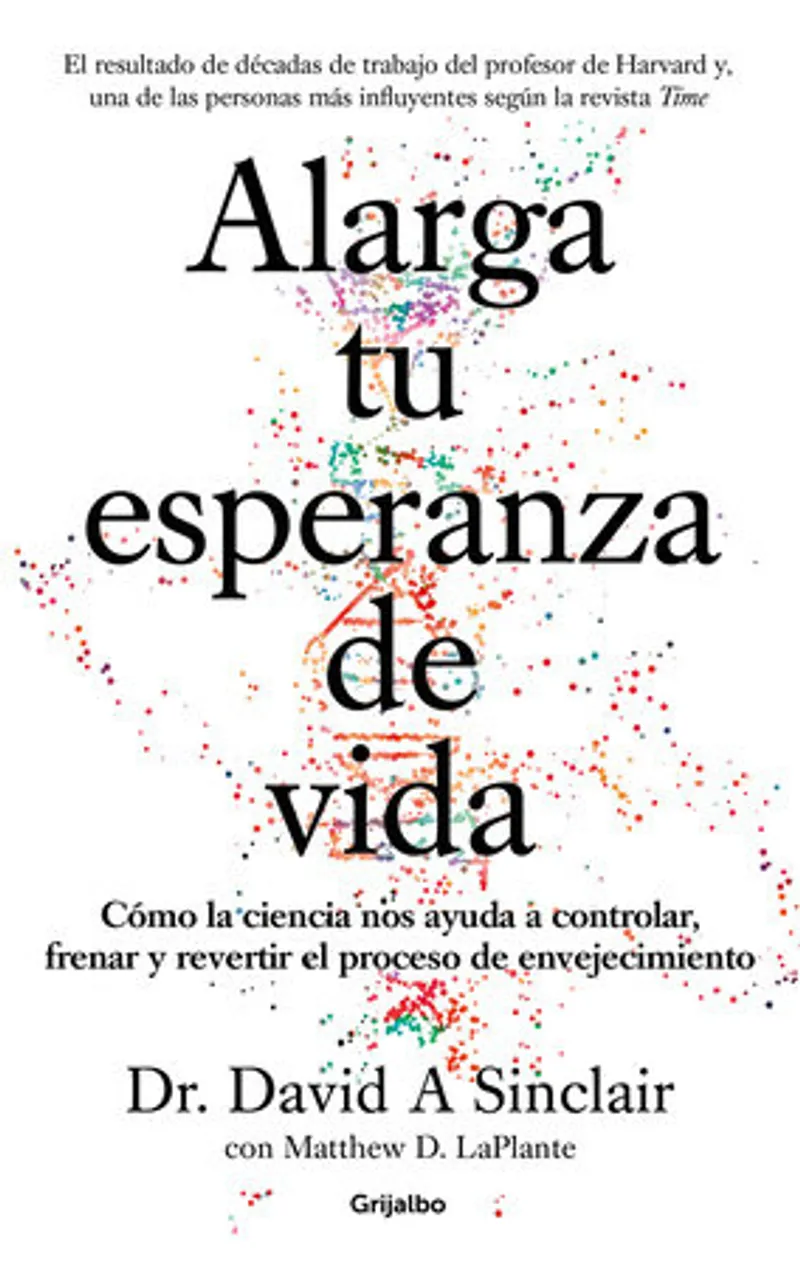
Alarga tu esperanza de vida: Cómo la ciencia nos ayuda a controlar, frenar y revertir el proceso de envejecimiento / Lifespan: Why We Age - and Why We Don't Book Review and Summary
Alarga tu esperanza de vida: Cómo la ciencia nos ayuda a controlar, frenar y revertir el proceso de envejecimiento / Lifespan: Why We Age - and Why We Don't Author: David A. Sinclair Page Count: UnknownPublication Date: 2020-PRH David Sinclair’s Lifespan: A Radical Reimagining of Aging—And How to Hack It What if aging isn’t an inevitable decline but a solvable problem? That’s the explosive premise of Lifespan: Why We Age—and Why We Don’t by Dr. David A. Sinclair, a Harvard geneticist and one of Time’s most influential people. In this bold, paradigm-shifting book, Sinclair doesn’t just challenge conventional wisdom—he dismantles it, offering a vision of the future where longevity isn’t a matter of luck but a science we can master. Sinclair’s core argument is as radical as it is compelling: aging is a disease, and like any disease, it can be treated. Drawing on cutting-edge research—including his own groundbreaking work on epigenetics and genetic reprogramming—he presents a compelling case that the aging process is not a fixed biological clock but a reversible condition governed by our genes. The key lies in a set of ancient survival mechanisms, hardwired into our DNA, that can be "rebooted" to restore youthful function. Sinclair’s lab has already demonstrated this in mice, where genetic tweaks extended their lifespans by up to 50%. The implications for humans? Nothing short of revolutionary. Sinclair’s writing is a masterclass in making complex science accessible without dumbing it down. He blends hard science with personal anecdotes, weaving together lab breakthroughs, historical insights, and practical advice. His tone is urgent yet optimistic, urging readers to see aging not as a passive fate but as a challenge we can actively combat. The book is part manifesto, part instruction manual, and entirely gripping—especially when Sinclair dives into the "how." He outlines actionable strategies, from intermittent fasting and cold exposure to targeted supplements like NMN (nicotinamide mononucleotide), which boosts NAD+ levels—a critical molecule for cellular repair. These aren’t just theoretical suggestions; Sinclair grounds them in real-world experiments, including his own self-experimentation with lifestyle tweaks that, he claims, have reversed some of his own biological aging markers. What makes Lifespan so compelling is Sinclair’s ability to balance big-picture vision with granular detail. He doesn’t just say "aging can be slowed"—he explains how, breaking down the role of sirtuins (longevity genes), the damage caused by epigenetic noise, and the potential of CRISPR-like tools to "reset" cells. His enthusiasm is infectious, whether he’s describing the potential of Yamanaka factors (which can turn back the clock on cells) or debunking myths about caloric restriction. Yet he’s also refreshingly candid about the uncertainties: not all of these technologies are ready for prime time, and some may carry risks. Sinclair’s honesty lends credibility to his optimism. The book’s greatest strength—and occasional weakness—is its ambition. Sinclair paints a future where aging is optional, where 100-year-olds might have the vitality of 50-year-olds, and where diseases like Alzheimer’s and heart failure are preventable. It’s thrilling, but at times, it borders on speculative. Sinclair acknowledges that human trials are still in early stages, yet his enthusiasm sometimes risks overselling the science. Still, even if some of his predictions take decades to fully materialize, the direction of travel is undeniable. The tools he describes—from senolytics (drugs that clear "zombie cells") to rapamycin analogs—are already being tested in humans, and the results are promising. Sinclair’s style is direct, conversational, and occasionally provocative. He doesn’t shy away from controversy, challenging the FDA’s slow approval of longevity drugs or critiquing Big Pharma’s reluctance to invest in anti-aging research. His frustration with institutional inertia is palpable, but it’s balanced by his faith in human ingenuity. The book is less a dry scientific treatise and more a call to arms—a rallying cry for scientists, policymakers, and individuals to rethink aging as a curable condition. Ultimately, Lifespan is more than a book about science; it’s a book about hope. Sinclair doesn’t just want us to live longer—he wants us to live better, free from the diseases and frailties that have long been accepted as inevitable. Whether you’re a skeptic or a true believer, his arguments are impossible to ignore. Aging may not yet be a treatable disease in the eyes of mainstream medicine, but Sinclair’s work suggests it soon could be. And that changes everything. #LongevityScience #AntiAging #DavidSinclair #Epigenetics #LifespanBook #FutureOfAging Related InsightsNorwegian Wood Book Review and Summary No Exit Book Review and Summary Perfect Chemistry Book Review and Summary{ "@context": "https://schema.org", "@type": "FAQPage", "mainEntity": [ { "@type": "Question", "name": "What is the main focus of Alarga tu esperanza de vida: Cómo la ciencia nos ayuda a controlar, frenar y revertir el proceso de envejecimiento / Lifespan: Why We Age - and Why We Don't Book Review and Summary?", "acceptedAnswer": { "@type": "Answer", "text": "Everything you need to know about Alarga tu esperanza de vida: Cómo la ciencia nos ayuda a controlar, frenar y revertir el proceso de envejecimiento / Lifespan: Why We Age - and Why We Don't with our detailed review." } }, { "@type": "Question", "name": "Who authored the comprehensive guide on Alarga tu esperanza de vida: Cómo la ciencia nos ayuda a controlar, frenar y revertir el proceso de envejecimiento / Lifespan: Why We Age - and Why We Don't Book Review and Summary?", "acceptedAnswer": { "@type": "Answer", "text": "This detailed article and its insights were carefully researched and authored by Isabella Moore." } }, { "@type": "Question", "name": "Where can I find more related content about Books?", "acceptedAnswer": { "@type": "Answer", "text": "You can explore more articles, detailed reviews, and similar insights by browsing the Related Insights section at the bottom of this article or visiting our dedicated Books category page." } } ] }