Showing Posts From
Ancientbritain
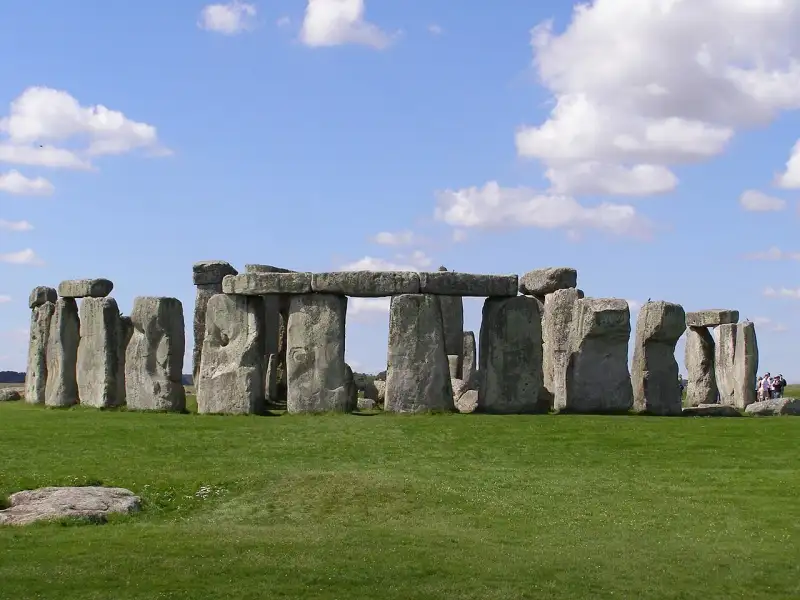

The Silence of the Stones: An Introduction to Eternity When the biting, unyielding wind sweeps across the vast, undulating expanse of the Salisbury Plain, it carries with it the unmistakable whispers of an epoch long swallowed by the voracious, unforgiving maw of time. Here, standing defiantly against the encroaching modernity of the twenty-first century, is a monument forged not merely of stone, but of sweat, blood, and an indomitable, almost terrifying human will to touch the divine. We call it Stonehenge. For millennia, it has been the silent sentinel of #AncientBritain, a riddle written in megaliths that has confounded kings, scholars, archaeologists, and wanderers alike. As an author who makes his living breathing life into the phantoms of the past, I find myself inextricably and obsessively drawn to the raw, visceral power of this place. The sheer, incomprehensible magnitude of the sarsen stones, silhouetted against a bruised, twilight sky, evokes a profound sense of awe that borders on dread. This is not merely a ruin; it is a testament to an ancient, breathing culture whose true name has been permanently erased from the annals of time, leaving only these silent, brooding giants to speak for them. In the grand, dramatic theater of #AncientHistory, there is perhaps no greater set piece, no more compelling a stage, than this circular sanctuary. To approach Stonehenge is to step across a threshold into a world that operates on a completely different frequency of time. We are accustomed to the frenetic pace of the digital age, where days blur into weeks and history is rewritten by the hour. But here, time is measured not in seconds or minutes, but in the slow, majestic turning of the celestial sphere, the creeping advance of the solstices, and the agonizingly slow weathering of solid rock. A Landscape Teeming with Phantoms Imagine, if you will, the plain as it was five thousand years ago. The air is thick, almost choking, with the scent of woodsmoke, roasting meat, and the metallic tang of freshly worked earth. The sounds of chanting, rhythmic, guttural, and deeply resonant, echo across the chalky downs, rising and falling like the tide. Men and women, their bodies painted with woad, their skin weathered by a life lived entirely exposed to the elements, and their eyes wide with religious fervor, gather under the vast, unpolluted canopy of the prehistoric night sky. They are the architects of eternity, driven by a cosmic clock that dictates the turning of the seasons, the birth of their cattle, and the meager harvest of their grain. The landscape surrounding the monument is not empty; it is a sprawling necropolis teeming with the ghosts of our ancestors. Every barrow that humps the horizon, every chalk-cut earthwork that scars the ground, every solitary standing stone in the surrounding countryside is a paragraph in a vast, epic narrative that we are only just beginning to decipher. To understand Stonehenge, we must first understand that it did not exist in isolation. It was the pulsing, beating heart of a sprawling, sacred geography. It was the absolute nexus where the world of the living violently, beautifully collided with the realm of the ancestors. The Architects Before Time: Blood in the Chalk Who were they, these primordial engineers who dared to reshape the earth? History, in its often arrogant simplicity, often paints the Neolithic Britons as simple savages, men and women clad in animal skins, scratching out a desperate, meager existence from a harsh, unforgiving land. But the stones tell a dramatically different, far more complex story. The construction of Stonehenge was an undertaking of such colossal scale, sophisticated planning, and logistical brilliance that it forces us to entirely reevaluate everything we thought we knew about the dawn of civilization in #AncientBritain. The First Builders and the City of the Dead The story of Stonehenge does not begin with the massive, iconic sarsens that define its silhouette today. It begins far earlier, around 3000 BCE, in a world transitioning from nomadic hunting to settled farming. The first monument was a simple, yet massive, circular earthwork—a henge—consisting of a ditch and a bank, carved into the stark white chalk of the plain using nothing but the shoulder blades of deer and antlers used as crude picks. Inside this pristine white enclosure, the early builders dug 56 mysterious pits, known today as the Aubrey Holes, named after the 17th-century antiquarian John Aubrey who first documented them. What was the true purpose of these pits? Were they sockets for massive wooden posts, creating a vast, imposing timber circle that predated the stone monument? Or were they, as the macabre evidence hauntingly suggests, receptacles for the cremated remains of the dead? The archaeological trowel points definitively to the latter. The Aubrey Holes contain the charred, fragmented remains of dozens of individuals. This transforms this early iteration of Stonehenge into a vast, circular cemetery, a city of the dead overlooking the undulating plains. The air here would have been perpetually thick with the acrid, oily smoke of funeral pyres, the wailing of mourners serving as a grim, continuous soundtrack to the nascent monument. It was a place of sorrow, of remembrance, and of a deep, abiding connection to those who had passed into the great beyond. The Arrival of the Bluestones: A Journey of Madness and Devotion The drama of Stonehenge truly unfolds roughly five centuries later, around 2500 BCE, with an act of sheer, almost incomprehensible audacity. The descendants of the first builders decided to drag massive stones to the site. But not just any stones. These were the bluestones, spotted dolerite and rhyolite, volcanic rocks possessing a strange, bluish hue when wet or freshly broken. The most astonishing, mind-bending part of this endeavor? These bluestones did not come from the local landscape. They were quarried from the jagged peaks of the Preseli Hills in western Wales, a staggering, grueling distance of over 150 miles away. Consider, for a moment, the sheer, brutal physical toll of this journey. The terrain between Wales and Salisbury Plain was unforgiving, a brutal mosaic of dense, impenetrable forests, treacherous, swallowing bogs, and churning, freezing rivers. How did a prehistoric people move these stones, some weighing up to four tons, across such an unforgiving landscape without the aid of the wheel or beasts of burden?The Over-land Route of Agony: Some historians and experimental archaeologists argue for a tortuous overland journey, employing massive wooden sledges, log rollers, and the sheer, unadulterated brute strength of hundreds of men and women pulling on ropes woven from twisted hide and plant fibers. The casualties must have been immense. Bones crushed under slipping stones, limbs broken, lives extinguished in the mud. The Perilous Coastal Voyage: Others suggest an equally perilous maritime route, floating the stones on massive, lashed-together rafts along the treacherous Welsh coast, up the Bristol Channel, and eventually down the River Avon. One sudden storm, one misjudged current, and the sacred stones—along with their human escorts—would be lost to the abyss.Whichever route they took, the transportation of the bluestones was an epic saga of human endurance, a generational undertaking that required unwavering dedication and a fanaticism that borders on madness. Why go to such extraordinary, deadly lengths? The answer almost certainly lies in the realm of the sacred. The bluestones were believed to possess magical, perhaps healing properties, their very substance imbued with the spirit of the distant Welsh mountains. To bring them to Salisbury Plain was not merely a construction project; it was a crusade to transport the divine itself, to anchor the magic of the ancestors in the chalk of Wessex. The Engineering Marvel of the Ancients: Forging the Giants If the transportation of the bluestones was a feat of staggering endurance, the subsequent erection of the sarsen stones—the gargantuan, indomitable sandstone blocks that form the outer circle and the inner horseshoe of trilithons—was a masterpiece of prehistoric engineering that defies logic. Shaping the Sarsen Giants with Flint and Sweat Brought from the Marlborough Downs, some 20 miles to the north, these monsters weighed up to 50 tons each. Moving them was only the first, brutal chapter in this herculean saga. The builders did not simply stand raw, unhewn boulders on end. They shaped them. They painstakingly dressed the incredibly hard sarsen stone using nothing more sophisticated than flint and smaller sarsen hammerstones. Imagine the scene: hundreds of men, their hands bloodied and blistered, pounding the surfaces of the great stones, millimeter by excruciating millimeter. They worked for years, perhaps decades, creating the smooth, slightly curved, rectangular blocks we see today. The sound of this relentless pounding must have been deafening, a rhythmic, percussive symphony of creation echoing across the plains day after day, year after year. The dust would have choked their lungs and blinded their eyes. This was not labor; this was a holy war against the very elements of the earth. #Stonehenge #AncientEngineering The Mortise and Tenon of Prehistory What truly elevates Stonehenge from a mere collection of standing stones to a sophisticated, unparalleled architectural marvel is the method used to join them. The builders did not rely on gravity alone, nor did they simply stack the stones like a child's blocks. They employed complex techniques borrowed directly from woodworking—specifically, the mortise and tenon joint. They carved massive, protruding pegs (tenons) on the tops of the upright stones and painstakingly hollowed out corresponding holes (mortises) on the undersides of the massive lintels that rested across them. Furthermore, the lintels themselves were subtly curved to form a perfect, continuous circle and joined end-to-end using complex tongue-and-groove joints. This interlocked the entire colossal structure, creating a ring of stone that was incredibly resilient to the ravages of time and weather. This is the genius of the ancients on full, unashamed display. They were not merely erecting markers; they were building an enduring, permanent temple, intentionally translating the impermanent, rotting architecture of their timber feasting halls into the immortal, eternal language of stone. They were building a house for the gods that would never fall. The People of the Stones: Grooved Ware and Beakers To understand the stones, we must understand the hands that raised them. During the period of Stonehenge's most dramatic construction, Britain was a melting pot of cultural shifts. The Grooved Ware Culture: Feasting at Durrington Walls The primary architects of the great sarsen circle are often associated with the 'Grooved Ware' culture, named for their distinctive, flat-bottomed pottery decorated with deep grooves. These were the people who inhabited the nearby super-settlement of Durrington Walls, located just a couple of miles from Stonehenge. Durrington Walls was a vast, sprawling complex of timber circles and hundreds of houses. Archaeological excavations have revealed massive middens—rubbish dumps—filled with the bones of tens of thousands of pigs and cattle. This was a place of immense, riotous feasting. Isotope analysis of the animal bones reveals a staggering truth: people were bringing livestock from as far away as the Scottish Highlands to feast at Durrington Walls in the midwinter. The dichotomy is poetic and profound. Durrington Walls, built of living, rotting timber, was the land of the living, a place of feasting, excess, and life. Stonehenge, built of cold, eternal stone, was the land of the dead, a place of silence, reverence, and eternity. The two sites were intimately connected by the River Avon, a literal and metaphorical conduit between life and death. The Beaker People: The Dawn of Bronze Just as the final stones were being rearranged at Stonehenge, a new culture swept into Britain from continental Europe—the Beaker people. Named after their distinctive, bell-shaped drinking vessels, they brought with them a revolutionary new technology: metalworking. The age of stone was ending; the age of copper and bronze was dawning. The Beaker people integrated with, and eventually superseded, the Grooved Ware culture. The famous "Amesbury Archer," a high-status burial found near Stonehenge, was a Beaker man, originating from the Alps. He was buried with gold hair tresses, copper knives, and the very beakers that gave his culture its name. The fact that this wealthy, powerful foreigner chose to be buried in the shadow of Stonehenge proves that the monument's fame and sacred power resonated far beyond the shores of Britain, drawing pilgrims and potentates from across the continent. Druids, Myth, and the Tapestry of Legend No exploration of Stonehenge is complete without delving headfirst into the swirling, intoxicating mists of myth and legend that have enveloped it for centuries. And at the heart of this mythology lies a single, evocative, and highly misunderstood word: Druid. The Shadow of the Sacred Oak For centuries, the popular imagination has inextricably linked Stonehenge with the Druids, the enigmatic, white-robed priests of the ancient Celtic world. We picture them wielding golden sickles, gathering sacred mistletoe from ancient oaks, and conducting esoteric, blood-drenched rituals within the stone circle at the absolute height of the summer solstice. This romanticized, deeply evocative vision, largely popularized by antiquarians like William Stukeley in the 18th century, is a potent narrative. The Druids represent the untamed, mystical heart of #AncientBritain, a counterpoint to the rigid, rational, and imperialistic world of the Roman conquerors who would eventually ruthlessly outlaw their practices. However, the cold, hard, uncompromising trowel of modern archaeology tells a vastly different story. The construction of Stonehenge predates the earliest known evidence of the Celtic culture and their Druidic priesthood by more than two thousand years. The original builders were not the Iron Age Celts of Roman history; they were a completely different, far older Neolithic and Bronze Age people whose true beliefs are lost to us. Yet, this historical inaccuracy does not entirely rob the Druid connection of its power. It is entirely plausible, perhaps even inevitable, that later generations, including the Celtic tribes and their Druids, recognized the inherent sacred nature of the site and incorporated it into their own spiritual practices. The stones, already ancient and imposing by the Iron Age, would have commanded reverence from anyone who stood before them. In the grand, sweeping narrative of historical fiction, the image of the Druid chanting amidst the sarsens remains a deeply compelling archetype, representing the continuous, unbroken thread of human spirituality seeking connection with the divine. Blood and Bronze: The Sacrificial Debates Where there is ancient, unfathomable religion, there is often the dark, lurking specter of sacrifice. Did the stones of Stonehenge truly run red with the blood of the chosen? This is a question that has thrilled and horrified storytellers, historians, and morbid tourists for generations. The historical record regarding human sacrifice in Neolithic and Bronze Age Britain is murky, a terrifying shadow play viewed in the flickering firelight of incomplete evidence. The Veneration of the Elite: Burials discovered near the site, such as the aforementioned Amesbury Archer, indicate a culture that venerated its elite, burying them with exquisite golden artifacts and the tools of their power. This speaks to reverence, not slaughter. The Gruesome Discoveries: Yet, there are darker, more sinister finds. Skulls with traumatic, blunt-force injuries. Bodies buried in strange, contorted positions, perhaps bound before death. And the chilling discovery of a decapitated man buried at the monument's edge during the later Iron Age.While there is no definitive, undeniable proof that ritual human sacrifice occurred routinely on the so-called "Slaughter Stone" (a highly dramatic and inaccurate name given by later, over-imaginative antiquarians to a fallen, iron-stained sarsen), the harsh, brutal reality of life in prehistoric times suggests that the shedding of blood, animal or otherwise, was likely an integral part of their communion with the gods. The very act of building the monument cost lives—men crushed beneath slipping fifty-ton stones, limbs mangled by snapping ropes, bodies broken by the relentless, grinding labor. In a very real, tangible sense, the monument is built upon a foundation of human sacrifice. Every stone stands as a headstone for the nameless laborers who gave their lives to raise it. Astronomical Alignments: The Cosmic Clock To truly grasp the profound significance of Stonehenge, one must cast their gaze upwards, away from the chalk, the blood, and the stone, and into the terrifying, beautiful vastness of the cosmos. Stonehenge is not just a temple; it is a celestial observatory, a massive architectural calendar built to capture the light of the heavens and bind the movements of the sky to the earth. The Solstice Watchers: Life and Death on the Horizon The most famous, undeniable alignment of Stonehenge is its orientation towards the sunrise on the summer solstice and the sunset on the winter solstice. This axis, extending from the very center of the monument, out through the entrance, and along the ceremonial Avenue, is the defining, foundational feature of the site's entire design. Imagine standing at the exact center of the circle on the longest day of the year. The air is cold and crisp, biting at your skin. The eastern horizon begins to pale, painting the sky in violent hues of crimson, purple, and gold. As the sun finally breaches the horizon, its first, blinding rays pierce the monument, casting long, dramatic shadows and perfectly aligning with the Heel Stone, a massive solitary sarsen standing just outside the main circle like a sentry. For the ancients, this was not a mere astronomical curiosity to be noted in a journal; it was a matter of absolute life and death. The solstices marked the critical turning points of the year. The winter solstice, in particular, was a time of deep, existential anxiety. Would the sun continue to sink lower in the sky, day after day, plunging the world into an eternal, freezing darkness? Or would it be reborn, promising the return of warmth, the thawing of the earth, and the continuation of life? Stonehenge was built to ensure the latter. It was a massive, stone engine designed to magically turn the wheel of the year and secure the survival of the tribe. They were not just watching the sun; they were participating in its resurrection. Eclipses, Lunar Nodes, and the Prehistoric Computer Some researchers, most notably the astronomer Gerald Hawkins in the 1960s, have argued passionately that Stonehenge's astronomical sophistication goes far, far beyond the relatively simple solar solstices. Hawkins controversially proposed that the 56 Aubrey Holes could have been used as an intricate system to predict lunar eclipses, tracking the complex, 18.6-year cycle of the lunar nodes. If this highly debated theory is true, it dramatically elevates the builders from mere farmers tracking the seasons to sophisticated, visionary astronomers, possessing a deep, mathematical understanding of celestial mechanics. It transforms Stonehenge into a Neolithic computer, a monument to the human intellect's desperate, beautiful desire to impose order and predictability upon the chaotic, terrifying canvas of the universe. While modern archaeologists heavily debate this "Stonehenge as a computer" theory, preferring simpler explanations based on ritual and ceremony, it adds an irresistible layer of intellectual mystery to the site. Are we looking at a temple of faith, or an academy of prehistoric science? Perhaps, in the minds of the ancients, there was no difference. #AncientAstronomy #CosmicClock The Sounds of the Stones: A Lithophonic Symphony There is another, often overlooked dimension to the enigma of Stonehenge: sound. The visual impact of the stones is so overwhelming that we forget to consider how the monument sounded. Recent acoustical archaeology—a fascinating new discipline—has revealed that the bluestones from Wales possess remarkable acoustic properties. When struck, they ring. They produce metallic, bell-like tones. They are lithophones. Imagine the rituals taking place within the circle. It wasn't just chanting and the crackle of fire. It was the ringing of the stones themselves, struck with mallets to produce a resonant, otherworldly symphony that would have vibrated through the very bones of the worshippers. The circular enclosure of the sarsens would have acted as an acoustic baffle, containing the sound, amplifying it, and creating an immersive, sensory experience that must have felt like the voice of the gods roaring into the earthly plane. The stones didn't just stand; they sang. A Journey Through the Ages: From Abandonment to Resurgence The story of Stonehenge did not end when the last sarsen was hauled into place and the final bluestone was aligned. The monument has stood, stoic and unyielding, through the agonizingly slow march of millennia, bearing witness to the tumultuous, bloody history of the British Isles. The Romans and the Twilight of the Gods When the heavily armored Roman legions waded ashore in 43 CE, bringing their arrow-straight roads, their rigid, unbending laws, and their pantheon of Mediterranean gods, Stonehenge must have seemed an incomprehensible, terrifying relic of a conquered, barbaric past. While the Romans definitely visited the site—leaving behind coins and pottery—they did not attempt to destroy it. Perhaps they recognized its inherent, lingering power, or perhaps they simply viewed it with a mix of imperial disdain and superstitious dread, leaving the sleeping giants well enough alone. Following the bloody collapse of Roman rule and the descent into the Dark Ages, Stonehenge entered a long period of twilight. The monument was abandoned, the knowledge of its true builders slipping into the abyss of forgotten history. The great stones began to fall, toppled by the slow, relentless erosion of the earth, the burrowing of animals, and perhaps, the intentional, fearful destruction by medieval religious zealots who viewed the site as a den of pagan witchcraft and devil worship. Medieval Mysticism and Arthurian Romance In the Middle Ages, the truth of Stonehenge was replaced by soaring fantasy. It became a place of dark magic and Arthurian legend. Geoffrey of Monmouth, the 12th-century chronicler who largely wove the rich tapestry of the Arthurian mythos, claimed with absolute authority that the stones were a monument to British nobles slaughtered by the treacherous Saxons, and that they had been magically transported from Ireland by none other than Merlin the wizard, using his dark arts to move the stones through the air. This fantastical, highly dramatic narrative dominated the popular understanding of Stonehenge for centuries, cementing its place in the romantic, mythical landscape of Britain. It wasn't until the Renaissance and the dawn of scientific antiquarianism in the 17th and 18th centuries that men like Inigo Jones, John Aubrey, and William Stukeley began to approach the site with a more analytical, yet still highly romanticized, eye. They began to dig, to measure, and to theorize, peeling back the layers of myth to reveal the even more astonishing truth beneath. Modern Controversies: Tunnels and Neo-Druids Today, Stonehenge is a UNESCO World Heritage site, a fenced-off marvel besieged daily by thousands of tourists armed with smartphones and an insatiable desire to capture the perfect photograph. The nearby highway, the heavily congested A303, thrums with the constant, irritating roar of modern traffic, a stark, jarring contrast to the profound, heavy silence of the stones. The site is currently at the center of fierce, ongoing modern controversies. Proposals to dig a massive road tunnel beneath the World Heritage Site to alleviate traffic on the A303 have sparked outrage among archaeologists, historians, and modern pagans alike, who fear the destruction of undiscovered artifacts and the irreversible alteration of the sacred landscape. The battle for Stonehenge's soul is far from over; it has merely shifted from the physical labor of dragging stones to the bureaucratic battles of the courtroom. Yet, despite the commercialization, the audio guides, and the controversies, the spiritual power of the place remains undiminished for many. During the summer and winter solstices, English Heritage graciously opens the stones to the public, and tens of thousands of modern Druids, Wiccans, New Agers, and curious revelers gather to watch the sunrise. They beat drums, blow horns, and touch the ancient rocks, seeking a connection to the earth and the cosmos that feels increasingly lost in our sterile, digitized world. The stones, it seems, still have the power to call to us. The Legacy That Remains: An Echo in the Chalk As an author who traffics in the drama of human history, I look at Stonehenge and I see the ultimate story—a narrative of staggering human ambition, of an unyielding, desperate desire to understand the terrifying cosmos, and to leave a permanent, undeniable mark upon a transient, decaying world. The true enigma of Stonehenge is not simply how it was built, though the engineering remains breathtaking. Nor is it precisely what it was used for, though the theories are endlessly fascinating. The true enigma lies in its enduring, unshakable resonance. It is a massive, stone mirror reflecting the anxieties, the hopes, the fears, and the dreams of every single generation that has stood before it. To the Neolithic farmers who first broke the chalk, it was a guarantor of the harvest and a house for the dead. To the Celts, a sacred grove of stone where the veil between worlds grew thin. To the medieval chroniclers, a testament to magic and lost kingship. To the Victorians, a puzzle to be solved. To us, in our frantic, modern age, it is a haunting, powerful reminder of the vast, uncharted depths of human history and our enduring need to find meaning in the alignment of the stars. When you stand on Salisbury Plain, the wind whipping your hair, and watch the sun dip below the horizon, casting the great trilithons into stark, black silhouette, you are not merely looking at a collection of old rocks. You are looking at a materialized prayer, a defiant shout into the void of eternity. You are looking at the indomitable spirit of #AncientBritain, a spirit that absolutely refuses to be silenced, echoing across five thousand years of wind, rain, and human folly. The stones keep their secrets well. They stand as a silent challenge to our modern hubris, reminding us that there are profound mysteries in this world that even our most advanced science cannot fully unravel, and that our ancestors possessed a wisdom and a dedication that we can barely comprehend. And perhaps, in the end, that is exactly as it should be. The silence of the stones is not an absence of meaning; it is a sacred space for our own imaginations to soar, to build our own myths, and to listen, just for a moment, to the voices of the ancient dead whispering in the wind. The blood, sweat, and tears that were poured into the dry chalky earth here created a monument that will outlast us all. We build our shining glass towers and our vast digital empires, arrogantly believing ourselves to be the pinnacle of creation. Yet, I wonder, in five thousand years, what will remain of our civilization? Will there be anything as majestic, as deeply resonant, as perfectly aligned, and as profoundly mysterious as the silent giants of Stonehenge? I highly doubt it. The enigma endures. The original architects are dust, the Druids are a romanticized myth, the true, specific purpose is forever lost to time, but the stones remain. Defiant, magnificent, and eternal, they stand as the ultimate testament to the beautiful, terrifying, and profoundly moving saga of humanity reaching for the stars. #History #AncientBritain Related InsightsThe Colosseum: Echoes of Eternity in the Heart of Rome The Great Pyramid of Giza: A Timeless Monument to Human Ingenuity The Whispering Stones of Chichen Itza: Echoes of the Maya{ "@context": "https://schema.org", "@type": "FAQPage", "mainEntity": [ { "@type": "Question", "name": "What is the main focus of The Enigma of Stonehenge: Druids and Giant Stones in Ancient Britain?", "acceptedAnswer": { "@type": "Answer", "text": "A dramatic deep dive into The Enigma of Stonehenge: Druids and Giant Stones in Ancient Britain. Mark Dinn explores the untold history, drama, and legacy of this fascinating subject." } }, { "@type": "Question", "name": "Who authored the comprehensive guide on The Enigma of Stonehenge: Druids and Giant Stones in Ancient Britain?", "acceptedAnswer": { "@type": "Answer", "text": "This detailed article and its insights were carefully researched and authored by Mark Dinn." } }, { "@type": "Question", "name": "Where can I find more related content about History?", "acceptedAnswer": { "@type": "Answer", "text": "You can explore more articles, detailed reviews, and similar insights by browsing the Related Insights section at the bottom of this article or visiting our dedicated History category page." } } ] }