Showing Posts From
Historical fiction
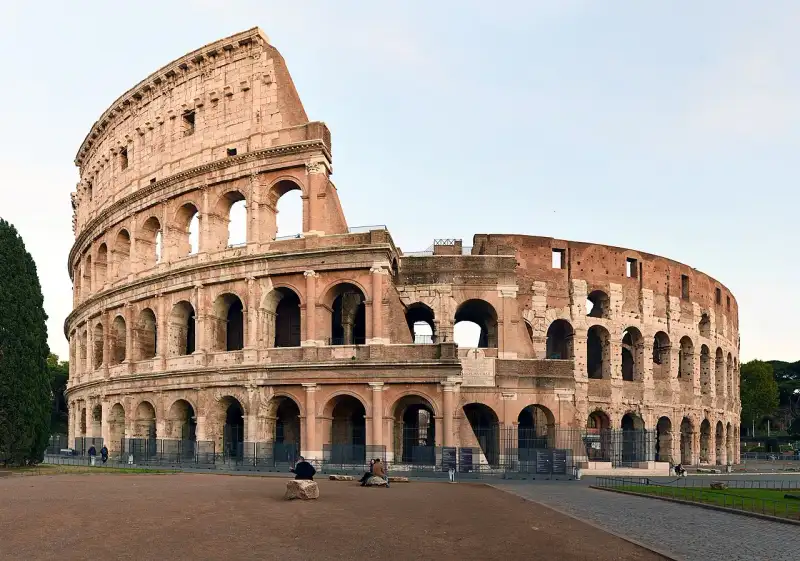

Close your eyes and listen. Can you hear it? Beneath the distant hum of modern traffic in the heart of the Eternal City, there is a phantom roar. It is the deafening, blood-curdling scream of fifty thousand souls, baying for blood under the blazing Mediterranean sun. The air is thick with the copper stench of spilled life, the musky odor of terrified, exotic beasts, and the acrid sting of burning incense meant to mask the smell of death. Welcome to the Flavian Amphitheatre. Welcome to the Colosseum. As a writer of historical fiction, I have walked the ruins of many ancient monuments, running my hands over cold stones and wondering about the stories they hold. #AncientHistory is not just a collection of dates and names; it is the raw, pulsing narrative of human triumph and depravity. And nowhere is that dichotomy more intensely concentrated than in the blood-soaked sands of Rome's greatest arena. Today, we dive deep into the belly of the beast. We will explore not just the architecture of this magnificent slaughterhouse, but the lived experiences of those who fought, bled, and died within its walls. We will uncover the secrets of the Colosseum, peeling back the layers of myth to reveal the terrifying, awe-inspiring reality of surviving Rome’s most infamous stage. #Rome #Colosseum #History The Roar of the Flavian Amphitheatre: An Introduction to Hell To understand the Colosseum, one must first understand the political climate of its inception. In the year 69 AD, known as the Year of the Four Emperors, Rome was torn apart by civil war following the suicide of the tyrannical Nero. Emerging from the chaos was Vespasian, a pragmatic and battle-hardened general. To consolidate his power and distance himself from Nero’s legacy of selfish excess, Vespasian made a brilliant political move. He drained the artificial lake of Nero’s opulent Golden House (the Domus Aurea) and decreed that a massive public amphitheater would be built in its place. He gave the land back to the people—in the form of an arena of death. Opened in 80 AD by Vespasian’s son, Titus, with a staggering hundred days of games, the Colosseum was an architectural marvel and a political weapon. It was a microcosm of Roman society, a place where the social order was strictly enforced through seating arrangements, and where the Emperor could present himself as a god among men, dealing life and death with the flick of a thumb. But for the men and women standing on the sand—the harena, from which we get the word "arena"—the politics meant nothing. For them, the Colosseum was a crucible of survival. The Architecture of Slaughter: The Secrets of the Hypogeum When you look at the Colosseum today, you see a labyrinth of brick and stone exposed where the arena floor used to be. This subterranean world is the hypogeum, the beating heart and secret engine of the amphitheater. It was added by the Emperor Domitian, and it transformed the games from mere combat into theatrical spectacles of impossible magic. The Trap Doors: The arena floor was dotted with dozens of trap doors. Imagine the terror of standing on the sand, knowing that at any moment, the ground beneath you could spring open, releasing a starving leopard, a pack of wolves, or a heavily armed opponent. The Elevators: To bring these beasts and men to the surface, the Romans engineered a complex system of pulleys, capstans, and elevators. Hundreds of slaves worked in the suffocating heat and darkness of the hypogeum, turning massive wooden capstans to lift cages to the arena floor. The timing had to be perfect. A missed cue meant ruining the Emperor’s show—a mistake punishable by death. The Aquaducts and Drainage: The Colosseum was connected to Rome’s massive aqueduct system. Not only did this provide drinking water for the spectators and a way to wash away the immense quantities of blood, but it also allowed for one of the most astonishing spectacles of all: the naumachiae, or naval battles, which we will discuss later.The hypogeum was a place of darkness, stench, and terror. It was a waiting room for the damned, where gladiators listened to the crowd above, knowing that the roar meant someone had just been slaughtered, and that their turn was approaching. #EngineeringMarvel #RomanArchitecture Forged in Fire: The Making of a Gladiator Who were the men who fought in the arena? Contrary to popular belief, they were not all condemned criminals thrown to the lions. While criminals (noxii) were certainly executed in the arena, the true gladiators were highly trained, highly valued athletes. They were the rock stars of the ancient world. Most gladiators were slaves, prisoners of war, or condemned men who had been sold to a lanista (an owner and trainer of gladiators). However, some free men actually volunteered for the arena. Why? For the chance at glory, wealth, and the adoration of the Roman public. A successful gladiator could win his freedom, symbolized by the presentation of a wooden sword, the rudis. Life in a gladiator school (ludus) was grueling. The training was relentless, focusing on mastering specific styles of combat. Gladiators were investments, and a lanista did not want to see his expensive fighter killed in his first bout. Therefore, they received excellent medical care—arguably better than most common Roman citizens. Their diet, however, would surprise modern athletes. The Barley Men: Gladiators were known as hordearii, or "barley men." Their diet consisted heavily of barley, beans, oatmeal, and dried fruit. Building a Shield: Why such a carb-heavy diet? The goal was to build a thick layer of subcutaneous fat. This fat served as a natural armor. A superficial slash across a fat belly would bleed dramatically—pleasing the crowd—but would not damage vital organs, allowing the gladiator to continue fighting. Bone Ash Tonics: To strengthen their bones after brutal training sessions, gladiators drank a foul-tasting concoction of water mixed with bone ash, acting as an early calcium supplement.The Classes of Combat: A Lethal Rock-Paper-Scissors Gladiatorial combat was not a chaotic free-for-all. It was a highly structured martial art, with specific classes of fighters pitted against one another to ensure a balanced and entertaining fight. The pairings were designed to contrast heavily armed, slow fighters with lightly armed, agile ones.The Murmillo: Armed with a large rectangular shield (scutum) and a short sword (gladius), the murmillo wore a heavily plumed helmet shaped like a fish. He was a tank—heavily armored and devastating in close quarters. The Thraex: The Thracian fought with a small rectangular shield and a curved sword called a sica, designed to reach around an opponent's shield and slash at their unarmored back. The Retiarius: The net-fighter was perhaps the most iconic and vulnerable gladiator. Armed only with a weighted net, a trident, and a small dagger, he wore no helmet and no leg armor. His only protection was a metal guard (galerus) on his left shoulder. He relied entirely on speed, agility, and the element of surprise.When a Retiarius faced a heavily armored Secutor (a variant of the murmillo designed specifically to fight the net-man), it was a battle of speed versus strength. The Retiarius had to keep his distance, trying to entangle his opponent, while the Secutor marched forward relentlessly, hoping to trap the lightly armed fighter in a corner. The tension of these mismatched bouts was what kept the Roman crowds coming back. #Gladiator #RomanHistory The Bestiarii and the Venationes: Nature Unleashed The mornings of the Roman games were dedicated to the venationes—the wild beast hunts. This was Rome’s way of demonstrating its dominance not just over other nations, but over nature itself. The Empire scoured its provinces, from the deserts of North Africa to the forests of Germania, to capture the most terrifying and exotic creatures imaginable. Lions, tigers, leopards, bears, rhinos, hippos, crocodiles, and elephants were all brought to the Colosseum. The logistics of transporting these animals alive across the Mediterranean were staggering, a testament to Roman engineering and stubborn cruelty. The men who fought these beasts were known as bestiarii. Some were trained hunters, armed with spears and bows, putting on a display of skill. Others were simply condemned criminals, thrust into the arena naked and unarmed, expected to die a horrific death for the crowd's amusement. The scale of the slaughter is almost incomprehensible to the modern mind. During the inaugural games of the Colosseum in 80 AD, the Roman historian Cassius Dio records that 9,000 animals were killed in just one hundred days. Over the centuries, the Roman appetite for blood led to the localized extinction of several species. The North African elephant and the Atlas bear were wiped from the face of the earth to satisfy the roar of the arena. #AncientWildlife #RomanEmpire Mythological Executions: Death as Theater At midday, when the Roman citizens paused to eat their lunches, the arena was turned over to the executions. But the Romans did not simply behead their criminals. In the Colosseum, executions were transformed into elaborate, macabre theatrical productions known as "fatal charades." The directors of the games would recreate famous myths and legends, casting condemned criminals in the starring roles. The catch? The criminals actually suffered the horrific fates of the mythological characters. The Fate of Icarus: A prisoner might be dressed as Icarus, fitted with wings, and forced to launch himself from a high platform, plummeting to his death on the sand below. The Agony of Prometheus: Another might be bound to a rock in the center of the arena, his stomach sliced open, while a starved bear or leopard was released from a trap door to play the role of the eagle tearing out his liver. The Fire of Hercules: A man condemned to burn might be forced to wear the "Tunic of Nessus"—a garment soaked in pitch and set ablaze, recreating the agonizing death of Hercules.These spectacles were designed not just to entertain, but to send a chilling message about the absolute power of Roman justice. The state controlled not only your life, but the narrative of your death. The Naumachiae: Flooding the Arena Perhaps the most mind-boggling secret of the Colosseum is the naumachia—the naval battle. Ancient sources, including the poet Martial, claim that in the early days of the Colosseum, before the hypogeum was fully built out with stone walls by Domitian, the arena floor could be flooded. Through a complex system of sluice gates connected to the aqueducts, the Romans could fill the basin of the arena with several feet of water. Flat-bottomed ships, built to scale, were brought in. These were not mere displays; these were full-scale battles featuring hundreds of combatants. The water would run red with blood as ships rammed each other and men drowned in the artificial lake. The engineering required to flood and drain the arena rapidly is a subject of intense debate among archaeologists today, but the accounts of the ancients insist that it happened, proving that in Rome, reality was often stranger—and more terrifying—than fiction. #Engineering #AncientRome The Emperor's Calculus: Bread, Circuses, and Power Why did the Roman state go to such astronomical expense to host these games? The answer lies in the famous phrase coined by the satirist Juvenal: panem et circenses—"bread and circuses." The population of Rome was massive, approaching one million people at its height. A significant portion of this population was unemployed, relying on the grain dole provided by the state. A bored, hungry, and crowded populace is a recipe for rebellion. The Emperor needed a way to distract them, pacify them, and bind them to him. The Colosseum was the ultimate political tool. By providing spectacular entertainment and distributing food during the games, the Emperor presented himself as the great provider. Furthermore, the arena was the only place where the Emperor regularly came face-to-face with the masses. It was a terrifying gauge of public opinion. If the crowd cheered, the Emperor was secure. If they rioted or mocked him, his life was in danger. The Emperor also controlled the ultimate power of life and death. When a gladiator was defeated but not killed, he would raise a finger to beg for mercy. The Emperor would look to the crowd. If they waved their garments and shouted "Mitte!" (Let him go!), he might spare the fighter. If they turned their thumbs and shouted "Iugula!" (Slit his throat!), the Emperor would order the death blow. By incorporating the crowd into this decision, the Emperor made them complicit in his power. A Day at the Games: From Sunrise to Sunset To survive a day at the Colosseum—even as a spectator—was an endurance test. The games were a full-day affair, beginning at dawn and ending at dusk. The Morning (Venationes): The day began with the beast hunts. The arena was transformed with painted wooden scenery to look like forests or deserts. The scent of exotic animals filled the air. The Midday (Executions): As the sun reached its zenith, the respectable citizens might leave to eat, while the poorer classes remained to watch the brutal, theatrical executions. This was the hour of blood and fire. The Afternoon (Munera): The afternoon was the main event—the gladiatorial combats (munera). The tension in the stadium would reach a fever pitch. Horns blared, hydraulic organs played, and the gladiators marched in, swearing their oath to the Emperor: "Ave Imperator, morituri te salutant" (Hail Emperor, those who are about to die salute you).The heat, the noise, the smell of blood and human sweat—it must have been an overwhelming sensory assault. To mitigate the heat, a massive canvas awning called the velarium was deployed over the seating area, operated by sailors of the Roman fleet. Saffron-scented water was sprayed over the crowd to mask the stench of the slaughter below. The Gladiatrix: Women in the Arena When we picture gladiators, we imagine hulking men. But there is a hidden secret of the arena: the gladiatrix. Women did fight in the Colosseum. Though rare and often considered a novelty act by the Roman elite, female gladiators existed. They were usually pitted against each other, or against wild beasts, often in the evening by torchlight to add to the exoticism of the spectacle. Emperor Domitian was particularly fond of staging matches between women and dwarfs. While male commentators often mocked these women, viewing them as a perversion of Roman gender roles, archaeological evidence suggests they were treated with the same seriousness as male fighters. A marble relief found in Halicarnassus (modern Turkey) depicts two heavily armed female gladiators, named Amazon and Achillia, fighting to a draw. The inscription honors them, proving that in the arena, skill and bravery could sometimes transcend gender. #Gladiatrix #WomenInHistory The End of an Era: The Silence of the Sand The bloody spectacle of the Colosseum could not last forever. As the Roman Empire slowly crumbled, and as Christianity took hold as the state religion, attitudes toward the games began to change. Christianity, with its focus on the sanctity of human life, found the gladiatorial games abhorrent. However, it was not an overnight change. The games continued for decades even after Rome became Christianized. The immense popularity of the spectacles made emperors hesitant to ban them entirely. The end came gradually. The last recorded gladiatorial fight took place around 404 AD. According to legend, a Christian monk named Telemachus leapt into the arena to stop a fight and was stoned to death by the outraged crowd. Appalled by this event, Emperor Honorius finally banned gladiatorial combat. The wild beast hunts (venationes) continued for another century, but eventually, the immense cost of maintaining the empire and the shifting moral landscape put an end to the bloodshed. The Colosseum fell into disrepair. It was struck by lightning, damaged by earthquakes, and eventually repurposed. It became a cemetery, a fortress for noble families, and eventually a massive quarry. The beautiful travertine marble that once covered its exterior was stripped away to build palaces and churches, including St. Peter's Basilica. The arena of death had become a skeleton. Echoes in Eternity: The Modern Legacy of the Colosseum Today, the Colosseum stands as a monument to the duality of human nature. It is a masterpiece of engineering and architectural genius, a testament to what human beings can achieve when they work together in pursuit of a grand vision. Yet, it is also a monument to profound cruelty, a place where hundreds of thousands of people and animals were slaughtered for the amusement of the mob. When we write historical fiction, we must embrace this duality. We cannot sanitize the past. To understand the Romans, we must look into the dark heart of the Colosseum and acknowledge the thrill they felt at the sight of spilled blood. We must acknowledge that the same society that gave us the foundations of modern law, philosophy, and engineering also found joy in the theatrical torture of their fellow human beings. The secrets of the Colosseum are not just about trap doors and hidden elevators. They are about the secrets of the human soul. The arena forces us to ask uncomfortable questions: What entertains us today? How do we treat the most vulnerable in our society? And if the Colosseum were rebuilt tomorrow, would we buy a ticket? As the sun sets over Rome, casting long shadows across the ruined arches of the Flavian Amphitheatre, the phantom roar fades into the hum of the modern city. But the ghosts of the arena—the murmillo, the bestiarius, the condemned prisoner, the slaughtered lion—they remain. They are trapped in the stone, echoing in eternity, reminding us of a time when death was the greatest show on earth. Stay curious, stay brave, and never forget the stories written in the sand. — Mark DinnDid you enjoy this deep dive into Roman history? Let me know your thoughts on the gladiators and the Colosseum in the comments below. For more tales of ancient battles, survival, and historical mysteries, be sure to check out my latest historical fiction novels. #MarkDinn #HistoricalFiction #WriterLife #AncientWorld #History #Rome Related InsightsWhisper of the Andes: Unraveling the Enigma of Machu Picchu The Whispering Stones of Chichen Itza: Echoes of the Maya The Edge of Empire: A Journey Along Hadrian's Wall{ "@context": "https://schema.org", "@type": "FAQPage", "mainEntity": [ { "@type": "Question", "name": "What is the main focus of The Secrets of the Colosseum: Surviving Rome's Bloody Arena?", "acceptedAnswer": { "@type": "Answer", "text": "A dramatic deep dive into The Secrets of the Colosseum: Surviving Rome's Bloody Arena. Mark Dinn explores the untold history, drama, and legacy of this fascinating subject." } }, { "@type": "Question", "name": "Who authored the comprehensive guide on The Secrets of the Colosseum: Surviving Rome's Bloody Arena?", "acceptedAnswer": { "@type": "Answer", "text": "This detailed article and its insights were carefully researched and authored by Mark Dinn." } }, { "@type": "Question", "name": "Where can I find more related content about History?", "acceptedAnswer": { "@type": "Answer", "text": "You can explore more articles, detailed reviews, and similar insights by browsing the Related Insights section at the bottom of this article or visiting our dedicated History category page." } } ] }
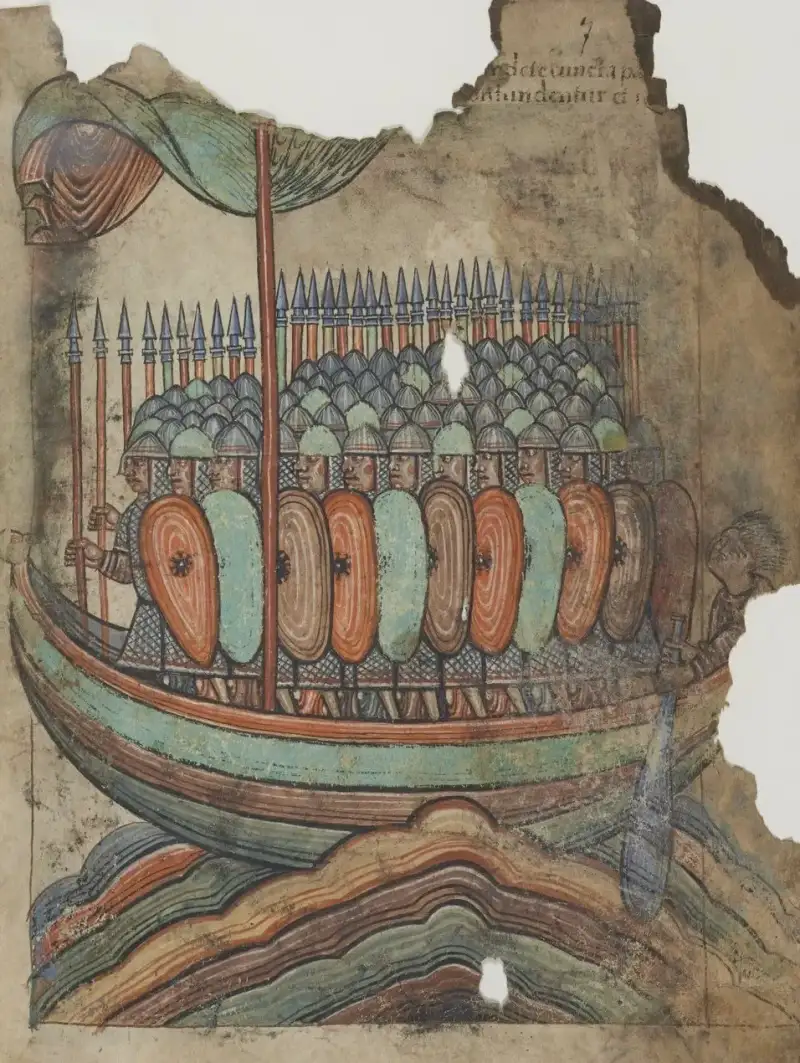
The biting chill of the North Sea wind howled like a choir of vengeful spirits, tearing at the heavy, woven wool sails of the longship as it cut mercilessly through the slate-grey waters. To the devout monks of Lindisfarne, the sea had always been a steadfast barrier, a vast, watery moat of God’s own creation protecting their sacred sanctuary from the chaos of the mainland. They did not know—could not have possibly known—that for the hardened men of the North, the sea was not a wall, but a grand, open highway. When the morning mist finally parted on that fateful, blood-soaked morning in 793 AD, it revealed not the comforting, golden light of dawn, but the terrifying, predatory silhouettes of shallow-drafted vessels. Their prows were carved into the snarling, aggressive visages of dragons and sea serpents, designed to frighten the land spirits of their victims. The Viking Age had officially arrived, heralded not by diplomats or royal decrees, but by the clash of cold steel, the terrifying roar of the berserker, and the crimson staining of holy ground. #AncientHistory #VikingAge I am Mark Dinn, and in my decades of weaving the intricate, often brutal threads of historical fiction, I have found very few tapestries as blood-soaked, culturally complex, and utterly captivating as that of the Norsemen. We universally call them "Vikings," a term that originally denoted a specific activity—fara í víking, going on an expedition or raid—rather than an ethnic or national identity. Yet, over the centuries, the word has become entirely synonymous with horned helmets (a complete Victorian theatrical fabrication), mindless savagery, and an unquenchable, animalistic thirst for plunder. The truth, as is always the case when one dares to peel back the heavy layers of myth and propaganda, is far more intricate, deeply dramatic, and endlessly fascinating. These were not merely unwashed barbarians hammering at the fragile gates of civilization; they were the supreme maritime navigators of their age, exceptionally shrewd merchants, intrepid global explorers, and pragmatic politicians who permanently reshaped the very map of Europe. Let us journey back, far beyond the embellished sagas and the Hollywood screens, to uncover the true, breathing Norse warriors behind the legends. #HistoricalFiction #NorseMythology #Vikings The Crucible of the North: Forging a Warrior Culture To truly understand the Viking, one must first understand the harsh, unforgiving forge in which he was made. The Scandinavian homeland—comprising modern-day Norway, Sweden, and Denmark—was a realm of stark, breathtaking natural beauty, but also of uncompromising environmental hostility. It was a land where winter held an iron dominion for much of the year, where the soil was often thin, acidic, and rocky, and where towering mountains plunged precipitously into deep, dark fjords. Survival here was a daily, exhaustive battle against the elements, breeding a people who were inherently resilient, fiercely resourceful, and intimately tied to the violent rhythms of nature. #Scandinavia #NordicHistory The Pressures that Broke the Ice As the late 8th century drew to a close, a volatile confluence of socioeconomic and environmental pressures began to build within this icy crucible. The situation was a powder keg waiting for a spark, driven by several key factors:Climatic Warming and Overpopulation: The region experienced a period of relative warming, which, paradoxically, led to a population boom. More mouths to feed meant less arable land to go around in a geography already starved for farming space. The Law of Primogeniture: The rigid cultural practice where the eldest son inherits the entire family estate left countless younger sons entirely disenfranchised, landless, and incredibly hungry for both material wealth and societal status. Political Consolidation: Ambitious chieftains and emerging petty kings began forcibly consolidating their localized power into larger realms, driving political dissidents, independent freemen, and defeated rivals out of their ancestral homes.Faced with a stark lack of opportunity at home, these desperate, ambitious men looked to the misty horizon. They possessed a martial culture that prized physical bravery above all other virtues, and they possessed the technological marvel that would make their wildest ambitions a reality: the longship. The combination was highly volatile. The resulting explosion across Europe was inevitable. #VikingHistory #MedievalEurope Masters of the Waves: The Engineering Miracle of the Longship If the Viking Age was a sudden, violent, earth-shattering storm, the longship was the lightning bolt that struck first. It is nearly impossible to overstate the absolute technological superiority of these vessels in the context of the early Middle Ages. While the rest of Christian Europe was painfully constructing heavy, lumbering cogs that required deep-water ports and highly favorable winds just to move, the Norse shipwrights were crafting absolute masterpieces of marine engineering. #NauticalHistory #Shipbuilding The secret of their dominance lay in their revolutionary construction methods. Built using the overlapping clinker method—where radially split oak planks were meticulously riveted together with iron and caulked with tarred animal hair or wool—the longships were incredibly flexible. They didn't stubbornly fight the massive waves of the ocean; they rode them, bending and flexing with the fury of the water like a living serpent. This flexibility made them incredibly fast, phenomenally seaworthy, and capable of crossing the treacherous, storm-tossed open waters of the North Atlantic. The Tactical Advantage of the Shallow Draft But their true, terrifying genius lay in their specific design geometry. They were perfectly symmetrical, allowing them to reverse direction instantly without the cumbersome need to turn the entire vessel around—a massive tactical advantage in the narrow confines of a river or during a hasty, contested retreat. Most importantly, they had an astonishingly shallow draft. A massive warship carrying fifty fully armed, mail-clad warriors could float in less than a meter of water. This specific engineering trait meant the Vikings absolutely did not need deep-water harbors to launch an invasion. They could navigate far up shallow, inland rivers, completely bypassing coastal defenses, striking at the soft, undefended underbelly of Europe. They could beach their ships directly on the sand or riverbank before their victims even fully realized they were under attack. The longship was, without hyperbole, the ultimate stealth bomber and amphibious assault craft of the medieval world. #VikingShips #NavalWarfare Lindisfarne: The Shattering of the Christian World "Never before has such terror appeared in Britain as we have now suffered from a pagan race," lamented the influential Northumbrian scholar Alcuin of York in a letter to the King. The year was 793, and the target was the Holy Island of Lindisfarne, the very cradle and beating heart of Christianity in northern England. #Lindisfarne #AngloSaxon The monks of Lindisfarne were incredibly wealthy, and far more importantly to the raiders, they were entirely defenseless. To the devout Christian mindset of the 8th century, a monastery was an absolute sanctuary, protected by the invisible wrath of God and the respect of civilized men. To the pragmatic, opportunistic Norse mindset, a monastery was simply an undefended treasure house, packed to the rafters with solid gold chalices, silver reliquaries, and jeweled gospel books, guarded only by soft men whose strange religion expressly forbade them to raise a sword in self-defense. It was an irresistible, highly logical target. The raid on Lindisfarne was a psychological earthquake that fractured the medieval psyche. The Norsemen arrived unannounced, slaughtering the monks where they stood, drowning some in the freezing sea, and dragging others away in iron chains to be sold as slaves in foreign markets. They stripped the gilded altars bare and trampled the holy, ancient relics into the mud. When news of the atrocity spread across the continent, it was met with absolute, paralyzing horror. How could an omnipotent God allow dirty pagans to desecrate His holiest sites? The terrified answer, many clerics concluded, was that the Vikings were a divine, apocalyptic punishment for the mounting sins of the Christian world. This horrific raid marked the official, bloody commencement of the Viking Age, initiating three centuries of relentless terror, extortionate tribute, and permanent cultural transformation. #Christianity #VikingRaids The Warrior Ethos: Honor, Iron, and the Halls of Valhalla What specific internal fire drove a man to leave his family, cross a raging, unpredictable ocean in an open wooden boat, and willingly throw himself into the meat-grinder of a shield wall? The answer lies in the deeply ingrained, unyielding warrior ethos of the Norse people, an ethos intrinsically and permanently linked to their fatalistic cosmology and their demanding gods. #Valhalla #Odin The Norse fully believed in a pantheon of deeply flawed, violently passionate, and immensely powerful deities. Odin, the All-Father, was not merely a benevolent god of wisdom, but a terrifying god of war, bloody frenzy, and death. Thor, the mighty thunderer, was the fierce protector of mankind, endlessly wielding his crushing hammer Mjolnir against the chaotic forces of the giants. To truly worship these gods was to emulate their violence and their bravery. The Unbreakable Threads of Fate Central to their entire belief system was the absolute concept of Fate, known as Wyrd. A man's time of death was spun by the mystical Norns before he was even born into the world. Nothing he did, no amount of cowardice or caution, could change the specific day he was destined to die. Therefore, the only thing a man could truly control was how he died, and the lasting reputation he left behind in the songs of the skalds. The ultimate, overriding goal of a Norse warrior—a true Drengr—was to fight with unparalleled bravery and fall in the heat of battle, his sword firmly in hand. Only then would he be personally chosen by the terrifying Valkyries to ascend to Valhalla, Odin's great hall of the slain, where he would feast on boar and fight his brothers for all eternity until the apocalyptic end of the world at Ragnarok. This fatalistic, dark worldview created warriors completely and utterly devoid of the paralyzing fear of death. To retreat from a pitched battle was not just considered cowardly; it was a profound denial of fate and a direct, unforgivable insult to the gods themselves. This psychological armor made the Vikings terrifying, relentless opponents. Among their ranks were the legendary Berserkers, elite shock troops who worshipped Odin and fought in a trance-like, animalistic fury. They purportedly bit the rims of their wooden shields, howled like wolves, and ignored grievous wounds, entirely convinced they were temporarily impervious to iron and fire. While the exact historical reality of the berserker state is still fiercely debated by modern historians—some attributing it to psychological conditioning, others to the ingestion of hallucinogenic mushrooms—the sheer, unbridled ferocity of the Norse infantry charge was undisputed by anyone who survived it. #Berserker #NorseMyth #VikingWeapons The Silk Road of the North: Traders, Explorers, and the Varangian Guard If we paint the Vikings solely in the crimson blood of their victims, we miss half the historical picture. The exact same longships that brought terrifying raiders to the misty coasts of France and England also carried shrewd merchants to the very edges of the known, civilized world. The Norse were consummate, pragmatic opportunists; if a coastal town was heavily fortified and well-defended, they traded silver for goods; if it was weak and unguarded, they drew their axes and raided. Often, they engaged in both activities on the very same voyage. #VikingTrade #MedievalCommerce Their economic trade networks were staggeringly vast and incredibly complex. While the Danes and Norwegians focused their maritime efforts largely on the west—battering the shores of Britain, Ireland, and Francia—the Swedes, known to history as the Rus, turned their dragon prows eastward. Navigating the treacherous, winding river systems of Eastern Europe, they established permanent fortified trading posts that would eventually grow into the massive, powerful city-states of Novgorod and Kyiv, literally laying the foundational political and genetic roots of modern Russia, Belarus, and Ukraine. The Lure of the East The Rus dragged their ships overland to travel down the Volga and the Dnieper rivers, eventually reaching the warm waters of the Caspian and Black Seas. They traded highly prized northern goods: dense furs, golden amber, carved walrus ivory, and—most crucially and brutally—tens of thousands of Slavic slaves. In exchange, they received the fabulous, unimaginable wealth of the Islamic Caliphates and the ancient Byzantine Empire. Millions of silver dirhams minted in Baghdad and Damascus have been found buried in massive Swedish hoards, a silent, gleaming testament to this sprawling, intercontinental economic web. In Constantinople, the glittering capital of the Byzantine Empire, the Norsemen encountered a civilization of wealth and political intrigue they could hardly comprehend. The Byzantine Emperors, recognizing the fierce, unyielding loyalty and terrifying martial prowess of these towering northern giants, formed the Varangian Guard. This elite, highly paid unit of axe-wielding bodyguards served directly under the Emperor, fighting in brutal campaigns across the Mediterranean, from Sicily to Syria, and returning to the snowy fjords of Scandinavia laden with gold, exotic spices, and shimmering silks. The incredible story of Harald Hardrada, a Norwegian prince who spent years commanding the Varangian Guard before returning north to violently claim the throne of Norway, remains one of the most epic, sweeping sagas of the entire era. #VarangianGuard #ByzantineEmpire #Constantinople From Raiding to Conquest: The Great Heathen Army and the Danelaw For decades, Viking raids followed a highly predictable, seasonal pattern: violent hit-and-run strikes during the warm summer months, followed by a swift return to Scandinavia before the deadly autumn storms churned the North Sea. But in the pivotal year of 865 AD, everything fundamentally changed. A massive, unprecedented coalition of Norse warriors, which the terrified writers of the Anglo-Saxon Chronicle dubbed the micel heathen here—the Great Heathen Army—landed on the shores of East Anglia. This was no longer a simple raid for silver; this was a coordinated, full-scale invasion of a nation. #GreatHeathenArmy #Invasion Legend dictates that this massive army was jointly led by the vengeful sons of the legendary hero Ragnar Lothbrok—Ivar the Boneless, Halfdan, and Ubba—seeking bloody retribution for their father's execution in a pit of venomous snakes by the arrogant King Aella of Northumbria. Regardless of the mythological embellishments added by later poets, the historical reality is that this highly organized army carved a bloody, unstoppable swath through the politically fragmented, squabbling kingdoms of Anglo-Saxon England. The Tactics of Total War They employed brilliant, highly adaptive strategic warfare. They captured local horses to move their infantry rapidly across the countryside, outmaneuvering the slower English armies. They fortified overwintering camps on strategic river islands, allowing them to maintain their military presence year-round rather than retreating. Kingdom after kingdom fell to the Norse axes. Proud Northumbria collapsed in a bloody coup, East Anglia was brutally conquered, and the powerful kingdom of Mercia was brought entirely to its knees. Only the southern kingdom of Wessex, under the stubborn, brilliant leadership of King Alfred the Great, managed to stem the relentless tide through a combination of guerrilla warfare and military reorganization. The resulting, uneasy peace treaty physically divided England, creating the Danelaw—a vast swathe of northern and eastern England where Danish laws, customs, and language held total sway. The Vikings had officially transitioned; they were no longer just raiders stealing wealth; they were settlers, land-owning farmers, and political rulers. They established the fortified city of Jorvik (modern York) as a thriving, multicultural hub of international trade, leaving an indelible, permanent Norse imprint on the culture, laws, and genetics of the British Isles. #Danelaw #AlfredTheGreat #Jorvik The Unsung Heroes: Shieldmaidens and the Matriarchs of the North The popular, modern image of the Viking Age is overwhelmingly, almost exclusively male, dominated by bearded men swinging broad axes. Yet, the complex society that produced these famous warriors was remarkably nuanced regarding gender roles and expectations. While the Norse world was undeniably patriarchal, women possessed legal rights, social agency, and economic power that were almost completely unheard of in the heavily subjugated female populations of the rest of medieval Christian Europe. #WomenInHistory #VikingWomen A free Norse woman could legally own property in her own name, officially request a divorce if her husband displeased her or failed to provide, and reclaim her full dowry if the marriage failed. When the men went "a-viking" for months or years on end, or engaged in long-distance trading, the women were left in absolute, unquestioned command of the sprawling farms and estates. They managed the complex finances, directed the labor of the thralls (slaves), and ensured the harvests were brought in before the snows fell. The ultimate symbol of a Norse woman's profound authority was not a weapon, but the heavy set of iron keys she wore proudly suspended from her ornate bronze brooches. The Reality of the Warrior Women But what of the legendary Shieldmaidens—the skjaldmær? The ancient sagas are utterly replete with heroic tales of fierce warrior women like Lagertha, Hervor, and Brynhildr, who fought fiercely in the bloody shield wall alongside the men, commanding fleets and armies. For centuries, traditional male historians dismissively categorized these stories as mere mythological archetypes or romantic fantasies. However, the historical paradigm shifted dramatically and permanently in 2017 with the advanced genomic analysis of a famous 10th-century warrior grave discovered in Birka, Sweden. The grave, packed to the brim with an array of deadly, high-quality weapons, sacrificed horses, and the tactical gaming pieces of a high-ranking military officer, had always been confidently assumed to belong to a male chieftain. The modern DNA results were absolute and conclusive: the esteemed, highly decorated warrior was biologically female. While it is highly unlikely that women formed a massive portion of the rank-and-file fighting forces, the physical evidence strongly suggests that exceptional, driven women did indeed take up the sword, proving definitively that the fiercely independent Viking spirit was never confined by gender. #Shieldmaiden #BirkaWarrior #Lagertha The Siege of Paris: Extortion on a Royal, Imperial Scale The soaring ambition of the Norsemen was never limited to the foggy shores of Britain. The politically fractured Carolingian Empire, the wealthy remnants of Charlemagne's vast European realm, presented an incredibly lucrative, tantalizing target. The broad, slow-moving rivers of Francia—the Seine, the Loire, the Garonne—quickly became heavily trafficked highways for massive Viking fleets seeking plunder and political leverage. #Francia #SiegeOfParis In the spring of 845 AD, a massive, terrifying fleet of 120 longships, commanded by a ruthless chieftain named Reginherus (whom many historians conflate with the legendary Ragnar Lothbrok himself), sailed aggressively up the Seine and laid direct siege to Paris, the jewel of the empire. The Frankish King Charles the Bald frantically assembled an army to defend the city, but the Vikings employed devastating psychological warfare. In full view of the terrified Frankish troops stationed on the riverbanks, the Vikings brutally executed 111 prisoners by hanging them from trees in a mass sacrifice honoring Odin. The Frankish army, horrified and demoralized by the sheer brutality, fled in terror without striking a blow, and the Vikings thoroughly sacked the city of Paris. The Birth of the Danegeld and the Normans To save his burning capital, Charles the Bald resorted to a desperate political tactic that would become disastrously common across Europe: he paid the Danegeld. He handed over an astonishing 7,000 pounds of pure silver to convince the Vikings to lift the siege and leave. It worked, but only temporarily. Paying a Viking to leave only ensures that he, or his heavily armed cousins, will inevitably return the moment the silver runs out. The Norsemen quickly learned that strategic extortion was often far more profitable—and far less physically dangerous—than outright, bloody combat. Decades later, the Vikings returned in force, and the geopolitical situation culminated in the early 10th century when a massively powerful chieftain named Rollo laid heavy siege to the city of Chartres. Recognizing that the Norsemen could not be permanently defeated by military force alone, the Frankish King Charles the Simple made a brilliant, enduring political maneuver. In 911 AD, he offered Rollo a vast, wealthy tract of land in northern France, provided Rollo convert to Christianity, swear fealty, and aggressively defend the coast against all other incoming Viking raiders. Rollo pragmatically accepted the deal. The land became forever known as Normandy (the land of the Northmen), and Rollo's highly adaptable descendants—the Normans—would eventually cross the channel and conquer all of England in 1066. #Normandy #Rollo #MedievalFrance Sailing the Edge of the World: Ice, Green Lands, and Vinland The exact same socio-economic pressures that drove the Vikings south into Europe and east into Russia also drove them west, directly into the uncharted, freezing, and utterly terrifying void of the open North Atlantic. They were unparalleled, instinctive navigators, relying not on magnetic compasses, but on their deep, generational understanding of the sun's position, the stars, the shifting ocean currents, the color of the water, and the flight patterns of seabirds to guide their fragile wooden longships across the vast, open ocean. #Exploration #NorthAtlantic In the late 9th century, intrepid Norse explorers discovered Iceland, a volcanic, geothermally active island of stark, otherworldly beauty. A massive migration rapidly followed, as fiercely independent chieftains, fleeing the increasingly autocratic and taxing rule of King Harald Fairhair of Norway, sought a new, unclaimed land where they could govern themselves entirely free of royal interference. They established the Althing, one of the world's absolute oldest surviving democratic parliaments, creating a unique, functioning republic without a king. Reaching the New World But the western horizon always beckoned to the most restless souls. In 982 AD, a notoriously fiery-tempered man named Erik the Red was legally exiled from Iceland for committing multiple murders. With nowhere else to go, he sailed further west into the ice flows and discovered a massive, glacially capped landmass. With a modern marketer’s distinct flair for branding, he deliberately named it "Greenland" to attract eager settlers from overcrowded Iceland. The most astonishing, world-changing chapter of Norse exploration, however, belongs to Erik's restless son, Leif Erikson. Around the pivotal year 1000 AD—a staggering five full centuries before Christopher Columbus was even born—Leif sailed further west from the settlements of Greenland, making historical landfall on the rugged coast of North America. He called this bountiful new territory Vinland (Land of Wine), due to the abundance of wild grapes and fertile soil he found there. The sagas describing this incredible trans-Atlantic journey were long dismissed by European scholars as mere mythological tall tales, right up until the 1960s, when archaeologists finally uncovered the physical remains of a Norse settlement at L'Anse aux Meadows in Newfoundland, Canada. The undeniable physical evidence of iron smithing and Norse architecture proved definitively that the Vikings were the very first Europeans to set foot in the Americas, pushing the absolute boundaries of the known, civilized world to their absolute limits. #Vinland #LeifErikson #LAnseAuxMeadows #Discovery The Twilight of the Gods: 1066 and the End of an Era No storm, no matter how violent or world-altering, lasts forever. The Viking Age, which had raged unabated across the globe for nearly three bloody centuries, eventually began to inevitably subside. The historical reasons for this decline were complex, interconnected, and manifold. Firstly, the Scandinavian homelands themselves fundamentally changed. The once-fractured kingdoms became centralized and politically stable under powerful Christian kings, dramatically reducing the number of exiled, landless chieftains desperately seeking fortune abroad. Secondly, European military defenses vastly improved; kings ordered the construction of heavily fortified towns (burhs), built bridges to block river access, and maintained professional standing armies, making the business of raiding significantly more dangerous and far less profitable. #1066 #VikingEnd The Power of the Cross Most importantly, however, the Norsemen were slowly, inexorably assimilated into the very Christian cultures they had once terrorized. The ultimate, victorious weapon against the Viking was not the broadsword or the castle wall, but the cross. The gradual, often forceful Christianization of Scandinavia fundamentally and permanently altered the Norse worldview. The glorious promise of fighting in Valhalla was violently replaced by the terrifying threat of burning in Hell; the ruthless warrior ethos was slowly tempered by the Christian doctrines of peace and sin. Scandinavian Kings quickly began to realize that the organized Church offered a massively powerful political tool for centralizing absolute authority, collecting taxes, and legitimizing their permanent rule through the concept of divine right. The definitive, bloody end of the Viking Age is traditionally pegged by historians to the momentous year 1066. Harald Hardrada, the towering King of Norway and the last great Viking warlord of the old breed, launched a massive, ambitious invasion of England, seeking to violently claim the empty throne. He met the defending English King Harold Godwinson at the infamous Battle of Stamford Bridge in Yorkshire. In a brutal, exhausting, hand-to-hand conflict that lasted all day, the Norse army was completely annihilated. Hardrada himself, the giant who had survived wars in Byzantium and Sicily, fell dead with an English arrow violently piercing his throat. The terrifying Viking threat to England was finally, permanently extinguished. Ironically, just three short weeks later, that same victorious Harold Godwinson would be utterly defeated and killed at the Battle of Hastings by William the Conqueror—the Duke of Normandy, and a direct, blood descendant of the Viking chieftain Rollo. The Norsemen had not truly been defeated by history; they had simply evolved to master it. #StamfordBridge #Hastings #WilliamTheConqueror Conclusion: The Enduring Legacy of the North Today, the sleek dragon ships no longer prowl the misty coasts of Europe, and the bloody altars of Odin have long since gone cold and silent under the earth. Yet, the profound, inescapable legacy of the Vikings is woven inextricably into the very fabric of the modern world. #Legacy #ModernHistory We speak their ancient words daily without realizing it. The English language is heavily, permanently peppered with Old Norse terminology—foundational words like sky, knife, window, husband, anger, trust, and even the days of the week we structure our lives around (Thursday is Thor's day, Wednesday is Odin/Woden's day, Friday is Freya's day). They established trading hubs that grew into massive cities that thrive to this very day, from the pubs of Dublin to the golden domes of Kyiv. Their unparalleled innovations in shipbuilding and oceanic navigation directly laid the necessary technical groundwork for the later Age of Global Exploration. More than the physical artifacts and the linguistic remnants, the Vikings endure fiercely in our collective, global imagination. They represent a primal, untamed human spirit, a ferocious, uncompromising independence, and a fearless, bold confrontation with the vast unknown. In my own daily work as an author of historical fiction, I find myself continually, obsessively drawn back to the mist-shrouded, icy fjords and the terrifying, blood-soaked shield walls. I return to them because the raw human drama, the massive stakes, and the sheer scale of the Viking Age are utterly unparalleled in human history. They were men and women of immense, beautiful contradictions: they were savage, remorseless killers who composed breathtaking, intricate poetry; they were ruthless, greedy extortionists who crafted exquisite, delicate jewelry; they were fierce pagan warriors who ultimately shaped the geographic and political destiny of Christian Europe. The story of the Viking raids is not merely a depressing tale of death and destruction. It is the epic, sweeping story of a dynamic, restless, brilliant people bursting forth from the ice, driven by sheer necessity, burning ambition, and a fatalistic courage, to permanently carve their names into the very bedrock of human history. And as long as the north wind blows cold and the grey waves crash violently against the shore, the legends of the true Norse warriors will never be forgotten. #MarkDinn #HistoryWriter #EpicHistory #NorseLegacy Related InsightsThe Rosetta Stone: Breaking the Silence of Ancient Egypt The Great Pyramid of Giza: A Timeless Monument to Human Ingenuity The Whispering Stones of Chichen Itza: Echoes of the Maya{ "@context": "https://schema.org", "@type": "FAQPage", "mainEntity": [ { "@type": "Question", "name": "What is the main focus of Viking Raids: The True Norse Warriors Behind the Legends?", "acceptedAnswer": { "@type": "Answer", "text": "A dramatic deep dive into Viking Raids: The True Norse Warriors Behind the Legends. Mark Dinn explores the untold history, drama, and legacy of this fascinating subject." } }, { "@type": "Question", "name": "Who authored the comprehensive guide on Viking Raids: The True Norse Warriors Behind the Legends?", "acceptedAnswer": { "@type": "Answer", "text": "This detailed article and its insights were carefully researched and authored by Mark Dinn." } }, { "@type": "Question", "name": "Where can I find more related content about History?", "acceptedAnswer": { "@type": "Answer", "text": "You can explore more articles, detailed reviews, and similar insights by browsing the Related Insights section at the bottom of this article or visiting our dedicated History category page." } } ] }
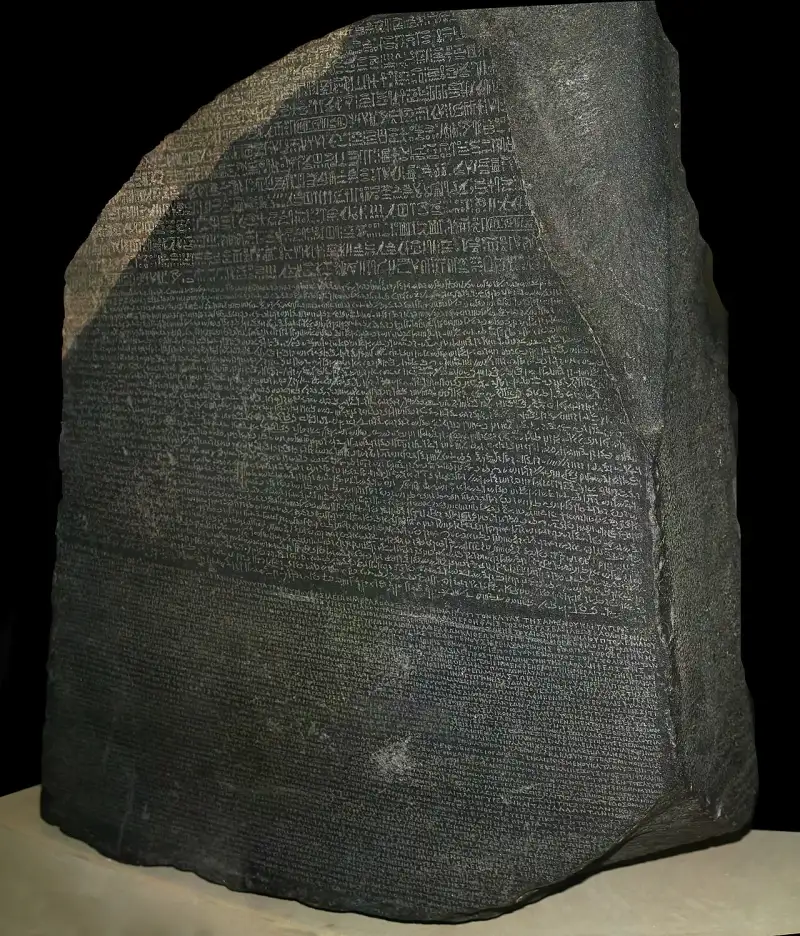
For nearly fifteen hundred years, the gods of the Nile had been silenced. Their temples, once echoing with the chants of priests and the rhythmic beating of sistrums, had been swallowed by the encroaching sands of time and neglect. The great pharaohs, men and women who had sought eternity through colossal stone monuments and intricate spells, were reduced to nameless effigies staring blankly across the desolate desert. But their greatest loss was not their hoarded gold, nor the physical crumbling of their monuments—it was their voice. The hieroglyphs, the sacred carvings that held the very soul of #AncientEgypt, had become a dead, indecipherable code, frustrating scholars and travelers for centuries. That is, until a seemingly mundane slab of black granodiorite was pulled from the thick mud of the Nile Delta. This is the dramatic, unfolding story of the Rosetta Stone, the miraculous key that unlocked a forgotten world and allowed the ancients to speak once more across the chasm of millennia. The Silence of the Sphinx: A Language Lost to Time To truly understand the magnitude of the Rosetta Stone's discovery, one must first comprehend the profound silence that preceded it. The ancient Egyptian civilization thrived for over three thousand years, producing a culture of unparalleled complexity. They chronicled their victories, their religious dogma, and their daily lives in hieroglyphs—a word derived from the Greek hieroglyphikos, meaning "sacred carvings." For millennia, this script was a living, breathing entity, adapting and evolving. However, as the empire's power waned, so too did the exclusivity and knowledge of its sacred script. The conquest of Egypt by Alexander the Great in 332 BC marked the beginning of a profound cultural shift. The subsequent Ptolemaic dynasty brought Greek as the language of administration and the elite. Hieroglyphs were increasingly confined to the realm of the priesthood and religious monuments. The final blow came with the advent of the Roman Empire and the subsequent rise of Christianity. In 391 AD, the Byzantine Emperor Theodosius I ordered the closing of all pagan temples throughout the empire. The ancient Egyptian religion was outlawed, and with it, the institutions that taught and preserved the hieroglyphic script. The last known dated hieroglyphic inscription was carved at the Temple of Philae in 394 AD. After that, the light went out. The language of the pharaohs was forgotten. For centuries, European scholars and Arab historians gazed upon the obelisks and tomb walls with awe and utter bewilderment. They believed the symbols were purely ideographic—mystical pictures representing abstract concepts of magic and philosophy, rather than a functional, phonetic language. The stones were silent. The history of Egypt was effectively erased, replaced by myths, biblical references, and the often-inaccurate accounts of classical Greek historians. The world desperately needed a key, a bridge across the void of time. #LostLanguages #History The Sands of Rashid: Napoleon's Audacious Expedition The stage for the resurrection of ancient Egypt was set not in the quiet halls of academia, but in the chaotic theater of war. In 1798, the ambitious, brilliant, and ruthlessly calculated French General Napoleon Bonaparte launched a massive military expedition to Egypt. His primary goal was strategic: to sever Britain's lucrative trade route to India and establish a French presence in the Middle East. However, Napoleon, a man deeply enamored with the grandeur of antiquity, did not just bring soldiers. He brought an army of the intellect. Accompanying the French fleet were 167 savants—scholars, scientists, engineers, artists, and mathematicians. Their mission was to study every aspect of Egypt, from its flora and fauna to its geography and, crucially, its staggering ancient ruins. This unprecedented marriage of military conquest and scientific inquiry would inadvertently birth the modern discipline of #Egyptology. The French army found themselves fighting not only the fiercely brave Mamluk cavalry but also the unforgiving Egyptian climate. The heat was oppressive, disease was rampant, and the sands seemed to swallow everything. Yet, amidst the suffering and the gunfire, the savants worked tirelessly. They sketched the Sphinx, measured the Pyramids of Giza, and marveled at the colossal ruins of Luxor and Karnak. But the true prize—the ability to read the writing on the walls—eluded them entirely. A Fortuitous Discovery in the Mud The pivotal moment arrived in mid-July 1799, near the small port city of Rosetta (known in Arabic as Rashid), located in the western delta of the Nile. The French forces, under the command of Pierre-François Xavier Bouchard, an engineering officer, were frantically reinforcing an old fifteenth-century Mamluk fortress, Fort Julien, in anticipation of an attack by the British or Ottoman forces. As the soldiers hacked away at an ancient wall to clear space for their cannons, their pickaxes struck something hard. It was not just another piece of masonry. Dragged from the rubble and the mud was a heavy, dark slab of stone, roughly the size of a tabletop. It measured 44 inches tall, 30 inches wide, and weighed an astonishing 1,680 pounds. Bouchard immediately recognized that this was no ordinary building block. The face of the stone was polished and covered in dense inscriptions. What made his heart race, however, was the structural layout of the text. The stone was divided into three distinct registers, each featuring a different script:The Top Register: Fourteen lines of ancient Egyptian hieroglyphs, mostly missing or damaged. The Middle Register: Thirty-two lines of a cursive, unknown script (which would later be identified as Demotic, the everyday administrative language of ancient Egypt). The Bottom Register: Fifty-four lines of Ancient Greek.Bouchard, though an engineer and not a linguist, possessed the educated foresight to grasp the artifact's potential significance. The Greek text, which could be readily translated by scholars of the era, declared that the decree contained within was to be inscribed "in sacred, and native, and Greek characters." This was the crucial clue. If the three texts were identical in meaning, then the Greek section could serve as a direct, one-to-one translation guide for the mysterious hieroglyphs above it. The silence was finally about to break. The Rosetta Stone had been found. #ArchaeologicalDiscovery #Napoleon A Sidelong Glance at Antiquity: What the Stone Actually Said Before diving into the fierce intellectual war that followed its discovery, it is deeply ironic to examine what the Rosetta Stone actually says. Given its monumental role in the history of human knowledge, one might expect it to contain a profound philosophical treatise, an epic poem of gods and monsters, or a dramatic historical chronicle of sweeping conquests. Instead, the Rosetta Stone is essentially a piece of bureaucratic propaganda. The text is a decree passed by a council of priests in the city of Memphis in 196 BC, during the reign of the Ptolemaic King Ptolemy V Epiphanes, who was merely a young boy at the time. The Ptolemaic dynasty, being of Greek descent, often faced unrest and rebellion from the native Egyptian population. The decree is a political instrument designed to solidify the young king's divine right to rule and to ensure the loyalty of the powerful Egyptian priesthood. The text tediously outlines the various benefactions Ptolemy V bestowed upon the temples:Tax Exemptions: He reduced taxes and completely forgave debts owed by the temples to the crown. Gifts of Grain and Money: He provided substantial donations of silver and grain to the temple treasuries. Military Protection: He successfully besieged the city of Lycopolis, defeating rebels who had risen against the state, thereby protecting the priests and the people. Amnesty: He granted amnesty to prisoners and those who had been on the run during the years of unrest.In return for these generous favors, the decree dictates that the priests must honor the king. They are ordered to construct new statues of Ptolemy V in every temple, to celebrate his birthday and coronation days with festivals and offerings, and, most importantly, to erect copies of this very decree in all the major temples across Egypt, written in the three scripts so that all—the gods, the native populace, and the Greek ruling class—could read of the king's piety and benevolence. It is a stunning irony of history that a rather dry, sycophantic tax document, mass-produced and placed in temples across the land, became the singular, most important artifact in the history of linguistics. It was the ancient equivalent of a press release, yet it held the secrets to eternity. #AncientHistory #PtolemaicEgypt The Spoils of War: From French Hands to the British Museum The joy of the French discovery was short-lived. The military realities of Napoleon's Egyptian campaign soon came crashing down. In 1801, a massive British expeditionary force, led by General Sir Ralph Abercromby, landed in Egypt to oust the French once and for all. The French army, isolated, diseased, and outmaneuvered, was eventually forced to surrender at Alexandria. A bitter dispute immediately arose over the fate of the countless antiquities the French savants had meticulously collected, cataloged, and drawn over the past three years. General Jacques-François Menou, the French commander, obstinately claimed that the artifacts, particularly the Rosetta Stone, were his personal property and should remain with the French. The British commander, Major General John Hely-Hutchinson, vehemently disagreed. Under the terms of the Capitulation of Alexandria, all antiquities collected by the French were declared the property of the British Crown as spoils of war. The tension was palpable. The French scholars threatened to burn their priceless notes and drawings rather than hand them over to the British. Legend has it that the French even tried to smuggle the Rosetta Stone out of Alexandria on a small boat, hidden among personal baggage, but they were intercepted by British agents. Ultimately, the British prevailed. The Rosetta Stone, a heavy, mute prisoner of war, was loaded onto the captured French frigate L'Égyptienne and sailed to England. In 1802, it arrived in Portsmouth and was subsequently transported to London. King George III ordered it to be placed in the British Museum, where it has remained almost continuously ever since. On its side, the British painted a stark, triumphant inscription in white letters: “Captured in Egypt by the British Army in 1801.” The physical stone belonged to Britain, but the intellectual race to decipher its secrets had only just begun. It would be a battle fought not with cannons and cavalry, but with ink, paper, and the sheer power of human genius. #BritishMuseum #WarSpoils The Race to Read: The English Polymath vs. The French Genius The news of the Rosetta Stone's existence swept through the academic circles of Europe like wildfire. Lithographic copies and plaster casts of the inscriptions were quickly distributed to universities and scholars across the continent. The text was a puzzle begging to be solved, a linguistic Mount Everest waiting to be conquered. The translation of the Greek text was completed relatively quickly, confirming the nature of the decree. But the hieroglyphs remained fiercely stubborn. The quest to decipher the stone soon narrowed into an intense, decades-long rivalry between two extraordinary minds: the brilliant English polymath Thomas Young, and the obsessive, tormented French linguist Jean-François Champollion. Thomas Young: The Man Who Knew Everything Thomas Young was a man of staggering intellect, often described as "the last man who knew everything." A physician, physicist (famous for the double-slit experiment establishing the wave theory of light), and linguist, Young approached the Rosetta Stone with the cold, analytical precision of a mathematician. In 1814, Young began his rigorous analysis of the stone. He focused heavily on the middle section, the Demotic script, realizing it was a simplified, cursive form of the hieroglyphs rather than a completely separate language. Young made significant breakthroughs. He was the first to realize that the hieroglyphic system was not entirely ideographic (picture-based) as had been assumed for centuries, but that it contained phonetic elements (representing sounds), at least when spelling foreign names. Young correctly identified that the oval enclosures, known as cartouches, contained the names of royalty. By comparing the Greek name "Ptolemaios" (Ptolemy) with the hieroglyphs inside a specific cartouche on the stone, Young successfully assigned phonetic values to several hieroglyphic signs. He proved that a square represented a 'p', a semicircle a 't', a lion a 'l', and so on. It was a monumental leap forward. Young published his findings anonymously in the Encyclopædia Britannica in 1819. However, Young's progress eventually stalled. He remained deeply convinced that the phonetic spelling was an exception, a tool used only by the ancient Egyptians to write foreign, Greek names, and that the vast majority of the hieroglyphs were still mystical, symbolic pictures. His scientific mind, constrained by established dogma, could not make the final, imaginative leap. Jean-François Champollion: The Tormented Visionary Across the English Channel, Jean-François Champollion was attacking the problem with a fervor that bordered on madness. Unlike the diverse Young, Champollion was singularly obsessed with Egypt from a very young age. Born in 1790 in the midst of the French Revolution, he was a linguistic prodigy. By his teenage years, he had mastered Latin, Greek, Hebrew, Amharic, Sanskrit, Avestan, Pahlavi, Chaldean, Syriac, Ethiopic, and, most crucially, Coptic. Coptic was the final phase of the ancient Egyptian language, written using the Greek alphabet with a few additional characters. It survived primarily as the liturgical language of the Egyptian Christian Church. Champollion firmly believed that Coptic was the direct linguistic descendant of the language of the pharaohs. This conviction would prove to be his greatest weapon. Champollion lived a life of poverty, political persecution, and fragile health, but his mind burned with the fire of decipherment. He studied every copy of Egyptian inscriptions he could get his hands on, comparing them endlessly. He built upon Young's work with the cartouches, acknowledging the Englishman's discovery of the phonetic alphabet for foreign names, though the two men would later engage in a bitter priority dispute. Champollion expanded the phonetic alphabet by studying cartouches from other monuments, successfully translating the names of other Greek and Roman rulers of Egypt, such as Cleopatra, Alexander, and Tiberius. But the ultimate question remained: did this phonetic system apply to the older, purely Egyptian pharaohs, or just the foreign conquerors? "Je tiens l'affaire!" - The Breakthrough of 1822 The climax of this decades-long intellectual thriller arrived in September 1822. Champollion received copies of newly discovered inscriptions from the temple of Abu Simbel, built long before the Greeks or Romans arrived. These inscriptions contained cartouches of ancient, native Egyptian kings. Champollion stared at a particular cartouche. It contained three symbols: a circle with a dot in the center, a mysterious symbol with three loops, and two folded cloths (which he already knew from his work on Ptolemy represented the sound 's'). Drawing upon his vast knowledge of Coptic, Champollion had a sudden, electrifying realization. The circle with a dot was the sun, and the Coptic word for sun was Ra. He hypothesized that the looped symbol was the word for "birth" or "to give birth," which in Coptic was mise. He put the sounds together: Ra + mise + s + s. Ramesses. He had just read the name of Ramses the Great, one of the most powerful pharaohs in Egyptian history. Trembling, he moved to another cartouche. This one contained the image of an ibis bird, the symbol of the god Thoth. Using the same logic, he translated it as Thoth + mise + s. Thutmose. The realization hit him with the force of a physical blow. The hieroglyphic system was not just picture writing. It was a complex, beautiful, and fully functional combination of phonetic signs (representing sounds) and ideographic signs (representing ideas). The Egyptians had been writing their own names, their own verbs, their own history phonetically all along. The code was cracked. The language was alive. According to historical lore, Champollion gathered his papers, sprinted down the street in Paris to the Institute of France where his brother worked, burst into the office, threw the papers on the desk, and shouted, "Je tiens l'affaire!" ("I've got it!"). The sheer emotional and mental exhaustion of the revelation was too much for his fragile constitution. Champollion immediately collapsed to the floor and fell into a coma-like state that lasted for five days. When he awoke, he began drafting his famous Lettre à M. Dacier, published on September 27, 1822, in which he officially announced his discovery to the world. The silence of fifteen centuries had been broken by the fevered brilliance of a single, obsessed scholar. #Decipherment #Linguistics #Genius The Resurrection of a Civilization The impact of Champollion's decipherment cannot be overstated. It was not merely an academic triumph; it was the resurrection of an entire civilization. Before 1822, ancient Egypt was a land of myth and mute stones. After 1822, it was a land of history, poetry, religion, and humanity. Equipped with Champollion's grammar and dictionary (published posthumously, as he died young at the age of 41, his body broken by his obsessive work and travels in Egypt), scholars could finally read the walls. The blank, imposing faces of the pharaohs suddenly gained names, lineages, and personalities. The battles they fought, such as Ramses II's clash with the Hittites at Kadesh, were read in vivid, propagandistic detail. The profound religious beliefs of the Egyptians, enshrined in the Book of the Dead and the Pyramid Texts, were finally understood, revealing a complex theology centered on Ma'at (cosmic balance), the afterlife, and the journey of the soul. We learned about the daily lives of the common people: the complaints of workers on strike at Deir el-Medina, the passionate love poetry penned on papyrus, the medical treatises detailing surgical procedures, and the complex legal documents governing land and inheritance. The ancient Egyptians ceased to be mysterious, magical figures and became human beings—fearing death, loving their families, suing their neighbors, and striving for a good life along the fertile banks of the Nile. The Rosetta Stone was the catalyst for an explosion of knowledge that fundamentally altered our understanding of human history. It pushed the boundaries of recorded civilization back thousands of years, proving that complex, highly organized societies with profound literary traditions existed long before the Greeks and Romans. #HistoricalRevelation #AncientCivilization The Enduring Legacy of the Stone Today, the Rosetta Stone sits behind thick glass in Room 4 of the British Museum. It is the most visited object in the entire institution, drawing millions of awe-struck observers every year. It is no longer just an archaeological artifact; it has become a global icon, a metaphor for solving the unsolvable. The term "Rosetta Stone" has entered the modern lexicon to describe any essential clue to a new field of knowledge. We speak of the "Rosetta Stone of genetics" or the "Rosetta Stone of immunology." When the European Space Agency launched a probe to study a comet and unlock the secrets of the early solar system, they aptly named it the Rosetta spacecraft, with its lander named Philae (after the island where the last hieroglyph was carved). The Modern Controversy: A Demand for Return Yet, the stone's legacy is not without ongoing conflict. The Rosetta Stone remains at the center of a fierce, decades-long debate regarding cultural repatriation. Prominent Egyptian archaeologists and government officials, most notably Dr. Zahi Hawass, have repeatedly and passionately demanded the permanent return of the stone to Egypt. They argue that the stone was stolen, taken as imperial booty during a time of colonial occupation, and that it rightfully belongs in the Grand Egyptian Museum in Giza, standing alongside the culture that created it. "The Rosetta Stone is the icon of our Egyptian identity," Hawass has stated. "Its home should be Egypt." The British Museum, conversely, argues that the stone was acquired legally under the treaties of the time, and that as a "universal museum," it is best positioned to preserve, protect, and display the artifact to a global audience in the context of world history. They fear that returning such a prominent item would set a precedent that could empty the halls of major Western museums. This debate highlights the complex, often painful legacy of colonialism and archaeology. The stone that united humanity through the understanding of language now serves as a focal point for arguments over ownership, heritage, and the right to control one's own history. The Eternal Whisper of the Nile Regardless of where it physically resides, the true power of the Rosetta Stone lies in what it accomplished. It stands as a testament to the enduring power of the written word and the relentless curiosity of the human mind. When you look at the Rosetta Stone, you are not just looking at a hunk of volcanic rock. You are looking at a portal. You are looking at the exact moment when the impenetrable darkness of the past was pierced by the light of understanding. Because of a young boy king's tax decree, the desperate fortifications of a French soldier, the cold logic of an English polymath, and the fiery genius of a French linguist, the ancient gods awoke from their slumber. The temples of Karnak are no longer silent. The tombs of the Valley of the Kings whisper their secrets to those who care to read them. Through the Rosetta Stone, ancient Egypt achieved the very thing it sought so desperately: immortality. As long as we can read their words, the pharaohs will never truly die. They continue to speak, telling us tales of a golden empire born from the mud of the Nile, echoing across eternity, reminding us that no voice, no matter how deeply buried beneath the sands of time, is ever truly lost. #Immortality #Legacy #MarkDinn #HistoricalFictionMark Dinn is an acclaimed author of historical fiction, known for bringing the forgotten dramas of the past vividly to life. His work explores the intersection of human ambition, archaeological discovery, and the relentless march of time. #History #Egypt Related InsightsUnraveling the Mysteries of Stonehenge: A Monolithic Marvel of the Ancient World 千古绝唱,江水悠悠:探秘乐山大佛的沧桑与辉煌 The Great Fire of London (1666): An Empire Reborn from Ashes{ "@context": "https://schema.org", "@type": "FAQPage", "mainEntity": [ { "@type": "Question", "name": "What is the main focus of The Rosetta Stone: Breaking the Silence of Ancient Egypt?", "acceptedAnswer": { "@type": "Answer", "text": "A dramatic deep dive into The Rosetta Stone: Breaking the Silence of Ancient Egypt. Mark Dinn explores the untold history, drama, and legacy of this fascinating subject." } }, { "@type": "Question", "name": "Who authored the comprehensive guide on The Rosetta Stone: Breaking the Silence of Ancient Egypt?", "acceptedAnswer": { "@type": "Answer", "text": "This detailed article and its insights were carefully researched and authored by Mark Dinn." } }, { "@type": "Question", "name": "Where can I find more related content about History?", "acceptedAnswer": { "@type": "Answer", "text": "You can explore more articles, detailed reviews, and similar insights by browsing the Related Insights section at the bottom of this article or visiting our dedicated History category page." } } ] }
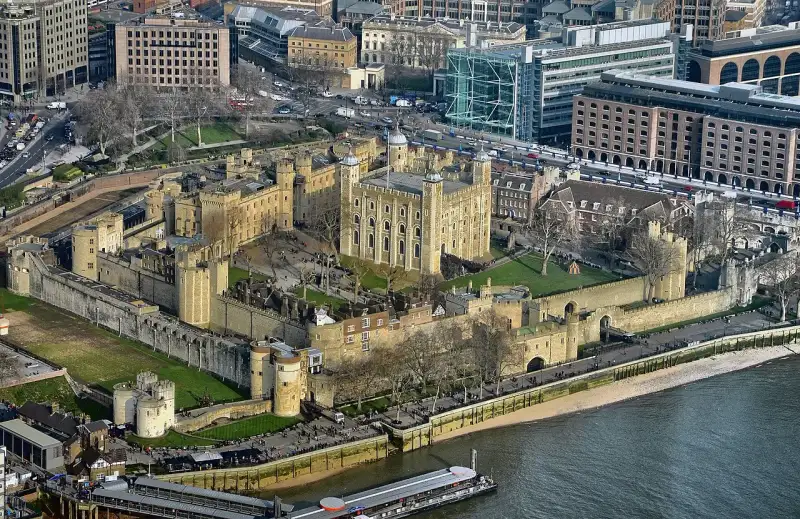
The Thames flows cold and dark beneath the imposing stone battlements of the Tower of London. For nearly a millennium, this colossal fortress has stood as a symbol of power, a repository of magnificent wealth, and, most chillingly, an inescapable prison. Its very foundations are steeped in the blood of traitors, queens, and innocent souls who found themselves on the wrong side of history. As the fog rolls off the river and engulfs the White Tower, one cannot help but feel the weight of centuries pressing down—a palpable atmosphere of sorrow, betrayal, and unspeakable terror. #TowerOfLondon #England #DarkHistory Welcome to the haunted heart of the British monarchy. I am Mark Dinn, and in this extensive journey into the shadows of the past, we will peel back the layers of time to uncover the chilling truths, the whispered legends, and the undeniable tragedies that have birthed the Ghosts of the Tower of London. #HistoricalFiction #MarkDinn The Architecture of Intimidation: A Fortress Born of Conquest When William the Conqueror ordered the construction of the White Tower in 1078, his purpose was singular and uncompromising: to dominate the recently subjugated people of London. Built of white stone imported from Caen in Normandy, it was a terrifyingly alien structure in a landscape of wooden buildings. It was not merely a castle; it was a physical manifestation of Norman supremacy. But as the centuries bled into one another, the Tower’s purpose mutated. It became a royal residence, an armory, a treasury, a menagerie, and eventually, the most feared prison in the realm. With every transformation, the walls absorbed the despair of its inhabitants. It is said that stones hold memories, and if that is true, the stones of the Tower of London possess the darkest memories in all of Europe. #MedievalArchitecture #WilliamTheConquerorThe White Tower: The central keep, originally a symbol of raw power, later a storehouse for weapons and a place of clandestine torture. The Traitor's Gate: The infamous water gate through which doomed prisoners entered, the slapping of the Thames against its steps the last sound of freedom they would ever hear. Tower Green: The secluded execution site reserved for those of noble or royal blood, sparing them the public spectacle of Tower Hill, yet offering no escape from the headsman's axe. The Bloody Tower: The very name evokes its grim history, the alleged site of one of the most heart-wrenching unsolved murders in English history.As we walk these ancient paths, we must remember that the ghosts we seek are not merely ethereal phantoms; they are the lingering echoes of real people, real suffering, and real betrayal. Let us delve into the stories of those who never truly left. #AncientHistory #HauntedPlaces The Princes in the Tower: Innocence Stolen in the Dark No mystery is more inextricably linked to the sinister reputation of the Tower than the fate of the two Princes. In the sweltering summer of 1483, twelve-year-old King Edward V and his nine-year-old brother, Richard, Duke of York, were lodged in the Tower. The ostensible reason was to prepare for young Edward's coronation. Their protector and uncle, Richard, Duke of Gloucester, assured the realm of their safety. Yet, as the days grew shorter, the boys were seen less and less frequently playing in the courtyards. Then, they vanished entirely. Gloucester, declaring the boys illegitimate, was crowned King Richard III. #WarOfTheRoses #RichardIII The silence that followed their disappearance was deafening. Whispers echoed through the halls of power, tales of midnight assassinations, of boys smothered in their sleep beneath heavy velvet pillows. Two centuries later, during the reign of Charles II, the bones of two children were discovered buried beneath a staircase in the White Tower. Were these the tragic princes? The world believes they were, though the absolute truth remains locked in the suffocating silence of the past. The Bloody Tower, where they were last seen, is a nexus of sorrowful energy. Yeoman Warders and visitors alike have reported seeing the apparitions of two small boys, dressed in nightshirts, clutching each other in terror. They appear fleetingly, their faces etched with the profound realization of their betrayal, before fading into the cold stone walls. They are the eternal victims of ambition, forever trapped in the fortress that was meant to protect them. #PrincesInTheTower #RoyalSecrets The Political Climate: A Cauldron of Paranoia To understand the tragedy of the Princes, one must understand the era. The Wars of the Roses had decimated the English nobility. Trust was a commodity rarer than gold, and the crown was a prize worth any sin. Richard III, whether a ruthless usurper or a victim of Tudor propaganda, operated in a world where preemptive murder was often considered a political necessity. The ghost of the Princes serve as a stark reminder of the cost of such ambition. Their spectral presence is a silent, unending accusation against the adults who failed them, a chilling testament to the ruthlessness of the medieval political machine. Anne Boleyn: The Headless Queen's Eternal Restlessness Of all the spirits said to wander the precincts of the Tower, none is more famous, nor more tragic, than Anne Boleyn. The second wife of King Henry VIII, her rise to power was meteoric, her fall devastating and swift. She was the woman for whom Henry broke with the Catholic Church, forever altering the course of English history. Yet, when she failed to provide the male heir Henry so desperately craved, and as his eye wandered to Jane Seymour, Anne's fate was sealed. #Tudors #AnneBoleyn #HenryVIII Accused of treason, adultery, and incest—charges engineered by the cunning Thomas Cromwell—Anne was imprisoned in the very apartments she had occupied before her triumphant coronation. The psychological torment must have been unbearable. The walls that once echoed with music and laughter now offered only the dreadful silence of impending doom. On May 19, 1536, Anne Boleyn was led to a scaffold on Tower Green. She faced her death with extraordinary courage and dignity, her final words praising the king who had ordered her execution. With a single, swift blow of a French swordsman's blade, her life was extinguished. But Anne, it seems, has never truly departed. Her ghost is the most frequently sighted apparition in the Tower. She is often seen near the site of her execution on Tower Green, sometimes appearing as a beautiful, melancholic figure, whole and intact. However, in more terrifying encounters, she is seen walking the corridors of the Queen's House or leading a spectral procession down the aisle of the Chapel Royal of St. Peter ad Vincula—her headless body carrying her severed head tucked beneath her arm. #GhostStories #HauntedHistory The Psychological Horror of the Fall Imagine the descent from absolute power to absolute helplessness. Anne Boleyn was a woman of fierce intellect and terrifying ambition. She understood the game of politics better than most men of her era. To find herself suddenly outmaneuvered, trapped in the web of a husband's changing affections and a minister's calculated cruelty, is a horror that transcends physical pain. Her restless spirit is a manifestation of unresolved injustice. The speed of her trial, the dubiousness of the evidence, and the brutal finality of the French sword created an emotional epicenter so powerful that it continues to ripple through time. She is the epitome of the Tower's duality: royal splendor immediately followed by bloody devastation. #TudorHistory #Betrayal The Brutality of the Rack: Whispers from the White Tower While Tower Green was reserved for quick, relatively clean executions of the elite, the depths of the White Tower and the subterranean dungeons were domains of unimaginable agony. The Tudor era, particularly the reigns of Henry VIII, Mary I, and Elizabeth I, saw the zenith of state-sanctioned torture. The Rack, the Scavenger's Daughter, and the Manacles were the tools of the trade, designed to extract confessions and break the spirit of religious and political dissidents. #Torture #DarkAges One of the most famous victims of the rack was Guy Fawkes, the conspirator behind the Gunpowder Plot of 1605. After days of excruciating torture, his signature on his confession was a barely legible scrawl, the desperate mark of a completely broken man. But while Fawkes's story is well known, hundreds of lesser-known individuals suffered similarly in the freezing, damp darkness. The ghosts here do not always appear in physical form; often, they manifest as sounds. Late at night, when the Tower is devoid of tourists, security guards and warders have reported hearing the echoing, agonizing screams of men and women being stretched beyond the limits of human endurance. The clanking of chains, the turning of heavy wooden gears, and the guttural moans of the dying seep from the ancient stones. It is as if the agony experienced in those rooms was so intense that it became permanently etched into the atmosphere itself. #GuyFawkes #TowerDungeons The Case of Thomas More and John Fisher Not all who suffered in the Tower yielded to torture. Sir Thomas More, the former Lord Chancellor, and Bishop John Fisher were men of unyielding faith. They refused to acknowledge Henry VIII as the Supreme Head of the Church of England. For their defiance, they were imprisoned in the Bell Tower and eventually executed. Fisher, old and frail, was so weakened by his imprisonment that he had to be carried to the scaffold. More famously declared himself "the King's good servant, but God's first." Their ghosts are said to walk the battlements near the Bell Tower, somber, quiet figures radiating a profound sense of peace—a stark contrast to the tormented souls that haunt the lower levels. They are the ghosts of conviction, spirits that found victory even in their execution. #ThomasMore #TudorEngland The Countess of Salisbury: The Most Gruesome Execution If there is one story that encapsulates the sheer, chaotic horror of Tudor executions, it is that of Margaret Pole, the Countess of Salisbury. She was a Plantagenet, one of the last surviving members of the royal line that preceded the Tudors. For Henry VIII, her very existence was a threat, a lingering shadow of the old regime. At the age of 67, she was condemned to death for treason, largely on fabricated charges. #Plantagenets #MargaretPole On May 27, 1541, she was brought to Tower Green. Unlike Anne Boleyn, Margaret Pole did not go quietly. She refused to lay her head on the block, arguing that she was no traitor. What followed was a butchery that shocked even the hardened citizens of Tudor London. The executioner was described as a "wretched and blundering youth." As the Countess refused to kneel, he began hacking at her shoulders and head as she attempted to flee around the scaffold. It reportedly took eleven agonizing blows before she finally succumbed to death. Her horrific end left a profound scar on Tower Green. Every year on the anniversary of her death, it is said that the phantom screams of the Countess can be heard echoing across the green. Some claim to have seen the spectral reenactment of the execution: a frantic, elderly woman pursued by an axe-wielding figure, her terrifying shrieks a chilling reminder of the utter ruthlessness of absolute power. This is not a peaceful ghost; this is a spirit trapped in an endless loop of panic and butchery. #GruesomeHistory #Macabre Arabella Stuart: Love, Madness, and the Queen's House Not all ghosts of the Tower were executed. Some were driven to madness by the sheer isolation and hopelessness of their confinement. Such was the tragic case of Lady Arabella Stuart. She was a cousin to King James I and, crucially, had a strong claim to the English throne. This made her a pawn in the dangerous game of succession, and her royal blood was her curse. #StuartDynasty #KingJamesI When she secretly married William Seymour, a man who also had royal connections, King James was furious. Seeing their union as a direct threat to his crown, he ordered them imprisoned. Arabella was sent to the Tower, while William was sent to another prison. They hatched a daring plot to escape and flee to France. William succeeded, but Arabella’s ship was captured just off the coast of Calais. She was returned to the Tower, never to see her husband again. Placed in the Queen's House, the realization of her permanent doom slowly unspooled her mind. She refused to eat, fell into deep depressions, and eventually died, allegedly of starvation, in 1615. The Queen's House, the half-timbered Tudor building that overlooks Tower Green, is now considered one of the most haunted buildings in England, and Arabella Stuart is its primary resident. Staff and visitors have reported feeling an overwhelming sense of sadness and anxiety in her former rooms. Doors open and close inexplicably, sudden drafts of freezing air sweep through the corridors, and the soft, mournful weeping of a woman is often heard in the dead of night. She is the ghost of broken hearts and shattered dreams, a prisoner of love in a fortress of stone. #HauntedPlaces #TragicLove The Menagerie: The Spectral Bears of the Martin Tower It is easy to forget that the Tower of London was not only a prison for humans. For six centuries, it housed the Royal Menagerie. Lions, leopards, elephants, polar bears, and exotic birds were kept in cramped, unsuitable conditions, symbols of the monarch's wealth and global reach. The suffering of these animals was immense, and it seems their spirits, too, have lingered. #RoyalMenagerie #HistoryOfLondon The most famous animal ghost story centers around the Martin Tower. In 1816, a guard named Edmund Lombe was on night duty. The story goes that he saw a massive, terrifying shape emerging from the shadows of a doorway—a gigantic spectral bear. Panicking, Lombe thrust his bayonet at the beast, only for the weapon to pass straight through it and strike the solid stone doorframe behind. The shock was so immense that Lombe collapsed. He was found the next morning in a state of delirium and died a few days later, quite literally frightened to death. To this day, the area around the Martin Tower is avoided by guards who know the history, fearful of encountering the ghostly remnants of the magnificent beasts that suffered and died within the Tower’s walls. #GhostBear #Paranormal The Yeoman Warders: Guardians of the Ghosts The true keepers of the Tower's secrets are the Yeoman Warders, the iconic Beefeaters. These men and women, all former military personnel, live within the walls of the fortress. They are the daily witnesses to the residual energy of the past. Their tales are not spun for tourists; they are quiet conversations held in the pub within the Tower walls, stories of inexplicable phenomena that challenge their deeply ingrained, pragmatic military mindsets. #Beefeaters #TowerGuardsThe Scent of Perfume: In the corridors of the White Tower, a sudden, overpowering scent of expensive, old-fashioned perfume often precedes a dramatic drop in temperature. Many believe this is the lingering essence of a royal lady, perhaps Queen Katherine Howard, another of Henry's wives executed on the Green. The Unseen Hands: Warders locking up the smaller towers at night frequently report the sensation of being shoved or having their shoulders grabbed by unseen hands. Some refuse to enter certain rooms alone. The Marching Boots: In the dead of winter, when the grounds are covered in snow, the distinct crunching of marching boots can be heard on the battlements, yet there are no footprints left behind. It is the spectral guard, forever walking the perimeter.These accounts, coming from individuals trained to be observant and rational, lend a chilling credibility to the legends. The Tower is not a dead monument; it is an active, pulsing environment where the veil between the past and present is terrifyingly thin. #ParanormalInvestigation #Hauntings The Legacy of the Stones Why do the ghosts of the Tower of London endure? Perhaps it is because the emotions experienced within these walls—the terror, the despair, the betrayal, and the agony—were so intense that they burned themselves into the very fabric of the environment. The Tower is a battery charged with a millennium of human suffering. #HistoryUncovered #TrueHistory Every execution, every confession extracted on the rack, every tear shed in solitary confinement added another layer to the psychic atmosphere of the fortress. When we walk through the Traitor's Gate or stand on Tower Green, we are not just observing history; we are wading through the emotional residue of the most dramatic moments in the English story. The Ghosts of the Tower of London are not meant to frighten us, though they often do. They are meant to remind us. They are historical anchors, forcing us to acknowledge the bloody cost of power and the fragility of justice. They compel us to remember the names of Anne Boleyn, Margaret Pole, the Princes, and the countless nameless souls whose blood washed the cobblestones. As the sun sets over the Thames and the ravens settle into their roosts, the tourists depart, and the massive wooden gates are locked. The Tower of London returns to the darkness. And in that darkness, the kings, queens, traitors, and innocents rise again, condemned to forever walk the corridors of the fortress that was both their palace and their tomb. The past is never truly dead. In the Tower of London, it isn't even past. It is right beside you, breathing cold air down your neck in the shadows of the Bloody Tower. #LondonHistory #SpookyStories #MarkDinnFictionMark Dinn is a critically acclaimed author of historical fiction, known for his immersive, deeply researched narratives that breathe life into the darkest and most dramatic chapters of history. Follow him for more explorations into the shadows of the past. #AuthorLife #HistoricalWriting #History #England Related InsightsThe Fall of the Spanish Armada: The Sea Battle That Changed History The Secrets of the Colosseum: Surviving Rome's Bloody Arena The Great Pyramid of Giza: A Timeless Monument to Human Ingenuity{ "@context": "https://schema.org", "@type": "FAQPage", "mainEntity": [ { "@type": "Question", "name": "What is the main focus of Ghosts of the Tower of London: Betrayal, Blood, and Royal Secrets?", "acceptedAnswer": { "@type": "Answer", "text": "A dramatic deep dive into Ghosts of the Tower of London: Betrayal, Blood, and Royal Secrets. Mark Dinn explores the untold history, drama, and legacy of this fascinating subject." } }, { "@type": "Question", "name": "Who authored the comprehensive guide on Ghosts of the Tower of London: Betrayal, Blood, and Royal Secrets?", "acceptedAnswer": { "@type": "Answer", "text": "This detailed article and its insights were carefully researched and authored by Mark Dinn." } }, { "@type": "Question", "name": "Where can I find more related content about History?", "acceptedAnswer": { "@type": "Answer", "text": "You can explore more articles, detailed reviews, and similar insights by browsing the Related Insights section at the bottom of this article or visiting our dedicated History category page." } } ] }
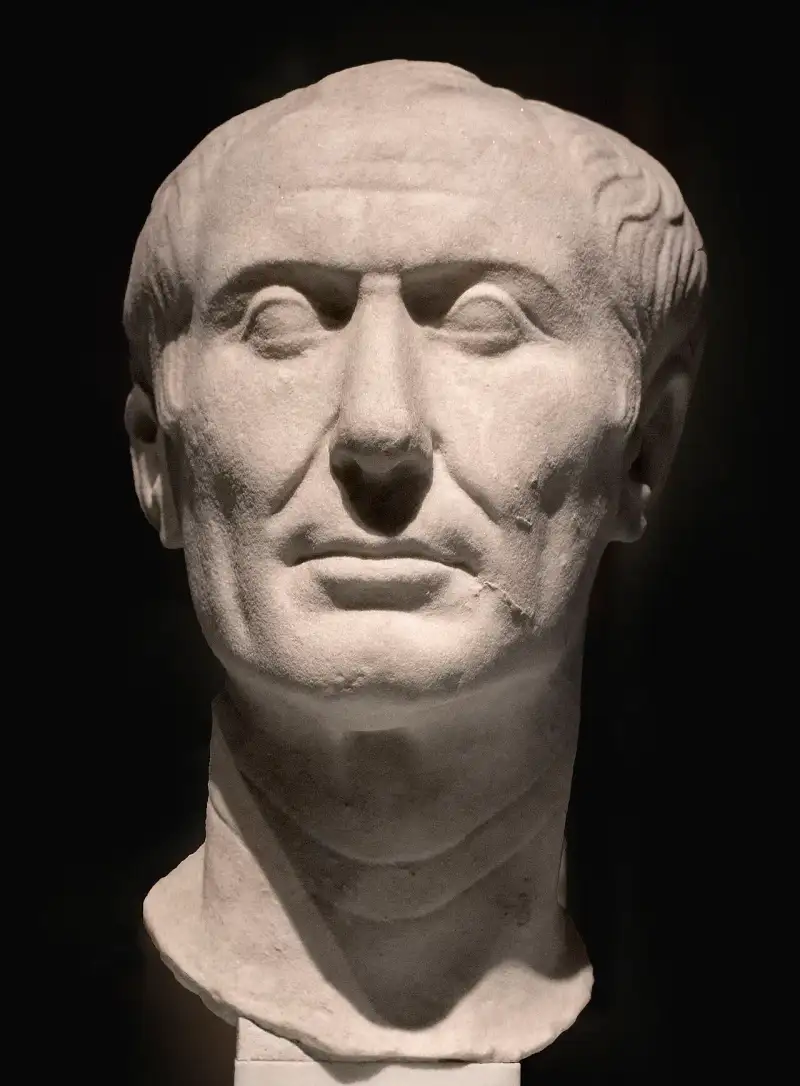
Julius Caesar: The Ambitious Soldier Behind the Myth "Alea iacta est." The die is cast. These four words, muttered on the banks of a muddy, insignificant river in northern Italy, shattered the greatest Republic the ancient world had ever seen. They belong to a man whose name has transcended history to become synonymous with absolute power: Gaius Julius Caesar. Yet, behind the marble busts, the Shakespearean tragedy, and the millennia of mythological accretion, who was the real Julius Caesar? He was not born an emperor. He was not destined for godhood. He was, first and foremost, an ambitious soldier, a political chameleon, and a man who understood that in Rome, power belonged not to the virtuous, but to the audacious. Join me, Mark Dinn, as we peel back the layers of antiquity, dust off the cobwebs of romanticized folklore, and step onto the blood-soaked soil of the #RomanEmpire. We are about to journey into the heart of the first century BC, a time of gladiators and legions, of treacherous senators and scheming generals, to uncover the visceral truth of the man who dared to conquer the known world. #AncientHistory #JuliusCaesar #HistoricalFiction The Crucible of Youth: Patrician Blood, Plebeian Sympathies To understand Caesar, one must first understand the volatile furnace of the late Roman Republic. It was a state tearing itself apart, polarized by extreme wealth inequality and the fierce rivalry between two political factions: the Optimates, who favored the traditional aristocratic Senate, and the Populares, who sought power by appealing directly to the plebeian masses. Gaius Julius Caesar was born in 100 BC into the Julian clan (the gens Julia), a patrician family of impeccable lineage that claimed direct descent from Iulus, son of the Trojan prince Aeneas, and through him, the goddess Venus herself. It was a pedigree that commanded immense respect, yet, surprisingly, his family was not particularly wealthy or politically dominant at the time of his birth. They lived in the Subura, a crowded, noisy, and notoriously rough lower-class neighborhood in Rome. This geographical reality—growing up a patrician in the slums—profoundly shaped the young Caesar. He learned the language of the streets, he understood the grievances of the poor, and he recognized the latent, terrifying power of the mob. His early years were forged in the fires of civil war. His uncle by marriage, Gaius Marius, a champion of the Populares, waged a brutal conflict against Lucius Cornelius Sulla, the ruthless defender of the Optimates. When Sulla emerged victorious and declared himself Dictator, he instituted horrific proscriptions—lists of enemies to be executed on sight. The teenage Caesar, because of his family ties, found himself squarely in Sulla’s crosshairs. Stripped of his inheritance and his priesthood, Caesar was forced to go into hiding, fleeing into the Sabine hills, ravaged by malaria, constantly moving to stay one step ahead of Sulla’s bounty hunters. It was a lesson in the fragility of power and the ruthlessness required to hold it. Eventually, Sulla pardoned the young man, supposedly remarking, "In this Caesar, there are many Mariuses." It was a chilling prophecy. The Forging of a Centurion: The Eastern Campaigns Knowing Rome was still too dangerous, Caesar joined the army and traveled east. It was here, far from the suffocating intrigues of the Senate, that the myth began to crystallize into reality. He served in Asia and Cilicia, displaying conspicuous bravery. At the Siege of Mytilene, he won the Civic Crown (Corona Civica), an immensely prestigious military decoration awarded for saving the life of a fellow citizen in battle. The laurel wreath was more than a medal; it was a political talisman that guaranteed him a seat in the Senate and immunity from certain physical punishments. But the defining anecdote of his early career occurred when he was captured by Cilician pirates while traveling across the Aegean Sea. The pirates, unaware of the tiger they held by the tail, demanded a ransom of twenty talents of silver. Caesar, insulted by the paltry sum, demanded they increase it to fifty talents, boasting that twenty was an insult to his worth. While his associates gathered the silver, Caesar lived among his captors not as a prisoner, but as a king. He demanded they keep quiet when he slept, forced them to listen to his poetry, and jokingly promised that once he was freed, he would return and crucify them all. They laughed. They thought it was the arrogant bluster of a pampered Roman aristocrat. But Caesar never made idle threats. Upon his release, he immediately raised a small fleet, hunted down the pirates, reclaimed his silver, and, true to his word, had them all crucified. This was the essence of Caesar: boundless confidence, absolute ruthlessness, and an unwavering commitment to his own perceived destiny. #MilitaryHistory #RomanRepublic The Political Gladiator: Bribery, Debt, and the First Triumvirate Returning to Rome after Sulla's death, Caesar threw himself into the gladiatorial arena of Roman politics. The Cursus Honorum (the sequential order of public offices) was a treacherous path, requiring not just talent, but immense wealth. Caesar, understanding that visibility was paramount, borrowed astronomical sums of money to fund lavish public games, banquets, and infrastructure projects. He essentially bought the love of the Roman mob, plunging himself into a debt so staggering it threatened to crush him. His creditors howled at his gates, but Caesar gambled on his own upward trajectory. He knew that if he could attain the highest offices, the spoils of war and governance would wipe his slates clean. He became Pontifex Maximus (chief priest), a lifelong position that carried immense prestige and political leverage. However, to truly dominate, he needed allies. In 60 BC, he orchestrated one of the most brilliant and consequential political maneuvers in ancient history: The First Triumvirate. He forged a secret alliance with the two most powerful men in Rome: Gnaeus Pompeius Magnus (Pompey the Great), the Republic's most celebrated general, and Marcus Licinius Crassus, the wealthiest man in Rome. It was a three-headed monster that effectively hijacked the Roman Republic. Crassus brought the gold, Pompey brought the soldiers, and Caesar brought the political acumen and the favor of the mob. Together, they bypassed the Senate, passed their own legislation, and divided the Roman world among themselves. For Caesar, the prize was the consulship in 59 BC, followed by the governorship of Gaul (modern-day France, Belgium, and northern Italy). Gaul was his proving ground. It was the anvil upon which he would forge an army loyal not to Rome, but to Caesar alone. The Conquest of Gaul: Mud, Blood, and Genius The Gallic Wars (58–50 BC) are where the ambitious politician transformed into one of the greatest military commanders in human history. Gaul was a vast, untamed wilderness inhabited by fiercely independent Celtic tribes. For centuries, the Gauls had been the boogeymen of the Roman psyche, ever since they had sacked Rome itself in 390 BC. Caesar did not just defeat the Gauls; he annihilated them, subjected them, and incorporated their vast territories into the Roman Empire. Over eight grueling years, he waged a campaign of staggering brutality and tactical brilliance. He fought the Helvetii, the Belgae, the Nervii, and the Veneti. He bridged the mighty Rhine River in just ten days to terrorize the Germanic tribes, proving that nowhere was safe from Roman engineering and Roman steel. He even launched two punitive expeditions to the misty, mysterious island of Britannia, becoming the first Roman general to cross the English Channel. His tactical genius was matched only by his logistical mastery. He moved his legions with terrifying speed, often appearing days before the enemy thought possible, catching them disorganized and unawares. He fought in the freezing mud of winter and the sweltering heat of summer. He suffered setbacks and near-disasters, but he possessed an uncanny ability to read the battlefield, to inspire his men to superhuman feats of endurance, and to snatch victory from the jaws of defeat. The defining moment of the Gallic Wars came at the Siege of Alesia in 52 BC. A united Gallic army under the charismatic chieftain Vercingetorix had retreated into the heavily fortified hilltop town of Alesia. Caesar, commanding a much smaller force, laid siege. He ordered his men to build an immense ring of circumvallation (inward-facing fortifications) around the town to starve the defenders. But then, word arrived that a massive Gallic relief army, hundreds of thousands strong, was marching to crush the Romans against the walls of Alesia. Caesar was trapped. The sensible, conventional decision would have been to retreat. Instead, Caesar ordered his men to build a second ring of fortifications, this one facing outward (contravallation). The Romans were now besieged while laying siege. When the relief army attacked, the fighting was apocalyptic. The Roman lines were stretched to the breaking point. But Caesar, wearing his trademark red cloak, rode into the thickest part of the fray, rallying his exhausted legionaries. The Gallic assault broke, Vercingetorix surrendered, and Gaul was irrevocably conquered. The human cost was staggering. Plutarch estimates that in Gaul, Caesar conquered three hundred tribes, took eight hundred cities, fought against three million men, killed one million in battle, and took another million as slaves. It was a genocide by modern standards, a triumph of civilization by Roman ones. Through it all, Caesar chronicled his victories in his Commentarii de Bello Gallico (Commentaries on the Gallic War), a masterpiece of propaganda written in crisp, third-person prose, ensuring the Roman populace knew exactly who their greatest hero was. #GallicWars #MilitaryStrategy #HistoryNerd The Rubicon: "Let the Die be Cast" While Caesar was subjugating Gaul, the political landscape in Rome had shifted dramatically. Crassus had been killed in a disastrous campaign against the Parthians, destroying the equilibrium of the Triumvirate. Pompey, growing increasingly jealous and fearful of Caesar’s rising star, aligned himself with the conservative Senate faction (the Optimates). The Senate, terrified of Caesar’s veteran army and his immense popularity with the plebeians, ordered him to disband his legions and return to Rome as a private citizen to face prosecution for alleged war crimes and political irregularities during his consulship. Caesar knew that returning to Rome without his army meant political annihilation, exile, or death. He faced an impossible choice: surrender his destiny to his enemies, or plunge the Republic into a catastrophic civil war. On January 10, 49 BC, Caesar stood on the banks of the Rubicon River, the northern boundary of Italy proper. Roman law strictly forbade a general from crossing the Rubicon with a standing army. To do so was an act of treason. According to the historian Suetonius, Caesar hesitated. He stared at the dark, rushing water, contemplating the magnitude of his actions. Finally, he turned to his officers and uttered the immortal words: “Alea iacta est.” The die is cast. He spurred his horse into the freezing water. The XIII Legion followed. The Roman Republic, effectively, died in that moment. What replaced it was a brutal, empire-spanning conflict between Caesar and Pompey. The Civil War: Pharsalus and the Fall of Pompey The ensuing civil war was a clash of titans. Pompey, boasting that he only had to stamp his foot on the ground of Italy for armies to appear, was caught off guard by Caesar's lightning-fast advance. Unprepared, Pompey and the majority of the Senate fled Rome, retreating to Greece to gather their massive Eastern legions. Caesar secured Rome, stabilized the economy, and then relentlessly pursued his former ally. The defining clash occurred on the dusty plains of Pharsalus in Greece in 48 BC. Pompey’s army was significantly larger, well-rested, and well-supplied. Caesar’s men were exhausted, hungry, and outnumbered almost two-to-one. But Caesar’s veterans were hardened by a decade of slaughter in Gaul. When Pompey’s vaunted cavalry charged, expecting to sweep the Roman flanks, Caesar revealed a hidden line of infantry armed with pila (javelins). He ordered them not to throw the javelins, but to use them as spears and thrust them directly into the faces of the aristocratic cavalrymen. The shock tactic worked. The cavalry panicked and broke, exposing Pompey’s flank. Caesar’s veterans rolled up the enemy line, and Pompey’s army disintegrated. Pompey fled to Egypt, seeking refuge with the young Pharaoh Ptolemy XIII. But the Egyptian king’s advisors, wishing to curry favor with the victorious Caesar, had Pompey assassinated the moment he stepped ashore. When Caesar arrived in Egypt and was presented with the severed head of his great rival, he did not rejoice. He wept. Pompey had been his son-in-law, his ally, and a fellow Roman. The assassination was a barbaric indignity that offended Caesar’s sense of Roman honor. #CivilWar #Pharsalus #JuliusCaesarHistory The Egyptian Interlude: Cleopatra and the Siege of Alexandria Caesar’s intervention in Egypt became one of the most romanticized and politically fraught chapters of his life. He found himself embroiled in a civil war between Ptolemy XIII and his sister-wife, the brilliant and alluring Cleopatra VII. Legend dictates that Cleopatra had herself smuggled into Caesar’s presence rolled in a carpet (or a linen sack). However it happened, the 52-year-old Roman dictator was instantly captivated by the 21-year-old Egyptian queen. She possessed a formidable intellect, a silver tongue, and the political ambition to match his own. Caesar sided with Cleopatra. For months, he was besieged in the royal palace of Alexandria by Ptolemy’s forces. It was a desperate struggle, during which the Great Library of Alexandria allegedly caught fire. Caesar fought in the streets, even swimming for his life in the harbor at one point, holding a valuable manuscript above the water with one hand. Eventually, Roman reinforcements arrived, Ptolemy was defeated, and Cleopatra was installed as the undisputed ruler of Egypt. Caesar remained in Egypt much longer than was militarily necessary, indulging in a lavish cruise down the Nile with his new lover. She bore him a son, Caesarion, the only known biological son of the great dictator. "Veni, Vidi, Vici": Consolidating Absolute Power Caesar tore himself away from the seductions of the East to extinguish the remaining fires of Pompeian resistance in Asia Minor, North Africa, and Spain. It was after a lightning-fast, five-day campaign against Pharnaces II in Pontus that Caesar sent his famously laconic report to the Senate: “Veni, vidi, vici.” I came, I saw, I conquered. By 45 BC, Caesar had defeated all his enemies. He returned to Rome the undisputed master of the Mediterranean world. He was appointed Dictator Perpetuo (Dictator for Life). Unlike Sulla, who had used his dictatorship to bathe Rome in the blood of his enemies, Caesar instituted a policy of clementia (clemency). He forgave those who had fought against him, restoring them to positions of power. It was a noble gesture, but a fatally flawed one. The men he pardoned were staunch republicans who could not abide the destruction of their ancient constitution. As dictator, Caesar initiated a staggering array of reforms. He relieved debt, reformed the calendar (creating the Julian calendar, the basis of the one we use today), built magnificent public works, founded colonies for his veterans, and expanded the Senate to include provincials from Gaul and Spain. He was a visionary who saw that the corrupt, inefficient republican system could no longer govern an empire spanning three continents. He centralized power, laid the groundwork for an imperial administration, and brought stability to a world fractured by decades of war. But his ambition was terrifying. He wore purple robes (the color of ancient kings), he allowed his face to be minted on coins (an unprecedented honor for a living Roman), and he sat on a gilded chair in the Senate. To the proud, aristocratic senators, Caesar was no longer a first citizen; he was a tyrant who threatened the very soul of Rome. #Dictator #RomanRepublic #AncientRome The Ides of March: The Bloody Price of Ambition The conspiracy against Caesar was born not in the slums, but in the highest echelons of Roman society. It was led by Gaius Cassius Longinus and Marcus Junius Brutus. Brutus was a particularly agonizing figure; he was the son of Caesar’s long-time mistress, Servilia, and Caesar loved him like a son. But Brutus claimed descent from Lucius Junius Brutus, the man who had expelled the last king of Rome centuries earlier. The weight of his ancestry compelled him to strike down the new tyrant. On March 15, 44 BC—the Ides of March—Caesar was scheduled to attend a Senate meeting at the Theatre of Pompey. The air was thick with omens. A soothsayer named Spurinna had warned him to beware the Ides of March. His wife, Calpurnia, had suffered a terrifying nightmare of his murder and begged him to stay home. Caesar, arrogant and fatalistic, ignored the warnings. "It is better to die once than to live in constant fear of death," he reportedly said. As he took his seat in the Senate, the conspirators crowded around him, under the pretense of presenting a petition. Tillius Cimber grabbed Caesar’s toga, pulling it down from his neck—the signal to attack. Publius Servilius Casca struck the first blow, a glancing knife wound to the neck. Caesar, the hardened soldier, fought back, driving his stylus into Casca’s arm. But he was surrounded by sixty men, their daggers flashing in the dim light. He fought like a trapped lion, bleeding from multiple wounds. But then, he saw Brutus step forward, dagger in hand. This was the ultimate betrayal. Whether he spoke the Greek phrase “Kai su, teknon?” (And you, my child?) or the Shakespearean “Et tu, Brute?” is heavily debated by historians. But what is universally agreed upon is that upon seeing Brutus, Caesar covered his face with his toga and stopped fighting. He collapsed at the base of the statue of Pompey, his great rival, bleeding out from twenty-three stab wounds. Only one, a blow to the chest, was deemed fatal by the physician Antistius. The dictator was dead. The Republic, the conspirators believed, was saved. The Aftermath: The Legacy that Birthed an Empire The assassins, calling themselves the "Liberators," expected to be hailed as heroes. They rushed into the streets holding their bloody daggers aloft, shouting that the tyrant was dead. Instead, they were met with stunned silence. Caesar was beloved by the plebeians and his veterans. His death did not restore the Republic; it plunged Rome into thirteen more years of apocalyptic civil war. Caesar’s right-hand man, Mark Antony, delivered a masterful funeral oration (dramatized brilliantly by Shakespeare) that incited the mob to riot, forcing the conspirators to flee Rome. But the greatest shock came when Caesar’s will was read. He had not named Antony as his primary heir, nor his son with Cleopatra, Caesarion. Instead, he adopted his obscure 18-year-old great-nephew, Gaius Octavius, leaving him his name, his vast fortune, and his political legacy. It was a stroke of posthumous genius. Octavius—soon to be known as Octavian, and eventually Augustus—proved to be an even more cunning and ruthless politician than his adoptive father. He allied with Antony to hunt down and destroy the assassins at the Battle of Philippi, and then, inevitably, turned on Antony and Cleopatra, defeating them at Actium. Augustus achieved what Caesar could not: he permanently dismantled the Republic and established the Roman Empire, ruling as its first Emperor for over forty years. But he did so standing on the shoulders of the giant who had paved the blood-soaked way. Conclusion: The Immortal Caesar Julius Caesar was a man of staggering contradictions. He was a populist who claimed divine lineage; a ruthless conqueror who pardoned his deadliest enemies; a brilliant writer, a legendary lover, and a military genius whose tactical doctrines are still studied in war colleges today. He recognized that the institutions of his era were decaying, and he possessed the audacity, the vision, and the terrible will to tear them down and build something new. He crossed the Rubicon knowing there was no turning back, embracing the chaos that would either elevate him to the heavens or cast him into oblivion. In the end, he achieved both. He was murdered on the Senate floor, a victim of his own unchecked ambition and his failure to understand the deep-rooted republican pride of his peers. Yet, in death, he became a god. A comet appeared in the sky shortly after his assassination, which Augustus declared was Caesar’s soul ascending to the heavens (Sidus Iulium). He gave his name to the month of July, and his family name became the title for emperors (Kaiser, Czar) for two thousand years. The Republic died with him, but the Empire he envisioned shaped the trajectory of Western civilization. As a writer of historical fiction, I find Caesar endlessly fascinating not because he was perfect, but because he was profoundly human, driven by an elemental fire that burned hotter and brighter than anyone else of his age. He was the ambitious soldier who looked at the known world and decided it belonged to him. And for a fleeting, glorious, terrifying moment in history, it did. Mark Dinn is a best-selling author of historical fiction. His latest novel, "The Blood of the Rubicon," explores the intimate political betrayals leading up to the Ides of March. Follow Mark for more deep dives into the shadows of antiquity. #HistoricalWriter #HistoryBlogger #RomanHistory #Antiquity #JuliusCaesarLife #DictatorPerpetuo Related InsightsThe Rosetta Stone: Breaking the Silence of Ancient Egypt Ghosts of the Tower of London: Betrayal, Blood, and Royal Secrets The Great Fire of London (1666): An Empire Reborn from Ashes{ "@context": "https://schema.org", "@type": "FAQPage", "mainEntity": [ { "@type": "Question", "name": "What is the main focus of Julius Caesar: The Ambitious Soldier Behind the Myth?", "acceptedAnswer": { "@type": "Answer", "text": "A dramatic deep dive into Julius Caesar: The Ambitious Soldier Behind the Myth. Mark Dinn explores the untold history, drama, and legacy of this fascinating subject." } }, { "@type": "Question", "name": "Who authored the comprehensive guide on Julius Caesar: The Ambitious Soldier Behind the Myth?", "acceptedAnswer": { "@type": "Answer", "text": "This detailed article and its insights were carefully researched and authored by Mark Dinn." } }, { "@type": "Question", "name": "Where can I find more related content about History?", "acceptedAnswer": { "@type": "Answer", "text": "You can explore more articles, detailed reviews, and similar insights by browsing the Related Insights section at the bottom of this article or visiting our dedicated History category page." } } ] }
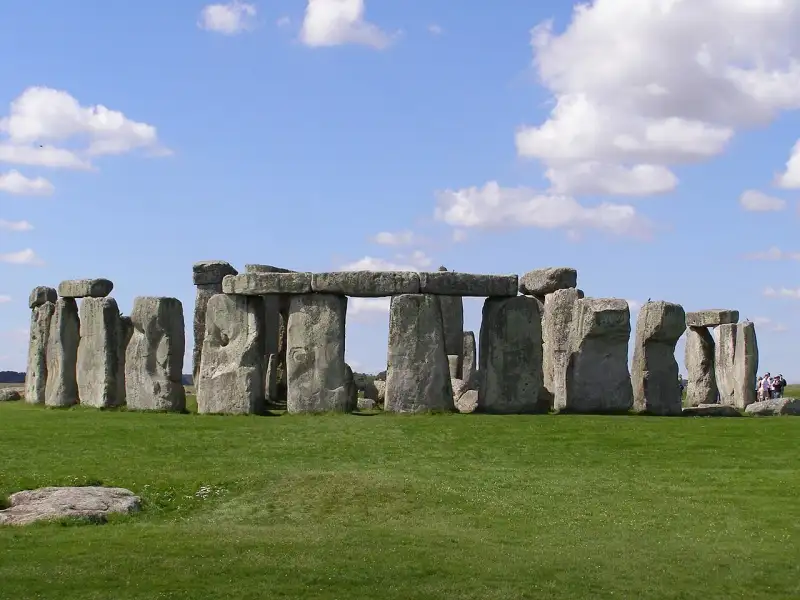
The Silence of the Stones: An Introduction to Eternity When the biting, unyielding wind sweeps across the vast, undulating expanse of the Salisbury Plain, it carries with it the unmistakable whispers of an epoch long swallowed by the voracious, unforgiving maw of time. Here, standing defiantly against the encroaching modernity of the twenty-first century, is a monument forged not merely of stone, but of sweat, blood, and an indomitable, almost terrifying human will to touch the divine. We call it Stonehenge. For millennia, it has been the silent sentinel of #AncientBritain, a riddle written in megaliths that has confounded kings, scholars, archaeologists, and wanderers alike. As an author who makes his living breathing life into the phantoms of the past, I find myself inextricably and obsessively drawn to the raw, visceral power of this place. The sheer, incomprehensible magnitude of the sarsen stones, silhouetted against a bruised, twilight sky, evokes a profound sense of awe that borders on dread. This is not merely a ruin; it is a testament to an ancient, breathing culture whose true name has been permanently erased from the annals of time, leaving only these silent, brooding giants to speak for them. In the grand, dramatic theater of #AncientHistory, there is perhaps no greater set piece, no more compelling a stage, than this circular sanctuary. To approach Stonehenge is to step across a threshold into a world that operates on a completely different frequency of time. We are accustomed to the frenetic pace of the digital age, where days blur into weeks and history is rewritten by the hour. But here, time is measured not in seconds or minutes, but in the slow, majestic turning of the celestial sphere, the creeping advance of the solstices, and the agonizingly slow weathering of solid rock. A Landscape Teeming with Phantoms Imagine, if you will, the plain as it was five thousand years ago. The air is thick, almost choking, with the scent of woodsmoke, roasting meat, and the metallic tang of freshly worked earth. The sounds of chanting, rhythmic, guttural, and deeply resonant, echo across the chalky downs, rising and falling like the tide. Men and women, their bodies painted with woad, their skin weathered by a life lived entirely exposed to the elements, and their eyes wide with religious fervor, gather under the vast, unpolluted canopy of the prehistoric night sky. They are the architects of eternity, driven by a cosmic clock that dictates the turning of the seasons, the birth of their cattle, and the meager harvest of their grain. The landscape surrounding the monument is not empty; it is a sprawling necropolis teeming with the ghosts of our ancestors. Every barrow that humps the horizon, every chalk-cut earthwork that scars the ground, every solitary standing stone in the surrounding countryside is a paragraph in a vast, epic narrative that we are only just beginning to decipher. To understand Stonehenge, we must first understand that it did not exist in isolation. It was the pulsing, beating heart of a sprawling, sacred geography. It was the absolute nexus where the world of the living violently, beautifully collided with the realm of the ancestors. The Architects Before Time: Blood in the Chalk Who were they, these primordial engineers who dared to reshape the earth? History, in its often arrogant simplicity, often paints the Neolithic Britons as simple savages, men and women clad in animal skins, scratching out a desperate, meager existence from a harsh, unforgiving land. But the stones tell a dramatically different, far more complex story. The construction of Stonehenge was an undertaking of such colossal scale, sophisticated planning, and logistical brilliance that it forces us to entirely reevaluate everything we thought we knew about the dawn of civilization in #AncientBritain. The First Builders and the City of the Dead The story of Stonehenge does not begin with the massive, iconic sarsens that define its silhouette today. It begins far earlier, around 3000 BCE, in a world transitioning from nomadic hunting to settled farming. The first monument was a simple, yet massive, circular earthwork—a henge—consisting of a ditch and a bank, carved into the stark white chalk of the plain using nothing but the shoulder blades of deer and antlers used as crude picks. Inside this pristine white enclosure, the early builders dug 56 mysterious pits, known today as the Aubrey Holes, named after the 17th-century antiquarian John Aubrey who first documented them. What was the true purpose of these pits? Were they sockets for massive wooden posts, creating a vast, imposing timber circle that predated the stone monument? Or were they, as the macabre evidence hauntingly suggests, receptacles for the cremated remains of the dead? The archaeological trowel points definitively to the latter. The Aubrey Holes contain the charred, fragmented remains of dozens of individuals. This transforms this early iteration of Stonehenge into a vast, circular cemetery, a city of the dead overlooking the undulating plains. The air here would have been perpetually thick with the acrid, oily smoke of funeral pyres, the wailing of mourners serving as a grim, continuous soundtrack to the nascent monument. It was a place of sorrow, of remembrance, and of a deep, abiding connection to those who had passed into the great beyond. The Arrival of the Bluestones: A Journey of Madness and Devotion The drama of Stonehenge truly unfolds roughly five centuries later, around 2500 BCE, with an act of sheer, almost incomprehensible audacity. The descendants of the first builders decided to drag massive stones to the site. But not just any stones. These were the bluestones, spotted dolerite and rhyolite, volcanic rocks possessing a strange, bluish hue when wet or freshly broken. The most astonishing, mind-bending part of this endeavor? These bluestones did not come from the local landscape. They were quarried from the jagged peaks of the Preseli Hills in western Wales, a staggering, grueling distance of over 150 miles away. Consider, for a moment, the sheer, brutal physical toll of this journey. The terrain between Wales and Salisbury Plain was unforgiving, a brutal mosaic of dense, impenetrable forests, treacherous, swallowing bogs, and churning, freezing rivers. How did a prehistoric people move these stones, some weighing up to four tons, across such an unforgiving landscape without the aid of the wheel or beasts of burden?The Over-land Route of Agony: Some historians and experimental archaeologists argue for a tortuous overland journey, employing massive wooden sledges, log rollers, and the sheer, unadulterated brute strength of hundreds of men and women pulling on ropes woven from twisted hide and plant fibers. The casualties must have been immense. Bones crushed under slipping stones, limbs broken, lives extinguished in the mud. The Perilous Coastal Voyage: Others suggest an equally perilous maritime route, floating the stones on massive, lashed-together rafts along the treacherous Welsh coast, up the Bristol Channel, and eventually down the River Avon. One sudden storm, one misjudged current, and the sacred stones—along with their human escorts—would be lost to the abyss.Whichever route they took, the transportation of the bluestones was an epic saga of human endurance, a generational undertaking that required unwavering dedication and a fanaticism that borders on madness. Why go to such extraordinary, deadly lengths? The answer almost certainly lies in the realm of the sacred. The bluestones were believed to possess magical, perhaps healing properties, their very substance imbued with the spirit of the distant Welsh mountains. To bring them to Salisbury Plain was not merely a construction project; it was a crusade to transport the divine itself, to anchor the magic of the ancestors in the chalk of Wessex. The Engineering Marvel of the Ancients: Forging the Giants If the transportation of the bluestones was a feat of staggering endurance, the subsequent erection of the sarsen stones—the gargantuan, indomitable sandstone blocks that form the outer circle and the inner horseshoe of trilithons—was a masterpiece of prehistoric engineering that defies logic. Shaping the Sarsen Giants with Flint and Sweat Brought from the Marlborough Downs, some 20 miles to the north, these monsters weighed up to 50 tons each. Moving them was only the first, brutal chapter in this herculean saga. The builders did not simply stand raw, unhewn boulders on end. They shaped them. They painstakingly dressed the incredibly hard sarsen stone using nothing more sophisticated than flint and smaller sarsen hammerstones. Imagine the scene: hundreds of men, their hands bloodied and blistered, pounding the surfaces of the great stones, millimeter by excruciating millimeter. They worked for years, perhaps decades, creating the smooth, slightly curved, rectangular blocks we see today. The sound of this relentless pounding must have been deafening, a rhythmic, percussive symphony of creation echoing across the plains day after day, year after year. The dust would have choked their lungs and blinded their eyes. This was not labor; this was a holy war against the very elements of the earth. #Stonehenge #AncientEngineering The Mortise and Tenon of Prehistory What truly elevates Stonehenge from a mere collection of standing stones to a sophisticated, unparalleled architectural marvel is the method used to join them. The builders did not rely on gravity alone, nor did they simply stack the stones like a child's blocks. They employed complex techniques borrowed directly from woodworking—specifically, the mortise and tenon joint. They carved massive, protruding pegs (tenons) on the tops of the upright stones and painstakingly hollowed out corresponding holes (mortises) on the undersides of the massive lintels that rested across them. Furthermore, the lintels themselves were subtly curved to form a perfect, continuous circle and joined end-to-end using complex tongue-and-groove joints. This interlocked the entire colossal structure, creating a ring of stone that was incredibly resilient to the ravages of time and weather. This is the genius of the ancients on full, unashamed display. They were not merely erecting markers; they were building an enduring, permanent temple, intentionally translating the impermanent, rotting architecture of their timber feasting halls into the immortal, eternal language of stone. They were building a house for the gods that would never fall. The People of the Stones: Grooved Ware and Beakers To understand the stones, we must understand the hands that raised them. During the period of Stonehenge's most dramatic construction, Britain was a melting pot of cultural shifts. The Grooved Ware Culture: Feasting at Durrington Walls The primary architects of the great sarsen circle are often associated with the 'Grooved Ware' culture, named for their distinctive, flat-bottomed pottery decorated with deep grooves. These were the people who inhabited the nearby super-settlement of Durrington Walls, located just a couple of miles from Stonehenge. Durrington Walls was a vast, sprawling complex of timber circles and hundreds of houses. Archaeological excavations have revealed massive middens—rubbish dumps—filled with the bones of tens of thousands of pigs and cattle. This was a place of immense, riotous feasting. Isotope analysis of the animal bones reveals a staggering truth: people were bringing livestock from as far away as the Scottish Highlands to feast at Durrington Walls in the midwinter. The dichotomy is poetic and profound. Durrington Walls, built of living, rotting timber, was the land of the living, a place of feasting, excess, and life. Stonehenge, built of cold, eternal stone, was the land of the dead, a place of silence, reverence, and eternity. The two sites were intimately connected by the River Avon, a literal and metaphorical conduit between life and death. The Beaker People: The Dawn of Bronze Just as the final stones were being rearranged at Stonehenge, a new culture swept into Britain from continental Europe—the Beaker people. Named after their distinctive, bell-shaped drinking vessels, they brought with them a revolutionary new technology: metalworking. The age of stone was ending; the age of copper and bronze was dawning. The Beaker people integrated with, and eventually superseded, the Grooved Ware culture. The famous "Amesbury Archer," a high-status burial found near Stonehenge, was a Beaker man, originating from the Alps. He was buried with gold hair tresses, copper knives, and the very beakers that gave his culture its name. The fact that this wealthy, powerful foreigner chose to be buried in the shadow of Stonehenge proves that the monument's fame and sacred power resonated far beyond the shores of Britain, drawing pilgrims and potentates from across the continent. Druids, Myth, and the Tapestry of Legend No exploration of Stonehenge is complete without delving headfirst into the swirling, intoxicating mists of myth and legend that have enveloped it for centuries. And at the heart of this mythology lies a single, evocative, and highly misunderstood word: Druid. The Shadow of the Sacred Oak For centuries, the popular imagination has inextricably linked Stonehenge with the Druids, the enigmatic, white-robed priests of the ancient Celtic world. We picture them wielding golden sickles, gathering sacred mistletoe from ancient oaks, and conducting esoteric, blood-drenched rituals within the stone circle at the absolute height of the summer solstice. This romanticized, deeply evocative vision, largely popularized by antiquarians like William Stukeley in the 18th century, is a potent narrative. The Druids represent the untamed, mystical heart of #AncientBritain, a counterpoint to the rigid, rational, and imperialistic world of the Roman conquerors who would eventually ruthlessly outlaw their practices. However, the cold, hard, uncompromising trowel of modern archaeology tells a vastly different story. The construction of Stonehenge predates the earliest known evidence of the Celtic culture and their Druidic priesthood by more than two thousand years. The original builders were not the Iron Age Celts of Roman history; they were a completely different, far older Neolithic and Bronze Age people whose true beliefs are lost to us. Yet, this historical inaccuracy does not entirely rob the Druid connection of its power. It is entirely plausible, perhaps even inevitable, that later generations, including the Celtic tribes and their Druids, recognized the inherent sacred nature of the site and incorporated it into their own spiritual practices. The stones, already ancient and imposing by the Iron Age, would have commanded reverence from anyone who stood before them. In the grand, sweeping narrative of historical fiction, the image of the Druid chanting amidst the sarsens remains a deeply compelling archetype, representing the continuous, unbroken thread of human spirituality seeking connection with the divine. Blood and Bronze: The Sacrificial Debates Where there is ancient, unfathomable religion, there is often the dark, lurking specter of sacrifice. Did the stones of Stonehenge truly run red with the blood of the chosen? This is a question that has thrilled and horrified storytellers, historians, and morbid tourists for generations. The historical record regarding human sacrifice in Neolithic and Bronze Age Britain is murky, a terrifying shadow play viewed in the flickering firelight of incomplete evidence. The Veneration of the Elite: Burials discovered near the site, such as the aforementioned Amesbury Archer, indicate a culture that venerated its elite, burying them with exquisite golden artifacts and the tools of their power. This speaks to reverence, not slaughter. The Gruesome Discoveries: Yet, there are darker, more sinister finds. Skulls with traumatic, blunt-force injuries. Bodies buried in strange, contorted positions, perhaps bound before death. And the chilling discovery of a decapitated man buried at the monument's edge during the later Iron Age.While there is no definitive, undeniable proof that ritual human sacrifice occurred routinely on the so-called "Slaughter Stone" (a highly dramatic and inaccurate name given by later, over-imaginative antiquarians to a fallen, iron-stained sarsen), the harsh, brutal reality of life in prehistoric times suggests that the shedding of blood, animal or otherwise, was likely an integral part of their communion with the gods. The very act of building the monument cost lives—men crushed beneath slipping fifty-ton stones, limbs mangled by snapping ropes, bodies broken by the relentless, grinding labor. In a very real, tangible sense, the monument is built upon a foundation of human sacrifice. Every stone stands as a headstone for the nameless laborers who gave their lives to raise it. Astronomical Alignments: The Cosmic Clock To truly grasp the profound significance of Stonehenge, one must cast their gaze upwards, away from the chalk, the blood, and the stone, and into the terrifying, beautiful vastness of the cosmos. Stonehenge is not just a temple; it is a celestial observatory, a massive architectural calendar built to capture the light of the heavens and bind the movements of the sky to the earth. The Solstice Watchers: Life and Death on the Horizon The most famous, undeniable alignment of Stonehenge is its orientation towards the sunrise on the summer solstice and the sunset on the winter solstice. This axis, extending from the very center of the monument, out through the entrance, and along the ceremonial Avenue, is the defining, foundational feature of the site's entire design. Imagine standing at the exact center of the circle on the longest day of the year. The air is cold and crisp, biting at your skin. The eastern horizon begins to pale, painting the sky in violent hues of crimson, purple, and gold. As the sun finally breaches the horizon, its first, blinding rays pierce the monument, casting long, dramatic shadows and perfectly aligning with the Heel Stone, a massive solitary sarsen standing just outside the main circle like a sentry. For the ancients, this was not a mere astronomical curiosity to be noted in a journal; it was a matter of absolute life and death. The solstices marked the critical turning points of the year. The winter solstice, in particular, was a time of deep, existential anxiety. Would the sun continue to sink lower in the sky, day after day, plunging the world into an eternal, freezing darkness? Or would it be reborn, promising the return of warmth, the thawing of the earth, and the continuation of life? Stonehenge was built to ensure the latter. It was a massive, stone engine designed to magically turn the wheel of the year and secure the survival of the tribe. They were not just watching the sun; they were participating in its resurrection. Eclipses, Lunar Nodes, and the Prehistoric Computer Some researchers, most notably the astronomer Gerald Hawkins in the 1960s, have argued passionately that Stonehenge's astronomical sophistication goes far, far beyond the relatively simple solar solstices. Hawkins controversially proposed that the 56 Aubrey Holes could have been used as an intricate system to predict lunar eclipses, tracking the complex, 18.6-year cycle of the lunar nodes. If this highly debated theory is true, it dramatically elevates the builders from mere farmers tracking the seasons to sophisticated, visionary astronomers, possessing a deep, mathematical understanding of celestial mechanics. It transforms Stonehenge into a Neolithic computer, a monument to the human intellect's desperate, beautiful desire to impose order and predictability upon the chaotic, terrifying canvas of the universe. While modern archaeologists heavily debate this "Stonehenge as a computer" theory, preferring simpler explanations based on ritual and ceremony, it adds an irresistible layer of intellectual mystery to the site. Are we looking at a temple of faith, or an academy of prehistoric science? Perhaps, in the minds of the ancients, there was no difference. #AncientAstronomy #CosmicClock The Sounds of the Stones: A Lithophonic Symphony There is another, often overlooked dimension to the enigma of Stonehenge: sound. The visual impact of the stones is so overwhelming that we forget to consider how the monument sounded. Recent acoustical archaeology—a fascinating new discipline—has revealed that the bluestones from Wales possess remarkable acoustic properties. When struck, they ring. They produce metallic, bell-like tones. They are lithophones. Imagine the rituals taking place within the circle. It wasn't just chanting and the crackle of fire. It was the ringing of the stones themselves, struck with mallets to produce a resonant, otherworldly symphony that would have vibrated through the very bones of the worshippers. The circular enclosure of the sarsens would have acted as an acoustic baffle, containing the sound, amplifying it, and creating an immersive, sensory experience that must have felt like the voice of the gods roaring into the earthly plane. The stones didn't just stand; they sang. A Journey Through the Ages: From Abandonment to Resurgence The story of Stonehenge did not end when the last sarsen was hauled into place and the final bluestone was aligned. The monument has stood, stoic and unyielding, through the agonizingly slow march of millennia, bearing witness to the tumultuous, bloody history of the British Isles. The Romans and the Twilight of the Gods When the heavily armored Roman legions waded ashore in 43 CE, bringing their arrow-straight roads, their rigid, unbending laws, and their pantheon of Mediterranean gods, Stonehenge must have seemed an incomprehensible, terrifying relic of a conquered, barbaric past. While the Romans definitely visited the site—leaving behind coins and pottery—they did not attempt to destroy it. Perhaps they recognized its inherent, lingering power, or perhaps they simply viewed it with a mix of imperial disdain and superstitious dread, leaving the sleeping giants well enough alone. Following the bloody collapse of Roman rule and the descent into the Dark Ages, Stonehenge entered a long period of twilight. The monument was abandoned, the knowledge of its true builders slipping into the abyss of forgotten history. The great stones began to fall, toppled by the slow, relentless erosion of the earth, the burrowing of animals, and perhaps, the intentional, fearful destruction by medieval religious zealots who viewed the site as a den of pagan witchcraft and devil worship. Medieval Mysticism and Arthurian Romance In the Middle Ages, the truth of Stonehenge was replaced by soaring fantasy. It became a place of dark magic and Arthurian legend. Geoffrey of Monmouth, the 12th-century chronicler who largely wove the rich tapestry of the Arthurian mythos, claimed with absolute authority that the stones were a monument to British nobles slaughtered by the treacherous Saxons, and that they had been magically transported from Ireland by none other than Merlin the wizard, using his dark arts to move the stones through the air. This fantastical, highly dramatic narrative dominated the popular understanding of Stonehenge for centuries, cementing its place in the romantic, mythical landscape of Britain. It wasn't until the Renaissance and the dawn of scientific antiquarianism in the 17th and 18th centuries that men like Inigo Jones, John Aubrey, and William Stukeley began to approach the site with a more analytical, yet still highly romanticized, eye. They began to dig, to measure, and to theorize, peeling back the layers of myth to reveal the even more astonishing truth beneath. Modern Controversies: Tunnels and Neo-Druids Today, Stonehenge is a UNESCO World Heritage site, a fenced-off marvel besieged daily by thousands of tourists armed with smartphones and an insatiable desire to capture the perfect photograph. The nearby highway, the heavily congested A303, thrums with the constant, irritating roar of modern traffic, a stark, jarring contrast to the profound, heavy silence of the stones. The site is currently at the center of fierce, ongoing modern controversies. Proposals to dig a massive road tunnel beneath the World Heritage Site to alleviate traffic on the A303 have sparked outrage among archaeologists, historians, and modern pagans alike, who fear the destruction of undiscovered artifacts and the irreversible alteration of the sacred landscape. The battle for Stonehenge's soul is far from over; it has merely shifted from the physical labor of dragging stones to the bureaucratic battles of the courtroom. Yet, despite the commercialization, the audio guides, and the controversies, the spiritual power of the place remains undiminished for many. During the summer and winter solstices, English Heritage graciously opens the stones to the public, and tens of thousands of modern Druids, Wiccans, New Agers, and curious revelers gather to watch the sunrise. They beat drums, blow horns, and touch the ancient rocks, seeking a connection to the earth and the cosmos that feels increasingly lost in our sterile, digitized world. The stones, it seems, still have the power to call to us. The Legacy That Remains: An Echo in the Chalk As an author who traffics in the drama of human history, I look at Stonehenge and I see the ultimate story—a narrative of staggering human ambition, of an unyielding, desperate desire to understand the terrifying cosmos, and to leave a permanent, undeniable mark upon a transient, decaying world. The true enigma of Stonehenge is not simply how it was built, though the engineering remains breathtaking. Nor is it precisely what it was used for, though the theories are endlessly fascinating. The true enigma lies in its enduring, unshakable resonance. It is a massive, stone mirror reflecting the anxieties, the hopes, the fears, and the dreams of every single generation that has stood before it. To the Neolithic farmers who first broke the chalk, it was a guarantor of the harvest and a house for the dead. To the Celts, a sacred grove of stone where the veil between worlds grew thin. To the medieval chroniclers, a testament to magic and lost kingship. To the Victorians, a puzzle to be solved. To us, in our frantic, modern age, it is a haunting, powerful reminder of the vast, uncharted depths of human history and our enduring need to find meaning in the alignment of the stars. When you stand on Salisbury Plain, the wind whipping your hair, and watch the sun dip below the horizon, casting the great trilithons into stark, black silhouette, you are not merely looking at a collection of old rocks. You are looking at a materialized prayer, a defiant shout into the void of eternity. You are looking at the indomitable spirit of #AncientBritain, a spirit that absolutely refuses to be silenced, echoing across five thousand years of wind, rain, and human folly. The stones keep their secrets well. They stand as a silent challenge to our modern hubris, reminding us that there are profound mysteries in this world that even our most advanced science cannot fully unravel, and that our ancestors possessed a wisdom and a dedication that we can barely comprehend. And perhaps, in the end, that is exactly as it should be. The silence of the stones is not an absence of meaning; it is a sacred space for our own imaginations to soar, to build our own myths, and to listen, just for a moment, to the voices of the ancient dead whispering in the wind. The blood, sweat, and tears that were poured into the dry chalky earth here created a monument that will outlast us all. We build our shining glass towers and our vast digital empires, arrogantly believing ourselves to be the pinnacle of creation. Yet, I wonder, in five thousand years, what will remain of our civilization? Will there be anything as majestic, as deeply resonant, as perfectly aligned, and as profoundly mysterious as the silent giants of Stonehenge? I highly doubt it. The enigma endures. The original architects are dust, the Druids are a romanticized myth, the true, specific purpose is forever lost to time, but the stones remain. Defiant, magnificent, and eternal, they stand as the ultimate testament to the beautiful, terrifying, and profoundly moving saga of humanity reaching for the stars. #History #AncientBritain Related InsightsThe Colosseum: Echoes of Eternity in the Heart of Rome The Great Pyramid of Giza: A Timeless Monument to Human Ingenuity The Whispering Stones of Chichen Itza: Echoes of the Maya{ "@context": "https://schema.org", "@type": "FAQPage", "mainEntity": [ { "@type": "Question", "name": "What is the main focus of The Enigma of Stonehenge: Druids and Giant Stones in Ancient Britain?", "acceptedAnswer": { "@type": "Answer", "text": "A dramatic deep dive into The Enigma of Stonehenge: Druids and Giant Stones in Ancient Britain. Mark Dinn explores the untold history, drama, and legacy of this fascinating subject." } }, { "@type": "Question", "name": "Who authored the comprehensive guide on The Enigma of Stonehenge: Druids and Giant Stones in Ancient Britain?", "acceptedAnswer": { "@type": "Answer", "text": "This detailed article and its insights were carefully researched and authored by Mark Dinn." } }, { "@type": "Question", "name": "Where can I find more related content about History?", "acceptedAnswer": { "@type": "Answer", "text": "You can explore more articles, detailed reviews, and similar insights by browsing the Related Insights section at the bottom of this article or visiting our dedicated History category page." } } ] }
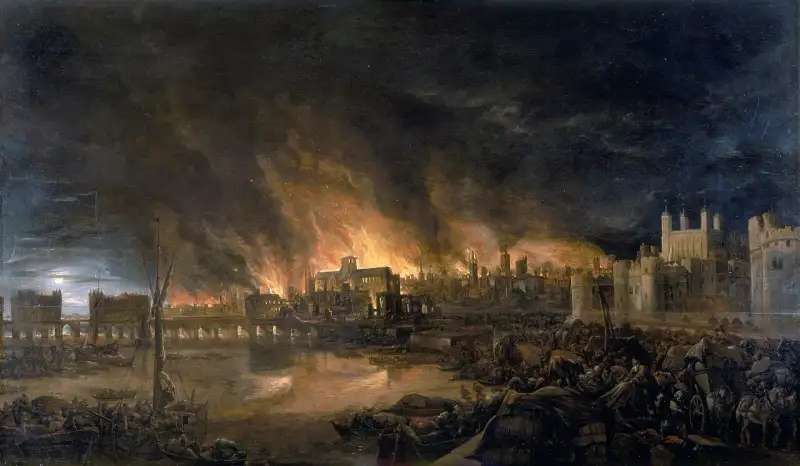
The Great Fire of London (1666): An Empire Reborn from Ashes The night of September 2, 1666, was unseasonably warm, the air thick with the dust of a long, dry summer. London, a sprawling medieval labyrinth of timber and pitch, slept under a starless sky. It was a city teetering on the precipice of ruin, though its denizens, nestled in their tightly packed beds, knew nothing of the impending doom. They were merchants and beggars, lords and cutpurses, all breathing the same stale air of a metropolis that had outgrown its ancient skin. This is the story of #London1666, a tale not just of destruction, but of the dramatic rebirth of an empire. As a historical author, I, Mark Dinn, have often wandered the modern streets of London, tracing the invisible scars left by that momentous event. To understand the Great Fire is to understand the very soul of the city—a soul forged in the crucible of a disaster so complete, it beggars belief. Let us travel back to that fateful night, stepping over the open sewers and winding our way down the narrow, claustrophobic alleys toward a modest bakery on Pudding Lane. #HistoricalFiction #MarkDinn #LondonHistory The Spark: A Baker's Oversight It began with a spark. Or perhaps an ember, overlooked in the weary exhaustion that follows a hard day's labor. Thomas Farriner, the King's baker on Pudding Lane, had drawn his ovens for the night. He was a man of some standing, providing hardtack and biscuits for the Royal Navy, a vital cog in the machinery of the burgeoning British Empire. Farriner claimed, to his dying day, that the ovens were properly extinguished. Yet, history tells a different, far more devastating tale. Sometime shortly after midnight, the latent heat found a stray bit of fuel. A piece of wood, a discarded rag, a pile of dry faggots stacked too close to the hearth. The first flames were tentative, licking at the dry timber of the bakery floor, tasting the ancient oak that formed the bones of Farriner's home. In the dead of night, the fire grew bold. It consumed the bakery with a ravenous hunger, the flames roaring up the wooden staircase, trapping Farriner, his daughter, and a maidservant on the upper floors. They escaped by clambering out of a high window, a desperate leap over the alleyway to a neighbor's roof. The maidservant, paralyzed by terror, refused to make the jump. She became the fire's first victim, a tragic footnote in the grand, terrifying ledger of the Great Fire. #PuddingLane #17thCentury The Tinderbox City To comprehend how a single bakery fire could consume a metropolis, we must understand the London of 1666. It was not the city of stone and concrete we know today. It was a medieval relic, a chaotic jumble of half-timbered houses, many of them jettisoned—meaning their upper stories leaned out over the streets, nearly touching the houses on the opposite side. Timber and Pitch: The primary building materials were oak and pitch, highly flammable substances that turned every home into a potential torch. A Drought of Biblical Proportions: The summer of 1666 had been exceptionally long and hot. A severe drought had baked the city bone-dry. The wooden frames of the houses were brittle, desperate for moisture. The Gale from the East: On the night of September 2, a strong, unyielding wind blew in from the east. It acted as a bellows, driving the flames forward with ferocious speed. Combustible Warehouses: The fire quickly reached Thames Street, a bustling thoroughfare lined with warehouses packed with the highly combustible lifeblood of the empire: tallow, oil, pitch, tar, hemp, and spirits.London was a tinderbox, waiting for a spark. And Thomas Farriner had unwittingly provided it. #AncientHistory #UrbanHistory The Inferno Awakens By Sunday morning, the fire had broken the bounds of Pudding Lane and was advancing toward the River Thames. The inhabitants of the area, accustomed to minor fires in the crowded city, initially viewed the blaze with mild concern. But as the sun rose, painting the sky a sickly, unnatural orange, the true scale of the disaster began to dawn on them. The flames hit the warehouses on Thames Street, and the fire transformed from a localized tragedy into an apocalyptic beast. Barrels of tar exploded like cannons. Rivers of burning oil flowed into the Thames, turning the water itself into a sheet of fire. The noise was deafening—a continuous, roaring bellow punctuated by the sharp crack of exploding timber and the terrified screams of the fleeing populace. I can imagine the scene: the frantic scrambling to salvage worldly possessions. Carts piled high with furniture, tapestries, and gold coins, rumbling over the cobblestones. The wealthy hired boats to carry their goods across the river to safety, driving the price of a short ferry ride to extortionate heights. The poor, with nothing but the clothes on their backs, fled on foot, a tide of desperate humanity pouring out of the city gates. #GreatFireOfLondon #HistoryNerd The Mayor's Folly In the face of such a crisis, leadership is paramount. Unfortunately for London, the Lord Mayor in 1666 was Sir Thomas Bloodworth, a man whose historical reputation is defined by a single, catastrophic failure of nerve. When Bloodworth was first roused from his bed and brought to view the fire early on Sunday morning, he was profoundly unimpressed. History has recorded his immortal, deeply regrettable words: "Pish! A woman might piss it out!" This breathtaking underestimation of the danger delayed the crucial early response. The traditional method of fighting fires in 1666 was to pull down houses in the path of the flames to create a firebreak. This required the Mayor's authority, but Bloodworth, fearing the cost of compensating the homeowners, hesitated. He wrung his hands while the city burned, his indecision costing London dearly. By the time he finally gave the order to pull down houses, it was too late. The fire had grown too large, too fast, easily leaping across the pathetic gaps created by the desperate citizens. #LeadershipFail #HistoricalFigures The King and the Duke: Royalty in the Ashes As Sunday bled into Monday, the fire became an uncontrollable monster, consuming everything in its path. The news reached Whitehall Palace, where King Charles II held court. Charles, the "Merry Monarch," was known for his hedonistic lifestyle, but in this moment of supreme crisis, he and his brother, James, Duke of York, stepped into the void left by Bloodworth's incompetence. King Charles realized that the city was in mortal peril. He bypassed the paralyzing bureaucracy of the city's government and put James in charge of the firefighting efforts. The Duke of York was a military man, and he approached the fire as he would a besieging army. He established command posts around the perimeter of the fire, drafting local men and soldiers into bucket chains and demolition crews. James rode up and down the lines, covered in soot, handing out gold coins to encourage the exhausted firefighters. The image of the royal princes, their faces blackened with ash, fighting side-by-side with common laborers, is one of the most enduring and dramatic tableaus of the Great Fire. #KingCharlesII #BritishMonarchy #RoyalHistory Desperation and Destruction: The Black Powder Solution Despite the heroic efforts of the Duke of York and his men, the fire continued its relentless march westward, driven by the howling eastern gale. It consumed the Royal Exchange, the financial heart of the empire. It swallowed the Guildhall, the center of civic governance. The heat was so intense that the lead roofs of the churches melted, pouring down the gargoyles and running through the streets in silvery, lethal streams. The conventional methods of pulling down houses with fire hooks were agonizingly slow and dangerously ineffective against the sheer ferocity of the blaze. Desperate times called for desperate measures. The King gave the order: bring in the gunpowder. The Navy was summoned, bringing barrels of black powder from the Tower of London. They began systematically blowing up houses in the path of the fire, creating massive, devastating firebreaks. The explosions shook the earth, adding to the apocalyptic atmosphere, but it was the only way to starve the beast of its fuel. The cost was immense, the destruction of property staggering, but the strategy slowly began to turn the tide. #NavalHistory #FirefightingHistory The Diarists: Pepys and Evelyn No account of the Great Fire would be complete without invoking the names of the two men who gave us our most vivid, visceral, and horrifyingly detailed accounts of the disaster: Samuel Pepys and John Evelyn. These two gentlemen, prominent figures in 17th-century London, recorded the unfolding apocalypse in their private diaries, providing future generations with an unparalleled window into the chaos. Samuel Pepys, a naval administrator and a man of insatiable curiosity, lived near the Tower of London. He was awoken early on Sunday morning by his maid, Jane, who told him of a fire in the city. Pepys initially dismissed it, but later that day, he took a boat on the Thames and witnessed the terrifying reality. His diary entries are masterpieces of journalistic observation. He noted the "pigeons... hovering about the windows and balconies till they some of them burned their wings, and fell down." He recorded the desperate panic of the citizens, the sky that looked "like the top of a burning oven," and the "most horrid, malicious, bloody flame." Pepys was instrumental in convincing the King of the severity of the situation, bypassing the useless Mayor Bloodworth and pleading for the use of soldiers and gunpowder. John Evelyn, a wealthy intellectual and horticulturist, viewed the fire with a more philosophical, though equally horrified, eye. He described the destruction as a divine judgment on a sinful city. Evelyn's account focuses on the agonizing loss of culture and architecture, particularly the burning of St. Paul's Cathedral. He wrote of the "dismal desert" the fire left behind, a post-apocalyptic landscape of smoking ruins where he could barely recognize the streets he had walked all his life. Through the eyes of Pepys and Evelyn, we don't just read about the fire; we smell the smoke, feel the blistering heat, and experience the profound psychological trauma of a city consuming itself. #SamuelPepys #JohnEvelyn #PrimarySources #HistoricalDocuments The Shadow of the Plague To fully grasp the psychological state of Londoners in 1666, one must remember the nightmare they had endured just the year before. In 1665, London was ravaged by the Great Plague, a devastating outbreak of the bubonic plague that killed an estimated 100,000 people—nearly a quarter of the city's population. The city was already a place of mourning, traumatized by the sight of death carts rumbling through the streets and the haunting cry of "Bring out your dead!" The air was thick with grief and the lingering fear of the pestilence. When the fire struck, many believed it was the final, apocalyptic stroke of a wrathful God, determined to wipe London from the face of the earth. However, historical hindsight offers a grim, fascinating irony. While the fire was a tragedy of property and displacement, it inadvertently acted as a brutal, necessary cleansing agent. The medieval slums, the rat-infested alleys, and the squalid, overcrowded tenements where the plague thrived were completely incinerated. The fire eradicated the breeding grounds of the disease. While outbreaks of plague occurred in England in subsequent years, London never again experienced a major epidemic on the scale of 1665. The Great Fire, in its merciless destruction, effectively sterilized the heart of the city, paving the way for a healthier, more sanitary metropolis. It is a chilling example of history's dark sense of balance, where salvation comes wrapped in the flames of devastation. #GreatPlague #MedicalHistory #UrbanSanitation The Treasure of the Thames: Spices, Silks, and Wine When the fire hit the warehouses along the Thames, it wasn't just burning timber and pitch; it was incinerating the wealth of the British Empire. London was a global trading hub, and the wharves were packed with exotic goods imported from the far corners of the globe. Imagine the sensory overload, the bizarre and tragic olfactory experience of the fire. As the warehouses burned, the air was filled not just with acrid smoke, but with the overpowering scent of burning spices—cinnamon, cloves, nutmeg, and pepper from the East Indies, violently roasted in the inferno. Bales of fine silk from Persia and India went up in vibrant, unnatural colored flames. Vast cellars filled with French wines and Spanish sherries boiled and exploded, the sweet alcohol feeding the fire and creating rivers of burning liquor that poured into the Thames, adding to the terrifying spectacle of a river on fire. The wealth of nations, the literal fruits of global exploration and exploitation, was reduced to fragrant, expensive ash in a matter of hours. The economic impact was staggering, bankrupting wealthy merchants overnight and crippling the city's trade for years to come. #GlobalTrade #EconomicHistory #SensoryHistory The Fall of St. Paul's Cathedral Of all the tragedies that unfolded during those infernal days, the destruction of St. Paul's Cathedral was perhaps the most culturally devastating. The old St. Paul's was a magnificent Gothic structure, the largest cathedral in England, dominating the London skyline. For centuries, it had stood as a symbol of faith and endurance. As the fire raged, the citizens of London believed the cathedral to be a safe haven. Its walls were thick, its plaza wide. Thousands of people brought their most valuable possessions—books, tapestries, gold—and stored them in the crypts of St. Paul's, trusting in the sanctity of the church to protect them. The booksellers of Paternoster Row, the center of London's publishing trade, moved their entire inventory into the cathedral's vaults. It was a fatal miscalculation. On Tuesday, September 4, the fire reached the cathedral. The wooden scaffolding erected for ongoing repairs caught alight. The flames climbed the tower, and soon, the immense lead roof began to melt. The molten lead poured down in a terrifying rain, destroying the pavement below. The fire penetrated the crypts, and the immense store of books and manuscripts became the ultimate fuel. The destruction was absolute. The ancient cathedral, the repository of centuries of knowledge and faith, burned with a ferocity that stunned the onlookers. Eyewitnesses reported that the stones of the cathedral exploded like grenades from the intense heat, and the ashes of the burned books were carried by the wind as far away as Eton and Windsor. The loss of St. Paul's was a psychological blow that struck at the very heart of the nation. #StPaulsCathedral #Architecture #GothicHistory The Aftermath: Refugees and Scapegoats By Wednesday, September 5, the eastern wind finally died down. The firebreaks created by the gunpowder explosions held. The Great Fire of London was, at last, defeated. But the victory was pyrrhic. The scale of the devastation was incomprehensible. Over 13,000 houses, 87 parish churches, the Royal Exchange, the Guildhall, and St. Paul's Cathedral were gone. An estimated 100,000 people—one-sixth of the city's population—were suddenly homeless, camped out in the fields of Moorfields and Islington, shivering in the autumn chill, their lives reduced to the ashes blowing in the wind. Remarkably, the official death toll recorded was incredibly low—traditionally stated as only six people. However, modern historians deeply suspect this number. The intense heat of the fire, reaching temperatures upwards of 1200 degrees Celsius, would have cremated many victims, leaving no remains to be recovered. Furthermore, the deaths of the poor and the marginalized were often unrecorded in the chaos of the time. The true human cost of the Great Fire remains a haunting mystery. #MysteryOfThePast #UntoldHistory The Search for a Villain In the bitter aftermath, a traumatized populace demanded answers. The people could not accept that such an apocalyptic event was the result of a simple baker's negligence. They needed a villain, a scapegoat to bear the weight of their profound loss. Suspicion immediately fell upon foreigners and Catholics. England was at war with France and the Netherlands, and anti-Catholic paranoia was a potent force in 17th-century London. Rumors spread like wildfire that the blaze was a deliberate act of arson, a Papist plot to destroy the Protestant capital. Mobs roamed the ruins, attacking anyone with a foreign accent. A tragic victim of this hysterical witch-hunt was Robert Hubert, a French watchmaker who was severely mentally impaired. Hubert confessed to starting the fire, claiming he had thrown a firebomb through the window of Farriner's bakery on behalf of the Pope. His confession was riddled with contradictions and impossibilities. It was later proven that Hubert had not even arrived in London until two days after the fire began. Yet, the authorities, desperate to appease the mob, accepted his false confession. Robert Hubert was hanged at Tyburn, a pathetic and innocent sacrifice to the city's grief and paranoia. His execution remains a dark stain on the history of the Great Fire, a stark reminder of the dangers of mob justice and the human need to find a culprit in the face of inexplicable tragedy. #JusticeDenied #HistoricalInjustice The Fire Court: Justice in the Ashes In the immediate aftermath of the fire, a massive legal crisis loomed. With thousands of properties destroyed, the complex web of leases, sub-leases, and freeholds threatened to stall the rebuilding effort indefinitely. Landlords demanded rent for houses that no longer existed; tenants, bankrupted by the disaster, refused to pay. The potential for endless litigation could have left London a ruined wasteland for decades. Recognizing this threat, Parliament established the "Fire Court" (officially the Court of Fire Judicature) in 1667. This was an extraordinary legal innovation. The court was composed of twenty-two senior judges who were granted unprecedented powers to hear cases, cut through legal red tape, and make binding, final decisions without the possibility of appeal. The Fire Court operated with remarkable efficiency and fairness. The judges sat in the ruins of Clifford's Inn, often working late into the night. They had the authority to cancel leases, extend terms, apportion costs between landlords and tenants, and order the rebuilding of properties. Their primary directive was to ensure that rebuilding happened as quickly as possible, overriding strict legal rights in favor of practical compromise and the public good. The records of the Fire Court remain a fascinating study in rapid crisis management and legal pragmatism. Without this remarkable institution, Wren's new city of stone might never have been built, trapped forever in the purgatory of 17th-century contract law. #LegalHistory #FireCourt #CrisisManagement Rebuilding an Empire: Wren's Vision The ashes of London were barely cool when the immense task of rebuilding began. King Charles II recognized the danger of a displaced, furious populace and acted swiftly to secure food and shelter for the refugees. He also saw an unprecedented opportunity. The fire had cleared the slate; it had wiped away the medieval squalor and presented the chance to build a modern, magnificent city worthy of the center of an expanding empire. The most famous architect of the age, Sir Christopher Wren, presented the King with a radical, visionary plan for a new London. Wren envisioned a city of wide, straight avenues, grand piazzas, and a sweeping embankment along the Thames, inspired by the classical grandeur of Paris and Rome. However, Wren's utopian vision clashed with the messy reality of property rights. The citizens of London, desperate to rebuild their homes and businesses, fiercely defended the original layout of their plots. Surveying the tangled web of ownership in the rubble proved impossible, and Wren's grand plan was eventually abandoned. Yet, the city that rose from the ashes was fundamentally transformed. #ChristopherWren #CityPlanning #Renaissance A New London of Stone The Rebuilding Act of 1667 laid down strict new regulations to ensure that a disaster of this magnitude could never happen again. The use of timber for the exteriors of buildings was banned. The new London was to be built of brick and stone. Streets were widened, overhanging jetties were outlawed, and access to the river was improved to allow for better firefighting in the future. The crowning achievement of the rebuilding effort was, of course, the new St. Paul's Cathedral. Designed by Christopher Wren, the new cathedral was a masterpiece of English Baroque architecture. Its magnificent dome, soaring above the city, became a symbol of London's resilience and rebirth. For over 300 years, Wren's St. Paul's dominated the skyline, surviving even the Blitz of the Second World War, a testament to the enduring spirit of the city. The fire also catalyzed significant social and economic changes. The loss of property led to the birth of the modern property insurance industry. In 1681, Nicholas Barbon established the first fire insurance company, the "Fire Office," and instituted the first organized fire brigades, complete with liveried firemen and rudimentary fire engines. The disaster had forced the city to modernize, dragging it out of the medieval era and into the modern age. #ArchitectureLover #LondonArchitecture #Baroque The Monument: Remembering the Inferno To commemorate the Great Fire and the subsequent rebuilding, a massive Doric column was erected near the site of Farriner's bakery on Pudding Lane. Designed by Christopher Wren and Robert Hooke, "The Monument" stands 202 feet tall—the exact distance from its base to the spot where the fire started. For centuries, the inscription on the Monument reflected the prejudices of the time, explicitly blaming "the treachery and malice of the Popish faction" for the fire. It wasn't until 1830, following the Catholic Emancipation Act, that these deeply offensive and historically inaccurate words were finally chiseled away. Today, you can climb the 311 spiral steps to the top of the Monument. From the viewing platform, you can look out over the modern city of London—a city of glass skyscrapers and concrete towers, a global financial hub that stands on the ashes of the old wooden city. It is a breathtaking view, a physical connection to a moment in history that forever altered the trajectory of the British Empire. #TheMonument #LondonViews #TravelHistory Modern Echoes: The Legacy of 1666 The Great Fire of London is not just a dusty historical anecdote; its echoes resonate powerfully in the modern world. It is a story about the fragility of urban life, the devastating consequences of negligence and poor leadership, and the remarkable capacity for human resilience and innovation in the wake of disaster. When we examine the Great Fire, we see the prototypes of modern emergency management. We see the birth of the insurance industry, the implementation of building codes, and the professionalization of firefighting. The disaster forced society to adapt and evolve, to create systems that protect us from the chaotic forces of nature. Furthermore, the Great Fire serves as a powerful reminder of the danger of scapegoating and misinformation during times of crisis. The tragic fate of Robert Hubert is a cautionary tale that remains fiercely relevant in our modern age of rapid information and digital mobs. When disaster strikes, the impulse to find an enemy, to blame the "other," is a deeply ingrained and dangerous human flaw. #LessonsFromHistory #ModernRelevance #SocietalChange The Enduring Spirit of London As a writer, I am endlessly fascinated by the dichotomy of destruction and creation. The Great Fire of London was a catastrophe of unimaginable proportions, a tragedy that destroyed lives, livelihoods, and centuries of history. Yet, from that infernal crucible emerged a cleaner, safer, and ultimately more magnificent city. The story of 1666 is the story of an empire reborn from ashes. It is a testament to the indomitable spirit of Londoners, a people who, faced with the complete annihilation of their world, simply picked up the pieces, cleared the rubble, and began to build anew. The next time you walk the streets of the City of London, past the gleaming towers of finance and the historic stone facades, pause for a moment. Remember the heat, the smoke, and the terror of that fateful September. Remember Thomas Farriner's bakery, the cowardice of Mayor Bloodworth, the heroism of the Duke of York, and the tragic scapegoat Robert Hubert. And marvel at the city that refused to die, the city that rose, phoenix-like, from the ashes of its own destruction to shape the course of history. The fire may have burned the wood and melted the lead, but it could not extinguish the soul of London. It merely forged it into something stronger, something enduring, something magnificent. This has been Mark Dinn. Until our next journey into the shadows of history, keep the embers of the past alive in your minds, for they light the path to our future. #HistoricalWriter #Storytelling #LondonLife #HistoryIsAlive Related InsightsEchoes from the Ash: The Rise, Fall, and Resurrection of Pompeii The Enigma of Stonehenge: Druids and Giant Stones in Ancient Britain The Edge of Empire: A Journey Along Hadrian's Wall{ "@context": "https://schema.org", "@type": "FAQPage", "mainEntity": [ { "@type": "Question", "name": "What is the main focus of The Great Fire of London (1666): An Empire Reborn from Ashes?", "acceptedAnswer": { "@type": "Answer", "text": "A dramatic deep dive into The Great Fire of London (1666): An Empire Reborn from Ashes. Mark Dinn explores the untold history, drama, and legacy of this fascinating subject." } }, { "@type": "Question", "name": "Who authored the comprehensive guide on The Great Fire of London (1666): An Empire Reborn from Ashes?", "acceptedAnswer": { "@type": "Answer", "text": "This detailed article and its insights were carefully researched and authored by Mark Dinn." } }, { "@type": "Question", "name": "Where can I find more related content about History?", "acceptedAnswer": { "@type": "Answer", "text": "You can explore more articles, detailed reviews, and similar insights by browsing the Related Insights section at the bottom of this article or visiting our dedicated History category page." } } ] }
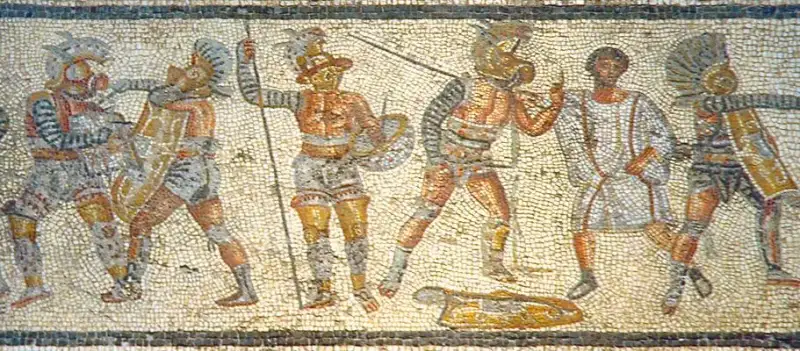
Roman Gladiators: Glory, Fame, and Certain Death in the Arena The air is thick with the coppery scent of fresh blood, mixing violently with the musk of fifty thousand sweating bodies pressing against the marble tiers of the Flavian Amphitheater. The roar of the crowd is a physical force, a tidal wave of sound that vibrates through the soles of your leather sandals. Below, on the blindingly bright sand—the harena, deliberately scattered to soak up the gore—two men circle each other. They are not merely fighters; they are demi-gods of the dirt, superstars forged in the crucibles of Roman brutality. One wields a net and trident, moving with the lithe grace of a panther. The other, encased in bronze armor that gleams like a falling sun, raises his short sword. This is not just combat. It is theater. It is politics. It is a sacrifice to the insatiable maw of Rome. #RomanEmpire #AncientHistory Welcome to the world of the Roman Gladiator. As an author who spends his days resurrecting the ghosts of antiquity, I am endlessly drawn to these men and women who lived on the razor's edge between immortal glory and agonizing obliteration. Their story is the story of Rome itself: magnificent, cruel, deeply disciplined, and ultimately fatal. #Gladiators #MarkDinn The Origins of Blood: From Funerals to Spectacles To understand the gladiator, one must look past the colossal stone arches of the Colosseum and gaze backward into the murky dawn of the Italian peninsula. The Romans did not invent this blood sport out of a mere desire for entertainment; its roots lay buried in solemn religious duty. #Etruscans #RomanHistory The earliest recorded gladiatorial combats, known as munera, occurred in 264 BC in the Forum Boarium (the cattle market) of Rome. Three pairs of slaves fought to the death at the funeral of a prominent aristocrat, Decimus Junius Brutus Pera. This was not a sport; it was a blood sacrifice, a munus (duty or offering) to appease the spirits of the dead. The Romans likely inherited this grim tradition from their northern neighbors, the Etruscans, or the Campanians to the south. Blood spilled on the earth was believed to nourish the departed soul on its journey through the underworld. For centuries, these games remained tied to funerals. If a patrician wanted to honor his deceased father—and simultaneously demonstrate his wealth and political power—he would sponsor a munus. What began as three pairs soon escalated. By 183 BC, a funeral hosted sixty pairs. By 65 BC, Julius Caesar, a man who understood the theatricality of power better than anyone, staged a staggering 320 pairs of gladiators wearing armor of pure silver to honor his father—who had been dead for twenty years. The religious veneer was slipping. The munera were becoming a political weapon. If you wanted the votes of the plebeians, you didn't just give them bread; you gave them blood. #JuliusCaesar #RomanRepublic The Ludus: Forging Steel and Flesh How does a man become a machine of death? The answer lies in the ludus, the gladiator training school. To enter a ludus was to cross the River Styx while still breathing. You swore the sacramentum gladiatorium, a terrifying oath that stripped you of your humanity and reduced you to property. The oath was uncompromising: "I vow to endure to be burned, to be bound, to be beaten, and to be killed by the sword." By speaking these words, a man surrendered his legal rights as a free person (if he had any) and became infamis, outcast, legally dead but physically alive. #Ludus #RomanLife The schools were run by the lanista, a figure who was simultaneously despised as a flesh-peddler and courted for his invaluable assets. The most famous schools were located in Capua and later in Rome itself, such as the Ludus Magnus, which sat right next to the Colosseum and connected to it via a subterranean tunnel—a dark artery pumping life into the arena. Life inside the ludus was a paradox of brutal discipline and exceptional care. Gladiators were an enormous investment. A prime fighter was worth a fortune, and the lanista did not want his investments dying of dysentery or breaking an ankle on uneven ground. The Training: Training was relentless. Recruits, called tirones, practiced with wooden swords (rudes) against a thick wooden post (palus). They were taught not just how to kill, but how to kill beautifully. The crowd demanded technique, not just butchery. The Brotherhood: Despite the horrific reality that they might one day have to kill the man sleeping in the next cell, gladiators formed incredibly tight-knit fraternities (collegia). They paid into communal burial funds to ensure that, if they fell, they would not be tossed into an unmarked pit. Their epitaphs, carved in stone across the empire, speak of deep friendships and surrogate families. #Brotherhood #AncientRomeClasses of Combat: The Taxonomy of Death The Romans were engineers and organizers, and they applied this categorization to their blood sports. Gladiators were not merely handed a sword and told to hack at one another. They were highly specialized, trained in specific classes that were designed to fight one another in asymmetrical, carefully balanced match-ups. This ensured maximum drama and tension. #MilitaryHistory #Weapons Here are some of the most iconic classes of the arena: The Murmillo (The Fish Man) Heavily armored and physically imposing, the Murmillo wore a massive helmet crested with a stylized fish. He carried a large rectangular shield (scutum) similar to a Roman legionary, and wielded the short, stabbing sword (gladius). His armor protected his head and his leading arm and leg, but left his torso exposed. He was a fortress, moving slowly but with devastating power. The Retiarius (The Net Fighter) The natural enemy of the Murmillo was the Retiarius, the most unique and recognizable of all gladiators. He wore virtually no armor—no helmet, no shield, no greaves. His only protection was a galerus, a metal shoulder guard on his left arm. His weapons were a weighted net (rete), a three-pronged trident (tridens), and a small dagger. He relied entirely on speed, agility, and the psychological terror of his net. The crowd loved the narrative: the nimble fisherman trying to net the lumbering sea monster. #Retiarius #GladiatorCombat The Thraex (The Thracian) Modeled after the fierce Thracian enemies of early Rome, this gladiator carried a small square or circular shield and wielded a sica—a wicked, curved sword designed to reach around the opponent's shield and slash at their unprotected back or legs. He wore heavily armored greaves on both legs and a helmet distinguished by a griffin crest. The Secutor (The Chaser) Specifically designed to fight the Retiarius, the Secutor was similar to the Murmillo, but his helmet was smooth and round, with tiny eyeholes. Why? So the Retiarius's net would slide right off without snagging on any crests or brims. The tiny eyeholes protected him from the trident, but severely restricted his vision and hearing, while the heavy helmet restricted his breathing. The fight between a Retiarius and a Secutor was a classic battle of endurance versus speed. The Dimachaerus (The Two-Sword Fighter) A rare and highly skilled class, the Dimachaerus fought with two swords, one in each hand, and wore very little armor. To survive in the arena without a shield required superhuman reflexes and a complete mastery of both offense and defense simultaneously. The Diet of Champions: Barley Men and Bone Ash If you imagine gladiators as ripped, lean bodybuilders akin to modern action stars, you are mistaken. The reality was much more pragmatic and fascinating. #AncientDiet #Nutrition Gladiators were often referred to as hordearii, which translates to "barley men." Their diet was overwhelmingly vegetarian, consisting of massive amounts of barley, beans, oatmeal, and dried fruit. Meat was a rarity. Why? Two reasons. Firstly, barley and beans were cheap, and feeding hundreds of men was expensive. Secondly, and more importantly, this high-carbohydrate diet allowed the gladiators to build up a thick layer of subcutaneous fat. This was not a sign of poor fitness; it was biological armor. In the arena, superficial cuts were inevitable. A thick layer of fat meant a blade could slice across a gladiator's chest or arm, producing a spectacular, crowd-pleasing spray of blood, without actually hitting any vital organs, muscles, or arteries. The fighter could continue fighting, bleeding profusely but largely unharmed, satisfying the crowd's thirst for gore while preserving the lanista's investment. Furthermore, we know from bone analysis (particularly from a gladiator graveyard discovered in Ephesus, Turkey) that they consumed a strange sports drink: a concoction of plant ash mixed with vinegar. This terrible-tasting brew was essentially an ancient calcium supplement, designed to fortify their bones against fractures and aid in healing after the crushing blows of training. #Archaeology #Ephesus Medical care was surprisingly advanced. The famous physician Galen, whose medical texts dominated Western medicine for over a thousand years, cut his teeth as a doctor at a gladiator school in Pergamum. He learned anatomy by examining the gaping wounds of fighters, treating horrific lacerations and developing advanced surgical techniques that saved countless lives. A Day at the Games: The Symphony of Slaughter The munera evolved into massive, state-sponsored spectacles that could last for days, weeks, or, in the case of Emperor Trajan's celebration of his victory over Dacia, 123 consecutive days. A typical day at the Colosseum was a carefully orchestrated symphony of slaughter, divided into three distinct acts. #Colosseum #Spectacle The Morning: Venationes (The Beast Hunts) The day began with exotic animals. The Romans scoured the edges of their vast empire—from the Atlas Mountains of Africa to the deep forests of Germania—to bring back lions, tigers, elephants, bears, rhinos, and crocodiles. The arena was transformed into elaborate, artificial landscapes with painted trees and mechanical hills. Highly trained hunters called venatores or bestiarii would battle these beasts. It was a display of Rome's dominance over nature itself. By the end of the morning, the sand was already soaked in blood. The Midday: Ludi Meridiani (The Executions) At noon, respectable citizens might leave to get lunch, because what happened next was purely brutal. This was the time for the execution of criminals, runaway slaves, and early Christians. This was not combat; it was theatrical murder. Victims were sometimes tied to posts and left to wild animals (damnatio ad bestias), or forced to act out mythological plays that ended in actual death. If the script called for Hercules to burn to death on a pyre, the condemned man was actually burned alive. It was a stark reminder of the consequences of defying Roman law. #RomanLaw #Executions The Afternoon: The Munera (The Main Event) As the afternoon sun cast long shadows across the arena, the main event began. The trumpets blared. The gladiators paraded in, dressed in purple and gold, displaying their weapons. The combat was tightly regulated. A referee (summa rudis), carrying a long staff, stood in the ring to ensure the rules were followed. If a fighter dropped his shield, the fight was paused. If a gladiator was severely wounded or exhausted, he could raise one finger in the air—the signal for submission. At this point, the combat stopped, and the gladiator's life hung in the balance. The referee would look to the emperor, or the sponsor of the games. The sponsor would look to the crowd. If the gladiator had fought bravely, the crowd would wave their tunics and shout "Mitte!" (Let him go!). The sponsor would give the signal for missio (release), and the loser would live to fight another day. But if the gladiator had fought cowardly, the crowd turned vicious. They would turn their thumbs—the exact gesture, pollice verso, is heavily debated by historians, but it indicated death—and yell "Iugula!" (Slit his throat!). The defeated gladiator was expected to kneel, grab the thigh of the victor, and accept the fatal thrust without flinching or crying out. To die well was the ultimate redemption. #Honor #DeathInTheArena Gladiators Who Defied Rome History is littered with the names of men who rose from the dust of the arena to achieve a strange, twisted kind of immortality. #HistoricalFigures #Heroes Spartacus: The most famous of them all. A Thracian auxiliary turned slave, Spartacus led a breakout from a ludus in Capua in 73 BC. Using kitchen knives and spits, 78 gladiators fought their way out and ignited the Third Servile War. For two years, Spartacus led an army of escaped slaves and gladiators that repeatedly humiliated the mighty Roman legions. Though he was eventually defeated by Crassus and his body never found, his name became a permanent symbol of defiance against tyranny. Flamma: The Syrian warrior who embodies the strange allure of the arena. Flamma was a Secutor who fought 34 times. He won 21 times, drew 9 times, and was granted a reprieve 4 times. What makes Flamma extraordinary is that he was offered the rudis—the wooden sword symbolizing freedom—four separate times. Four times, he was told he was a free man. Four times, he refused it, choosing to remain a gladiator. The arena was his home; the roar of the crowd was his addiction. He died at age 30, a legend of the sands. Marcus Attilius: A rare Roman citizen who voluntarily sold himself into the arena to pay off massive debts. Attilius shocked the Roman world by defeating a champion named Hilarus on his very first day. He became a celebrity, proving that Roman blood, even when disgraced, could still dominate the arena. Emperor Commodus: The megalomaniac who styled himself as Hercules reincarnated. Commodus was obsessed with gladiatorial combat and actually fought in the Colosseum, dragging the dignity of the imperial throne into the bloody dirt. Naturally, his fights were carefully staged. His opponents were given wooden swords, or he slaughtered wounded animals from the safety of a raised platform. His sheer insanity and debasement of the games ultimately led to his assassination in a bathtub by an athlete. #Commodus #MadEmperors The Women of the Arena: Gladiatrices While the vast majority of gladiators were men, the Roman arena was not exclusively a brotherhood. The gladiatrix existed, a fascinating and controversial figure in Roman history. #Gladiatrix #WomenInHistory Female gladiators were exceedingly rare and were treated as exotic novelties. They were not permitted to wear helmets, as their gender had to be visible to the crowd. They often fought other women, or, in particularly bizarre spectacles, fought dwarves or wild boars. One of the most famous pieces of evidence for female gladiators is a marble relief from Halicarnassus (modern Turkey) dating to the 1st or 2nd century AD. It depicts two women, heavily armed with swords and shields, locked in combat. Below them are their stage names: Amazonia and Achillia. The inscription notes that they fought to an honorable draw and were both granted a reprieve. The existence of female gladiators deeply unsettled conservative Roman moralists. For a woman, especially one of high birth, to expose herself in the arena was considered the ultimate degradation of Roman virtue. In 200 AD, Emperor Septimius Severus finally banned women from participating in single combat in the arena, bringing an end to the era of the gladiatrix. The Architecture of Slaughter: The Colosseum We cannot speak of gladiators without speaking of their ultimate stage: the Flavian Amphitheater, known today as the Colosseum. #Architecture #Rome Completed in 80 AD under Emperor Titus, the Colosseum was an engineering marvel that still staggers the imagination. It could hold upwards of 50,000 spectators, arranged in strict hierarchical seating. The Emperor and the Vestal Virgins sat at the front, senators behind them, then equestrians, then plebeian men, and finally, at the very top in the nosebleed section, women and the poorest citizens. But the true genius of the Colosseum lay beneath the sand. The hypogeum was a massive subterranean labyrinth of tunnels, cages, and trapdoors. Hundreds of slaves worked in the suffocating heat and darkness, operating massive wooden elevators powered by capstans. A lion or a gladiator could appear seemingly by magic from a trapdoor in the arena floor, terrifying and delighting the crowd. It was a machine designed for the sole purpose of maximizing drama and bloodshed. The Twilight of the Arena Nothing lasts forever. Not the glory of the empire, and not the bloodlust of the arena. #FallOfRome #LateAntiquity The decline of the gladiatorial games was a slow, agonizing process brought about by a confluence of cultural and economic shifts. The primary catalyst was the rise of Christianity. For the first three centuries of the empire, Christians had been victims of the arena, torn apart by lions for the amusement of the mob. As Christianity gained power and eventually became the state religion under Constantine in the 4th century AD, Christian writers railed against the games, viewing them as demonic, barbaric, and a sinful waste of human life. In 404 AD, according to legend, a Christian monk named Telemachus leapt into the arena in Rome to stop a gladiatorial fight. The furious crowd stoned him to death. The Emperor Honorius, purportedly moved by the monk's martyrdom, issued an edict permanently banning gladiatorial combat. However, theology was not the only factor. The Roman Empire was going bankrupt. The invasions of the barbarians, political instability, and economic collapse meant that the staggering cost of maintaining the ludi, transporting exotic animals, and feeding thousands of fighters simply became unsustainable. By the 5th century, the Roman state could barely afford to pay its armies to defend the borders, let alone finance massive blood spectacles. The games faded away, replaced by the much cheaper and safer chariot races in the Circus Maximus. The Colosseum was abandoned, its marble stripped to build churches, its subterranean tunnels filling with dirt and weeds. Echoes in Eternity: The Modern Legacy "What we do in life, echoes in eternity." These words, spoken by the fictional Maximus Decimus Meridius in Ridley Scott's 2000 cinematic masterpiece Gladiator, perfectly capture why these ancient warriors still hold us spellbound. #PopCulture #Cinema Why do we, sitting in our comfortable, air-conditioned homes two millennia later, still care about men hacking each other to death in the dirt? Perhaps it is because the gladiator represents the ultimate distillation of the human struggle against fate. They were men (and women) who were dealt the absolute worst hand life could offer: enslaved, brutalized, condemned to die for the amusement of others. Yet, within that hellish paradigm, they forged their own honor. They faced certain death with a cold, terrifying dignity. They created brotherhood in the abyss. They forced a society that viewed them as property to stand and applaud them as gods. As a writer, I find their stories to be the most compelling of the ancient world. They are not the tales of emperors wrapped in silk, debating philosophy on the Palatine Hill. They are the tales of sweat, terror, and the desperate, primal will to survive one more day, one more fight, one more roar of the crowd. The Flavian Amphitheater may be a ruin, and the blood may have long since washed out of the sand, but the spirit of the gladiator—fierce, unyielding, and eternally defiant—still echoes through the corridors of history. Mark Dinn is a bestselling author of Historical Fiction. His latest novel, 'The Sand and the Sword,' explores the intertwined destinies of a Retiarius and a Roman Senator during the chaotic Year of the Four Emperors. Follow him for more deep dives into the shadows of the ancient world. #HistoricalFiction #MarkDinnBooks #History #Gladiators Related InsightsThe Great Pyramid of Giza: A Timeless Monument to Human Ingenuity Whisper of the Andes: Unraveling the Enigma of Machu Picchu The Black Death: The Bubonic Plague That Decimated Medieval Europe{ "@context": "https://schema.org", "@type": "FAQPage", "mainEntity": [ { "@type": "Question", "name": "What is the main focus of Roman Gladiators: Glory, Fame, and Certain Death in the Arena?", "acceptedAnswer": { "@type": "Answer", "text": "A dramatic deep dive into Roman Gladiators: Glory, Fame, and Certain Death in the Arena. Mark Dinn explores the untold history, drama, and legacy of this fascinating subject." } }, { "@type": "Question", "name": "Who authored the comprehensive guide on Roman Gladiators: Glory, Fame, and Certain Death in the Arena?", "acceptedAnswer": { "@type": "Answer", "text": "This detailed article and its insights were carefully researched and authored by Mark Dinn." } }, { "@type": "Question", "name": "Where can I find more related content about History?", "acceptedAnswer": { "@type": "Answer", "text": "You can explore more articles, detailed reviews, and similar insights by browsing the Related Insights section at the bottom of this article or visiting our dedicated History category page." } } ] }
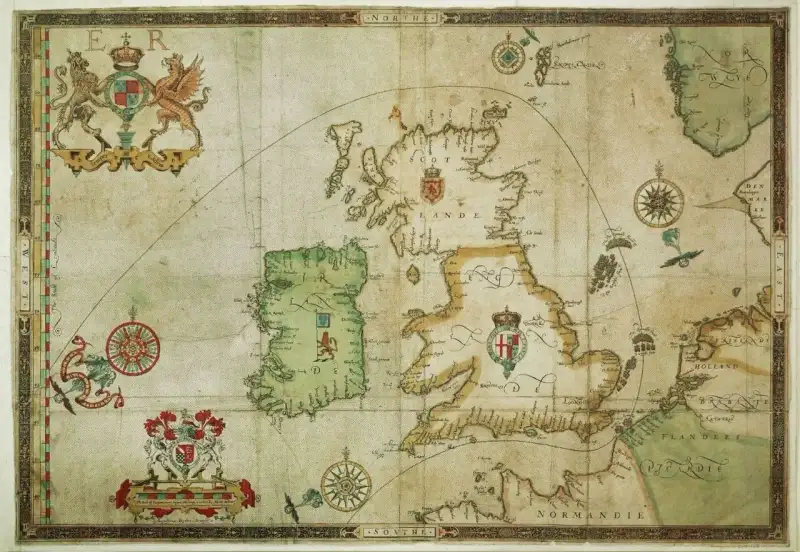
The sea does not suffer fools, nor does it yield to the hubris of kings. It is an ancient, wrathful entity, a theater of war where empires are made and broken upon the foaming waves. In the sweltering summer of 1588, the churning gray waters of the English Channel bore witness to one of the most spectacular, terrifying, and consequential clashes in the annals of human history: the defeat of the "Invincible" Spanish Armada. As a historical author, I have spent countless nights poring over the brittle, ink-stained dispatches of Tudor captains and the tragic, heart-wrenching letters of Spanish commanders, attempting to grasp the sheer magnitude of this confrontation. What transpired during those fateful weeks was not just a battle of ships and cannons, but a collision of two worlds, two religions, and two wildly different visions for the future of the globe. #History #NavalHistory #SpanishArmada The Gathering Storm: Spain's Grand Enterprise To understand the sheer weight of the Armada, one must first step back into the dimly lit corridors of the Escorial, where King Philip II of Spain, a man of relentless piety and unimaginable power, plotted the downfall of his arch-nemesis: Queen Elizabeth I of England. For decades, Elizabeth had been a thorn in Philip’s side. She had turned England into a bastion of Protestantism, encouraged swashbuckling privateers like Sir Francis Drake to plunder Spanish galleons in the New World, and openly supported the Dutch rebellion against Spanish rule. To Philip, England was a nest of heretics and pirates. The time for diplomacy had long passed. It was time for the "Enterprise of England." #TudorHistory #PhilipII #ElizabethI Philip’s grand design was breathtaking in its ambition and terrifying in its scale. He envisioned a gargantuan fleet, the likes of which the world had never seen, sailing from Lisbon to the English Channel. There, it would link up with a battle-hardened Spanish army stationed in the Netherlands under the command of the brilliant Duke of Parma. Together, this unstoppable force would cross the Channel in flat-bottomed barges, land on the English coast, march on London, depose the "heretic Queen," and restore the Catholic faith to the British Isles. A Fleet to Conquer the World By the spring of 1588, the "Invincible Armada" was ready. It was a floating city, a testament to the might and wealth of the Spanish Empire, largely funded by the silver mined from the agonizing depths of Potosí in the New World. 130 Ships: Comprising massive, towering galleons designed to act as floating fortresses, alongside heavily armed merchant vessels, smaller pinnaces, and Mediterranean galleasses (huge rowed warships). 30,000 Men: Among them were 8,000 sailors to man the ships, 18,000 elite soldiers to fight the land war, and a small army of priests, monks, and inquisitors to save English souls (or burn them, if saving proved impossible). 2,400 Cannons: A staggering arsenal capable of unleashing hellfire upon any vessel foolish enough to stand in their path. #MilitaryHistoryCommanding this immense force was Alonso Pérez de Guzmán, the Duke of Medina Sidonia. He was a noble of the highest rank, a capable administrator, but critically, he was not a seasoned sailor. When Philip appointed him, Medina Sidonia had famously pleaded to be excused, citing his tendency to get seasick and his lack of naval combat experience. But Philip, believing he was guided by the hand of God, refused the Duke’s resignation. Medina Sidonia set sail with a heavy heart, burdened by the impossible expectations of his sovereign and his Creator. The English Defense: Wood, Wind, and Wit Across the churning divide of the Channel, England was not waiting quietly for the executioner's axe. Queen Elizabeth I, aware of the encroaching doom, had mobilized her realm. The English response was characterized by a frantic, desperate energy, born of the knowledge that failure meant the end of their nation. #England #TudorEra The Dogs of War Unleashed The English fleet was fundamentally different from the Spanish Armada. While the Spanish relied on massive galleons built for close-quarters boarding actions—floating castles that sought to grapple enemy ships and overwhelm them with superior infantry—the English had spent the previous decades revolutionizing naval warfare. Led by brilliant, ruthless commanders like Lord Howard of Effingham, Sir Francis Drake, Sir John Hawkins, and Sir Martin Frobisher, the English had developed the "race-built" galleon. These ships were lower, sleeker, and significantly faster than their Spanish counterparts. More importantly, they were designed not as troop transports, but as floating gun platforms. The English strategy was simple but revolutionary: stay out of grappling range, use their superior speed and maneuverability to dictate the engagement, and pound the Spanish ships to splinters with long-range cannon fire. As the Armada slowly crept northward along the coast of Europe, beacon fires were lit across the length and breadth of England, passing the dread warning from hilltop to hilltop. The Spaniards were coming. The fate of the world hung in the balance. The Clash in the Channel: A Ballet of Death On July 19, 1588, the Spanish Armada was finally sighted off the coast of Cornwall, near the Lizard. The legend goes that Sir Francis Drake was playing a game of bowls on Plymouth Hoe when the news arrived, and he coolly remarked that there was time enough to finish the game and beat the Spaniards too. While the veracity of this tale is debated by historians, it perfectly encapsulates the swagger and audacity of the English sea dogs. #FrancisDrake #NavalBattle The Crescent Formation When the English fleet finally sailed out of Plymouth to meet the Armada, they were confronted with a sight that must have frozen the blood in their veins. The Spanish ships were arranged in a massive, tightly disciplined crescent formation, stretching for miles across the horizon. This formation was a tactical masterpiece. The strongest galleons protected the vulnerable wings (the horns of the crescent), while the slower supply ships and troop transports were nestled safely in the center. For a week, the two great fleets engaged in a running, agonizingly tense battle as they moved slowly up the English Channel. The English ships darted in like angry wasps, firing broadsides at the Spanish flanks before turning away before the heavier Spanish ships could grapple them. The Spanish, maintaining their rigid discipline, absorbed the punishment, returning fire when they could, but relentlessly pushing forward toward their rendezvous with the Duke of Parma. The air was thick with the acrid, choking stench of black powder. The roar of the cannons was deafening, a continuous, thunderous drumbeat echoing across the water. Yet, despite the unprecedented expenditure of gunpowder and shot, neither side managed to inflict a decisive blow. The English realized with growing horror that their cannons, though numerous, were largely bouncing off the incredibly thick oak hulls of the Spanish galleons. The "Invincible Armada" seemed exactly that—invulnerable to English fire. #Warfare #16thCentury Hell on Water: The Fireships of Calais By late July, the Armada had reached the Strait of Dover and dropped anchor off the coast of Calais, France. Medina Sidonia had achieved the first part of his impossible mission: he had navigated the Channel without losing a single major warship to English action (two had been lost to accidental collisions and explosions). However, he now faced a catastrophic problem. The Duke of Parma’s army was not ready. Blockaded by shallow-draft Dutch rebel ships (the "Sea Beggars") and lacking the necessary barges to safely reach the Armada, Parma could not embark. The Spanish fleet was sitting in an exposed anchorage, with a hostile English fleet lurking just out of range, and a fast-approaching storm threatening to blow them onto the treacherous Flemish shoals. It was here, in the dead of night on August 7, 1588, that the English played their trump card. It was a tactic as old as naval warfare itself, but executed with terrifying precision and devastating psychological effect: fireships. #Fireships #Tactics The Midnight Inferno Lord Howard ordered eight old, heavily combustible ships to be stripped of all valuables. Their holds were packed with pitch, tar, brimstone, gunpowder, and anything else that would burn fiercely. Their cannons were left fully loaded, primed to cook off in the heat and add a deadly barrage to the ensuing inferno. As the tide turned and the wind blew strongly toward the anchored Spanish fleet, the fireships were set ablaze and sent drifting into the darkness. Imagine the terror of the Spanish sailors on watch that night. The darkness of the Channel was suddenly pierced by eight towering pillars of fire, roaring and crackling as they bore down upon the tightly packed Armada. The flames licked at the night sky, casting a hellish, orange glow over the water. The loaded cannons aboard the fireships began to explode in the heat, firing randomly into the night, adding to the absolute chaos. Panic, raw and uncontrollable, swept through the Spanish fleet. The disciplined crescent formation, which had held so flawlessly for a week, shattered in an instant. Fearing that the fireships were packed with massive explosives (similar to the devastating "Hellburners" the Dutch had used in Antwerp), the Spanish captains did not wait to weigh anchor. They hacked their thick anchor cables with axes, abandoning their vital ground tackle in a desperate scramble to escape the approaching inferno. Ships collided in the darkness, rigging tangled, and hulls ground together as the Armada scattered in a disorganized, panicked mass into the North Sea. #Chaos #BattleOfCalais The Battle of Gravelines: Blood and Timber Dawn broke on August 8 to reveal a Spanish fleet that was scattered, disorganized, and deeply vulnerable. For the first time since the campaign began, the Armada was not in its defensive crescent. The English, realizing their golden opportunity had arrived, closed in for the kill. What followed was the Battle of Gravelines, the climax of the Armada campaign. Having realized that firing from a distance was ineffective against the thick Spanish hulls, the English commanders made a bold, dangerous decision: they sailed to within musket range—sometimes as close as fifty yards—before unleashing their broadsides. The combat was brutal, bloody, and deafening. The English ships, faster and more maneuverable, poured a relentless, terrifying hail of iron roundshot into the Spanish galleons. The Spanish, desperate to grapple and board, found their cumbersome ships outmaneuvered at every turn. Furthermore, many of the Spanish cannons were found to be loaded with the wrong size ammunition, or their gunners, untrained for sustained rapid fire, could not reload quickly enough. The Slaughter on the Decks For nine grueling hours, the battle raged. The Spanish ships, particularly the galleons San Martín (Medina Sidonia’s flagship) and San Mateo, absorbed an unbelievable amount of punishment. Their hulls were riddled with holes, their rigging was shredded into a tangled mess of hemp and canvas, and their decks ran red with the blood of soldiers and sailors. Eyewitness accounts speak of a hellish scene. Splinters of oak, jagged and sharp as daggers, flew across the decks, impaling men where they stood. The screams of the wounded mingled with the roar of the cannons and the crash of falling masts. Priests moved among the dying, offering absolution amidst the carnage. By late afternoon, the Spanish fleet was on the brink of total annihilation. Several ships were sinking, others were completely disabled, and the English were preparing to board and capture the prizes. But then, as if the heavens themselves intervened, a sudden, violent squall blew up, forcing the English to break off their attack. The Armada was saved from immediate destruction, but its spirit was broken, and its mission was definitively aborted. #BattleOfGravelines #NavalCombat The Perilous Journey North: The Wrath of God The Armada was battered, bleeding, and dangerously low on ammunition and food. The wind, blowing strongly from the south, prevented them from returning down the English Channel. Medina Sidonia faced a grim, agonizing reality: the only way home to Spain was a perilous, uncharted journey north, sailing around the treacherous coasts of Scotland and Ireland. It was a journey into a nightmare. As the fleet rounded the northern tip of Scotland, they were battered by a series of unprecedented, ferocious autumnal storms. The Spanish ships, already severely damaged at Gravelines, with weakened masts and hulls full of leaks, were woefully unequipped to handle the furious gales of the North Atlantic. Shipwrecks and Slaughter on the Irish Coast The true tragedy of the Spanish Armada did not occur in the English Channel, but on the jagged, unforgiving rocks of the Irish coast. Desperate for fresh water, food, and repairs, many Spanish captains tried to seek shelter in the bays and inlets of western Ireland. But their charts were inaccurate, and they had abandoned their main anchors in the panic at Calais. Unable to hold their positions against the gale-force winds, dozens of proud Spanish galleons were driven mercilessly onto the rocky shores. Over twenty ships were wrecked along the coasts of Donegal, Sligo, Mayo, Clare, and Kerry. Thousands of sailors and soldiers drowned in the freezing, churning surf. Those who miraculously survived the wrecks and managed to drag themselves ashore faced an equally grim fate. The English authorities in Ireland, terrified of a Spanish-backed Catholic uprising, had issued strict orders: any Spaniard found on Irish soil was to be executed immediately. Local lords, some loyal to the English crown and others simply eager for Spanish gold and weapons, systematically hunted down the survivors. Thousands of exhausted, starving Spaniards were summarily executed, their bodies left to rot on the beaches or hung from trees. Of the 130 ships that had sailed from Lisbon with such arrogant fanfare, only around 65 battered, disease-ridden hulks managed to limp back to Spanish ports in the autumn of 1588. Over 20,000 men had died, the vast majority not from English cannon fire, but from disease, starvation, and the terrifying fury of the sea. #Shipwreck #IrishHistory #Tragedy The Legacy of the Armada: A Turning Point in History When news of the disaster finally reached King Philip II at the Escorial, he reportedly retreated to his private chapel and prayed. "I sent my ships to fight against men," he famously said, "not against the winds and the waves of God." The defeat of the Spanish Armada was a seismic event, a genuine turning point in global history that fundamentally altered the geopolitical landscape of Europe and the world. The Rise of Britannia For England, the victory was the defining moment of Queen Elizabeth I’s reign. It secured the Protestant faith in the British Isles and prevented a Spanish conquest that would have forever altered the course of British history. The victory fostered a surging wave of national pride and a potent myth of English invincibility at sea—a myth that would shape British identity for centuries. More importantly, it marked the beginning of England’s rise as a global naval superpower. The tactics developed during the Armada campaign—relying on speed, maneuverability, and long-range gunnery—became the blueprint for naval warfare for the next three centuries. The English had learned that the future of naval combat did not lie in floating castles meant for boarding, but in floating artillery batteries designed to sink the enemy from afar. This realization paved the way for the eventual dominance of the Royal Navy and the establishment of the British Empire. #BritishEmpire #RoyalNavy The Slow Eclipse of Spain For Spain, the defeat was a colossal humiliation and a massive financial blow, though it did not immediately end Spanish hegemony. Spain remained a dominant global power for decades, and Philip quickly rebuilt his navy. However, the aura of Spanish invincibility was permanently shattered. The psychological impact on Protestant Europe was profound; they realized that the mighty Spanish Empire could bleed, and that it could be beaten. The Armada campaign also drained Spain's resources, exacerbating an already fragile economy burdened by endless wars in Europe and the Americas. It was the beginning of a long, slow decline that would eventually see Spain eclipsed by rising powers like France, the Netherlands, and Great Britain. The Modern Relevance: Hubris and the Unknown Why does the story of the Spanish Armada continue to captivate us centuries later? Because it is a narrative deeply rooted in the most fundamental aspects of the human condition. It is a story of towering ambition, of religious zealotry, of technological innovation clashing with entrenched tradition, and, ultimately, of the crushing, inescapable consequences of hubris. Philip II believed he was fighting a holy war, convinced that God would not allow his grand enterprise to fail. But he underestimated the ingenuity and desperation of his enemies, and, most critically, he underestimated the unforgiving, unpredictable power of nature. In our modern era, surrounded by advanced technology and data-driven predictions, it is easy to fall into the same trap of arrogant certainty that doomed the Spanish Armada. The wrecks scattered along the Irish coast remain a silent, potent reminder that no empire is truly invincible, no plan is foolproof, and that history is often decided not by the grand designs of kings, but by the shifting winds, the crashing waves, and the courage of those fighting for their very survival. The story of the Armada is a testament to the fact that the sea remains untamed, and history, in all its chaotic, bloody glory, is written by those who learn to harness the storm, rather than those who simply expect the storm to bow to their will. #HistoricalFiction #MarkDinn #WorldHistory #AncientHistory #MaritimeHistoryMark Dinn is a celebrated author of historical fiction and narrative history. His works focus on bringing the visceral reality, dramatic tension, and untold human stories of the past into the vibrant light of the present. #History #NavalHistory Related Insights千古绝唱,江水悠悠:探秘乐山大佛的沧桑与辉煌 The Black Death: The Bubonic Plague That Decimated Medieval Europe The Acropolis of Athens: A Timeless Citadel of Human Triumph{ "@context": "https://schema.org", "@type": "FAQPage", "mainEntity": [ { "@type": "Question", "name": "What is the main focus of The Fall of the Spanish Armada: The Sea Battle That Changed History?", "acceptedAnswer": { "@type": "Answer", "text": "A dramatic deep dive into The Fall of the Spanish Armada: The Sea Battle That Changed History. Mark Dinn explores the untold history, drama, and legacy of this fascinating subject." } }, { "@type": "Question", "name": "Who authored the comprehensive guide on The Fall of the Spanish Armada: The Sea Battle That Changed History?", "acceptedAnswer": { "@type": "Answer", "text": "This detailed article and its insights were carefully researched and authored by Mark Dinn." } }, { "@type": "Question", "name": "Where can I find more related content about History?", "acceptedAnswer": { "@type": "Answer", "text": "You can explore more articles, detailed reviews, and similar insights by browsing the Related Insights section at the bottom of this article or visiting our dedicated History category page." } } ] }
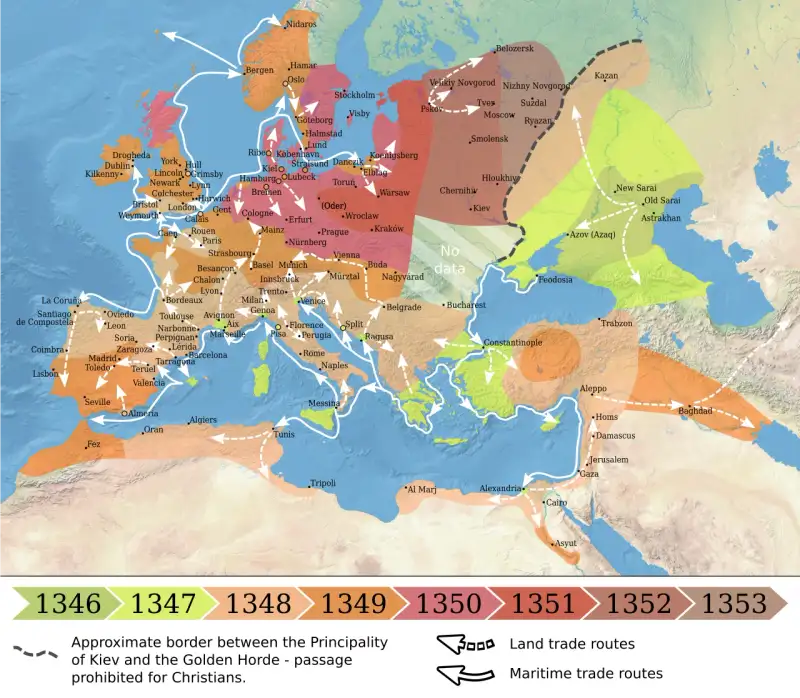
The Black Death: The Bubonic Plague That Decimated Medieval Europe A World on the Precipice In the year of our Lord 1347, the continent of Europe was entirely unaware that it stood upon the very precipice of the abyss. To understand the magnitude of the cataclysm that was about to unfold, one must first envision the fragile state of the world into which the pestilence crept. #MedievalEurope was a tapestry of burgeoning cities, sprawling feudal estates, and dense, interconnected trade networks. It was a world humming with the commerce of the Renaissance's dawn, yet precariously balanced on the edge of a knife. The preceding decades had not been kind. The Great Famine of 1315–1317 had already severely weakened the population, bringing years of unyielding rain, rotting crops, and widespread starvation. Generations had grown up undernourished, their immune systems compromised, their bodies frail. The population had swelled beyond the agricultural capacity of the land, creating crowded, unsanitary urban centers where waste flowed openly in the streets, and humans lived cheek-by-jowl with livestock, rats, and fleas. It was a world ripe for the harvest. But no prophet, no astrologer gazing at the conjunction of Saturn, Jupiter, and Mars in the house of Aquarius, could have truly predicted the sheer, unadulterated horror that was sailing toward them from the East. The #BlackDeath was not merely a disease; it was an apocalypse, an event so profound and terrifying that it fundamentally ruptured the fabric of human history. The Winds of Pestilence: Origins in the East The nightmare did not begin in the cramped alleys of Paris or the bustling docks of London. It originated in the vast, arid expanses of Central Asia, likely in the steppes of modern-day Kyrgyzstan or Mongolia. There, the bacterium Yersinia pestis had long circulated among populations of marmots and other rodents. Climate changes in the 1330s—perhaps a series of exceptionally dry years following a period of lush growth—drove these rodents out of their natural habitats and closer to human settlements. Through the intricate webbing of the Silk Road, the disease began its inexorable march westward. It hitchhiked on the backs of merchant caravans, nestled in bales of silk and sacks of spices, carried by the ubiquitous black rat (Rattus rattus) and its deadly companion, the Oriental rat flea (Xenopsylla cheopis). The turning point, the moment the plague truly weaponized itself against Europe, occurred at the Genoese trading outpost of Kaffa (modern-day Feodosia) on the Crimean Peninsula. In 1345, the city was besieged by the Golden Horde, led by the Mongol warlord Jani Beg. The siege dragged on, but suddenly, the Mongol ranks were decimated by a mysterious, rapidly fatal illness. In what is perhaps the first recorded instance of biological warfare, the desperate and dying Mongols loaded the plague-ridden corpses of their fallen comrades onto trebuchets and hurled them over the walls into the city of Kaffa. The Genoese merchants, horrified by the raining dead, quickly succumbed to the contagion. Panic ensued. Desperate to escape the infected city, they boarded their swift galleys and fled into the Black Sea, unwittingly carrying the grim reaper in their holds. #AncientHistory #Warfare The Death Ships Arrive In October 1347, a fleet of twelve Genoese galleys limped into the harbor of Messina, Sicily. The scene that greeted the Sicilian port authorities was one of unimaginable horror. The sailors aboard the vessels were either dead or dying. Those still clinging to life were delirious with fever, their bodies covered in mysterious black boils that oozed blood and pus. These were the infamous "death ships." The authorities in Messina quickly realized the danger and ordered the fleet out of the harbor, but it was too late. The true vectors of the disease—the infected rats and their fleas—had already scurried down the mooring lines and into the city. The Black Death had made landfall in Europe. The speed with which the contagion consumed Messina was breathtaking. Within days, the city was a charnel house. The disease spread so rapidly that the living could scarcely bury the dead. People dropped in the streets, in their homes, in the very churches where they sought sanctuary. From Sicily, the plague moved with terrifying swiftness. By early 1348, it had reached Genoa and Venice. By summer, it had crossed the Alps into France and the Holy Roman Empire. By autumn, it had crossed the Channel to England. The Anatomy of the Terror What made the Black Death so utterly terrifying to the medieval mind was its gruesome physical manifestation and its sheer unpredictability. Modern science tells us that the Black Death was primarily the bubonic plague, but it also manifested in two other, even more deadly forms: pneumonic and septicemic.Bubonic Plague: The most common form, characterized by the sudden onset of fever, chills, vomiting, and terrible aches. Its most distinguishing feature was the appearance of "buboes"—painful, swollen lymph nodes in the groin, armpits, or neck. These swellings, which could grow to the size of an apple, would eventually turn black and split open, oozing foul-smelling pus and blood. Mortality rate: 50% to 70%. Pneumonic Plague: This occurred when the infection reached the lungs. It was highly contagious, spreading directly from person to person through the air via coughing and sneezing. Victims would cough up blood and essentially drown in their own fluids within a matter of days. Mortality rate: nearly 100%. Septicemic Plague: The deadliest form, where the bacteria multiplied directly in the bloodstream. Victims would die incredibly quickly, sometimes before any other symptoms appeared. Internal bleeding caused dark patches on the skin—the literal "black death." Mortality rate: 100%.The Italian writer Giovanni Boccaccio, who survived the plague in Florence, provided a harrowing firsthand account in his masterpiece, The Decameron: "It did not take the form it had assumed in the East... but in men and women alike it first betrayed itself by the emergence of certain tumors in the groin or the armpits, some of which grew as large as a common apple, others as an egg... From the two said parts of the body this deadly gavocciolo soon began to propagate and spread itself in all directions indifferently." A Society in Collapse The societal impact of the Black Death cannot be overstated. As the death toll mounted, the very foundations of medieval civilization began to crumble. Institutions that had stood for centuries proved utterly powerless in the face of this invisible enemy. The Failure of Medicine The medical community of the 14th century was entirely unequipped to understand or combat the plague. Grounded in the ancient Greek theory of humorism, physicians believed that illness was caused by an imbalance of the four bodily humors (blood, phlegm, yellow bile, and black bile) or by "miasma"—corrupt, foul-smelling air rising from swamps or unburied corpses. Their treatments were as varied as they were ineffective. #MedicalHistory is replete with the desperate, sometimes bizarre remedies employed during the plague years. Bloodletting: Believing that drawing "bad blood" would cure the patient, physicians regularly bled victims using leeches or lancets, often simply accelerating their death by weakening them further. Aromatherapy: To combat the miasma, people carried nosegays of sweet-smelling flowers, herbs, and spices (the origin of the nursery rhyme "Ring Around the Rosie"). Bizarre Poultices: Buboes were lanced and treated with poultices made of anything from roasted onions and herbs to crushed emeralds and even the chopped-up remains of pigeons or snakes. Theriac: An expensive, ancient concoction containing dozens of ingredients, including opium and snake flesh, widely prescribed to the wealthy but entirely useless against Yersinia pestis.The Breakdown of Social Order More terrifying than the physical symptoms was the moral and social collapse that accompanied the plague. The sheer volume of death overwhelmed the living. Mass graves, known as plague pits, were dug outside city walls, where bodies were layered like lasagna. The bonds of family and friendship shattered under the weight of fear. Boccaccio noted with despair that "brother was forsaken by brother, nephew by uncle, brother by sister, and oftentimes husband by wife; nay, what is more, and scarcely to be believed, fathers and mothers were found to abandon their own children, untended, unvisited, to their fate, as if they had been strangers." Law and order evaporated. Magistrates and guards died or fled. Entire towns were abandoned, leaving ghost ships of stone in the countryside. Crops rotted in the fields for lack of hands to harvest them. Livestock wandered aimlessly, dying in the pastures. The silence that descended upon Europe was profound and chilling—the silence of the grave. #History The Scapegoats and the Zealots In the absence of a scientific explanation, the people of Medieval Europe turned to theology and superstition. The prevailing belief was that the Black Death was a divine punishment, the wrath of a furious God meted out upon a sinful world. This desperation gave rise to some of the darkest chapters of the plague years. The Flagellants Believing that extreme penance was the only way to appease God, massive movements of flagellants swept across Europe. These were bands of men and women who traveled from town to town, stripped to the waist, whipping themselves with scourges embedded with iron spikes while chanting hymns of repentance. They believed that by sharing in the suffering of Christ, they could atone for the sins of humanity. The flagellant movement grew massive, becoming a law unto itself and challenging the authority of the Church. Pope Clement VI eventually condemned them, recognizing the threat they posed not just to religious order, but to public health, as they actively spread the plague from town to town, their open wounds providing perfect entry points for the bacteria. The Persecution of the Jews Perhaps the most tragic and shameful consequence of the Black Death was the systematic persecution and massacre of Jewish communities across Europe. Desperate to find a human scapegoat for their suffering, wild rumors began to circulate that the Jews were responsible for the plague, accusing them of poisoning the wells and springs. Despite the fact that Jews were dying of the plague at the same rate as Christians, the hysteria proved unstoppable. In city after city, particularly in the Holy Roman Empire, Jewish populations were rounded up, tortured into false confessions, and burned at the stake. In February 1349, in the city of Strasbourg, over 2,000 Jews were burned alive in the local cemetery in a horrific event known as the Strasbourg massacre. In Basel, the entire Jewish population was burned in a specially constructed wooden house on an island in the Rhine. Pope Clement VI issued bulls defending the Jews and pointing out the illogical nature of the accusations, but his voice was drowned out by the roar of the mob. The Aftermath: A World Transformed By the early 1350s, the initial, catastrophic wave of the Black Death began to subside. It is estimated that between 30% to 50% of Europe's population had perished—somewhere between 25 and 50 million people. The demographic shock was unprecedented, and it set in motion a series of profound changes that would forever alter the course of Western civilization. The Economic Upheaval and the Fall of Feudalism The most immediate consequence of the massive population loss was a severe labor shortage. For centuries, the feudal system had relied on an abundance of cheap peasant labor bound to the land. Suddenly, the peasantry found themselves in a position of unprecedented bargaining power. Lords and landowners, desperate to have their fields tilled and their crops harvested, were forced to offer higher wages, better living conditions, and lower rents. Peasants who were once tied to the land of a specific lord found that they could simply leave and find better terms elsewhere. Governments attempted to resist this economic shift. In England, King Edward III issued the Statute of Laborers in 1351, which attempted to freeze wages at pre-plague levels and restrict peasant mobility. These measures, however, were largely ineffective and deeply resented, eventually contributing to the great Peasants' Revolt of 1381. The Black Death essentially broke the back of the feudal system, paving the way for the rise of a more mobile, affluent lower and middle class. The Shift in Religion and Culture The psychological trauma of the Black Death left an indelible mark on European culture. The Church, which had failed to protect the people or explain the tragedy, suffered a significant loss of prestige. Many of the most dedicated and selfless priests and monks had died while tending to the sick, leaving a vacuum that was often filled by less qualified, more opportunistic individuals. This creeping disillusionment sowed early seeds of dissent that would eventually blossom into the Protestant Reformation centuries later. Art and literature took on a darker, more morbid tone. The motif of the Danse Macabre, or the Dance of Death, became wildly popular. These artworks depicted skeletons leading people from all walks of life—kings, popes, merchants, and peasants—in a mocking dance to the grave, emphasizing the universality of death and the futility of earthly power and wealth. Tomb sculptures changed as well. Rather than the idealized, peaceful effigies of the past, wealthy individuals began commissioning "transi tombs," which featured two tiers: the top showing the person as they were in life, and the bottom revealing a rotting, worm-eaten corpse, a stark reminder of memento mori—"remember you must die." The Endless Echo The Black Death of 1347-1351 was not the end. The plague returned to Europe in successive waves every few decades for centuries, though never again with the apocalyptic ferocity of its initial debut. It became a grim, expected part of life, finally vanishing from Europe only in the 18th century, though it still exists in small pockets around the world today, easily treated with modern antibiotics. When we look back at the Black Death through the lens of history, we see more than just a medical catastrophe. We see a crucible that tested the absolute limits of human endurance. It was an era of unimaginable darkness, where the air itself seemed to carry the scent of the grave, and the tolling of the death knells never ceased. Yet, from that darkness, a new world was forged. The shattering of old hierarchies, the redistribution of wealth, and the shift in human consciousness laid the crucial groundwork for the Renaissance. The Black Death reminds us of the fragility of our civilization, the terrifying power of the natural world, and the profound, resilient nature of the human spirit when faced with the ultimate abyss. It remains, etched into our collective memory and perhaps even our DNA, the most terrifying chapter in the grand, sweeping narrative of human history. The Medical Truth Uncovered It is fascinating to consider how long the true cause of the plague remained hidden in shadows. It was not until the late 19th century, during a massive outbreak in Hong Kong in 1894, that Alexandre Yersin, a Swiss-French physician and bacteriologist, finally isolated the bacillus responsible for the disease. Named Yersinia pestis in his honor, this microscopic organism had ruled the world with an iron fist centuries before humanity even knew it existed. Following this, Paul-Louis Simond identified the rat flea as the primary vector in 1898. The intricate, deadly dance between the bacterium, the rat, the flea, and the human host was finally understood. It is a sobering thought that for centuries, humanity fought a war in the dark, battling miasmas and bad humors while the true enemy nested in the very thatch of their roofs and the straw of their beds. Modern Reflections on an Ancient Terror Today, in our era of rapid global travel, advanced medicine, and interconnected economies, the story of the Black Death serves as a potent, timeless warning. We have seen, in recent years, how quickly a novel pathogen can sweep across the globe, disrupting lives, economies, and social norms. While our medical arsenal is vastly superior to the poultices and bloodletting of the 14th century, our societal vulnerabilities remain eerily similar. The Black Death teaches us about the dangers of rampant scapegoating and the spread of misinformation during times of crisis. The tragic fate of the European Jews during the plague years is a stark reminder of how fear can rapidly curdle into hatred and violence against the marginalized. Furthermore, the economic aftershocks of the plague demonstrate how massive demographic shifts can upend established economic orders. Just as the plague empowered the peasantry and helped dismantle feudalism, modern pandemics force us to reevaluate the structures of our own labor markets and economic systems. A Masterpiece of Macabre History In the annals of human existence, there are dividing lines—events so massive that history is neatly split into "before" and "after." The fall of Rome was one. The discovery of the New World was another. But perhaps none was so sharp, so brutal, and so universally devastating as the Black Death. As a writer of historical fiction, I find myself continually drawn to this period. It is an era stripped of pretense, where human nature is laid bare in both its absolute worst and its absolute best. For every tale of a parent abandoning a child, there is a tale of a brave nun or a steadfast physician who stayed to comfort the dying, knowing it would cost them their own lives. The story of the Black Death is not just a story of a disease; it is the story of us. It is a testament to the fact that while humanity can be brought to the very brink of extinction, battered by forces beyond our control, we possess a terrifying, beautiful resilience. The cities repopulated, the fields were replanted, and the world spun on, forever scarred, but undeniably alive. We walk today on streets built over the plague pits, we admire art born from the ashes of the Danse Macabre, and we live in a society shaped by the economic earthquakes of the 1350s. The Black Death is not merely ancient history; it is the foundational trauma of the modern world. #HistoricalFiction #MarkDinn #TheBlackDeath #ResilienceMark Dinn is a renowned historical fiction author, known for his immersive and dramatic storytelling that breathes life into the darkest and most fascinating chapters of human history. His works focus on the resilience of the human spirit in the face of insurmountable odds. #History #MedievalEurope Related InsightsUnraveling the Mysteries of Stonehenge: A Monolithic Marvel of the Ancient World The Colosseum: Echoes of Eternity in the Heart of Rome The Rosetta Stone: Breaking the Silence of Ancient Egypt{ "@context": "https://schema.org", "@type": "FAQPage", "mainEntity": [ { "@type": "Question", "name": "What is the main focus of The Black Death: The Bubonic Plague That Decimated Medieval Europe?", "acceptedAnswer": { "@type": "Answer", "text": "A dramatic deep dive into The Black Death: The Bubonic Plague That Decimated Medieval Europe. Mark Dinn explores the untold history, drama, and legacy of this fascinating subject." } }, { "@type": "Question", "name": "Who authored the comprehensive guide on The Black Death: The Bubonic Plague That Decimated Medieval Europe?", "acceptedAnswer": { "@type": "Answer", "text": "This detailed article and its insights were carefully researched and authored by Mark Dinn." } }, { "@type": "Question", "name": "Where can I find more related content about History?", "acceptedAnswer": { "@type": "Answer", "text": "You can explore more articles, detailed reviews, and similar insights by browsing the Related Insights section at the bottom of this article or visiting our dedicated History category page." } } ] }