Showing Posts From
Aristotle and dante
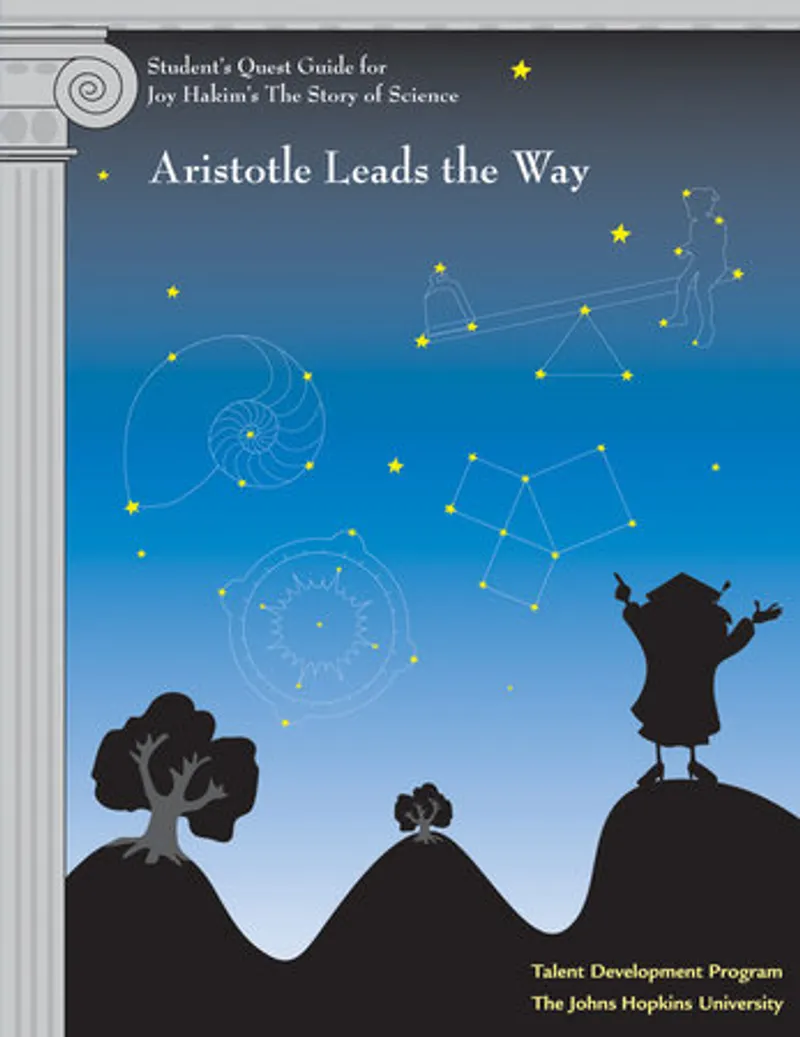
Student's Quest Guide: Aristotle Leads the Way Author: Johns Hopkins UniversityPage Count: UnknownPublication Date: 2007-PRH A Journey Through Time and Science: Student’s Quest Guide: Aristotle Leads the Way Few educational resources manage to blend history, science, and adventure as seamlessly as Student’s Quest Guide: Aristotle Leads the Way. Published by Johns Hopkins University in 2007, this curriculum is not just a companion to Joy Hakim’s The Story of Science but a standalone masterpiece that transforms the study of ancient science into an immersive, multidisciplinary quest. Designed for middle-grade students, it bridges the gap between dry textbook facts and the vibrant curiosity of discovery, making it an invaluable tool for educators, homeschoolers, and young learners alike. At its core, the book is a celebration of intellectual curiosity—a theme that resonates deeply in today’s education landscape, where STEM fields often feel disconnected from their historical roots. The curriculum traces the evolution of scientific thought from Mesopotamia to the Middle Ages, anchoring abstract concepts in tangible, human stories. Aristotle, the titular guide, is more than a philosopher; he becomes a lens through which students explore the foundations of astronomy, physics, and chemistry. This approach demystifies science, showing it as a living, breathing endeavor shaped by real people and their relentless pursuit of understanding. What sets this guide apart is its structure. Divided into five thematic units, each with nine class sessions, the book is meticulously organized to scaffold learning. The inclusion of a "Teacher’s Quest Guide" and a parallel "Student’s Quest Guide" ensures that educators have everything they need—background information, materials lists, standards correlations, and embedded reading strategies—while students receive engaging worksheets and activities. The presence of Professor Quest, a time-traveling cartoon character, adds a playful yet educational touch, summarizing key lessons in a way that feels both accessible and memorable. The author’s style is refreshingly hands-on. Rather than relying solely on lectures or rote memorization, the curriculum emphasizes discovery through experiments, timeline activities, and cross-curricular links. A lesson on ancient Greek astronomy might include a hands-on model of the geocentric universe, while a discussion of alchemy could lead to a simple chemistry experiment. This blend of theory and practice ensures that students don’t just learn facts—they experience them. The cross-curricular connections further enrich the learning experience, tying science to math, language arts, history, and even art. For example, a study of medieval manuscripts could inspire a creative writing assignment or an art project, reinforcing the idea that science and culture are deeply intertwined. One of the guide’s most compelling features is its adaptability. Whether used in a traditional classroom, a homeschool setting, or an enrichment program, it meets students where they are. The review and assessment activities are thoughtfully designed to gauge comprehension without stifling creativity. The inclusion of standards correlations also makes it a practical choice for educators adhering to modern curricular demands. That said, the guide is not without its challenges. Some educators might find the pacing demanding, especially if they’re new to inquiry-based learning. The reliance on Hakim’s original text means that those unfamiliar with The Story of Science series might need to supplement with additional resources. However, these are minor hurdles in an otherwise brilliantly crafted curriculum. The book’s greatest strength lies in its ability to make ancient science feel immediate and relevant—a feat that many contemporary STEM programs struggle to achieve. In an era where education often prioritizes test scores over wonder, Student’s Quest Guide: Aristotle Leads the Way is a breath of fresh air. It reminds us that science is not just a collection of formulas but a grand adventure spanning millennia. By grounding abstract concepts in human stories and interactive learning, Johns Hopkins University has created a resource that does more than teach—it inspires. For parents, teachers, and students seeking a science curriculum that is as engaging as it is educational, this guide is a must-have. It proves that the past is not a dusty relic but a living, breathing foundation for the future. #ScienceEducation #STEMlearning #HistoryOfScience #Homeschooling #Aristotle #CurriculumDesign Related InsightsA Magical Girl Rehired Book Review and Summary Galveston Book Review and Summary Emily Wilde's History of Dark Faerie Book Review and Summary{ "@context": "https://schema.org", "@type": "FAQPage", "mainEntity": [ { "@type": "Question", "name": "What is the main focus of Aristotle and Dante Discover the Secrets of the Universe Book Review and Summary?", "acceptedAnswer": { "@type": "Answer", "text": "Everything you need to know about Aristotle and Dante Discover the Secrets of the Universe with our detailed review." } }, { "@type": "Question", "name": "Who authored the comprehensive guide on Aristotle and Dante Discover the Secrets of the Universe Book Review and Summary?", "acceptedAnswer": { "@type": "Answer", "text": "This detailed article and its insights were carefully researched and authored by Benjamin Alire Sáenz." } }, { "@type": "Question", "name": "Where can I find more related content about Books?", "acceptedAnswer": { "@type": "Answer", "text": "You can explore more articles, detailed reviews, and similar insights by browsing the Related Insights section at the bottom of this article or visiting our dedicated Books category page." } } ] }