Showing Posts From
As i lay dying
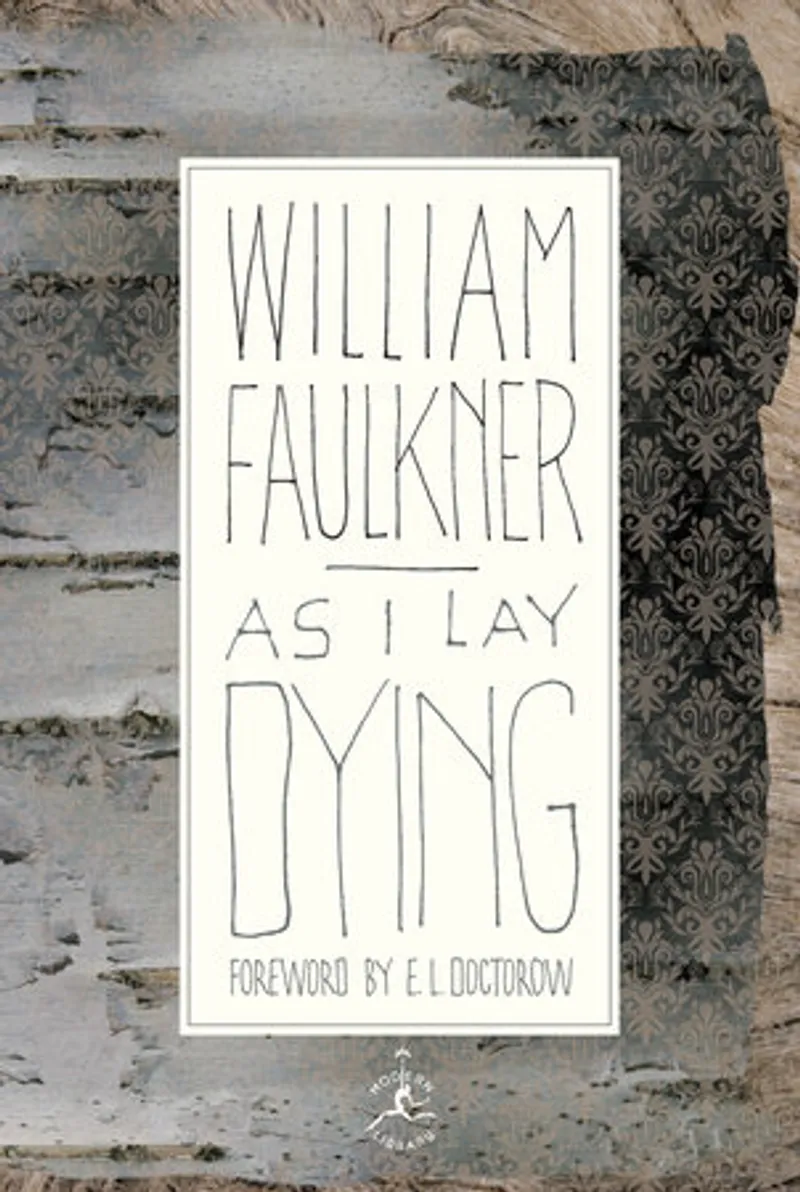
As I Lay Dying Author: William FaulknerPage Count: UnknownPublication Date: 2000-PRH William Faulkner’s As I Lay Dying is a masterclass in narrative experimentation, a novel that dismantles the conventions of storytelling to expose the raw, fragmented nature of human experience. Published in 1930 but set in the fictional Yoknapatawpha County, Mississippi, the book is a harrowing yet darkly comic odyssey that follows the Bundren family as they transport the corpse of their matriarch, Addie, across the countryside to bury her in her hometown. What could have been a straightforward tale of grief and duty instead becomes a polyphonic symphony of voices, each clamoring for truth in a world where meaning is as elusive as the shifting sands of the Mississippi Delta. At its core, As I Lay Dying is a meditation on death—not just as an event, but as a force that distorts perception, memory, and identity. Addie herself, though dead for much of the novel, looms larger than life through the recollections of those who knew her. Her voice, delivered in a single, searing chapter, is a revelation: a woman who despises her husband, resents her children, and finds solace only in the arms of a lover before her marriage. Faulkner’s genius lies in making her absence felt so acutely that her presence becomes almost unbearable. Death, here, is not an end but a catalyst, exposing the lies, half-truths, and desperate yearnings of the living. The novel’s structure is its most striking feature. Told through 59 interior monologues—some just a few lines, others sprawling confessions—Faulkner abandons traditional narrative cohesion in favor of a chaotic, almost cubist portrait of a family in crisis. Each voice is distinct: Darl, the poetic and detached son, whose observations border on prophecy; Cash, the pragmatic carpenter, whose meticulous log of the journey is both practical and heartbreaking; Dewey Dell, the pregnant teenager, whose chapters are drenched in shame and desire; Vardaman, the youngest, who confuses his mother’s death with the butchering of a fish, blurring the line between grief and confusion. Even Addie’s husband, Anse, a man of staggering selfishness and piety, gets his say, revealing a man who sees himself as a martyr despite his cowardice. Faulkner’s prose is dense, rhythmic, and often brutal, mirroring the physical and emotional toll of the journey. The language is Southern Gothic at its finest—rich with dialect, biblical cadences, and a sense of impending doom. Yet beneath the grotesquery (a cow drowning in a flood, a barn burning with a corpse inside) lies a profound humanity. The Bundrens are not heroes; they are flawed, desperate people clinging to rituals and superstitions in a world that offers no comfort. Their quest is absurd, their motives selfish, and yet Faulkner imbues their struggle with a tragic dignity. The novel asks: What does it mean to honor the dead when the living are so thoroughly broken? Faulkner’s style is not merely experimental for the sake of innovation; it is essential to the story’s power. By fragmenting the narrative, he forces the reader to piece together the truth, much like the characters themselves. The lack of a single, authoritative voice underscores the subjectivity of memory and the impossibility of objective truth. In a world where Addie’s death is both a personal tragedy and a public spectacle (the family’s odyssey becomes a local curiosity), Faulkner exposes how grief is both a private wound and a communal performance. The novel’s humor, dark as it is, is another layer of Faulkner’s genius. The Bundrens’ misfortunes—cash lost in a river, a team of mules drowned, a bridge collapsing—are played for both tragedy and farce. Anse’s self-righteousness, Dewey Dell’s desperate attempts to abort her pregnancy, and Vardaman’s childish logic ("My mother is a fish") inject levity into an otherwise bleak landscape. This balance between horror and comedy is quintessential Faulkner, a reflection of life’s absurdity and resilience. Ultimately, As I Lay Dying is a novel about the stories we tell ourselves to survive. The Bundrens are not just carrying a corpse; they are carrying the weight of their own myths, their regrets, and their desperate need to impose order on chaos. Faulkner’s genius is in making the reader complicit in this act, forcing us to sift through the noise to find fragments of truth. It is a novel that demands patience, but rewards it with a vision of humanity that is as ugly as it is beautiful. #Faulkner #SouthernGothic #ModernClassic #LiteraryFiction #AsILayDying #WilliamFaulkner Related InsightsCrescent City Hardcover Box Set Book Review and Summary The Favorite Book Review and Summary From Whispers to Worlds: Charting the Timeless Odyssey of Children's Literature{ "@context": "https://schema.org", "@type": "FAQPage", "mainEntity": [ { "@type": "Question", "name": "What is the main focus of As I Lay Dying Book Review and Summary?", "acceptedAnswer": { "@type": "Answer", "text": "Everything you need to know about As I Lay Dying with our detailed review." } }, { "@type": "Question", "name": "Who authored the comprehensive guide on As I Lay Dying Book Review and Summary?", "acceptedAnswer": { "@type": "Answer", "text": "This detailed article and its insights were carefully researched and authored by William Faulkner." } }, { "@type": "Question", "name": "Where can I find more related content about Books?", "acceptedAnswer": { "@type": "Answer", "text": "You can explore more articles, detailed reviews, and similar insights by browsing the Related Insights section at the bottom of this article or visiting our dedicated Books category page." } } ] }