Showing Posts From
Azerbaijantravel
-
 John Explorer
 - 16 Jun, 2026 04:15
The Obsidian Trails: Tracing Azerbaijan's Forgotten Fire Keepers of Garasu
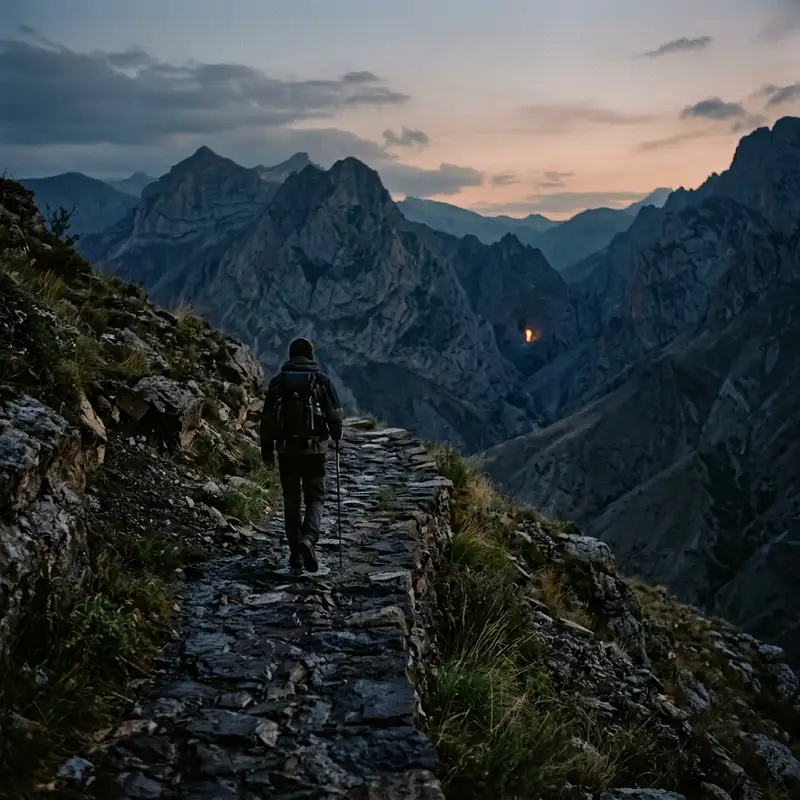
It began, as all truly profound journeys do, not with a map, but with a whisper – an ember of a story fanned by a fleeting encounter in a dimly lit chai khana on Baku’s labyrinthine old town streets. My quest, initially, was to explore the lesser-known mud volcanoes and petroglyphs of Azerbaijan, a country I’d always seen as a crossroads of empires and energies. But then, an elderly carpet weaver, with eyes like #ancient coals, spoke of a place far beyond the tourist trails, a place where fire wasn't just a natural phenomenon or a Zoroastrian symbol, but the very heartbeat of a secluded community, a pre-dawn echo of faith in the Whispering Peaks of Garasu. He didn't speak of Yanar Dag, the 'Burning Mountain' near Baku, nor of the Atashgah fire #temple in Surakhany. Those were known, curated flames. No, he spoke of a different fire, one that burned not for Ahura Mazda, but for something older, more primal, a spirit intrinsic to the very earth. He called them the Atashgahlar of Garasu – the fire-keepers of a tradition so ancient it predated recorded #history, a lineage perhaps even more archaic than the earliest forms of Zoroastrianism. And just like that, the compass of my curiosity spun wildly, pointing not north or east, but inwards, towards an untold narrative, a truly forgotten flame. The Anomaly of Azerbaijan's Flames: A Deeper Spark Azerbaijan, often dubbed the 'Land of Fire,' owes its moniker to the abundant natural gas seeps that ignite spontaneously, creating eternal flames across its diverse landscape. From the dramatic pillars of fire at Yanar Dag to the historical Atashgah temple, these natural phenomena have shaped local beliefs and attracted pilgrims for millennia. But what if these visible, well-documented fires are merely the latest manifestations of a far older, more esoteric reverence for elemental fire? What if, buried beneath layers of Silk Road trade, Soviet uniformity, and modern development, lay a continuum of belief, guarded by a handful of people in a forgotten corner of the Caucasus? My initial research was frustratingly sparse. 'Garasu' was a common enough name, meaning 'black water,' scattered across maps in tiny villages and streams. 'Whispering Peaks' yielded nothing. The old weaver’s tale was vague, steeped in local idiom and metaphor. Yet, the persistence of the legend, even in fragments, was enough. I sought out linguists, ethnographers, and even a few reclusive historians in dusty university archives, piecing together whispers of archaic Turkic and Caucasian Albanian faiths, animistic cults, and earth-venerating practices that once thrived before the waves of Abrahamic religions swept through. It became clear that the Atashgahlar were not just a community, but perhaps the last living remnants of a pre-Zoroastrian, perhaps even proto-human, connection to fire. My destination, I deduced, was somewhere in the lesser-traveled western reaches of the Greater Caucasus, a region famed for its rugged terrain and cultural isolation. It wouldn’t be found on any standard tour itinerary, nor would there be a signpost. This was a #journey into the uncharted territories of both geography and human belief. A Cartographer's Nightmare: Plotting the Unseen Path to Garasu The journey itself was an odyssey, a testament to the isolation of Garasu. My starting point was Ganja, a city steeped in history, but one quickly left behind as I pushed deeper into the foothills. The paved roads gave way to gravel, then to treacherous dirt tracks that snaked precariously along sheer cliffs and through dense forests. My guide, a stoic, silver-haired man named Eldar, rarely spoke, communicating mostly through gestures and the occasional guttural word that sounded like it belonged to an older tongue. He carried a battered map, not of paper, but of memory, etched with the contours of generations of ancestral wanderings. Days blurred into a rhythm of ascent. The air grew thinner, crisper, carrying the scent of pine and damp earth. We traversed deep ravines where icy rivers roared, climbed scree slopes where every step felt like a gamble, and navigated dense thickets of rhododendron and hazelnut. The only sounds were the wind, the distant cry of a hawk, and the crunch of our boots on ancient stones. There were no guesthouses, no villages even, for long stretches. We slept in makeshift shelters, under the vast, star-dusted canopy of the Caucasus sky, the silence broken only by the crackle of our small campfire – a stark contrast to the eternal flames I sought. Eldar pointed out subtle signs: a peculiar cairn on a ridge, a cluster of stones arranged in a pattern that spoke of human hands, not natural forces, a faint, almost invisible trail leading off into what seemed like an impassable thicket. These were the 'Obsidian Trails' the old weaver spoke of, paths worn smooth not by commerce or conquest, but by millennia of quiet pilgrimage. They were not marked for the casual wanderer; they were threads in a tapestry visible only to those who knew how to look, and perhaps, how to believe. After what felt like an eternity – a full week of arduous trekking – the landscape began to shift. The peaks, previously jagged and forbidding, softened into undulating ridges, scarred by ancient landslides and etched with time. Then, a faint, persistent scent reached me – not the sulfurous tang of Yanar Dag, but something deeper, richer, like burning wood, resin, and something else… primal earth. It was the scent of Garasu. The Atashgahlar: Guardians of the Ancient Embers We emerged into a hidden valley, nestled like a palm in the cupped hands of the Whispering Peaks. It was an anachronism, a pocket of time undisturbed. A cluster of stone and timber dwellings clung to the mountainside, smoke curling lazily from their chimneys. This was the home of the Atashgahlar. They were a small community, perhaps no more than fifty souls, their faces weathered by sun and wind, their eyes holding the quiet intensity of those who live close to the earth and its mysteries. They were wary at first, their hospitality cautious, but Eldar’s lineage and my genuine respect for their solitude slowly opened doors. I learned that they were not a lost tribe, but rather a self-sustaining community, living off subsistence farming, herding, and the knowledge passed down through generations. They spoke a dialect peppered with ancient words, and their customs were unlike anything I had encountered elsewhere in Azerbaijan. They called themselves the 'Children of Garasu,' deriving their spiritual identity directly from the land and its eternal fires. Their spiritual core lay not in a grand temple, but in several 'sacred hearths' – natural gas vents that had been burning uninterrupted for untold centuries. These weren't mere curiosities; they were living entities, channels to the earth's spirit, sustained by the very breath of the mountains. One such hearth, the 'Mother Flame,' burned in a small, rough-hewn grotto, its light flickering against walls blackened by ages of smoke. Another, the 'Sky Flame,' issued from a fissure high on an exposed rock face, visible for miles on a clear night, a silent beacon. Rituals of Earth and Sky: Experiencing the Primal Faith I was privileged to witness their rituals, quiet ceremonies performed with profound reverence. These were not the elaborate, codified rites of organized religion, but fluid, organic expressions of gratitude and connection. There were no priests in ornate robes, only elders – men and women – who led the community in offerings of dried herbs, grains, and sometimes, a single drop of lamb's blood, sacrificed to the flames not in supplication, but in communion. They didn't pray to the fire in the monotheistic sense, but with it, seeing it as a manifestation of the animating force of the world, a conduit between the visible and invisible. Their chants were low, melodic hums, echoing the murmurs of the wind and the crackle of the flames. There was a deep ecological consciousness to their faith: the mountains, the rivers, the animals, and the fire were all interconnected, part of a sacred web. To harm one was to harm all.One evening, I joined them for a vigil at the Mother Flame. The grotto was filled with the rhythmic breathing of those gathered, and the mesmerizing dance of the fire. An elder, her face a roadmap of generations, carefully added a handful of pungent, dried mountain herbs to the flame. The air filled with a rich, earthy incense, and her low, guttural chant began. It spoke of ancestors, of the earth's bounty, of the eternal cycle of life and death, all woven around the central, unwavering presence of the fire. In that moment, surrounded by primal elements and ancient faith, the concept of time itself seemed to dissolve, leaving only the eternal now. The Obsidian Trails: A Journey Through Time and Stone Beyond the primary hearths, Eldar and other younger members of the community showed me other significant sites connected by the 'Obsidian Trails.' These were not just routes between settlements, but pathways to knowledge, to sacred places that amplified the spiritual energy of the land. We hiked to a series of carved rock formations that resembled ancient altars, their surfaces smoothed by wind and ritual, sometimes bearing faint, indecipherable pictograms. These, I was told, were 'listening stones,' where ancestors communicated with the spirits of the mountains. We discovered natural caves adorned with soot marks and primitive carvings, clearly used as temporary shelters or ceremonial sites for millennia. One particular cave, hidden behind a waterfall, contained a small, almost imperceptible seep of gas that, when lit, produced a tiny, delicate flame. This was a 'birthing fire,' used for initiation rites, where young members of the community would spend a night in solitude, communing with the elemental spirit of fire and undergoing a profound personal transformation. The trails themselves were a marvel of ancient engineering and intuition. They weren't straight or efficient, but seemed to follow ley lines, connecting specific natural formations, springs, and vantage points that held spiritual significance. They demanded respect, patience, and a deep understanding of the land. Every turn revealed another breathtaking vista, another silent testament to the enduring relationship between the Atashgahlar and their ancestral home. The very stones beneath my feet felt heavy with history, imbued with the echoes of countless footsteps over countless generations. Echoes of a Vanished Era: The Historical Significance The existence of the Atashgahlar of Garasu is an anthropological goldmine. While Zoroastrianism, with its dualistic cosmology and ethical framework, became the dominant fire-worshipping religion in Persia and beyond, the Garasu community appears to represent an earlier, more animistic form of fire veneration. Their practices lack the sophisticated theological constructs of Zoroastrianism, focusing instead on a direct, unmediated interaction with fire as a living spirit, a manifestation of the earth’s own energy. This hints at a continuum of belief, a deep root system that underlies many of the more formalized religions. It suggests that the reverence for natural flames in Azerbaijan likely predates the arrival of Iranian peoples and their Zoroastrian faith, reaching back into the Neolithic or even Paleolithic periods, when early humans first harnessed and revered fire for its life-giving and transformative properties. The Atashgahlar, then, are not just a community; they are a living archive, a repository of humanity's earliest spiritual impulses. Their isolation has been their salvation. Shielded by the formidable Caucasus mountains, they largely escaped the waves of conquest and conversion that swept through the more accessible regions of Azerbaijan. While #Islam ultimately became the predominant faith, and various Turkic and Persian influences shaped the #culture, the Atashgahlar remained, quietly tending their fires, their beliefs woven so tightly into the fabric of their daily lives and their land that they became inseparable. The Fading Glow: Challenges to Preservation Yet, this ancient flame is flickering. The modern world, with its relentless march of progress, is slowly encroaching. Though still largely isolated, the younger generation of Atashgahlar faces a choice: remain in the valley, preserving a way of life that offers little material comfort but immense spiritual richness, or seek opportunities in the cities, where education, healthcare, and economic prospects beckon. I observed the quiet struggle in the eyes of a young woman named Leyla, who spoke some rudimentary Azerbaijani and dreamed of studying medicine. How do you balance the preservation of a unique, irreplaceable cultural heritage with the legitimate aspirations of its people for a better quality of life? This is the paradox faced by many such hidden communities around the globe. The elders understand this. They teach the young ones not just the rituals, but the stories, the history, the intricate connection to the land. They are planting seeds, hoping that even if some leave, the core knowledge will endure, perhaps to be re-ignited in new forms. There is no desire to commercialize their traditions, no interest in becoming a tourist attraction. Their faith is personal, deeply ingrained, and not for public consumption. This makes their preservation even more delicate – it depends entirely on the internal conviction of a dwindling few. Beyond the Horizon: The Future of the Fire Keepers My departure from Garasu was bittersweet. I left with a heavy heart, burdened by the knowledge of what could be lost, yet profoundly enriched by what I had found. The journey was more than an adventure; it was a profound lesson in humility, in the enduring power of belief, and the fragile beauty of cultures that resist the homogenization of the modern world. What is the future of the Atashgahlar? Perhaps their fire will eventually fade into myth, an echo in the whispers of the peaks. Or perhaps, like the smoldering embers under ash, it will continue to burn, hidden from plain sight, ready to reignite when the world remembers the primal truth it embodies. My hope, as I journeyed back down the treacherous Obsidian Trails, was that their story would find its way into the collective consciousness, not as a spectacle, but as a testament to the incredible diversity and resilience of the human spirit. The Atashgahlar reminded me that exploration isn't just about discovering new places, but about uncovering forgotten dimensions of humanity itself. Their fires are a beacon, not of a lost past, but of an enduring truth: that beneath the surface of our complex lives, the elemental forces still hold profound meaning, if only we dare to seek them out, and listen to the whispers of the earth. A Flame Carried Within I carried a piece of Garasu with me, not a souvenir, but a feeling – the quiet intensity of the Mother Flame, the crisp mountain air, the stoic dignity of the fire-keepers. The journey had been physically demanding, intellectually challenging, and spiritually humbling. It peeled back layers of what I thought I knew about faith, history, and the very concept of home. The Whispering Peaks hold secrets still, but the greatest secret is the resilience of the human heart, capable of nurturing a flame through millennia, against all odds. #AzerbaijanAdventures #HiddenCulture #AncientRituals #FireWorship #GarasuAdventures #ObscureHistory #JohnExplorer #AzerbaijanTravel #HiddenCulture #AncientRituals #FireWorship #GarasuAdventures #ObscureHistory Related InsightsIm Bann der Gezeiten: Wenn Stein und Meer den Mont Saint-Michel umarmen 明孝陵:大明王朝的开国之陵 Le Cattedrali Sotterranee di Puglia: Un Viaggio Intimo nelle Città Rupestri delle Gravine{ "@context": "https://schema.org", "@type": "FAQPage", "mainEntity": [ { "@type": "Question", "name": "What is the main focus of The Obsidian Trails: Tracing Azerbaijan's Forgotten Fire Keepers of Garasu?", "acceptedAnswer": { "@type": "Answer", "text": "Join John Explorer on a perilous journey into Azerbaijan's remote Whispering Peaks of Garasu, where a hidden community keeps alive an ancient, pre-Zoroastrian fire worship tradition, long forgotten by the modern world." } }, { "@type": "Question", "name": "Who authored the comprehensive guide on The Obsidian Trails: Tracing Azerbaijan's Forgotten Fire Keepers of Garasu?", "acceptedAnswer": { "@type": "Answer", "text": "This detailed article and its insights were carefully researched and authored by John Explorer." } }, { "@type": "Question", "name": "Where can I find more related content about Travel?", "acceptedAnswer": { "@type": "Answer", "text": "You can explore more articles, detailed reviews, and similar insights by browsing the Related Insights section at the bottom of this article or visiting our dedicated Travel category page." } } ] }