Showing Posts From
Babel
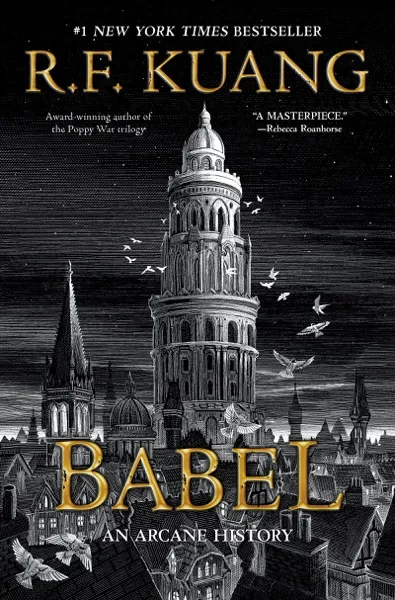

Babel Author: R. F. KuangPage Count: UnknownPublication Year: 2022-GB Babel: A Masterclass in Language, Power, and Empire R.F. Kuang’s Babel is a dazzling, devastating novel that weaves together the intellectual rigor of linguistic theory, the brutal mechanics of colonialism, and the personal cost of revolution. Set in an alternate 1830s Oxford where silver-working magic is powered by language, Babel follows Robin, a poor Chinese boy plucked from his homeland to study at the Royal Institute of Translation—Babel Tower—where he masters the art of "silver-tongued" magic. But as Robin rises through the ranks, he confronts the hypocrisy of the British Empire, the erasure of his own culture, and the question of whether language can ever truly be a tool for justice—or merely another weapon of oppression. At its core, Babel is a novel about the power of words—not just as a means of communication, but as a mechanism of control, resistance, and self-definition. Kuang, a brilliant academic who holds degrees in history and Chinese studies, grounds the fantastical premise in meticulous research, blending real historical events (like the Opium Wars) with speculative magic. The result is a world that feels both exquisitely crafted and eerily plausible. Silver-working, the novel’s central magic system, operates on the idea that precise translations—where every word, every nuance, carries material weight—can bend reality. A misplaced preposition doesn’t just alter meaning; it can shatter a bridge. This literalization of linguistic precision is more than clever worldbuilding—it’s a metaphor for the way language shapes power. The British Empire doesn’t just conquer through guns; it dominates through dictionaries, through the very act of defining what is "correct" and what is "savage." Kuang’s prose is as precise as the silver-working it celebrates. Her writing is intellectual without being cold, emotional without being sentimental. She balances dense academic debates on linguistics with raw, visceral scenes of violence and betrayal. The dialogue crackles with wit and tension, particularly in the exchanges between Robin and his fellow students—each representing different colonized nations, each grappling with their own complicity in the empire’s machinery. The novel’s tone shifts seamlessly from the gothic grandeur of Oxford’s spires to the grimy underbelly of London’s opium dens, mirroring the duality of Robin’s own identity: the outsider who has internalized the oppressor’s gaze. What makes Babel so compelling is its refusal to offer easy answers. Robin’s journey is one of disillusionment, but Kuang doesn’t let him (or the reader) settle into comfortable moralizing. The empire is monstrous, yes, but its monsters are not faceless—they are scholars, linguists, and bureaucrats who believe, however naively, in the rightness of their cause. The novel forces us to ask: Can language be reclaimed? Can a system built on theft ever be used for justice? Robin’s growing radicalization is both inevitable and heartbreaking, as he realizes that the tools of his oppression—his mastery of English, his silver-working—are also the only weapons he has left. Kuang’s style is also deeply intertextual, drawing on postcolonial theory, Marxist critique, and even the structure of The Canterbury Tales to frame her narrative. The novel’s epistolary elements—letters, manifestos, and essays—ground the fantastical elements in something tangible, reminding us that ideas have consequences. Yet for all its intellectual weight, Babel never feels like a lecture. It’s a gripping, often brutal story about friendship, betrayal, and the cost of speaking truth to power. By the novel’s climax, Kuang delivers a devastating critique of assimilation and revolution alike. Robin’s choices are not triumphant; they are tragic, necessary, and deeply human. Babel doesn’t just ask us to admire its prose or its worldbuilding—it demands we sit with the discomfort of its questions. What does it mean to be free when the language of your oppressor is the only one that grants you power? Can a stolen tongue ever sing a song of liberation? In an era where political rhetoric is weaponized daily, Babel feels like a warning and a rallying cry. It’s a novel for anyone who has ever felt the knife-edge of words—those who wield them, those who are silenced by them, and those who dare to turn them against their makers. #Babel #RFKuang #FantasyWithDepth #ColonialismInSF #SilverTongue #MustRead2023 Related InsightsThe Nightingale Book Review and Summary How to Let Go: A Memoir of Finding Peace in Endings Book Review and Summary Murakami T Book Review and Summary{ "@context": "https://schema.org", "@type": "FAQPage", "mainEntity": [ { "@type": "Question", "name": "What is the main focus of Babel Book Review and Summary?", "acceptedAnswer": { "@type": "Answer", "text": "Everything you need to know about Babel with our detailed review." } }, { "@type": "Question", "name": "Who authored the comprehensive guide on Babel Book Review and Summary?", "acceptedAnswer": { "@type": "Answer", "text": "This detailed article and its insights were carefully researched and authored by William Clark." } }, { "@type": "Question", "name": "Where can I find more related content about Books?", "acceptedAnswer": { "@type": "Answer", "text": "You can explore more articles, detailed reviews, and similar insights by browsing the Related Insights section at the bottom of this article or visiting our dedicated Books category page." } } ] }