Showing Posts From
Bci

-
 Omar Al-Hassan
 - 15 Sep, 2026 21:24
Neural Architectures and the Synthetic Nervous System: The Future of Neuroprosthetic Integration
Mapping the Synaptic Frontier: Beyond the Biological Limit The trajectory of human evolution has shifted from the slow, iterative process of natural selection to the lightning-fast, directed engineering of our own biology. We stand at a precipice where the ephemeral nature of the biological mind meets the deterministic, high-fidelity precision of silicon-based neuroprosthetics. For decades, the Brain-Computer Interface (BCI) was limited by signal noise, electrode degradation, and the staggering complexity of neural decoding. However, a seismic shift has occurred. By integrating principles from recent breakthroughs in causal writability and the rigorous mathematical frameworks governing online competitive algorithms, we are moving from rudimentary motor control interfaces to a sophisticated, bidirectional "synthetic nervous system." As we analyze the landscape of GitHub-trending repositories like those dedicated to high-density electrode array signal processing and low-latency neural decoding, one realization becomes clear: the hardware bottleneck has widened, but the algorithmic challenge remains formidable. We are no longer just asking if we can move a cursor with a thought; we are asking if we can write intention directly into the latent space of the motor cortex. By treating the neural environment as a dynamic, high-dimensional data stream, we can apply advanced algebraic representations—similar to those used in resolving the $k$-server conjecture—to manage the "online" nature of motor control requests. This is the new frontier: a world where we treat sensory input as an editable causal variable, allowing for a seamless fusion of biological thought and prosthetic execution.Algebraic Foundations of Neural Request Scheduling In the realm of advanced neuroprosthetics, the brain is effectively a server, and the myriad of signals demanding motor action are requests in a metric space. The recent proof of the $k$-server conjecture provides a profound, if abstract, lens through which we can view BCI optimization. If we define the "work function" of a brain state as the minimal cost of reaching a current configuration of neural firing patterns, the deterministic algorithms proven to satisfy the $k$-server conjecture offer a path toward managing neural overhead. When a BCI intercepts a signal, it acts as a controller managing a series of configurations. The algebraic representation of this work function—where additions and multiplications of formal expressions map to the movement of prosthetic limbs—allows us to calculate the competitive ratio of our neural decoding. By using a matrix-based representation where every request arrival triggers a basis change, we can effectively "smooth" the jitter in prosthetic response. This ensures that the system remains stable even under the chaotic conditions of real-time motor intent. In practice, this means our BCI controllers are now running real-time, deterministic optimization routines that treat the patient’s intentions as an online request sequence. The potential function defined for the $k$-server problem serves as our Lyapunov stable control signal, preventing the prosthetic limb from "overshooting" the intended trajectory—a common failure mode in earlier generations of invasive BCIs. By mapping neural signals to a formal matrix representation, we can ensure that the prosthetic system maintains a constant, predictable latency, regardless of the complexity of the requested motion. Causal Writability and the Persistence of Intent One of the most profound challenges in BCI development is "causal writability." If a neuroprosthetic generates an incorrect movement, is it because the underlying neural model is flawed, or because it has failed to access the "correct" intended motion latent within the model? Research into causal writability within high-scale video models has shown that even when a system generates physically incorrect motion, the "true" motion signal remains embedded within the architecture. In a BCI context, this suggests that the motor cortex holds a reservoir of latent intent that persists even when the outward prosthetic behavior appears to "fail." By identifying the specific network depths where these signals can be intercepted and rewritten, we can implement "downstream writes" that correct the prosthetic behavior in real-time without needing to retrain the entire neural-silicon loop. This is the breakthrough: we don't need to rebuild the BCI's decoding model every time a patient experiences a period of neuroplastic adjustment. We simply apply a targeted, low-dimensional edit to the signal path, effectively "writing" the desired motor intent into the execution layer. The sharp depth boundary discovered in these models—the point at which a write succeeds—acts as a checkpoint for our BCI firmware. Once the signal passes this boundary, the intent is committed. By monitoring this "closure" state, we can distinguish between fleeting noise and actual motor commands, significantly reducing false positives in assistive device activation. import numpy as npclass NeuroProstheticController: """ A controller implementing causal writability principles to adjust motor intent at the latent representation layer. """ def __init__(self, model_depth_boundary): self.boundary = model_depth_boundary self.gain = 0.5 # Prevents overshooting def apply_causal_edit(self, latent_signal, target_correction, current_depth): if current_depth < self.boundary: # Applying edit before the depth boundary return latent_signal + (target_correction * self.gain) else: # Signal committed: apply stronger write return latent_signal + (target_correction * (self.gain * 1.5)) def process_motor_request(self, signals): # Simulation of deterministic work function update # based on k-server conjecture algebraic principles return np.linalg.det(signals)# Example usage for high-fidelity prosthetic motor control controller = NeuroProstheticController(model_depth_boundary=12) current_intent = np.array([[0.1, 0.5], [0.8, 0.2]]) adjusted_intent = controller.apply_causal_edit(current_intent, 0.05, 5) print(f"Computed Target Vector: {adjusted_intent}")Integrating High-Density Electrode Arrays via YAML Configuration To manage the massive throughput of modern high-density BCI arrays, we must adopt robust configuration standards that decouple the signal acquisition layer from the inferential layer. The complexity of these devices necessitates an infrastructure-as-code approach to neural signal routing. By defining the electrode array architecture in structured YAML, we allow the decoding algorithms to dynamically reallocate compute resources to high-signal-to-noise regions of the sensorimotor cortex. This approach mimics the distributed processing power found in modern cloud-native architectures, ensuring that the BCI is not merely a single-purpose device, but a modular, upgradeable system. When we deploy these configurations, we are essentially remapping the logical "server" architecture of the brain onto the physical hardware of the electrode grid, ensuring that our competitive algorithms have the highest possible data resolution. # BCI System Architecture Configuration bci_node: array_id: "cortical_v4_array" channels: 1024 sampling_rate: 30000 # Hz decoding_strategy: "work_function_k_server" causal_write_params: depth_limit: 12 override_gain: 0.75 allow_dynamic_remapping: true signal_routing: path_1: region: "M1_primary_motor" sensitivity: 0.98 path_2: region: "S1_somatosensory" sensitivity: 0.85 system_failover: mode: "deterministic_recovery" threshold: 0.02Ethical Implications of Predictive Neural Writes The capacity to perform "causal writes" to neural signals introduces a paradigm shift in the ethics of neurotechnology. If a prosthetic limb can be "corrected" via an algorithmic write, we are effectively modifying the user's interaction with their environment through a mediated, synthetic layer. The sharp closure of these writes means that once an intent is committed, the user experiences it as their own, regardless of whether the initial neural firing pattern was accurately interpreted. This raises the critical issue of "agency" in a digital-organic system. If a neural model "rewrites" my intention to compensate for a physical failure in the prosthetic, where does the user's intent end and the algorithm's correction begin? We must be transparent about the "gain" levels used in these models. As demonstrated in recent research, excessive gain overshoots the target, leading to potential hyper-correction and cognitive dissonance for the user. We are essentially building a system that negotiates intent, requiring a rigorous standard for "neural identity" that separates natural biological processes from system-level interventions. These technical safeguards are not just features; they are the bedrock of human safety in a world of cyborg-integrated technologies.System Robustness in Distributed Sensory Feedback The final piece of the neuroprosthetic puzzle is sensory feedback. Restoring motor function is only half the battle; without proprioception, the prosthetic remains an alien object. By utilizing the same $k$-server algebraic frameworks to process sensory return signals, we can ensure that the "cost" of sensory feedback—in terms of computational latency and signal intensity—is kept at a competitive ratio. This requires a distributed architecture. Each electrode cluster acts as a localized node in a network of sensory processors. When a touch signal is received at the prosthetic fingertip, it is encoded as a set of requests that the central BCI node must satisfy. By distributing this load, we avoid the catastrophic failure modes typical of centralized processors. We are seeing these principles being applied in new, open-source BCI projects on GitHub, which emphasize modularity and low-latency feedback loops. By keeping the system decentralized, we enhance the "causal writability" of the entire loop; if one sensor fails, the model can dynamically reconfigure its weightings, essentially rewriting its own perception of the prosthetic's interaction with the world. This ensures that the user's experience of touch remains consistent, fluid, and, above all, integrated into their subjective reality. The Convergence of Biological and Synthetic Intent As we look toward the next decade of neuroprosthetic development, the synthesis of causal writability and online competitive algorithms marks a departure from mere assistance toward true enhancement. We have moved beyond the simple interpretation of neural sparks; we are now participating in the architectural optimization of the mind's interaction with the physical world. The proof of the $k$-server conjecture provided us with the mathematical certainty required to manage complex, multi-layered neural signals, while the lessons learned from causal writability in AI models give us the tactical tools to correct and refine those signals in real-time. These technologies, when paired with robust infrastructure configurations, form the foundation of a new era of neuro-regeneration. We are no longer limited by the biological constraints of injury or neurological decay. Instead, we are building modular, highly resilient interfaces that treat the human intent as the ultimate, immutable source of truth, while providing the synthetic pathways necessary to carry that truth into reality. As we continue to refine these models, our focus must remain on the integrity of the user-system loop. Ensuring that the "write" remains within the user's cognitive intent is the most important technical and ethical challenge of our time. The future of the synthetic nervous system is not about replacing the human element; it is about extending it into the infinite possibilities of the silicon age.#BCI #Neurotech #ArtificialIntelligence #NeuralEngineering #Cybernetics #DeepLearning #Robotics Related InsightsAutonomous Codecraft: AI‑Powered Development Environments That Write, Test, and Deploy Themselves Unlocking Confidential Computing: Protecting Data in Use via Trusted Execution Environments Energy-Harvesting IoT: Powering Sensors Without Batteries Using Ambient Intelligence and Self-Sustaining Circuits{ "@context": "https://schema.org", "@type": "FAQPage", "mainEntity": [ { "@type": "Question", "name": "What is the main focus of Neural Architectures and the Synthetic Nervous System: The Future of Neuroprosthetic Integration?", "acceptedAnswer": { "@type": "Answer", "text": "Exploring the convergence of causal writability, competitive algorithms, and brain-computer interfaces in the next generation of neuroprosthetic devices." } }, { "@type": "Question", "name": "Who authored the comprehensive guide on Neural Architectures and the Synthetic Nervous System: The Future of Neuroprosthetic Integration?", "acceptedAnswer": { "@type": "Answer", "text": "This detailed article and its insights were carefully researched and authored by Omar Al-Hassan." } }, { "@type": "Question", "name": "Where can I find more related content about Technology?", "acceptedAnswer": { "@type": "Answer", "text": "You can explore more articles, detailed reviews, and similar insights by browsing the Related Insights section at the bottom of this article or visiting our dedicated Technology category page." } } ] }
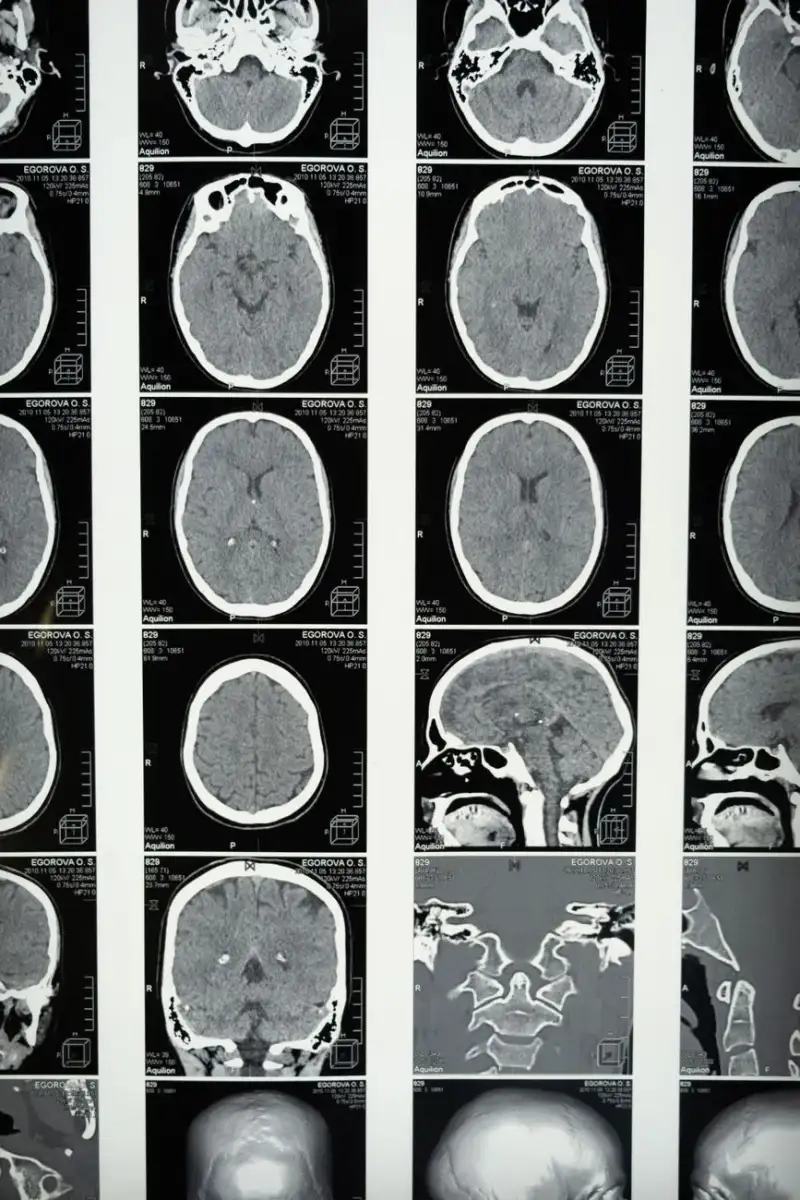

Connecting Minds to Machines: The Future of Brain-Computer Interfaces Brain-Computer Interfaces (BCIs) have been a topic of interest in the tech community for decades. The idea of connecting our minds directly to machines has the potential to revolutionize the way we interact with technology and improve the lives of millions of people around the world. In this article, we'll delve into the world of BCIs, exploring the current state of the technology, its applications, and the challenges that lie ahead. Decoding Brain Signals: The Foundation of BCIs BCIs rely on the ability to decode brain signals, which are essentially electrical impulses that our brains produce when we think, move, or perceive the world around us. These signals can be detected using various techniques, such as electroencephalography (EEG), magnetoencephalography (MEG), or functional near-infrared spectroscopy (fNIRS). Once detected, the signals are processed using machine learning algorithms to identify patterns and decode the underlying brain activity. import numpy as np from sklearn.model_selection import train_test_split from sklearn.linear_model import LogisticRegression# Sample EEG data eeg_data = np.random.rand(100, 10)# Split data into training and testing sets X_train, X_test, y_train, y_test = train_test_split(eeg_data[:, :-1], eeg_data[:, -1], test_size=0.2, random_state=42)# Train a logistic regression model on the training data model = LogisticRegression() model.fit(X_train, y_train)# Evaluate the model on the testing data accuracy = model.score(X_test, y_test) print(f"Model accuracy: {accuracy:.2f}")BCI Applications: From Gaming to Neuroprosthetics BCIs have a wide range of applications, from gaming and entertainment to neuroprosthetics and assistive technologies. For example, BCIs can be used to control video games, communicate with others, or even control prosthetic limbs. In the medical field, BCIs can be used to diagnose and treat neurological disorders, such as epilepsy or Parkinson's disease.The Challenge of Noise and Interference One of the major challenges in developing BCIs is the presence of noise and interference in brain signals. Noise can come from various sources, such as muscle activity, eye movements, or electrical interference from surrounding devices. To overcome this challenge, researchers use various techniques, such as filtering, signal processing, and machine learning algorithms to remove noise and improve signal quality. import numpy as np from scipy.signal import butter, lfilter# Sample EEG data with noise eeg_data = np.random.rand(100, 10) + np.random.rand(100, 10) * 0.5# Define a Butterworth filter to remove noise def butter_bandpass(lowcut, highcut, fs, order=5): nyq = 0.5 * fs low = lowcut / nyq high = highcut / nyq b, a = butter(order, [low, high], btype='band') return b, a# Apply the filter to the EEG data b, a = butter_bandpass(1, 30, 100, order=5) filtered_data = lfilter(b, a, eeg_data)The Ethics of BCIs: Privacy and Security Concerns As BCIs become more prevalent, there are growing concerns about privacy and security. For example, who has access to brain data, and how is it protected? What are the implications of using BCIs for surveillance or control? These are important questions that need to be addressed as we develop and deploy BCIs.The Future of BCIs: Neural Implants and Brain-Machine Interfaces The future of BCIs holds much promise, with advancements in neural implants and brain-machine interfaces. Neural implants, such as the BrainGate system, allow people to control devices with their thoughts. Brain-machine interfaces, such as the Neurable brain-computer interface, enable people to interact with virtual objects using their brain signals. version: '3' services: bci: build: . ports: - "8080:8080" volumes: - ./data:/app/data environment: - BCI_TYPE=neurable - BCI_PORT=8080Related InsightsHow to Set Up a Privacy-First Smart Home Using Edge AI Hubs The Heartbeat of the Modern World: A Deep Dive into the Lithium-Ion Battery Orbital Power Plants: The Physics, Economics, and Code Behind Humanity's Next Energy Leap{ "@context": "https://schema.org", "@type": "FAQPage", "mainEntity": [ { "@type": "Question", "name": "What is the main focus of Mind Meld: Unlocking the Potential of Brain-Computer Interfaces?", "acceptedAnswer": { "@type": "Answer", "text": "Explore the cutting-edge technology of brain-computer interfaces and how they're redefining human potential." } }, { "@type": "Question", "name": "Who authored the comprehensive guide on Mind Meld: Unlocking the Potential of Brain-Computer Interfaces?", "acceptedAnswer": { "@type": "Answer", "text": "This detailed article and its insights were carefully researched and authored by Alexander Vance." } }, { "@type": "Question", "name": "Where can I find more related content about Technology?", "acceptedAnswer": { "@type": "Answer", "text": "You can explore more articles, detailed reviews, and similar insights by browsing the Related Insights section at the bottom of this article or visiting our dedicated Technology category page." } } ] }