Showing Posts From
Boy who cried bear
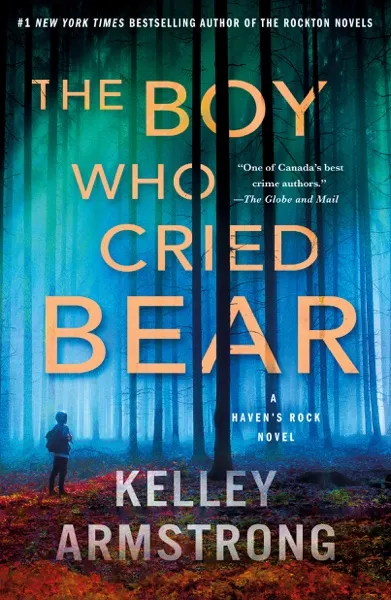

Boy Who Cried Bear Author: Kelley ArmstrongPage Count: UnknownPublication Year: 2024-GB Kelley Armstrong’s Boy Who Cried Bear is a masterclass in blending the uncanny with the deeply human, turning folklore into something fresh and unsettlingly real. At its core, the novel explores the age-old question of what happens when a child’s imagination refuses to stay in the realm of fantasy—and instead spills into the world with terrifying consequences. Armstrong, a writer celebrated for her ability to weave supernatural horror with relatable emotion, crafts a story that lingers long after the last page, not because of cheap jump scares, but because of its haunting exploration of belief, trauma, and the monsters we create to make sense of the world. The premise is deceptively simple: a young boy, after years of insisting he’s seen a massive, terrifying bear lurking in the woods behind his family’s isolated home, finally encounters something that might just confirm his claims. But Boy Who Cried Bear isn’t a straightforward monster hunt. Instead, it’s a slow-burn psychological unraveling, where the line between reality and delusion blurs with devastating precision. Armstrong excels at grounding the supernatural in the mundane, making the horrors feel all the more plausible. The bear isn’t just a creature of myth; it’s a manifestation of the boy’s unresolved grief, his family’s fractured dynamics, and the suffocating isolation of rural life. The story’s power lies in its refusal to offer easy answers—is the bear real, or is it a coping mechanism gone horribly wrong? Armstrong leaves it deliciously ambiguous, trusting the reader to sit with the discomfort. Armstrong’s prose is tight and evocative, with a knack for capturing the stifling atmosphere of a small town where secrets fester like old wounds. Her characters are the heart of the story, particularly the unnamed boy (referred to only as “the boy” in a stroke of narrative genius), whose voice is both childlike and eerily mature. His perspective is raw, his fears visceral, and his desperation to be heard heartbreaking. The supporting cast—the boy’s distant father, his overworked mother, the skeptical townsfolk—are sketched with just enough detail to feel real, their own traumas and biases adding layers to the central mystery. Armstrong doesn’t waste time on excessive exposition; instead, she lets the tension simmer, ratcheting up the dread through subtle hints and ominous dialogue. What sets Boy Who Cried Bear apart is its thematic depth. Beneath the surface-level horror lies a searing commentary on how society dismisses the voices of children, especially when their stories challenge the status quo. The boy’s insistence on the bear’s existence is met with ridicule, gaslighting, and ultimately, violence—not because he’s wrong, but because adults would rather silence inconvenient truths than confront their own failures. Armstrong forces the reader to ask: who are we really protecting when we call a child a liar? The novel also delves into the cyclical nature of trauma, how family legacies of pain can manifest in the next generation, and the dangerous allure of believing in something—anything—when the world has already failed you. Armstrong’s style is a masterclass in restraint. She doesn’t rely on gore or cheap thrills; instead, she builds her horror through atmosphere, silence, and the slow drip of dread. The bear itself is less a physical entity and more a symbol—a looming, inescapable presence that embodies the boy’s unprocessed emotions. The prose is unadorned but precise, each word serving a purpose. There’s a folk-horror undertone to the novel, reminiscent of Shirley Jackson or Stephen King at their most unsettling, but with a modern, psychological edge. The ending is ambiguous, but not in a way that feels like a cop-out. Instead, it’s a gut-punch reminder that some stories don’t have neat resolutions—only consequences. Boy Who Cried Bear is a book that will haunt you, not because it’s scary in the traditional sense, but because it feels true. It’s a story about the monsters we refuse to see until it’s too late, and the cost of turning away from the people who need us most. Armstrong has crafted something special here—a novel that respects its audience enough to leave room for interpretation, while still delivering a narrative that’s as emotionally resonant as it is chilling. #BoyWhoCriedBear #KelleyArmstrong #SupernaturalHorror #PsychologicalThriller #LyricalHorror #FolkloreReimagined Related InsightsInfinite Jest Book Review and Summary Final Fantasy XIV: Stormblood -- The Art of the Revolution -Western Memories- Book Review and Summary Divine Oaths Book Review and Summary{ "@context": "https://schema.org", "@type": "FAQPage", "mainEntity": [ { "@type": "Question", "name": "What is the main focus of Boy Who Cried Bear Book Review and Summary?", "acceptedAnswer": { "@type": "Answer", "text": "Everything you need to know about Boy Who Cried Bear with our detailed review." } }, { "@type": "Question", "name": "Who authored the comprehensive guide on Boy Who Cried Bear Book Review and Summary?", "acceptedAnswer": { "@type": "Answer", "text": "This detailed article and its insights were carefully researched and authored by Emma Thompson." } }, { "@type": "Question", "name": "Where can I find more related content about Books?", "acceptedAnswer": { "@type": "Answer", "text": "You can explore more articles, detailed reviews, and similar insights by browsing the Related Insights section at the bottom of this article or visiting our dedicated Books category page." } } ] }