Showing Posts From
Call down the hawk
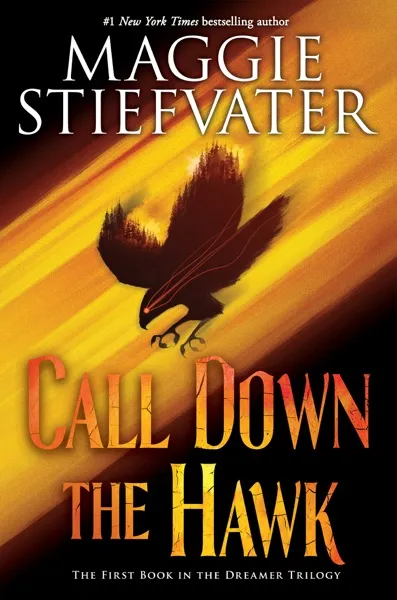

Call Down the Hawk Author: Maggie StiefvaterPage Count: UnknownPublication Year: 2019-GB Maggie Stiefvater’s Call Down the Hawk is a masterclass in weaving myth into modern realism, a novel that feels both timeless and urgently contemporary. Part of the Dreamer Trilogy, it introduces readers to a world where dreams are not just the stuff of sleep but a tangible, dangerous force—one that can be stolen, weaponized, or lost entirely. Stiefvater, a writer of rare emotional precision and lyrical power, crafts a story that is as much about the fragility of human connection as it is about the supernatural. At its core, Call Down the Hawk explores the cost of power and the loneliness of being different. The protagonist, Ronan Lynch, is a character who has always been an enigma, even to himself. He comes from a family cursed with the ability to pull dreams into reality—a gift that is as much a burden as it is a wonder. Ronan’s dreams, in particular, have a habit of bleeding into the waking world in violent, unpredictable ways. The novel opens with him waking from a nightmare only to find a dead body in his kitchen, a man he doesn’t recognize but whose death is somehow tied to his subconscious. This eerie inciting incident sets the tone for a story that is equal parts noir thriller and psychological horror. Stiefvater’s genius lies in her ability to balance the surreal with the deeply human. Her prose is rich and immersive, painting the American South—a place she clearly adores—with a painter’s eye. The decaying grandeur of the Lynch family estate, the neon glow of diners in the dead of night, the quiet desperation of small-town life all serve as a backdrop to a story that is fundamentally about isolation. Ronan, along with his brothers Declan and Matthew, each grapple with their own versions of alienation. Declan, the responsible older brother, buries himself in academia to escape the family’s curse; Matthew, the youngest, is still learning to control his own burgeoning abilities. Together, they form a fractured unit, bound not just by blood but by the shared weight of their legacy. What makes Call Down the Hawk so compelling is its refusal to simplify the supernatural elements into neat, explanatory packages. Dreams here are not just metaphors—they are forces with their own rules, their own dangers. The novel introduces the concept of Dreamers, people who can pull dreams into reality, and the Rooks, those who hunt them. The conflict between these two groups drives much of the plot, but Stiefvater never reduces the story to a mere chase. Instead, she uses the supernatural as a lens to examine deeper themes: the fear of losing control, the struggle to belong, and the desperate need for someone to see you, really see you, beyond the masks you wear. Stiefvater’s style is a blend of the poetic and the visceral. She has a knack for writing scenes that are both breathtakingly beautiful and viscerally intense. Consider a moment where Ronan, in a fit of rage, tears apart a motel room with his bare hands, his emotions manifesting in the physical world in a way that is terrifying and awe-inspiring. Or the quiet, aching tenderness of a scene where he tries to explain his fears to his brothers, only to find that words fail him. These moments are where Stiefvater’s writing shines brightest—when she balances the raw, unfiltered emotion of her characters with the haunting, dreamlike quality of their world. The novel also excels in its character dynamics, particularly in the relationships between the Lynch brothers. Their interactions are fraught with tension, love, and resentment, a dynamic that feels achingly real. Stiefvater doesn’t shy away from showing the ugly sides of these characters—their selfishness, their cowardice, their moments of cruelty—yet she never lets these flaws diminish their humanity. Ronan, in particular, is a study in contradictions: he is fiercely loyal but emotionally closed-off, powerful yet vulnerable, a predator who fears he will never be tamed. One of the most striking aspects of Call Down the Hawk is its exploration of trauma and healing. The Lynch family is haunted not just by their curse but by the loss of their father, a man who was both a Dreamer and a monster. His absence looms large over the story, a wound that refuses to heal. Stiefvater doesn’t offer easy resolutions to this pain; instead, she shows how her characters navigate it, how they try to piece together a future despite the weight of their past. It’s a message that resonates deeply in a world where so many of us carry our own invisible scars. Ultimately, Call Down the Hawk is a novel about the things we create—whether they are dreams, nightmares, or the stories we tell ourselves to survive. It’s a story about the power of imagination, the terror of losing control, and the quiet courage it takes to face the darkness, both within and without. Stiefvater has crafted a world that is as vivid and immersive as it is haunting, a testament to her skill as a storyteller. If you’re a fan of urban fantasy that feels grounded in real emotion, or if you’ve ever woken up from a dream and wondered how much of it was real, this book will grip you from the first page to the last. #DreamerTrilogy #MaggieStiefvater #UrbanFantasy #SupernaturalThriller #RonanLynch #DarkFantasy Related InsightsThe Bloodfire Oath (The Arcanum Order, #1) Book Review and Summary Fahrenheit 451 (Edición Icónica) / Fahrenheit 451 Book Review and Summary A Gambling Man Book Review and Summary{ "@context": "https://schema.org", "@type": "FAQPage", "mainEntity": [ { "@type": "Question", "name": "What is the main focus of Call Down the Hawk Book Review and Summary?", "acceptedAnswer": { "@type": "Answer", "text": "Everything you need to know about Call Down the Hawk with our detailed review." } }, { "@type": "Question", "name": "Who authored the comprehensive guide on Call Down the Hawk Book Review and Summary?", "acceptedAnswer": { "@type": "Answer", "text": "This detailed article and its insights were carefully researched and authored by Sarah Davis." } }, { "@type": "Question", "name": "Where can I find more related content about Books?", "acceptedAnswer": { "@type": "Answer", "text": "You can explore more articles, detailed reviews, and similar insights by browsing the Related Insights section at the bottom of this article or visiting our dedicated Books category page." } } ] }