Showing Posts From
Children of memory
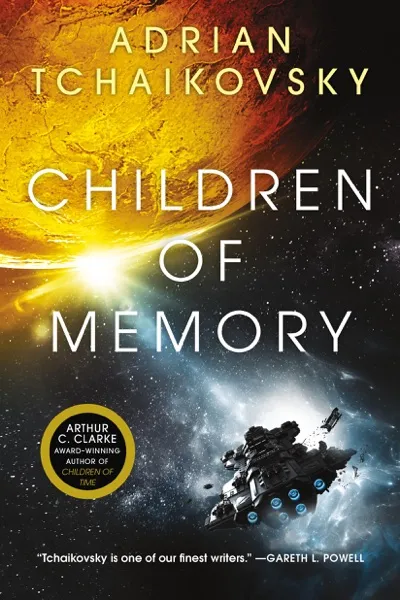

Children of Memory Author: Adrian TchaikovskyPage Count: UnknownPublication Year: 2022-GB Children of Memory is a masterclass in speculative fiction, a novel that burrows deep into the human psyche while hurtling through the cosmos at warp speed. Adrian Tchaikovsky, the award-winning architect of the Shadows of the Apt series and the humane space opera Children of Time, once again proves why he’s one of the genre’s most daring and empathetic voices. Published in 2022, this standalone work cements his reputation as a writer who can weave grand, galaxy-spanning narratives with intimate, soul-stirring character studies. At its core, Children of Memory is a meditation on memory, identity, and the ethical weight of survival. It asks: when your past is a patchwork of implanted experiences, when your very self is a construct, what does it mean to be human? Tchaikovsky doesn’t just pose these questions—he immerses the reader in them, crafting a story that is as intellectually provocative as it is emotionally resonant. The novel follows a cast of outsiders—human and otherwise—on a distant, dying world where time itself is unraveling. The planet’s inhabitants, known as the Memory, are a collective of beings who share and swap memories as currency, their lives stitched together from fragments of others’ pasts. Among them is a woman named Yime, who remembers too much, and a man called Rebro, who remembers too little. Their lives intersect with that of a child born without memory, a being who may hold the key to saving—or dooming—their fragile civilization. Tchaikovsky’s genius lies in his ability to balance scale and intimacy. The novel’s setting is vast—a dying planet, a crumbling infrastructure, a society on the brink of collapse—but the emotional heart of the story is small, personal, and achingly human. The prose is sharp, economical, and laced with dry wit, a style that feels both modern and timeless. His characters are flawed, contradictory, and deeply real, their struggles echoing universal themes of belonging, loss, and redemption. What sets Children of Memory apart is its refusal to offer easy answers. Tchaikovsky doesn’t just explore the consequences of memory loss; he interrogates the nature of memory itself. Is memory the essence of identity, or is it merely a story we tell ourselves to make sense of the chaos? The novel suggests that identity is not a fixed thing but a fluid, collaborative act—one that can be rewritten, stolen, or shared. In a world where memory is currency, the question of who controls the narrative becomes a matter of life and death. The author’s style is deceptively simple yet profoundly effective. Tchaikovsky has a knack for grounding speculative concepts in visceral, tangible detail. A crumbling city is not just a setting but a character in its own right, its decay mirroring the moral unraveling of its inhabitants. The dialogue crackles with tension, and the pacing is relentless, pulling the reader forward with a mix of dread and curiosity. There are no neat resolutions here—only hard choices, painful sacrifices, and the quiet resilience of those who carry the weight of memory. Children of Memory is a book for readers who crave depth in their speculative fiction. It’s a novel that lingers long after the last page, its themes resonating like the echo of a half-remembered dream. Tchaikovsky doesn’t just tell a story; he invites the reader into a philosophical labyrinth, where every turn reveals another layer of what it means to be human in a universe that is indifferent to our memories. If you loved the intellectual rigor of Ted Chiang or the emotional depth of Becky Chambers, this book will speak to you. It’s a testament to the power of memory—not just as a record of the past, but as the foundation of our present and the blueprint for our future. #Tchaikovsky #SciFiMasterpiece #MemoryAndIdentity #DystopianFiction #SpeculativeFiction #BookReview Related InsightsMidnight in the Garden of Good and Evil Book Review and Summary Klara and the Sun Book Review and Summary Never Let Me Go Book Review and Summary{ "@context": "https://schema.org", "@type": "FAQPage", "mainEntity": [ { "@type": "Question", "name": "What is the main focus of Children of Memory Book Review and Summary?", "acceptedAnswer": { "@type": "Answer", "text": "Everything you need to know about Children of Memory with our detailed review." } }, { "@type": "Question", "name": "Who authored the comprehensive guide on Children of Memory Book Review and Summary?", "acceptedAnswer": { "@type": "Answer", "text": "This detailed article and its insights were carefully researched and authored by Sarah Davis." } }, { "@type": "Question", "name": "Where can I find more related content about Books?", "acceptedAnswer": { "@type": "Answer", "text": "You can explore more articles, detailed reviews, and similar insights by browsing the Related Insights section at the bottom of this article or visiting our dedicated Books category page." } } ] }