Showing Posts From
Circe
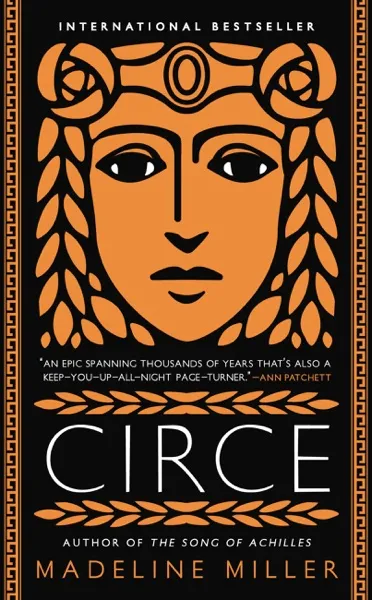

Circe Author: Madeline MillerPage Count: UnknownPublication Year: 2018-GB Circe: A Myth Reimagined with Fire and Feminine Might Madeline Miller’s Circe is not just a retelling of Greek mythology—it is a reclamation. A spell woven from the threads of Homer’s Odyssey and Hesiod’s Theogony, the novel breathes new life into the oft-maligned figure of Circe, the witch-goddess of Aeaea. But Miller does more than rehabilitate a villainess; she crafts a story that pulses with raw, unapologetic femininity, where power is not seized but earned through endurance, cunning, and an unshakable connection to the natural world. At its heart, Circe is a meditation on transformation—not just the literal sorcery of turning men into swine, but the quiet, relentless metamorphosis of a woman who refuses to be defined by others. Circe begins as the overlooked daughter of Helios, the sun god, dismissed by her siblings and tormented by her own self-doubt. Her early life is one of exile and diminishment, a state that mirrors the fate of countless women throughout history. Yet, through Miller’s lyrical prose, Circe’s journey becomes a defiant anthem. “I was not a girl, not yet a woman,” she reflects, “but I was enough.” This line encapsulates the novel’s central theme: the search for agency in a world that seeks to strip it away. Miller’s prose is as intoxicating as Circe’s famous potions. She writes with the cadence of a poet, her sentences curling around the reader like smoke. There is a hypnotic quality to her storytelling, one that lends weight to even the most mundane moments. When Circe describes the first time she tastes wine—“sweet as stolen honey”—the reader tastes it too. When she speaks of the sea, it is not as a backdrop but as a living, breathing entity, one that shares her secrets and scars. This sensory richness is no accident; it is Miller’s way of immersing the reader in Circe’s world, making her not just a character but a force of nature. What sets Circe apart from other myth retellings is its unflinching honesty about power—and the cost of wielding it. Circe is neither a saint nor a monster, but a woman navigating the treacherous waters of immortality, motherhood, and self-preservation. Her encounters with gods and mortals alike are fraught with tension. She outwits Hermes, the trickster god, with a blend of wit and weary resignation. She mothers Telegonus, the son she never expected to have, with a fierce, protective love that humanizes her in ways few myths dare to. And she faces down Athena, the goddess of wisdom, in a confrontation that is as much about ideological clash as it is about personal vendetta. These moments are not just battles of strength but of ideology—circles of power, control, and the relentless questioning of what it means to be free. Miller’s feminist lens is subtle but unmistakable. Circe is not defined by her relationships with men—Odysseus, her beloved son Telemachus, or the doomed mortal Glaucus—but by her own choices. Her magic is not a tool for manipulation but a means of survival. Her exile is not a punishment but an awakening. The novel asks: What if the witch wasn’t evil? What if she was simply a woman who refused to be tamed? In Circe, Miller gives her a voice, a lineage, and a legacy that stretches beyond the confines of ancient texts. The novel’s structure further reinforces its themes. Miller eschews a linear narrative in favor of a meandering, almost episodic journey that mirrors Circe’s long, eventful life. The pacing is deliberate, allowing the reader to linger in moments of quiet reflection as much as in scenes of high drama. This approach makes Circe’s eventual transformation—not just into a mother or a sorceress, but into a goddess who has earned her divinity—feel earned. By the novel’s end, Circe is no longer a side character in someone else’s story. She is the architect of her own fate. Circe is a book that lingers, like the scent of salt on the wind or the echo of a spell half-remembered. It is a story of power, yes, but not the kind that is seized in battle. It is the power of patience, of observation, of standing firm when the world tries to bend you. In an era where women’s stories are still fighting to be heard, Circe’s voice is a clarion call—a reminder that myth is not just a relic of the past, but a living, breathing thing, waiting to be reclaimed. #Circe #MadelineMiller #GreekMythology #FeministFantasy #WitchLiterature #MythRetelling Related InsightsHoudini Heart Book Review and Summary Ivanhoe Book Review and Summary Dracula Book Review and Summary{ "@context": "https://schema.org", "@type": "FAQPage", "mainEntity": [ { "@type": "Question", "name": "What is the main focus of Circe Book Review and Summary?", "acceptedAnswer": { "@type": "Answer", "text": "Everything you need to know about Circe with our detailed review." } }, { "@type": "Question", "name": "Who authored the comprehensive guide on Circe Book Review and Summary?", "acceptedAnswer": { "@type": "Answer", "text": "This detailed article and its insights were carefully researched and authored by Camille Dubois." } }, { "@type": "Question", "name": "Where can I find more related content about Books?", "acceptedAnswer": { "@type": "Answer", "text": "You can explore more articles, detailed reviews, and similar insights by browsing the Related Insights section at the bottom of this article or visiting our dedicated Books category page." } } ] }