Showing Posts From
City of last chances
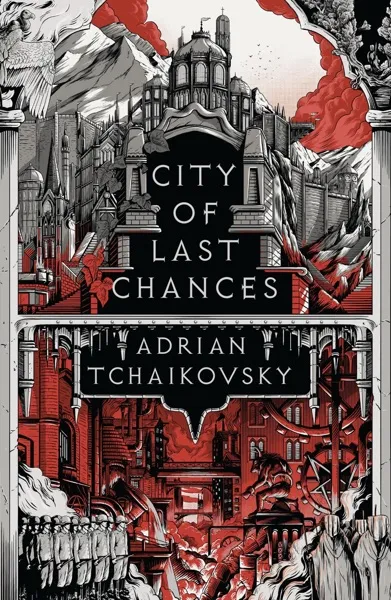

City of Last Chances Author: Adrian TchaikovskyPage Count: UnknownPublication Year: 2022-GB Adrian Tchaikovsky’s City of Last Chances is a masterclass in speculative fiction, a novel that marries the grit of urban decay with the wonder of cosmic horror and the desperate hope of human resilience. Released in 2022, this standout from the British author—best known for his Children of Time series—delivers a story that is as intellectually stimulating as it is emotionally gripping. In a world where the old certainties have crumbled and the future is a shifting, uncertain horizon, Tchaikovsky crafts a tale that feels both timeless and urgently modern. It is a book that lingers long after the last page, not just because of its haunting premise, but because of the way it is told—with a voice that is both precise and poetic, relentless yet deeply human. At its core, City of Last Chances explores the theme of survival in a broken world. Not just the survival of individuals, but of communities, ideals, and the very idea of progress. The story unfolds in a city that is, quite literally, falling apart—a metropolis built on the edge of an abyss, both literal and metaphorical. The ground beneath its streets groans with instability, the buildings lean like dying giants, and the people cling to routines that are barely holding together. This isn’t just a setting; it’s a character in its own right, a decaying organism that refuses to die but offers no solace either. Tchaikovsky doesn’t romanticize decay. Instead, he immerses the reader in its texture—the damp chill of crumbling stone, the scent of rust and old wiring, the unspoken dread that comes from knowing the city might finally collapse tomorrow. What makes this world so compelling is not just its physical decay, but the moral decay that accompanies it. The city is ruled by a council of opportunists, bureaucrats, and warlords who exploit the chaos for their own gain. The poor are ground into the dirt, their lives measured in scraps of food and scraps of hope. Yet amid this oppression, there are flickers of resistance—characters who refuse to accept the inevitability of collapse. It’s here that Tchaikovsky’s genius truly shines. He doesn’t offer easy heroes or simplistic villains. His characters are flawed, tired, and often contradictory, but their struggles feel achingly real. They make choices not out of courage, but out of necessity, and that makes their victories—and their failures—all the more poignant. Tchaikovsky’s prose is sharp and immersive, a blend of hard-edged realism and lyrical melancholy. His sentences are lean and functional when needed, delivering tension and pacing with surgical precision. Yet, when he turns to description or introspection, he reveals a poet’s touch. There’s a moment early in the book where the protagonist watches the sun set over the crumbling skyline, and the light catches the broken glass of a thousand windows like scattered stars. It’s a small detail, but it lingers, not just as a description, but as a symbol—beauty still exists, even in ruin. This duality is central to Tchaikovsky’s style: he balances the brutality of his world with moments of fragile grace, giving the story depth and resonance. The novel also plays with genre in a way that feels fresh and unpredictable. On the surface, it reads like a dystopian survival tale, but it quickly spirals into something far stranger. There are hints of cosmic horror—indications that the city’s decay is not just man-made, but perhaps the result of forces beyond human comprehension. The ground doesn’t just crumble; it breathes. The walls don’t just crack; they bleed. This adds a layer of existential dread that elevates the story from mere social commentary to something more haunting, more universal. Tchaikovsky doesn’t shy away from ambiguity. The truth about what’s really happening beneath the city remains tantalizingly out of reach, leaving the reader to grapple with the same uncertainty that torments his characters. What makes City of Last Chances so memorable is its refusal to offer easy answers. There are no grand triumphs here, no clean resolutions. The characters fight, they suffer, they make terrible choices—and sometimes, they win. Sometimes, they lose. But they always move forward, because there is no other option. In an era where so much fiction offers either nihilistic despair or hollow optimism, Tchaikovsky strikes a rare balance. His world is bleak, but not without hope; it is cruel, but not without kindness. It is a story that understands that survival is not about triumph, but about endurance. Ultimately, City of Last Chances is a book about the things we build—cities, relationships, futures—and the things we destroy, often without meaning to. It’s about the weight of history, the burden of memory, and the quiet, stubborn will to keep going even when everything is falling apart. Adrian Tchaikovsky has written a novel that is as intellectually rich as it is emotionally devastating. It’s a story that will leave you breathless, questioning, and perhaps, just a little bit wiser about the fragility of the world we inhabit. #CityOfLastChances #AdrianTchaikovsky #CosmicHorror #DystopianFiction #SpeculativeFiction #MustReadSFF Related InsightsChildren of Strife Book Review and Summary Evermore Book Review and Summary In Too Deep Book Review and Summary{ "@context": "https://schema.org", "@type": "FAQPage", "mainEntity": [ { "@type": "Question", "name": "What is the main focus of City of Last Chances Book Review and Summary?", "acceptedAnswer": { "@type": "Answer", "text": "Everything you need to know about City of Last Chances with our detailed review." } }, { "@type": "Question", "name": "Who authored the comprehensive guide on City of Last Chances Book Review and Summary?", "acceptedAnswer": { "@type": "Answer", "text": "This detailed article and its insights were carefully researched and authored by Anna Kowalska." } }, { "@type": "Question", "name": "Where can I find more related content about Books?", "acceptedAnswer": { "@type": "Answer", "text": "You can explore more articles, detailed reviews, and similar insights by browsing the Related Insights section at the bottom of this article or visiting our dedicated Books category page." } } ] }