Showing Posts From
Cold mountain
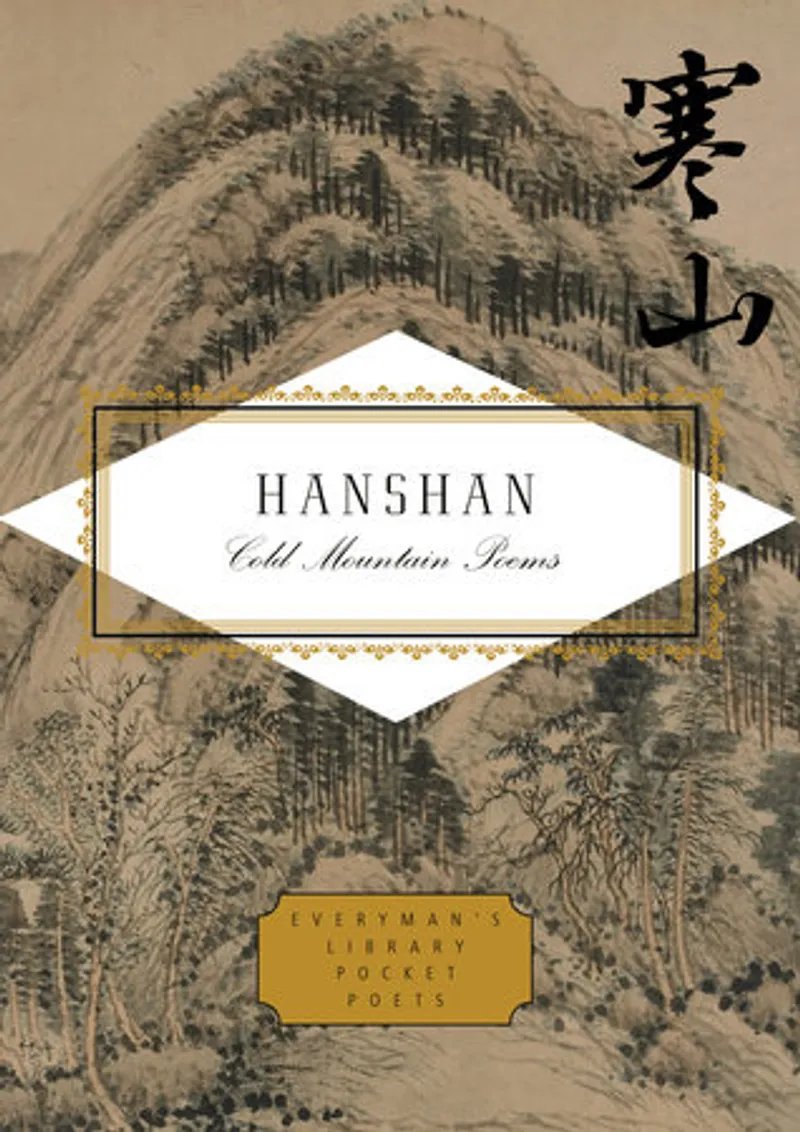
Cold Mountain Poems Author: HanshanPage Count: UnknownPublication Date: 2024-PRH Hanshan’s Cold Mountain Poems is a revelation—a luminous, centuries-old whisper that still speaks directly to the modern soul. This new edition, freshly translated and thematically arranged, is not just a book but a pilgrimage. It invites readers into the mind of a man who, over a thousand years ago, carved his thoughts into stone walls high in the mountains of China. His name, Hanshan—Cold Mountain—is both his identity and his philosophy: a life lived apart, in quiet communion with nature and the divine. What makes these poems endure? It is their raw, unfiltered humanity. Hanshan writes with a humor that is both earthy and profound, a love for solitude that feels less like escapism and more like a necessary return to oneself. His lines are vivid, almost cinematic in their clarity: a moonlit path, a rustling bamboo grove, a sudden storm that clears the mind. There is no pretension here—only the voice of a man who has seen the world’s illusions and chosen instead the truth of the mountain. The poems are deeply Zen, yet they never feel like doctrine. They are more like koans made flesh—small, paradoxical moments that open the heart. One moment Hanshan laughs at the absurdity of human striving; the next, he meditates on the fleeting nature of life. His tone shifts from playful to solemn, from irreverent to deeply reverent, mirroring the unpredictability of a mind at peace. This is not poetry for the passive reader; it demands engagement, a willingness to sit with ambiguity, to feel the weight of a single image. The thematic organization of this edition is particularly effective. Instead of a chronological or arbitrary arrangement, the poems are grouped by mood and subject: solitude, nature, enlightenment, humor, impermanence. This structure allows the reader to enter Hanshan’s world in a more immersive way. You might begin with a poem about the joy of walking barefoot in the grass, only to turn a page and confront the stark reality of death. Such juxtapositions are not jarring but natural—life, in all its contradictions, laid bare. The translation itself feels alive. It avoids the stiffness of literal renderings, capturing instead the spirit of Hanshan’s voice. The language is clean and direct, yet rich with imagery. There is a musicality here, a rhythm that mimics the natural cadence of speech. This is not poetry to be dissected in a classroom but to be felt in the quiet of early morning or the stillness of night. The physical book itself is a tribute to the art of the codex. Printed on creamy, acid-free paper, bound in full cloth with elegant foil stamping, it feels like an object of reverence. The silk ribbon marker, the half-round spine, the illustrated jacket—all these details serve to elevate the reading experience. This is a book meant to be held, to be returned to, to be kept close. Hanshan’s genius lies in his ability to make the profound feel ordinary and the ordinary feel sacred. He writes of a cup of tea as if it were a revelation, of a winter night as if it held the secrets of the universe. In doing so, he reminds us that enlightenment is not a distant goal but a moment-by-moment choice—to see the world with fresh eyes, to laugh at our own folly, to sit quietly and listen to the wind. This new edition of Cold Mountain Poems is more than a translation; it is an invitation. It calls to those who are weary of noise, who crave stillness, who seek wisdom not in grand theories but in the rustle of leaves and the flight of a bird. Hanshan does not offer answers. He offers presence. And in a world that moves too fast, that is perhaps the greatest gift of all. #ColdMountainPoems #ZenPoetry #Hanshan #BuddhistLiterature #PoetryOfSolitude #TimelessWisdom Related InsightsThe Tower of Nero Book Review and Summary Instant Classic Book Review and Summary Hello Stranger Book Review and Summary{ "@context": "https://schema.org", "@type": "FAQPage", "mainEntity": [ { "@type": "Question", "name": "What is the main focus of Cold Mountain Book Review and Summary?", "acceptedAnswer": { "@type": "Answer", "text": "Everything you need to know about Cold Mountain with our detailed review." } }, { "@type": "Question", "name": "Who authored the comprehensive guide on Cold Mountain Book Review and Summary?", "acceptedAnswer": { "@type": "Answer", "text": "This detailed article and its insights were carefully researched and authored by Charles Frazier." } }, { "@type": "Question", "name": "Where can I find more related content about Books?", "acceptedAnswer": { "@type": "Answer", "text": "You can explore more articles, detailed reviews, and similar insights by browsing the Related Insights section at the bottom of this article or visiting our dedicated Books category page." } } ] }