Showing Posts From
Cutting for stone
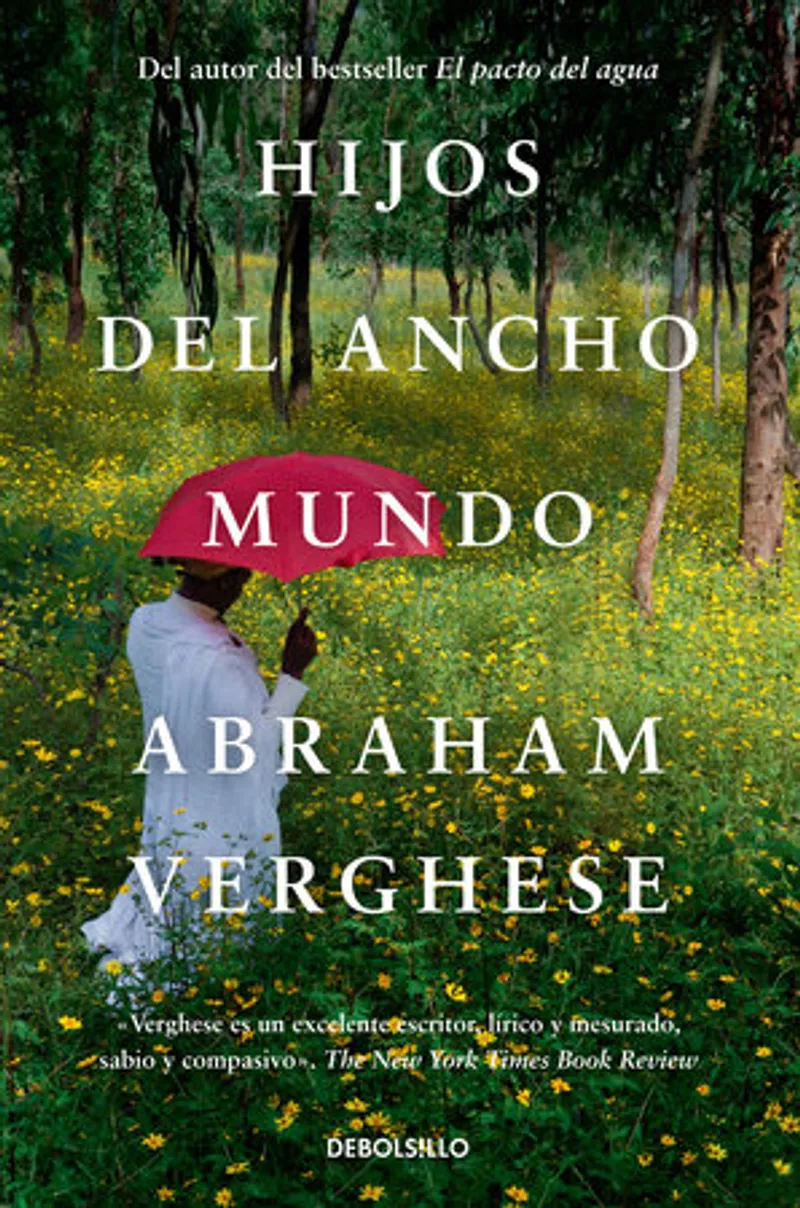
Hijos del ancho mundo / Cutting for Stone Author: Abraham VerghesePage Count: UnknownPublication Date: 2023-PRH Abraham Verghese’s Cutting for Stone is a masterclass in storytelling—a novel that pulses with the rhythm of life itself, where medicine becomes both a metaphor and a mirror for human frailty, resilience, and the unbreakable bonds of family. More than just a sweeping saga set across continents and decades, it is a meditation on identity, belonging, and the scars we carry, both visible and hidden. With prose as precise as a surgeon’s scalpel and as rich as the Ethiopian earth, Verghese crafts a world where every heartbeat, every surgical incision, and every political upheaval feels visceral, urgent, and deeply personal. At its core, Cutting for Stone is a story about twins—Marion and Shiva Stone—whose lives are forged in the crucible of loss and separation. Born to a nun and a British surgeon in the tumultuous setting of 1950s Addis Ababa, their arrival is marked by tragedy: their mother dies in childbirth, and their father vanishes without a trace. Raised in the missionary hospital Missing by a surrogate family of doctors and nurses, the brothers grow up in the shadow of medicine, their childhoods steeped in the sights, smells, and moral complexities of a hospital where healing and suffering are daily companions. Verghese, himself a physician, imbues every scene with an authenticity that transcends mere research; his descriptions of surgical procedures, the hum of a hospital at dawn, or the quiet despair of a patient’s final moments are rendered with such intimacy that the reader feels they are standing in the operating theater alongside the characters. The novel’s central theme is the duality of human connection—how love and betrayal, loyalty and abandonment, can coexist within the same heart. Marion and Shiva share an almost supernatural bond, a psychic tether that defies logic, yet their paths diverge violently as Ethiopia’s political landscape erupts into revolution. The country’s upheaval mirrors the brothers’ own fracturing relationship, as colonialism, nationalism, and personal ambition collide. Verghese doesn’t shy away from the brutality of history; the novel’s second half shifts to America, where Marion, now exiled, grapples with the ghosts of his past while navigating the sterile corridors of a New York hospital. The contrast between the chaotic, sun-baked chaos of Ethiopia and the clinical precision of American medicine underscores the novel’s deeper question: Where do we belong when the world we knew is gone? Verghese’s prose is a study in contrasts—lyrical yet unflinching, tender yet unsentimental. His sentences often read like a surgeon’s notes: clear, deliberate, and devoid of unnecessary flourish, yet capable of transporting the reader to another time and place with a single, vivid image. Consider this passage, where Marion reflects on his father’s disappearance: "He had left no note, no footprint, no trace—only the echo of a voice that had once been loud in the house, now reduced to a whisper in the wind." The writing is never overwrought, yet it carries an emotional weight that lingers long after the page is turned. This restraint makes the rare moments of raw emotion—such as Shiva’s silent grief or Marion’s desperate search for meaning—hit all the harder. What elevates Cutting for Stone beyond a mere family epic is Verghese’s ability to weave the personal and the political into a seamless tapestry. The novel’s title itself is a nod to the Hippocratic Oath ("I will not cut for stone"), a phrase that encapsulates the ethical dilemmas faced by physicians. Yet it also hints at the idea of cutting—whether it’s the literal incisions of surgery, the emotional wounds of betrayal, or the historical cleavages that divide nations. Verghese doesn’t offer easy answers; instead, he presents life as a series of incisions, each one necessary for healing, even if it leaves a scar. The novel’s greatest strength, however, lies in its characters. Marion is a compelling protagonist—introspective, flawed, and deeply human—whose journey from Ethiopia to America is as much about self-discovery as it is about survival. Shiva, the more enigmatic twin, is a study in contradictions: brilliant yet self-destructive, loving yet distant. Their relationship is the beating heart of the book, a testament to how blood ties can both bind and suffocate. Even the secondary characters—a saintly nun, a cynical surgeon, a revolutionary doctor—are rendered with such depth that they feel like old friends or bitter enemies by the novel’s end. Cutting for Stone is, at its heart, a love letter to medicine as both a calling and a curse. Verghese, who practiced as a doctor before becoming a writer, clearly reveres the profession, yet he doesn’t romanticize it. Instead, he presents it as a sacred duty, one that demands both skill and sacrifice. The novel’s most moving moments are not the grand declarations of love or the dramatic confrontations, but the quiet scenes—Marion holding a patient’s hand as they slip away, Shiva performing a surgery with trembling hands, the hushed conversations between doctors in the hospital corridors. These are the moments that define us, Verghese suggests, not the grand gestures. In an era where so much fiction feels disposable, Cutting for Stone endures because it is, above all, a necessary book. It reminds us that stories—like the human body—are held together by invisible threads, and that the most profound healing often comes from the most unexpected places. Verghese’s novel is not just a story about two brothers; it is a story about all of us, about the families we are born into, the ones we choose, and the ones we lose along the way. #CuttingForStone #AbrahamVerghese #LiteraryFiction #FamilySaga #MedicalDrama #EpicNovel Related InsightsTailored Realities Book Review and Summary Armor of Light Book Review and Summary Installment Immortality Book Review and Summary{ "@context": "https://schema.org", "@type": "FAQPage", "mainEntity": [ { "@type": "Question", "name": "What is the main focus of Cutting for Stone Book Review and Summary?", "acceptedAnswer": { "@type": "Answer", "text": "Everything you need to know about Cutting for Stone with our detailed review." } }, { "@type": "Question", "name": "Who authored the comprehensive guide on Cutting for Stone Book Review and Summary?", "acceptedAnswer": { "@type": "Answer", "text": "This detailed article and its insights were carefully researched and authored by Abraham Verghese." } }, { "@type": "Question", "name": "Where can I find more related content about Books?", "acceptedAnswer": { "@type": "Answer", "text": "You can explore more articles, detailed reviews, and similar insights by browsing the Related Insights section at the bottom of this article or visiting our dedicated Books category page." } } ] }