Showing Posts From
Dearly
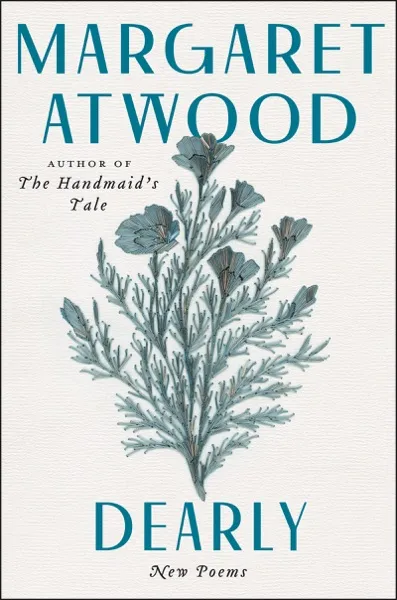

Dearly Author: Margaret AtwoodPage Count: UnknownPublication Year: 2020-GB Margaret Atwood’s Dearly: A Poignant Farewell to What We’ve Lost—and What We Still Might Save Margaret Atwood’s Dearly is not just a collection of poems; it is a mirror held up to the ravaged face of the world—a world that has been both nurtured and neglected by humanity. Published in 2020, at the height of global reckonings with climate change, political upheaval, and pandemic dread, this book arrives as both a lament and a plea. Atwood, the towering voice of speculative fiction and feminist dystopia (The Handmaid’s Tale), turns here to poetry to articulate what prose alone cannot: the raw, unfiltered terror and tenderness of existence in an age of collapse. The central theme of Dearly is loss—loss of nature, of innocence, of time itself—but it is also a meditation on memory, legacy, and the stubborn persistence of hope. The title, with its double meaning ("dearly" as both adverb and adjective), suggests both the cost of what we cherish and the fragility of the things we hold dear. Atwood writes as if she already knows this world is ending, yet she refuses to look away. Instead, she catalogs its wonders and wounds with a poet’s precision and a prophet’s urgency. Atwood’s style in Dearly is deceptively simple, yet layered with meaning. Her language is unadorned, often conversational, but every word feels deliberate, surgical in its impact. She avoids the ornate flourishes of some poets, opting instead for clarity that cuts straight to the bone. Consider the opening poem, "Dearly": "Dearly beloved, we are gathered here in this place, at this time, to bury the dead." It’s a funeral dirge for a planet in decline, but it’s also a wedding vow—a commitment to the earth even as its end is in sight. This duality runs through the collection: Atwood mourns what is gone while clinging to what might still be saved. One of the collection’s most striking sequences is "The Age of Lead," which weaves together historical and contemporary anxieties. The poem’s title references the poisoning of children in 19th-century Montreal and the modern plague of lead-contaminated water in Flint, Michigan, but it also serves as a metaphor for the slow, creeping toxicity of human neglect. Atwood’s genius lies in her ability to connect disparate threads—personal grief, environmental decay, political betrayal—into a cohesive lament. She writes of a world where "the birds are gone," where "the rivers run thick with secrets," and where "the future is a locked room / and we are the locksmiths." Yet Dearly is not without moments of transcendence. Atwood’s love for the natural world shines through in poems like "A Row of Corn," where she personifies the stalks as witnesses to time: "They stand in their green uniforms, soldiers of the sun, listening to the wind’s command." There’s a quiet defiance here, a refusal to surrender entirely to despair. Atwood, now in her late 80s, writes with the wisdom of someone who has seen generations come and go, who understands that destruction is not the end of the story but perhaps the beginning of a reckoning. Her use of form is subtle but effective. Free verse dominates, but she occasionally employs rhyme or meter to underscore themes of order and chaos. In "The Last Man in Europe" (a nod to George Orwell’s 1984), she writes: "The last man in Europe sits in a room with a window that does not open on the world." The constrained form mirrors the protagonist’s entrapment, reinforcing Atwood’s recurring motif of confinement—whether environmental, political, or existential. What makes Dearly so devastating is its refusal to offer easy answers. Atwood does not preach; she observes. She does not promise redemption; she documents the cracks in the foundation. Yet the collection is far from nihilistic. There’s a tender stubbornness in her work, a belief that even in the face of annihilation, art—and poetry in particular—can be an act of resistance. As she writes in "Butterfly": "It is the small things that keep us going." This is the heart of Dearly: an acknowledgment that hope is not a grand gesture but a collection of small, daily rebellions against oblivion. Atwood’s voice here is that of a wise elder, weary but unbowed, speaking to us from the other side of catastrophe. She is not warning us; she is showing us what we’ve already done. And yet, in the final lines of the collection, there is a flicker of something like grace: "We are the ones who will not be erased. We are the echo in the dark." It’s a chilling and beautiful assertion—that even in erasure, there is a trace. That even in loss, there is a stubborn, lingering presence. Dearly is a book for this moment, but it will outlast it. It is a eulogy, a manifesto, and a love letter—all at once. Margaret Atwood has given us a final gift: the opportunity to look into the abyss and, for a moment, recognize ourselves in its reflection. #Dearly #MargaretAtwood #Poetry #ClimateChange #LiteraryLegacy #HopeInDarkness Related InsightsThe Seventh Ribbon Book Review and Summary Last Tudor Book Review and Summary L'Inchiostro Proibito: Il Silenzio Forzato delle Pagine nell'Impero Sovietico{ "@context": "https://schema.org", "@type": "FAQPage", "mainEntity": [ { "@type": "Question", "name": "What is the main focus of Dearly Book Review and Summary?", "acceptedAnswer": { "@type": "Answer", "text": "Everything you need to know about Dearly with our detailed review." } }, { "@type": "Question", "name": "Who authored the comprehensive guide on Dearly Book Review and Summary?", "acceptedAnswer": { "@type": "Answer", "text": "This detailed article and its insights were carefully researched and authored by Maximilian Fischer." } }, { "@type": "Question", "name": "Where can I find more related content about Books?", "acceptedAnswer": { "@type": "Answer", "text": "You can explore more articles, detailed reviews, and similar insights by browsing the Related Insights section at the bottom of this article or visiting our dedicated Books category page." } } ] }