Showing Posts From
Death to the emperor
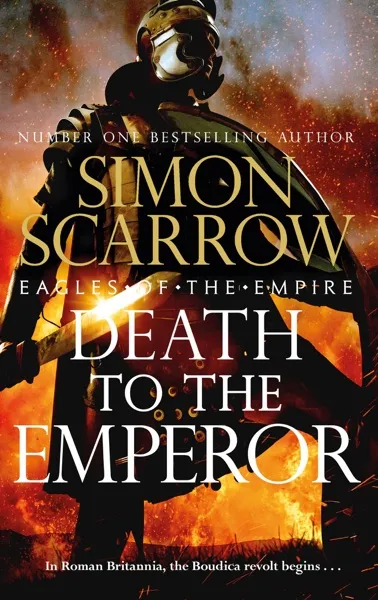

Death to the Emperor Author: Simon ScarrowPage Count: UnknownPublication Year: 2022-GB Simon Scarrow’s Death to the Emperor is a masterclass in historical fiction, blending military precision with the raw, unrelenting drama of imperial Rome’s final days. Set against the backdrop of the Year of the Four Emperors (69 AD), Scarrow crafts a gripping narrative that pits ambition against survival, loyalty against treachery, and the brutal machinery of power against the fragile threads of human connection. This isn’t just a story about emperors falling—it’s about the empire itself, its glory and its rot, seen through the eyes of those caught in its death throes. The novel’s central theme is the fragility of power. The Roman Empire, at its zenith, was a colossus with feet of clay. In Death to the Emperor, Scarrow dissects that paradox with surgical precision. The emperor’s death—whether by assassination, battlefield defeat, or suicide—isn’t just an event; it’s a cataclysm that sends shockwaves through the empire. Scarrow doesn’t glorify the emperors (Galen, Otho, Vitellius, and Vespasian) as demi-gods but exposes them as flawed, desperate men clinging to a throne that’s already slipping from their grasp. The real heroes, if they can be called that, are the soldiers and officers who navigate this treacherous terrain, where one wrong move means death not just for them, but for their families. Scarrow’s strength lies in his ability to weave personal stakes into the grand historical tapestry. His characters are not just ciphers in a textbook—they breathe, bleed, and betray. Take the protagonist, a fictional centurion named Macro, whose loyalty is tested at every turn. Macro isn’t a superhuman hero; he’s a man who makes mistakes, who questions orders, and who fears the consequences of failure. This relatability makes his struggles compelling. When he faces off against the emperor’s enemies or grapples with his own moral compromises, the reader isn’t just reading history—they’re living it. Scarrow’s prose is tight, muscular, and devoid of unnecessary flourish. He writes like a man who respects his reader’s intelligence, delivering action in crisp, vivid strokes without over-explaining. Battles are chaotic but never confusing, and the political maneuvering is as tense as a drawn sword. His dialogue crackles with authenticity, whether it’s the clipped exchanges of soldiers in the field or the venomous whispers of courtiers in the palace. This isn’t a book that demands you admire its style—it’s a book that demands you feel its momentum. One of the most striking aspects of Death to the Emperor is its unflinching portrayal of violence. Scarrow doesn’t romanticize war; he shows it as it was—brutal, filthy, and indifferent to human suffering. The deaths are sudden, the victories hollow, and the aftermath leaves scars that never fully heal. This isn’t just for shock value; it underscores the novel’s core message: power is transient, but the cost of its pursuit is eternal. Scarrow’s research is evident, but he wears it lightly. He doesn’t drown the reader in historical minutiae; instead, he uses the era’s texture—the stench of the city, the clatter of legionary boots, the stifling intrigue of the imperial court—to immerse us in the world. The result is a novel that feels as real as the history books, but with the added thrill of a story that could have been lost to time. If there’s a weakness, it’s in the pacing at times. Scarrow juggles multiple perspectives, and while this adds depth, it can occasionally dilute the emotional impact of individual arcs. Some characters, though vivid, exist primarily as foils to Macro, and their fates sometimes feel like stepping stones rather than fully realized tragedies. But this is a minor quibble in a novel that otherwise delivers relentless momentum. Death to the Emperor is more than just a military thriller or a historical drama—it’s a meditation on the cyclical nature of power and the human cost of ambition. Scarrow doesn’t just tell us that empires fall; he makes us feel their collapse in our bones. #HistoricalFiction #RomanEmpire #MilitaryFiction #AncientRome #SimonScarrow #EmpiresFall Related InsightsThe Hours Book Review and Summary Democracy in a Hotter Time Book Review and Summary Notes on a Nervous Planet Book Review and Summary{ "@context": "https://schema.org", "@type": "FAQPage", "mainEntity": [ { "@type": "Question", "name": "What is the main focus of Death to the Emperor Book Review and Summary?", "acceptedAnswer": { "@type": "Answer", "text": "Everything you need to know about Death to the Emperor with our detailed review." } }, { "@type": "Question", "name": "Who authored the comprehensive guide on Death to the Emperor Book Review and Summary?", "acceptedAnswer": { "@type": "Answer", "text": "This detailed article and its insights were carefully researched and authored by Diego Lopez." } }, { "@type": "Question", "name": "Where can I find more related content about Books?", "acceptedAnswer": { "@type": "Answer", "text": "You can explore more articles, detailed reviews, and similar insights by browsing the Related Insights section at the bottom of this article or visiting our dedicated Books category page." } } ] }