Showing Posts From
Edgecomputing
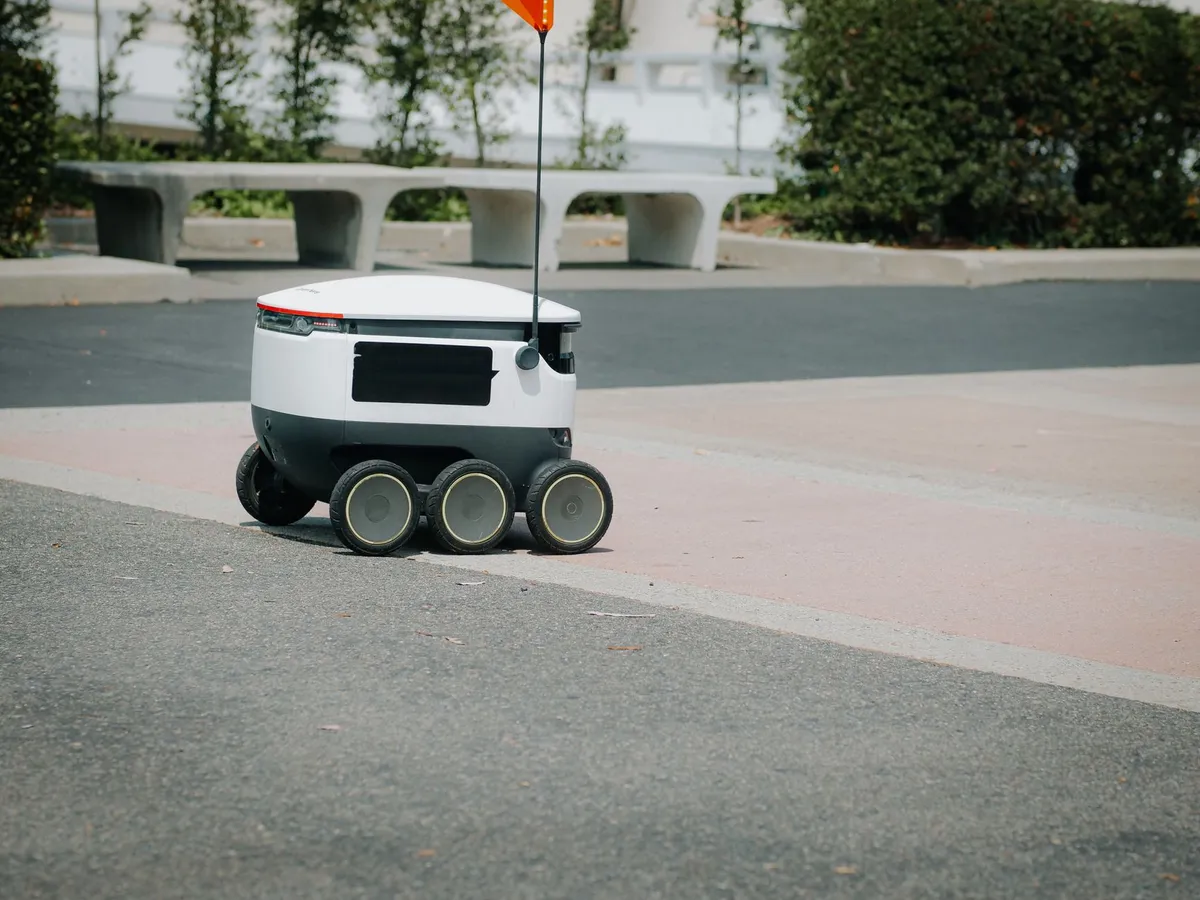
-
 David O'Connor
 - 16 Sep, 2026 11:38
The Silent Urban Revolution: Architecting Agentic Societies for Autonomous Last-Mile Delivery
The Concrete Jungle's New Inhabitants The cadence of urban delivery is shifting beneath our feet. For decades, the "last mile" has remained the most expensive and inefficient node in the global supply chain, tethered to the constraints of human labor, traffic congestion, and the volatility of unpredictable urban environments. As we pivot toward an era of dense, autonomous micro-logistics, we are not merely deploying robots; we are birthing an "agentic society." These systems, comprised of autonomous fleets navigating public walkways, must balance high-fidelity spatial awareness with the complex social dynamics of shared spaces. Imagine a sidewalk crowded with pedestrians, cyclists, and automated couriers. Each robot operates on behalf of a principal—a delivery service, a retail aggregator, or a local merchant—whose objectives may only partially align with those of its peers. The core challenge is no longer just obstacle avoidance; it is the orchestration of decentralized agents in an environment where trust is non-existent, communication is unreliable, and the cost of a "social" error—such as blocking a wheelchair ramp or failing to yield—carries severe societal and legal weight. To succeed, we must move beyond simple reactive control loops. We are entering the age of World-Action Models (WAMs) that can predict future states with granular precision, coupled with social harnesses that enforce behavioral constraints, ensuring that the efficiency of micro-logistics does not come at the cost of urban order. Navigating the World through Modality-Autoregressive Intelligence At the heart of modern robotics lies the transition from pure pixel-based observation to modality-rich reasoning. Traditional approaches, which rely heavily on massive RGB frame buffers, often suffer from high computational overhead and suboptimal spatial understanding. Our current research trajectory, specifically through Modality-Autoregressive (ModAR) frameworks, suggests that the future of micro-logistics lies in denoising latent modalities—such as point tracks, DINO features, and depth maps—before committing to an action. By leveraging ModAR, we enable robots to simulate future trajectories with significantly higher success rates while reducing training FLOPs by orders of magnitude compared to pretrained video-model counterparts. In an urban delivery context, this is transformative. A robot equipped with ModAR does not just "see" an approaching pedestrian; it tracks point-features across depth planes, allowing for the anticipation of human intent in dense crowds. The computational efficiency of ModAR is critical for edge deployment. Because these models can run on localized, power-constrained hardware, we avoid the latency pitfalls of cloud-dependent decision-making. By conditioning future actions on previous modality generations, the agent maintains a fluid, autoregressive world model that adjusts in real-time to the chaotic, stochastic nature of city sidewalks. Implementing the Social Harness Layer Autonomous agents, despite their competency, are susceptible to failure when interacting with others whose objectives deviate from their own. An "honest" robot might attempt to optimize for delivery speed, while a faulty agent—or one incentivized for disruptive behavior—could effectively stall traffic flow. To mitigate this, we propose a multi-layered social harness. This harness acts as an intermediary, sitting between the agent’s internal execution logic and the raw communication primitives (the "speech" layer). The social harness provides three critical functions: proactive failure prevention, runtime invalid message detection, and post-facto forensic accountability. In a micro-logistics network, this means every communication—whether it is a sensor-sharing handshake between two robots or a trajectory negotiation—is mediated through a set of social constraints defined at the architecture level, not the agent level. import torch import torch.nn as nnclass SocialHarnessLayer(nn.Module): """ A behavioral constraint engine for autonomous delivery agents. Enforces compliance with safety protocols and social norms. """ def __init__(self, agent_id, compliance_threshold=0.95): super().__init__() self.agent_id = agent_id self.threshold = compliance_threshold def validate_trajectory(self, proposed_path, environment_context): # Check against local safety primitives (e.g., collision with static obstacles) if not self._check_static_bounds(proposed_path): return False, "Violation: Static constraint collision" # Inspect for socially disruptive intent (e.g., high-speed maneuvering in crowds) if self._detect_social_disruption(proposed_path, environment_context): return False, "Violation: Social throughput interference" return True, "Success" def _detect_social_disruption(self, path, context): # Implementation of social norm heuristic checks # Returns True if the path disrupts pedestrian flow return False By decoupling the "personal harness" (private objectives) from the "social harness" (system-wide norms), we enable a modular infrastructure where individual robot manufacturers can iterate on their control policies without compromising the collective stability of the logistics network. Infrastructure Deployment and Edge Orchestration Deploying these agents in a live urban theater requires more than just high-quality AI; it requires a robust, scalable orchestration layer. We must move away from monoliths and toward micro-services, where the robotic agent acts as a compute node. Using a combination of Kubernetes (K3s) for orchestration and lightweight message queuing, we can manage global fleet status while keeping safety-critical decisions local to the device. The deployment configuration below demonstrates how we might isolate the social harness container from the primary vision-action model, ensuring that even if the ModAR layer experiences a kernel panic or model degradation, the social safety supervisor remains operational, forcing the robot into a "fail-safe" stop state. # docker-compose.yaml for edge delivery units version: '3.8'services: perception-modar: image: micro-logistics/modar-engine:v2.1 deploy: resources: limits: memory: 4096M command: --model-type DINO_DEPTH_V4 --gpu-count 1 social-harness: image: micro-logistics/social-safety-harness:v1.0 restart: always environment: - TRUST_BOUNDARY_POLICY=STRICT - LOG_LEVEL=DEBUG volumes: - ./logs:/var/log/harness depends_on: - perception-modar comms-bridge: image: ros2/foxy-base network_mode: "host" environment: - RMW_IMPLEMENTATION=rmw_cyclonedds_cppThis architecture ensures that communication primitives—the "speech"—are monitored. In an agentic society, if an agent transmits data that violates the social harness (e.g., an incorrect obstacle-free flag designed to trick a competitor), the social harness logs the incident, triggers a cryptographic proof of the violation, and immediately severs the agent's interaction capability within the local cluster. Challenges in Multi-Agent Trust and Verification The most significant hurdle to widespread urban delivery is the "Trust Boundary." When different logistics providers (e.g., Amazon, DoorDash, or local autonomous fleets) share the same physical infrastructure, their underlying agents may have misaligned incentives. One company might prioritize battery life, while another prioritizes transit speed. In such a mixed environment, agents must negotiate for path priority. Without a standardized social harness, these negotiations become game-theoretic minefields. An agent could spoof sensor data to gain priority in a crowded crosswalk. To solve this, we rely on immutable logs. By appending all negotiation headers to a local lightweight ledger, we enable post-facto investigation. If a collision occurs, the social harness log acts as a black box that cannot be tampered with by the agent's principal, providing the necessary audit trail for legal and insurance reconciliation in an automated city environment.Furthermore, our experiments indicate that agents benefit from predicting multiple future modalities rather than just the next RGB frame. This is because RGB data is prone to aliasing in high-glare or low-light urban settings. By prioritizing semantic features and point tracks, we create a more robust "world model" that is significantly less likely to succumb to the sensory manipulation that faulty agents might attempt. The "social harness" essentially acts as a runtime verification filter on these world-action predictions. Future Research Directions: Beyond Local Constraints The realization of a fully autonomous agentic society requires significant advancements in decentralized consensus protocols. Currently, we are testing the efficacy of "Federated Learning for Social Norms," where fleets update their collective understanding of urban etiquette—such as how to behave near construction zones or outdoor dining areas—without transmitting sensitive private context. The next frontier for ModAR and social harnesses lies in cross-modal alignment. We are investigating how to incorporate LLM-based reasoning (Large Language Models) to interpret human semantic gestures, such as a hand wave or a nod from a pedestrian. However, this introduces the danger of "Prompt-Injection" at the edge, where a human might try to spoof the robot’s intent. The social harness must therefore extend its capabilities to parse input signals for malicious intent, treating human interaction as a potential security vector. As we look toward 2030, the integration of 6G communication standards will provide the bandwidth necessary for real-time, cross-fleet model synchronization, further tightening the social harness. The goal is to reach a state where the logistics grid is invisible to the pedestrian, operating with the fluidic grace of a school of fish, despite being composed of thousands of autonomous, independently-owned nodes. We are not just building delivery robots; we are encoding the future of urban civil society into the silicon and code of the machines that navigate our streets. The Synthesis of Order and Autonomy The trajectory of robotics in micro-logistics is no longer a matter of hardware miniaturization or raw compute power. We have reached a point where the bottleneck is interaction. By implementing Modality-Autoregressive World-Action Models, we solve the efficiency problem—creating agents that can perceive, predict, and move with unprecedented agility and minimal training costs. By overlaying a robust, multi-layered social harness, we solve the trust and security problem, providing the essential infrastructure needed for agents to coexist in a competitive, heterogeneous ecosystem. The transition from isolated automated experiments to an integrated, agentic urban society depends on our ability to enforce order without stifling the rapid, autonomous decision-making required for real-time logistics. The proposed architectures demonstrate that we can indeed create a "social safety net" for AI. These systems allow for granular auditing, robust runtime verification, and the prevention of malicious exploitation, all while maintaining the sub-millisecond response times required for urban safety. As these technologies mature, we will see the last mile evolve from a chaotic mess of human-error-prone delivery vehicles into a structured, silent, and highly efficient network of autonomous agents, fundamentally rewriting the economics of urban commerce and setting the benchmark for the next decade of robotics deployment in our cities.#AI #Robotics #Logistics #EdgeComputing #Cybersecurity #SoftwareEngineering #FutureTech Related InsightsQuantum Repeaters & Satellite Links: Building the Unhackable Internet of Tomorrow The Ultimate Guide to Custom PC Building: Forging Your Digital Masterpiece Algorithmic Sovereignty: Deconstructing the DAO Paradox in On-Chain Governance{ "@context": "https://schema.org", "@type": "FAQPage", "mainEntity": [ { "@type": "Question", "name": "What is the main focus of The Silent Urban Revolution: Architecting Agentic Societies for Autonomous Last-Mile Delivery?", "acceptedAnswer": { "@type": "Answer", "text": "Exploring the intersection of World-Action Models and social agent frameworks to revolutionize urban micro-logistics at scale." } }, { "@type": "Question", "name": "Who authored the comprehensive guide on The Silent Urban Revolution: Architecting Agentic Societies for Autonomous Last-Mile Delivery?", "acceptedAnswer": { "@type": "Answer", "text": "This detailed article and its insights were carefully researched and authored by David O'Connor." } }, { "@type": "Question", "name": "Where can I find more related content about Technology?", "acceptedAnswer": { "@type": "Answer", "text": "You can explore more articles, detailed reviews, and similar insights by browsing the Related Insights section at the bottom of this article or visiting our dedicated Technology category page." } } ] }
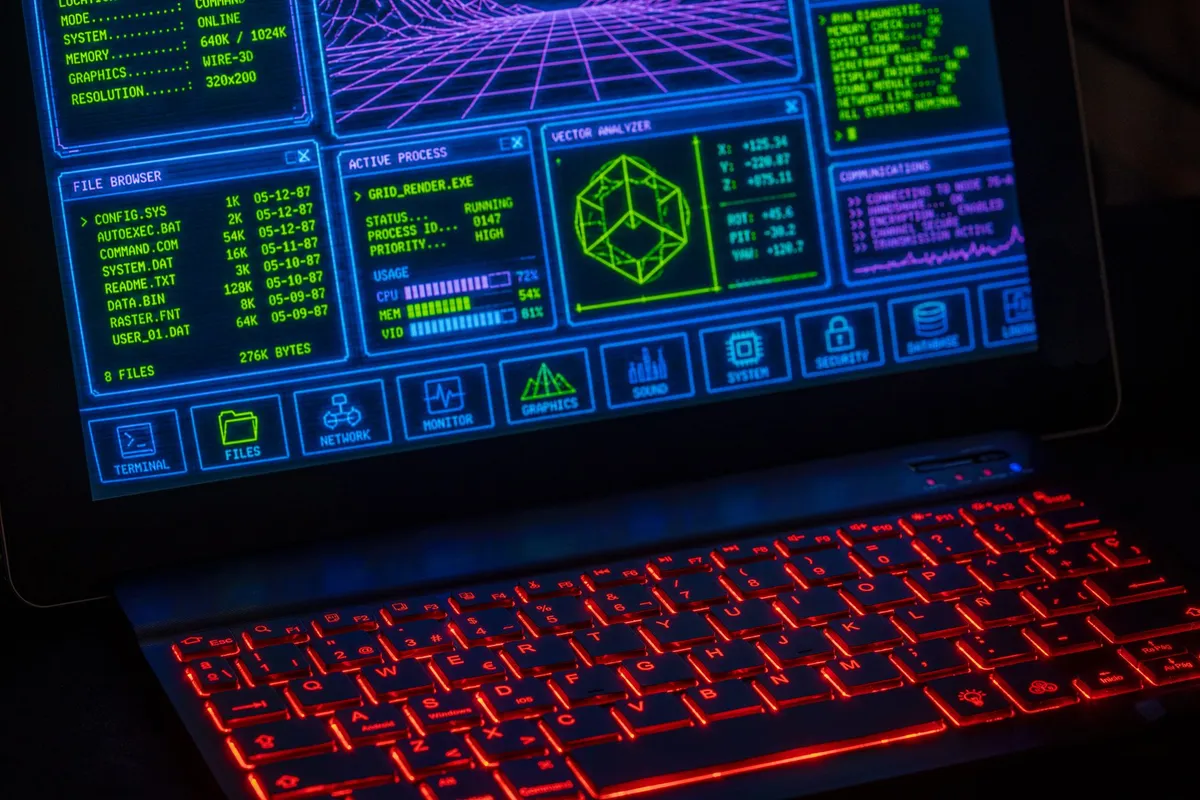
-
 Zeynep Kaya
 - 15 Sep, 2026 11:47
Beyond the Keyboard: The Multimodal Singularity in Human-Computer Interaction
The Silent Revolution of Tangible Computing The era of the QWERTY keyboard and the stationary mouse is rapidly drawing to a close. As we stand at the precipice of the "multimodal singularity," human-computer interaction (HCI) is undergoing a fundamental paradigm shift. We are moving away from the brittle, syntax-heavy input methods that have defined the last four decades of computing and toward a fluid, expressive, and truly ambient environment. This evolution is driven by the convergence of low-latency computer vision models, sophisticated natural language understanding (NLU), and the deployment of powerful inference engines at the edge. For years, we treated our devices as external tools—rigid instruments that required us to speak their language. Today, thanks to advances in Transformer-based architectures and lightweight skeletal tracking, the device is beginning to speak ours. When we talk about the integration of gesture control and voice AI, we aren’t merely talking about minor quality-of-life improvements; we are talking about a total reconfiguration of how humans perceive digital information. We are transitioning from the "desktop" metaphor to a "spatial" metaphor, where the interface is no longer contained within a rectangle of pixels but is instead cast across the geometry of our physical reality. This shift requires a technical architecture that is robust enough to handle high-bandwidth sensory data while maintaining the sub-millisecond responsiveness required to avoid the "uncanny valley" of input lag. As a researcher, I see this not as an incremental step, but as the foundation of a new digital existence.Architectural Foundations of Spatial Gesture Recognition To understand the modern stack, we must look at how we process skeletal data. Modern gesture recognition is no longer reliant on simple image thresholding. Instead, we utilize deep convolutional neural networks (CNNs) and graph neural networks (GNNs) to interpret spatial relationships in real-time. By leveraging libraries like MediaPipe or custom implementations using TensorRT for optimization, developers can map 21 distinct hand landmarks with millisecond precision. The challenge lies in the fusion of this visual data with intent-based voice streams. When a user points to an object in an augmented reality workspace and says, "Move that to the staging environment," the system must perform three simultaneous operations: spatial anchoring of the visual gesture, semantic parsing of the command, and translation of the intent into a system-level function call. This requires a robust middleware layer that keeps the input buffer synchronized. import mediapipe as mp import cv2class GestureProcessor: def __init__(self): self.mp_hands = mp.solutions.hands self.hands = self.mp_hands.Hands( static_image_mode=False, max_num_hands=2, min_detection_confidence=0.7 ) def process_frame(self, frame): # Convert BGR to RGB for MediaPipe rgb_frame = cv2.cvtColor(frame, cv2.COLOR_BGR2RGB) results = self.hands.process(rgb_frame) if results.multi_hand_landmarks: for hand_landmarks in results.multi_hand_landmarks: # Extract landmark 8 (index finger tip) for gesture interaction index_tip = hand_landmarks.landmark[8] return (index_tip.x, index_tip.y) return None# Optimization: Deployment via TensorRT for edge inference # Allows real-time gesture tracking at >60 FPS on edge hardwareNatural Language Understanding and Intent Orchestration The voice AI component of our modern HCI stack has evolved far beyond basic command-and-control interactions. With the advent of Large Language Models (LLMs) deployed via quantized models like Llama-3 or Mistral (using frameworks like Ollama or vLLM), we can now handle contextual ambiguity in natural language. The technical hurdle here is latency; standard cloud-based LLM calls are far too slow for real-time interaction. The industry is shifting toward local-first, quantized model inference. The "Orchestrator" pattern is critical here. When a gesture—such as a pinch-to-select—is detected, the system triggers a latent state. Any voice input following this trigger is then tagged with a spatial coordinate. This allows the AI to understand "that" or "here" in a way that feels natural. The underlying YAML configuration for a typical orchestration service might look like the following snippet, which defines the event-driven triggers for multimodal fusion. # multimodal_orchestrator_config.yaml service: name: "spatial-fusion-engine" version: "1.0.4" pipeline: - input: gesture_stream buffer_size: "50ms" trigger_threshold: 0.85 - input: audio_stream whisper_model: "small.en" vad_threshold: 0.4 fusion_logic: mode: "concurrency" timeout: "200ms" backend: "gRPC" endpoint: "localhost:50051/semantic-parser"Edge Computing and Low-Latency Inference Requirements To achieve the "zero-latency" feel required for high-fidelity HCI, we must rethink the data pipeline. Cloud round-trips introduce jitter, which is the mortal enemy of a responsive gesture interface. We are seeing a significant trend toward edge computing, where inferencing for both vision and speech happens on the local device or an edge gateway. In many TechCrunch-covered startups, the current trend is the integration of Neural Processing Units (NPUs) directly into the user interface pipeline. By moving the model to the edge, we reduce latency from 200ms (typical round-trip) to under 20ms. This is the difference between a system that feels like a glitchy toy and one that feels like an extension of the human body. Furthermore, local inference provides critical privacy benefits. When a user is interacting with their environment, they do not want their gesture data or conversational audio uploaded to a massive central server. Implementing local processing, as seen in many high-traction GitHub repositories, ensures that sensitive spatial mapping data remains within the local network boundary.Security and Ethical Considerations in Ubiquitous Interfaces The proliferation of always-on gesture and voice sensors introduces profound security risks. When every room is a potential node for gesture monitoring, the surface area for unauthorized data harvesting grows exponentially. We must advocate for "Privacy by Design" within the API layer itself. This means implementing hardware-level kill switches for cameras and microphones and ensuring that all multimodal fusion logic is conducted in a Trusted Execution Environment (TEE). Furthermore, the "bias in the loop" is a massive concern. If our skeletal tracking models are trained primarily on a specific demographic, the system will inherently perform poorly for others. We have seen this repeatedly in the computer vision space, where models struggle with diverse skin tones or varied lighting conditions. As engineers, it is our responsibility to curate datasets that are representative of the global population. This is not just a moral obligation; it is a technical necessity for product viability. If an interface fails to track a specific hand type, it is fundamentally broken. The Future of the Multimodal Singularity Looking ahead, we are moving toward what many in the research community call "Ambient Intelligence." This is a world where the interface disappears entirely. No screens, no peripherals, just the intent-driven manipulation of digital assets in physical space. We will see the maturation of "Spatial Computing," where the distinction between augmented reality, virtual reality, and the desktop environment blurs into a singular, unified workspace. The software engineering challenge of the next decade will be the creation of universal APIs for this new reality. Just as we have standard protocols for the web (HTTP/REST/GraphQL), we need standard protocols for spatial interaction. We need a way for a "pinch" gesture in one application to have a globally understood meaning, just as a "click" does today. We must build for interoperability, ensuring that voice and gesture are treated as first-class citizens in every operating system, not as bolted-on accessibility features. We are architects of a new layer of existence; let us build it with the foresight that our interfaces, like our tools, define who we are. Orchestrating the Next Digital Decade As we refine these technologies, the focus must shift from the novelty of the feature to the reliability of the experience. The integration of gesture control and voice AI is the logical progression of a trajectory that began with punch cards and ended with the smartphone. We are reclaiming our dexterity as the primary interface. By prioritizing edge-based processing, robust semantic parsing, and a commitment to security, we are ensuring that this transition empowers rather than alienates the user. The complexity of the underlying systems—ranging from CUDA-accelerated vision models to asynchronous gRPC streams—remains formidable, but the objective is simple: to make the digital experience as fluid and natural as the physical one. We are no longer limited by the friction of peripheral hardware. We are now entering an era where our intent is the only requisite for creation. As practitioners, our task is clear: build systems that are as nuanced and adaptable as the human users they serve. The keyboard will eventually be an artifact, but the intent behind our gestures will remain the core of everything we build. The future is not just about what we can make; it is about how effortlessly we can make it. #AI #SpatialComputing #SoftwareEngineering #FutureTech #HCI #MachineLearning #DevOps Related InsightsAI Agents in Cybersecurity: The Silent Revolution of Automated Patch Management Unlocking the Secrets of Quantum Computing: Breakthroughs in Qubit Stability and Error Correction When Steel Meets Soul: Companion Bots and Assisted‑Living Robotics Redefining Elder Care{ "@context": "https://schema.org", "@type": "FAQPage", "mainEntity": [ { "@type": "Question", "name": "What is the main focus of Beyond the Keyboard: The Multimodal Singularity in Human-Computer Interaction?", "acceptedAnswer": { "@type": "Answer", "text": "Exploring the technical convergence of spatial computing, gesture recognition, and LLM-driven voice synthesis in modern user interfaces." } }, { "@type": "Question", "name": "Who authored the comprehensive guide on Beyond the Keyboard: The Multimodal Singularity in Human-Computer Interaction?", "acceptedAnswer": { "@type": "Answer", "text": "This detailed article and its insights were carefully researched and authored by Zeynep Kaya." } }, { "@type": "Question", "name": "Where can I find more related content about Technology?", "acceptedAnswer": { "@type": "Answer", "text": "You can explore more articles, detailed reviews, and similar insights by browsing the Related Insights section at the bottom of this article or visiting our dedicated Technology category page." } } ] }
-
 Kaan Demir
 - 18 Jul, 2026 17:03
Beyond the Browser: How WebAssembly (Wasm) is Revolutionizing Server-Side and Edge Computing
The Rise of WebAssembly (Wasm) Beyond the Browser: Server-Side and Edge Introduction Wasm can be used as a server-side runtime, allowing developers to write high-performance, language-agnostic code that can run on any platform. This is particularly useful for edge computing, where low-latency and high-performance are critical. Wasmtime: A Wasm Runtime for Server-Side Applications Wasmtime is a standalone Wasm runtime that allows developers to run Wasm code on the server-side. It's designed to be fast, secure, and language-agnostic, making it an ideal choice for server-side applications. Install wasmtime curl https://wasmtime.dev/install.sh -sO - | bash Compile a Wasm module wasm-pack build --target web Run the Wasm module on the server-side wasmtime run -- .pkg/index_bg.wasm Edge Computing with Wasm Edge computing involves processing data closer to the source, reducing latency and improving performance. Wasm is well-suited for edge computing due to its platform-agnostic nature and high-performance capabilities. Cloudflare Workers: A Wasm-Powered Edge Computing Platform Cloudflare Workers is a serverless platform that uses Wasm as its runtime. It allows developers to write edge computing applications in languages like Rust, C++, and JavaScript, which are then compiled to Wasm and executed on the edge. // Create a Cloudflare Worker addEventListener('fetch', event => { event.respondWith(handleRequest(event.request)) }) async function handleRequest(request) { // Wasm code can be executed here return new Response('Hello, world!') } Wasm and AI Wasm can be used to accelerate AI workloads by compiling AI models to Wasm and executing them on the server-side or edge. TensorFlow Wasm: A Wasm-Powered AI Runtime TensorFlow Wasm is a Wasm-powered runtime for TensorFlow models. It allows developers to compile TensorFlow models to Wasm and execute them on the server-side or edge. Compile a TensorFlow model to Wasm tensorflow-wasm compile --model model.pb --output model.wasm Execute the Wasm model on the server-side wasmtime run -- .pkg/model.wasm Wasm and Robotics Wasm can be used in robotics to accelerate robot control and perception workloads. RoboTTT: A Wasm-Powered Robot Control System RoboTTT is a Wasm-powered robot control system that uses Wasm to accelerate robot control and perception workloads. It's designed to be fast, secure, and language-agnostic, making it an ideal choice for robotics applications. // Create a RoboTTT robot control system use robo_ttt::{Robot, WasmRuntime}; fn main() { // Create a Wasm runtime let wasm_runtime = WasmRuntime::new(); // Load a Wasm module let wasm_module = wasm_runtime.load_module("robot_control.wasm").unwrap(); // Create a robot control system let robot = Robot::new(wasm_module); } #WebAssembly #Wasm #EdgeComputing #ServerSide #TechTrends Related InsightsBeyond the Electron: Harnessing the Power of Photons for Optical Computing Holographic Displays: The Silent Revolution Reshaping AR/VR, 3D Visualization, and Human-Computer Interaction Navigating the Uncharted Territory of AI Ethics & Tech Strategy Expertise{ "@context": "https://schema.org", "@type": "FAQPage", "mainEntity": [ { "@type": "Question", "name": "What is the main focus of Beyond the Browser: How WebAssembly (Wasm) is Revolutionizing Server-Side and Edge Computing?", "acceptedAnswer": { "@type": "Answer", "text": "WebAssembly has evolved far beyond its browser origins, now powering server-side applications and edge computing. Discover how Wasm is transforming modern computing architecture." } }, { "@type": "Question", "name": "Who authored the comprehensive guide on Beyond the Browser: How WebAssembly (Wasm) is Revolutionizing Server-Side and Edge Computing?", "acceptedAnswer": { "@type": "Answer", "text": "This detailed article and its insights were carefully researched and authored by Kaan Demir." } }, { "@type": "Question", "name": "Where can I find more related content about Technology?", "acceptedAnswer": { "@type": "Answer", "text": "You can explore more articles, detailed reviews, and similar insights by browsing the Related Insights section at the bottom of this article or visiting our dedicated Technology category page." } } ] }