Showing Posts From
Elder race
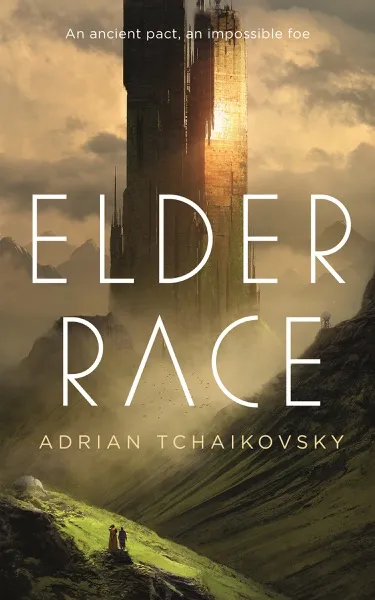
Elder Race Author: Adrian TchaikovskyPage Count: UnknownPublication Year: 2021-GB Adrian Tchaikovsky’s Elder Race is a masterclass in speculative fiction, a story that interrogates the nature of first contact, colonialism, and what it truly means to be civilized. Published in 2021, this novella—winner of the 2022 Hugo Award for Best Novella—packs the depth of an epic into a mere few hundred pages, weaving a narrative that is as intellectually rigorous as it is emotionally resonant. At its core, Elder Race explores the myth of progress and the arrogance of assuming our own enlightenment. The novel follows Nyr Illim Tevitch, a human scholar exiled to a distant planet to observe its civilization without interference. When the native Laini people—a species on the cusp of spaceflight—mistake him for one of their mythical "Elder Race" deities, Nyr is thrust into a role he never sought. The story’s genius lies in flipping the script on the classic "god among primitives" trope. Nyr is no omniscient savior; he’s a flawed, exhausted man, his knowledge of the Laini’s language and culture painfully incomplete. His struggle isn’t just to guide them—it’s to admit that he might not understand them at all. Tchaikovsky’s prose is sharp and unadorned, stripping away the romanticism of first contact to reveal something far more uncomfortable: the quiet violence of interference, even with the best intentions. The Laini, with their own myths and social structures, are not passive recipients of human wisdom. Their society is rich, their curiosity dangerous, and their willingness to challenge Nyr’s authority forces him to confront the limitations of his own civilization’s claims to superiority. The novella’s strength is in its refusal to offer easy answers. There are no heroes or villains here, just beings caught in the messy, unpredictable web of communication and misunderstanding. What makes Elder Race so compelling is Tchaikovsky’s ability to weave big ideas into intimate, human-scale drama. Nyr’s isolation is palpable—he’s a man who has spent years observing a culture he can never truly belong to, and now he’s forced to engage with it in the most personal way possible. The Laini’s perspective, though less central, is equally fascinating. Their religion, their politics, and their burgeoning science are all shaped by their encounter with Nyr, making the story a two-way mirror reflecting how contact with an "Elder Race" reshapes both parties. Tchaikovsky’s style is deceptively simple. He avoids ornate worldbuilding in favor of a tight, immersive focus on character and consequence. The world feels lived-in not because of excessive description, but because of the weight of Nyr’s choices and the reactions they provoke. The dialogue crackles with tension, each line a potential minefield of misinterpretation. When Nyr tries to explain scientific concepts to the Laini, the results are both hilarious and heartbreaking—proof that even the most advanced knowledge is useless without shared context. The novella’s ending is a masterstroke of ambiguity. Without spoiling anything, Tchaikovsky leaves the reader with a question that lingers long after the last page: Who is really being changed by this encounter? The answer isn’t a triumphant revelation or a tragic downfall, but something far more human—a recognition that progress isn’t a straight line, and that the most meaningful connections are those that force us to see ourselves as others do. Elder Race is a book that demands to be read slowly, savored not for its plot twists but for its quiet revelations. It’s a story about the dangers of assuming we know best, and the humbling truth that sometimes, the "primitive" culture holds more wisdom than the "advanced" one. In an era where first contact stories often default to either utopian wish-fulfillment or dystopian cautionary tales, Tchaikovsky carves out something far more rare and valuable: a tale of genuine mutual transformation. This is science fiction at its most essential—not as escapism, but as a mirror held up to our own assumptions, our own failures, and our fragile, stubborn hope that understanding is possible. #FirstContactStories #ColonialismInSF #HugoAwardWinner #AdrianTchaikovsky #SpeculativeFiction #ScienceFictionWithHeart Related InsightsBreaking the Dark Book Review and Summary No Longer Allowed In Another World Vol. 6 Book Review and Summary And If I Die Before I Wake: A Memoir Book Review and Summary{ "@context": "https://schema.org", "@type": "FAQPage", "mainEntity": [ { "@type": "Question", "name": "What is the main focus of Elder Race Book Review and Summary?", "acceptedAnswer": { "@type": "Answer", "text": "Everything you need to know about Elder Race with our detailed review." } }, { "@type": "Question", "name": "Who authored the comprehensive guide on Elder Race Book Review and Summary?", "acceptedAnswer": { "@type": "Answer", "text": "This detailed article and its insights were carefully researched and authored by Victoria Smith." } }, { "@type": "Question", "name": "Where can I find more related content about Books?", "acceptedAnswer": { "@type": "Answer", "text": "You can explore more articles, detailed reviews, and similar insights by browsing the Related Insights section at the bottom of this article or visiting our dedicated Books category page." } } ] }