Showing Posts From
England
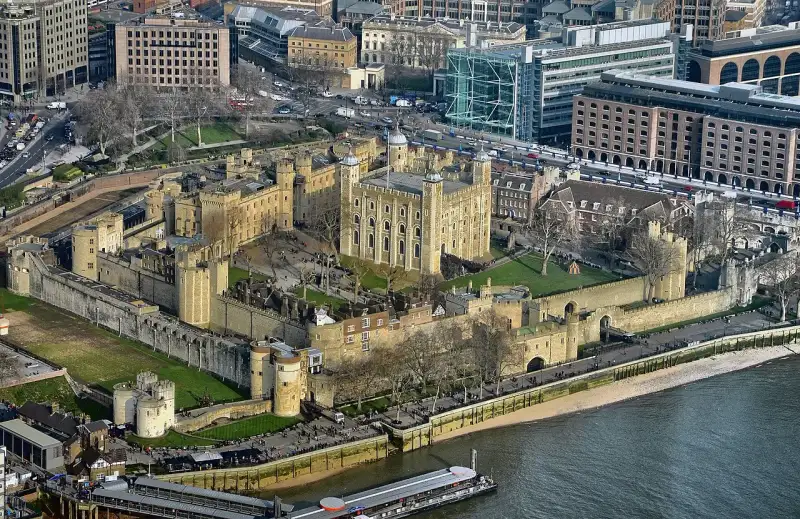

The Thames flows cold and dark beneath the imposing stone battlements of the Tower of London. For nearly a millennium, this colossal fortress has stood as a symbol of power, a repository of magnificent wealth, and, most chillingly, an inescapable prison. Its very foundations are steeped in the blood of traitors, queens, and innocent souls who found themselves on the wrong side of history. As the fog rolls off the river and engulfs the White Tower, one cannot help but feel the weight of centuries pressing down—a palpable atmosphere of sorrow, betrayal, and unspeakable terror. #TowerOfLondon #England #DarkHistory Welcome to the haunted heart of the British monarchy. I am Mark Dinn, and in this extensive journey into the shadows of the past, we will peel back the layers of time to uncover the chilling truths, the whispered legends, and the undeniable tragedies that have birthed the Ghosts of the Tower of London. #HistoricalFiction #MarkDinn The Architecture of Intimidation: A Fortress Born of Conquest When William the Conqueror ordered the construction of the White Tower in 1078, his purpose was singular and uncompromising: to dominate the recently subjugated people of London. Built of white stone imported from Caen in Normandy, it was a terrifyingly alien structure in a landscape of wooden buildings. It was not merely a castle; it was a physical manifestation of Norman supremacy. But as the centuries bled into one another, the Tower’s purpose mutated. It became a royal residence, an armory, a treasury, a menagerie, and eventually, the most feared prison in the realm. With every transformation, the walls absorbed the despair of its inhabitants. It is said that stones hold memories, and if that is true, the stones of the Tower of London possess the darkest memories in all of Europe. #MedievalArchitecture #WilliamTheConquerorThe White Tower: The central keep, originally a symbol of raw power, later a storehouse for weapons and a place of clandestine torture. The Traitor's Gate: The infamous water gate through which doomed prisoners entered, the slapping of the Thames against its steps the last sound of freedom they would ever hear. Tower Green: The secluded execution site reserved for those of noble or royal blood, sparing them the public spectacle of Tower Hill, yet offering no escape from the headsman's axe. The Bloody Tower: The very name evokes its grim history, the alleged site of one of the most heart-wrenching unsolved murders in English history.As we walk these ancient paths, we must remember that the ghosts we seek are not merely ethereal phantoms; they are the lingering echoes of real people, real suffering, and real betrayal. Let us delve into the stories of those who never truly left. #AncientHistory #HauntedPlaces The Princes in the Tower: Innocence Stolen in the Dark No mystery is more inextricably linked to the sinister reputation of the Tower than the fate of the two Princes. In the sweltering summer of 1483, twelve-year-old King Edward V and his nine-year-old brother, Richard, Duke of York, were lodged in the Tower. The ostensible reason was to prepare for young Edward's coronation. Their protector and uncle, Richard, Duke of Gloucester, assured the realm of their safety. Yet, as the days grew shorter, the boys were seen less and less frequently playing in the courtyards. Then, they vanished entirely. Gloucester, declaring the boys illegitimate, was crowned King Richard III. #WarOfTheRoses #RichardIII The silence that followed their disappearance was deafening. Whispers echoed through the halls of power, tales of midnight assassinations, of boys smothered in their sleep beneath heavy velvet pillows. Two centuries later, during the reign of Charles II, the bones of two children were discovered buried beneath a staircase in the White Tower. Were these the tragic princes? The world believes they were, though the absolute truth remains locked in the suffocating silence of the past. The Bloody Tower, where they were last seen, is a nexus of sorrowful energy. Yeoman Warders and visitors alike have reported seeing the apparitions of two small boys, dressed in nightshirts, clutching each other in terror. They appear fleetingly, their faces etched with the profound realization of their betrayal, before fading into the cold stone walls. They are the eternal victims of ambition, forever trapped in the fortress that was meant to protect them. #PrincesInTheTower #RoyalSecrets The Political Climate: A Cauldron of Paranoia To understand the tragedy of the Princes, one must understand the era. The Wars of the Roses had decimated the English nobility. Trust was a commodity rarer than gold, and the crown was a prize worth any sin. Richard III, whether a ruthless usurper or a victim of Tudor propaganda, operated in a world where preemptive murder was often considered a political necessity. The ghost of the Princes serve as a stark reminder of the cost of such ambition. Their spectral presence is a silent, unending accusation against the adults who failed them, a chilling testament to the ruthlessness of the medieval political machine. Anne Boleyn: The Headless Queen's Eternal Restlessness Of all the spirits said to wander the precincts of the Tower, none is more famous, nor more tragic, than Anne Boleyn. The second wife of King Henry VIII, her rise to power was meteoric, her fall devastating and swift. She was the woman for whom Henry broke with the Catholic Church, forever altering the course of English history. Yet, when she failed to provide the male heir Henry so desperately craved, and as his eye wandered to Jane Seymour, Anne's fate was sealed. #Tudors #AnneBoleyn #HenryVIII Accused of treason, adultery, and incest—charges engineered by the cunning Thomas Cromwell—Anne was imprisoned in the very apartments she had occupied before her triumphant coronation. The psychological torment must have been unbearable. The walls that once echoed with music and laughter now offered only the dreadful silence of impending doom. On May 19, 1536, Anne Boleyn was led to a scaffold on Tower Green. She faced her death with extraordinary courage and dignity, her final words praising the king who had ordered her execution. With a single, swift blow of a French swordsman's blade, her life was extinguished. But Anne, it seems, has never truly departed. Her ghost is the most frequently sighted apparition in the Tower. She is often seen near the site of her execution on Tower Green, sometimes appearing as a beautiful, melancholic figure, whole and intact. However, in more terrifying encounters, she is seen walking the corridors of the Queen's House or leading a spectral procession down the aisle of the Chapel Royal of St. Peter ad Vincula—her headless body carrying her severed head tucked beneath her arm. #GhostStories #HauntedHistory The Psychological Horror of the Fall Imagine the descent from absolute power to absolute helplessness. Anne Boleyn was a woman of fierce intellect and terrifying ambition. She understood the game of politics better than most men of her era. To find herself suddenly outmaneuvered, trapped in the web of a husband's changing affections and a minister's calculated cruelty, is a horror that transcends physical pain. Her restless spirit is a manifestation of unresolved injustice. The speed of her trial, the dubiousness of the evidence, and the brutal finality of the French sword created an emotional epicenter so powerful that it continues to ripple through time. She is the epitome of the Tower's duality: royal splendor immediately followed by bloody devastation. #TudorHistory #Betrayal The Brutality of the Rack: Whispers from the White Tower While Tower Green was reserved for quick, relatively clean executions of the elite, the depths of the White Tower and the subterranean dungeons were domains of unimaginable agony. The Tudor era, particularly the reigns of Henry VIII, Mary I, and Elizabeth I, saw the zenith of state-sanctioned torture. The Rack, the Scavenger's Daughter, and the Manacles were the tools of the trade, designed to extract confessions and break the spirit of religious and political dissidents. #Torture #DarkAges One of the most famous victims of the rack was Guy Fawkes, the conspirator behind the Gunpowder Plot of 1605. After days of excruciating torture, his signature on his confession was a barely legible scrawl, the desperate mark of a completely broken man. But while Fawkes's story is well known, hundreds of lesser-known individuals suffered similarly in the freezing, damp darkness. The ghosts here do not always appear in physical form; often, they manifest as sounds. Late at night, when the Tower is devoid of tourists, security guards and warders have reported hearing the echoing, agonizing screams of men and women being stretched beyond the limits of human endurance. The clanking of chains, the turning of heavy wooden gears, and the guttural moans of the dying seep from the ancient stones. It is as if the agony experienced in those rooms was so intense that it became permanently etched into the atmosphere itself. #GuyFawkes #TowerDungeons The Case of Thomas More and John Fisher Not all who suffered in the Tower yielded to torture. Sir Thomas More, the former Lord Chancellor, and Bishop John Fisher were men of unyielding faith. They refused to acknowledge Henry VIII as the Supreme Head of the Church of England. For their defiance, they were imprisoned in the Bell Tower and eventually executed. Fisher, old and frail, was so weakened by his imprisonment that he had to be carried to the scaffold. More famously declared himself "the King's good servant, but God's first." Their ghosts are said to walk the battlements near the Bell Tower, somber, quiet figures radiating a profound sense of peace—a stark contrast to the tormented souls that haunt the lower levels. They are the ghosts of conviction, spirits that found victory even in their execution. #ThomasMore #TudorEngland The Countess of Salisbury: The Most Gruesome Execution If there is one story that encapsulates the sheer, chaotic horror of Tudor executions, it is that of Margaret Pole, the Countess of Salisbury. She was a Plantagenet, one of the last surviving members of the royal line that preceded the Tudors. For Henry VIII, her very existence was a threat, a lingering shadow of the old regime. At the age of 67, she was condemned to death for treason, largely on fabricated charges. #Plantagenets #MargaretPole On May 27, 1541, she was brought to Tower Green. Unlike Anne Boleyn, Margaret Pole did not go quietly. She refused to lay her head on the block, arguing that she was no traitor. What followed was a butchery that shocked even the hardened citizens of Tudor London. The executioner was described as a "wretched and blundering youth." As the Countess refused to kneel, he began hacking at her shoulders and head as she attempted to flee around the scaffold. It reportedly took eleven agonizing blows before she finally succumbed to death. Her horrific end left a profound scar on Tower Green. Every year on the anniversary of her death, it is said that the phantom screams of the Countess can be heard echoing across the green. Some claim to have seen the spectral reenactment of the execution: a frantic, elderly woman pursued by an axe-wielding figure, her terrifying shrieks a chilling reminder of the utter ruthlessness of absolute power. This is not a peaceful ghost; this is a spirit trapped in an endless loop of panic and butchery. #GruesomeHistory #Macabre Arabella Stuart: Love, Madness, and the Queen's House Not all ghosts of the Tower were executed. Some were driven to madness by the sheer isolation and hopelessness of their confinement. Such was the tragic case of Lady Arabella Stuart. She was a cousin to King James I and, crucially, had a strong claim to the English throne. This made her a pawn in the dangerous game of succession, and her royal blood was her curse. #StuartDynasty #KingJamesI When she secretly married William Seymour, a man who also had royal connections, King James was furious. Seeing their union as a direct threat to his crown, he ordered them imprisoned. Arabella was sent to the Tower, while William was sent to another prison. They hatched a daring plot to escape and flee to France. William succeeded, but Arabella’s ship was captured just off the coast of Calais. She was returned to the Tower, never to see her husband again. Placed in the Queen's House, the realization of her permanent doom slowly unspooled her mind. She refused to eat, fell into deep depressions, and eventually died, allegedly of starvation, in 1615. The Queen's House, the half-timbered Tudor building that overlooks Tower Green, is now considered one of the most haunted buildings in England, and Arabella Stuart is its primary resident. Staff and visitors have reported feeling an overwhelming sense of sadness and anxiety in her former rooms. Doors open and close inexplicably, sudden drafts of freezing air sweep through the corridors, and the soft, mournful weeping of a woman is often heard in the dead of night. She is the ghost of broken hearts and shattered dreams, a prisoner of love in a fortress of stone. #HauntedPlaces #TragicLove The Menagerie: The Spectral Bears of the Martin Tower It is easy to forget that the Tower of London was not only a prison for humans. For six centuries, it housed the Royal Menagerie. Lions, leopards, elephants, polar bears, and exotic birds were kept in cramped, unsuitable conditions, symbols of the monarch's wealth and global reach. The suffering of these animals was immense, and it seems their spirits, too, have lingered. #RoyalMenagerie #HistoryOfLondon The most famous animal ghost story centers around the Martin Tower. In 1816, a guard named Edmund Lombe was on night duty. The story goes that he saw a massive, terrifying shape emerging from the shadows of a doorway—a gigantic spectral bear. Panicking, Lombe thrust his bayonet at the beast, only for the weapon to pass straight through it and strike the solid stone doorframe behind. The shock was so immense that Lombe collapsed. He was found the next morning in a state of delirium and died a few days later, quite literally frightened to death. To this day, the area around the Martin Tower is avoided by guards who know the history, fearful of encountering the ghostly remnants of the magnificent beasts that suffered and died within the Tower’s walls. #GhostBear #Paranormal The Yeoman Warders: Guardians of the Ghosts The true keepers of the Tower's secrets are the Yeoman Warders, the iconic Beefeaters. These men and women, all former military personnel, live within the walls of the fortress. They are the daily witnesses to the residual energy of the past. Their tales are not spun for tourists; they are quiet conversations held in the pub within the Tower walls, stories of inexplicable phenomena that challenge their deeply ingrained, pragmatic military mindsets. #Beefeaters #TowerGuardsThe Scent of Perfume: In the corridors of the White Tower, a sudden, overpowering scent of expensive, old-fashioned perfume often precedes a dramatic drop in temperature. Many believe this is the lingering essence of a royal lady, perhaps Queen Katherine Howard, another of Henry's wives executed on the Green. The Unseen Hands: Warders locking up the smaller towers at night frequently report the sensation of being shoved or having their shoulders grabbed by unseen hands. Some refuse to enter certain rooms alone. The Marching Boots: In the dead of winter, when the grounds are covered in snow, the distinct crunching of marching boots can be heard on the battlements, yet there are no footprints left behind. It is the spectral guard, forever walking the perimeter.These accounts, coming from individuals trained to be observant and rational, lend a chilling credibility to the legends. The Tower is not a dead monument; it is an active, pulsing environment where the veil between the past and present is terrifyingly thin. #ParanormalInvestigation #Hauntings The Legacy of the Stones Why do the ghosts of the Tower of London endure? Perhaps it is because the emotions experienced within these walls—the terror, the despair, the betrayal, and the agony—were so intense that they burned themselves into the very fabric of the environment. The Tower is a battery charged with a millennium of human suffering. #HistoryUncovered #TrueHistory Every execution, every confession extracted on the rack, every tear shed in solitary confinement added another layer to the psychic atmosphere of the fortress. When we walk through the Traitor's Gate or stand on Tower Green, we are not just observing history; we are wading through the emotional residue of the most dramatic moments in the English story. The Ghosts of the Tower of London are not meant to frighten us, though they often do. They are meant to remind us. They are historical anchors, forcing us to acknowledge the bloody cost of power and the fragility of justice. They compel us to remember the names of Anne Boleyn, Margaret Pole, the Princes, and the countless nameless souls whose blood washed the cobblestones. As the sun sets over the Thames and the ravens settle into their roosts, the tourists depart, and the massive wooden gates are locked. The Tower of London returns to the darkness. And in that darkness, the kings, queens, traitors, and innocents rise again, condemned to forever walk the corridors of the fortress that was both their palace and their tomb. The past is never truly dead. In the Tower of London, it isn't even past. It is right beside you, breathing cold air down your neck in the shadows of the Bloody Tower. #LondonHistory #SpookyStories #MarkDinnFictionMark Dinn is a critically acclaimed author of historical fiction, known for his immersive, deeply researched narratives that breathe life into the darkest and most dramatic chapters of history. Follow him for more explorations into the shadows of the past. #AuthorLife #HistoricalWriting #History #England Related InsightsThe Fall of the Spanish Armada: The Sea Battle That Changed History The Secrets of the Colosseum: Surviving Rome's Bloody Arena The Great Pyramid of Giza: A Timeless Monument to Human Ingenuity{ "@context": "https://schema.org", "@type": "FAQPage", "mainEntity": [ { "@type": "Question", "name": "What is the main focus of Ghosts of the Tower of London: Betrayal, Blood, and Royal Secrets?", "acceptedAnswer": { "@type": "Answer", "text": "A dramatic deep dive into Ghosts of the Tower of London: Betrayal, Blood, and Royal Secrets. Mark Dinn explores the untold history, drama, and legacy of this fascinating subject." } }, { "@type": "Question", "name": "Who authored the comprehensive guide on Ghosts of the Tower of London: Betrayal, Blood, and Royal Secrets?", "acceptedAnswer": { "@type": "Answer", "text": "This detailed article and its insights were carefully researched and authored by Mark Dinn." } }, { "@type": "Question", "name": "Where can I find more related content about History?", "acceptedAnswer": { "@type": "Answer", "text": "You can explore more articles, detailed reviews, and similar insights by browsing the Related Insights section at the bottom of this article or visiting our dedicated History category page." } } ] }