Showing Posts From
Europeanhistory
-
 John Explorer
 - 27 May, 2026 11:45
Whispers in the White Gold Mountains: Tracing Austria's Forgotten Salt Smugglers
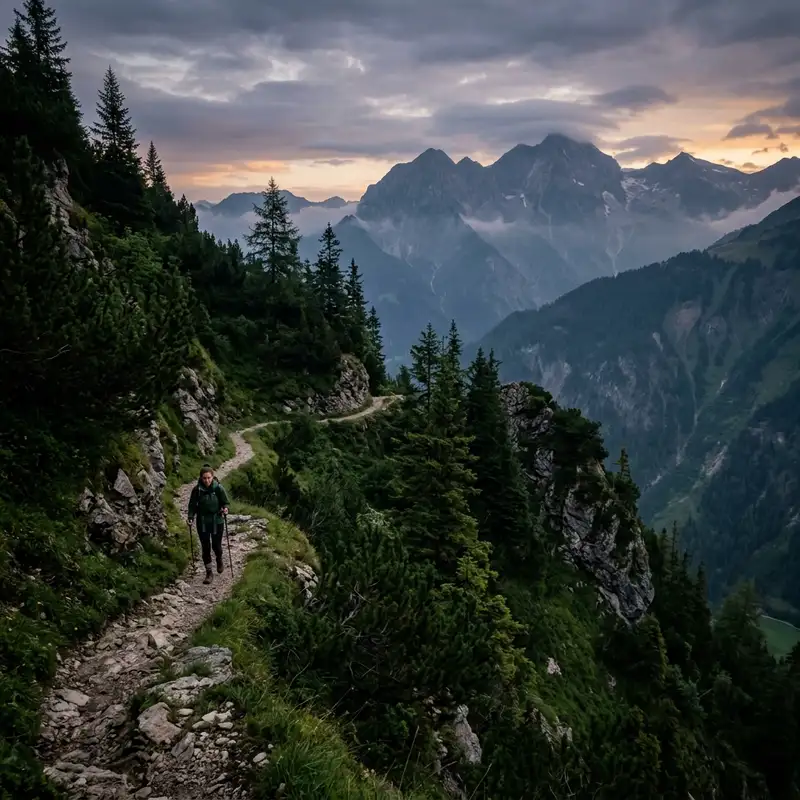
"Whispers in the White Gold Mountains: Tracing Austria's Forgotten Salt Smugglers" The taste wasn't on my tongue, but in the air itself – a subtle, #ancient minerality that seemed to cling to the damp rock faces of the Salzkammergut. It wasn't the sharp tang of the sea, nor the clean bite of a fresh Alpine breeze. This was something else, something primal and deeply rooted, a ghost of an industry that built empires and fueled clandestine journeys through these very mountains. For years, I’ve trekked across continents, seeking out the edges of the map, the stories untold, the cultures teetering on the brink of obscurity. But few quests have pulled at me with the same quiet, insistent gravity as the one that led me here, to the forgotten high passes and shadowed valleys of Austria, in search of what locals sometimes still refer to as the Schattenwanderer – the Shadow Walkers. My obsession began not with a grand discovery, but with a footnote. Buried deep within a dusty, century-old ethnographic text about Alpine folk traditions, a single paragraph spoke of a network of illicit salt trails, secret routes used by daring men and women to bypass the rigid salt monopolies of the Habsburg #empire. These weren't the famed salt mines of Hallstatt, whose #history is rightly celebrated. No, these were the arteries of a black market, pathways etched by desperation and ingenuity, connecting remote hamlets and mountain hideaways. It was a narrative of economic survival against overwhelming odds, a tale of ordinary people transformed into daring outlaws by the sheer necessity of survival. The idea that such an intricate, hidden world existed beneath the polished veneer of Austria’s postcard-perfect landscapes was irresistible. I had to find it. The Genesis of White Gold: Beyond the Famous Mines Salt, in bygone eras, was more than a condiment; it was currency, a preservative, a political tool, and a source of immense power. The Salzkammergut region of Austria, with its dramatic lakes and towering peaks, sits atop some of the richest salt deposits in Europe. For millennia, from the Bronze Age Celts to the mighty Habsburgs, this 'white gold' fueled prosperity. Hallstatt, a #UNESCO World Heritage site, is perhaps the most famous testament to this legacy, boasting the world's oldest salt mine, a place where humans have extracted salt for over 7,000 years. Its history is a well-trodden path for tourists, and rightly so. But my #journey was not about the official narrative, the sanctioned industry. It was about the periphery, the cracks in the system, the ingenious ways people resisted control. The salt monopoly, especially under the Habsburgs, was absolute and lucrative. Salt was produced and sold by the state, often at exorbitant prices. For remote farming communities, geographically isolated and often impoverished, accessing affordable salt – essential for preserving meat, flavoring food, and even for their livestock – was a constant struggle. This economic squeeze created the perfect breeding ground for Salzschmuggler – salt smugglers. They weren't criminals in the common sense, but often respected members of their communities, driven by a primal need to provide for their families. Their routes skirted official checkpoints, traversed treacherous glaciers and hidden ravines, and often involved intricate systems of lookouts and coded messages. It was a clandestine world, woven into the very fabric of Alpine life, yet deliberately erased from mainstream history. My initial research was frustratingly vague. Local archives held scant records – authorities were more interested in catching smugglers than documenting their methods or routes. Oral histories were fragmented, whispered fragments from elderly villagers whose grandparents had hinted at such activities. But the mountains themselves, I believed, held the truest archives. The barely visible paths, the weathered markers, the strategically placed ruins of forgotten shelters – these were the breadcrumbs I sought. Echoes in the Peaks: The Shadow Paths of the Schattenwanderer My quest began in Bad Ischl, a town famed for its imperial connections, yet nestled at the heart of the Salzkammergut. From there, I ventured into smaller, lesser-known valleys – Gosau, Abtenau, the remote corners of the Dachstein region. It quickly became clear that these weren't simple, straightforward trails. They were often animal tracks, old shepherd's paths, or routes deliberately chosen for their difficulty and invisibility. They snaked up near-vertical rock faces, traversed icy scree slopes, and plunged through dense, sunless forests where the trees grew so thick, it felt like walking through the belly of a beast. Imagine the Schattenwanderer – often solitary, sometimes in small, tight-knit groups – carrying sacks of precious, illicit salt, sometimes weighing over 50 kilograms. They moved under the cloak of darkness, by moonlight or the faint glow of a storm lantern, their only companions the howling wind and the rustling of unseen creatures. Their attire would have been simple woolens, leather boots worn smooth from countless ascents and descents, their faces weathered and etched with a mix of defiance and weariness. They knew every rock, every crevice, every shift in the mountain's mood. A sudden storm, a wrong step, or the unexpected patrol of a Salzaufseher (salt warden) could mean the difference between a successful run and a frozen grave, or worse, imprisonment and a harsh sentence. I spent days, then weeks, retracing what I believed to be segments of these trails. Guided by subtle topographical clues, vague descriptions from old maps that were not salt maps but general regional surveys (and thus overlooked by officialdom), and the occasional, almost accidental discovery of an old, hand-carved way marker, I slowly began to piece together a fragmented network. One particular section, a perilously narrow path winding along a sheer cliff face high above the Gosausee, known locally as the 'Teufelsleiter' (Devil's Ladder), offered a visceral understanding of the risks. It was a path that demanded absolute focus, one misstep a plunge into the turquoise depths below. Why would anyone choose such a route? Only if the alternative – capture – was far worse. Life Under the Salt’s Shadow: Villages and Vigilantes The impact of the salt monopoly and the subsequent smuggling rings permeated every aspect of village life. Farmers often doubled as smugglers, their agrarian rhythms providing cover for nocturnal expeditions. Innkeepers might offer clandestine rooms for exhausted Schattenwanderer or act as middlemen for the 'white gold'. Even local priests might turn a blind eye, understanding the desperation of their flock. This wasn't a world of clear-cut good and evil; it was a complex tapestry of survival. In one tiny hamlet, nestled in a valley that time seemed to have forgotten, I met an elderly woodcarver named Franz. His family had lived in the region for generations, and his great-grandfather, he admitted with a twinkle in his eye, "knew the mountains like the back of his hand, especially at night." Franz spoke of secret signals – a specific birdsong, a light flickered thrice from a distant peak – used to warn of approaching wardens. He described hidden caches where salt could be stored, often natural caves or cleverly disguised hollows in ancient trees. He even showed me a curious, rough-hewn wooden tool, almost like a small grappling hook, used, he said, to scale difficult rock faces or aid in carrying sacks over treacherous terrain. This was the first tangible artifact I’d seen related to the Schattenwanderer, a silent testament to their ingenuity.The salt wardens themselves, the Salzaufseher, were often local men, caught between duty and community. Their task was unenviable: to enforce the emperor's law against their own neighbors. Stories abound of cat-and-mouse chases across the mountains, of cunning evasions and narrow escapes. But also of quiet understandings, of wardens who, perhaps, took a little too long to check a certain path, or whose eyesight was a little less sharp on a moonless night, allowing a weary Schattenwanderer to slip through. The line between hunter and hunted was often blurred by shared hardship and a deep understanding of the mountains. I also learned about the ingenious ways salt was disguised. Sometimes it was pressed into cakes and hidden within bales of hay or timber. Other times, it was dissolved in water, transported in barrels ostensibly filled with wine or water, and then recrystallized later. The creativity born out of necessity was astounding, a testament to the human spirit's ability to adapt and overcome. These were not merely acts of defiance; they were acts of economic rebellion, a silent war waged by the common folk against an oppressive system. A Modern Day Pilgrimage: My Journey into the Past My personal journey tracing these phantom trails became a meditative, often grueling, pilgrimage. It wasn't about covering vast distances at speed, but about slowing down, observing, and listening to the whispers of the past. I spent nights in remote, simple mountain huts, the kind accessible only by foot, where the only sounds were the wind and the distant chime of cowbells. I drank from icy glacial streams, feeling a connection to those who had relied on these same waters centuries ago. One particularly poignant moment came on a high pass between the Wolfgangsee and the Postalm, a route Franz had vaguely described as "a shortcut, but only if you knew the stones." The path was barely discernible, overgrown with alpine flora, but occasionally, I’d spot a pile of stones that felt deliberately placed, not natural. As I paused, catching my breath, a profound sense of respect washed over me. I wasn't just walking a trail; I was walking through history, stepping in the very footsteps of desperate men and women. The physical exertion – the burning lungs, the aching muscles – wasn't a deterrent, but a bridge, connecting me to their struggles. It stripped away the comfortable veneer of modern #travel and left me with a raw, authentic appreciation for their resilience. I learned to read the landscape in a new way: not just for beauty, but for clues. A subtly flattened patch of earth might have been a temporary camp. A cluster of ancient larches might have offered cover for a quick rest. The mountains, with their stoic silence, held countless secrets, patiently waiting for someone to observe, to listen. The crisp, clean air that filled my lungs felt imbued with stories, with the echoes of hushed conversations, the scrape of leather boots on rock, the hurried beat of desperate hearts. This wasn't a journey of grand archaeological digs or spectacular ruins. It was a journey of inference, of piecing together fragments, of imagining the lives lived on these harsh, #beautiful slopes. It taught me the value of unwritten history, the narratives that exist outside official records, preserved instead in the land itself and in the collective memory of a people. The Taste of History: Preserving the White Gold's Legacy Today, the salt monopoly is long gone, and the Schattenwanderer are ghosts in the annals of local folklore. The mines are tourist attractions, and salt is a commonplace grocery item. Yet, the legacy of these hidden trails and the people who trod them remains vital. It's a reminder that history isn't just about kings and battles, but about the everyday struggles of ordinary people, their resourcefulness, and their quiet defiance. My expedition revealed that while the specific routes are largely forgotten, some elements of the Schattenwanderer spirit persist. In remote Alpine huts, I still found hearty, heavily salted dishes – a nod to the past, perhaps. In the direct, resilient gaze of the mountain folk, I saw glimmers of the independence and fortitude that must have defined their smuggling ancestors. There's a subtle pride in their voices when they speak of their family's deep roots in the mountains, a hint of unspoken knowledge about what their forefathers truly did. For me, this journey was a profound lesson in perspective. It underscored the fact that true exploration isn't always about venturing to the farthest corners of the earth, but sometimes about looking closer, digging deeper into the familiar, and uncovering the hidden layers beneath. The Austrian Alps, so often celebrated for their majestic beauty and winter sports, hold another, quieter narrative – one of human struggle, ingenuity, and a defiant spirit, etched in rock and carried on the wind. To walk these hidden salt trails is to engage in an act of historical empathy, to imagine the cold sweat, the burning muscles, the constant fear of discovery, and the profound relief of a successful run. It's to appreciate the simple value of a commodity we now take for granted, and to honor the memory of those who risked everything for a pinch of white gold. The whispers in the mountains are fading, but for those willing to listen, the stories of the Schattenwanderer still resonate, a powerful echo of a past that shaped the very soul of these magnificent Alps. #AustriaTravel #HiddenGems #SaltTrails #EuropeanHistory #AdventureTravel