Showing Posts From
Ficciones
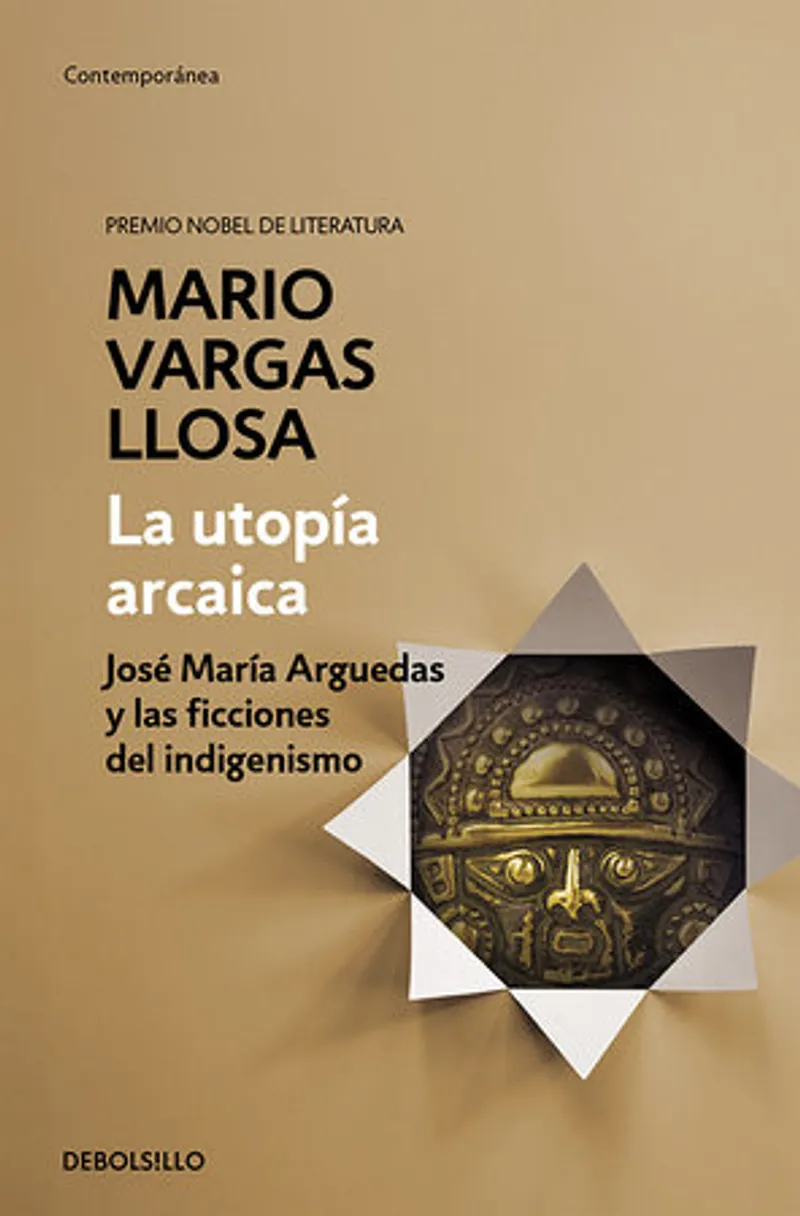
La utopía arcaica: José María Arguedas y las ficciones del indigenismo / The Archaic Utopia. José Maria Arguedas and the Indigenists Fiction Author: Mario Vargas LlosaPage Count: UnknownPublication Date: 2024-PRH The Archaic Utopia: Vargas Llosa’s Unflinching Elegy for a Literary Martyr Mario Vargas Llosa’s The Archaic Utopia is not merely a biography or a literary critique—it is a posthumous reckoning, a dissection of genius sacrificed to ideology, and a meditation on the tragic collision between art and politics. At its core, this book is a eulogy for José María Arguedas, the Peruvian novelist whose life and work embodied the contradictions of Latin America’s indigenist movement. But it is also a mirror held up to Vargas Llosa himself, reflecting the uneasy tension between his own literary ideals and the ideological currents that shaped—and ultimately broke—Arguedas. Vargas Llosa’s fascination with Arguedas is deeply personal. He does not approach his subject with detached academic rigor but with the intimacy of a fellow writer who recognizes both the brilliance and the fragility of a kindred spirit. Arguedas, as Vargas Llosa portrays him, was a man of two worlds: a mestizo who straddled the divide between indigenous and Western cultures, a scholar who felt the weight of Peru’s colonial scars, and a revolutionary who believed literature could be a weapon for social change. Yet, as Vargas Llosa argues, this duality was also Arguedas’ undoing. His immersion in both cultures made him a "displaced" figure—a man who could never fully belong to either, whose soul was perpetually torn between the lyrical beauty of his native Quechua-infused prose and the rigid demands of Marxist indigenism. The book’s title, The Archaic Utopia, is telling. For Vargas Llosa, Arguedas’ indigenism was not just a political stance but a romanticized fantasy—a yearning for a pre-Columbian purity that never truly existed. Arguedas’ novels, such as Los ríos profundos and Todas las sangres, are celebrated for their poetic evocation of Andean life, but Vargas Llosa critiques them as relics of a utopian dream, a literary attempt to resurrect a mythic past that could never be reconciled with the messy, violent reality of Peru. In this sense, Arguedas’ tragedy was that he became a prisoner of his own idealism, sacrificing his artistic freedom on the altar of revolutionary fervor. Vargas Llosa’s prose is, as always, razor-sharp and uncompromising. He writes with the precision of a surgeon, dissecting Arguedas’ life and work with clinical detachment, yet the emotional undercurrent is undeniable. There is a palpable sense of sorrow in his words, a mourning not just for Arguedas’ suicide in 1969 but for the loss of a literary voice that could have soared higher had it not been shackled by ideology. Vargas Llosa does not dismiss Arguedas’ political commitments outright—he acknowledges their sincerity—but he laments the way they constrained his art. "He could have been greater," Vargas Llosa seems to say, "if only he had trusted his own genius instead of bending to the expectations of his time." What makes The Archaic Utopia so compelling is its refusal to offer easy answers. Vargas Llosa does not condemn Arguedas as a naive idealist, nor does he lionize him as a martyr of the left. Instead, he presents a nuanced portrait of a man whose greatest strength—his empathy—was also his fatal flaw. Arguedas’ inability to reconcile the contradictions of his identity led him to a place of despair, where the weight of his own contradictions became unbearable. In this, Vargas Llosa draws a parallel to his own life, where his early flirtations with Marxism gave way to a more skeptical, liberal worldview. The difference, perhaps, is that Vargas Llosa survived his ideological battles; Arguedas did not. The book is also a masterclass in biographical writing. Vargas Llosa weaves together history, anthropology, and literary analysis to create a rich tapestry of Peru in the mid-20th century. He situates Arguedas within the broader context of Latin American indigenism, comparing him to figures like Ciro Alegría and Manuel Scorza, while also contrasting his lyrical style with the more militant prose of his contemporaries. The result is a portrait that feels both intimate and expansive, a biography that transcends the personal to become a meditation on the role of the artist in a polarized world. Ultimately, The Archaic Utopia is a book about the cost of conviction. Arguedas believed in the power of literature to change the world, but in the end, the world changed him—until there was no room left for the man who had once dreamed of harmony between cultures. Vargas Llosa, ever the skeptic, seems to ask: Was it worth it? Was the sacrifice of his art justified by the political cause he championed? The answer, as with most things in life, is complicated. But what is undeniable is the power of Vargas Llosa’s prose, which elevates this book from a mere critique to a haunting elegy for a lost literary soul. #VargasLlosa #Arguedas #Indigenismo #LatinAmericanLiterature #LiteraryCriticism #PeruvianLiterature Related InsightsThe Steel Prince, The Rebel Army Book Review and Summary Hollywood, Ending Book Review and Summary El color púrpura / The Color Purple Book Review and Summary{ "@context": "https://schema.org", "@type": "FAQPage", "mainEntity": [ { "@type": "Question", "name": "What is the main focus of Ficciones Book Review and Summary?", "acceptedAnswer": { "@type": "Answer", "text": "Everything you need to know about Ficciones with our detailed review." } }, { "@type": "Question", "name": "Who authored the comprehensive guide on Ficciones Book Review and Summary?", "acceptedAnswer": { "@type": "Answer", "text": "This detailed article and its insights were carefully researched and authored by Jorge Luis Borges." } }, { "@type": "Question", "name": "Where can I find more related content about Books?", "acceptedAnswer": { "@type": "Answer", "text": "You can explore more articles, detailed reviews, and similar insights by browsing the Related Insights section at the bottom of this article or visiting our dedicated Books category page." } } ] }