Showing Posts From
Foundation
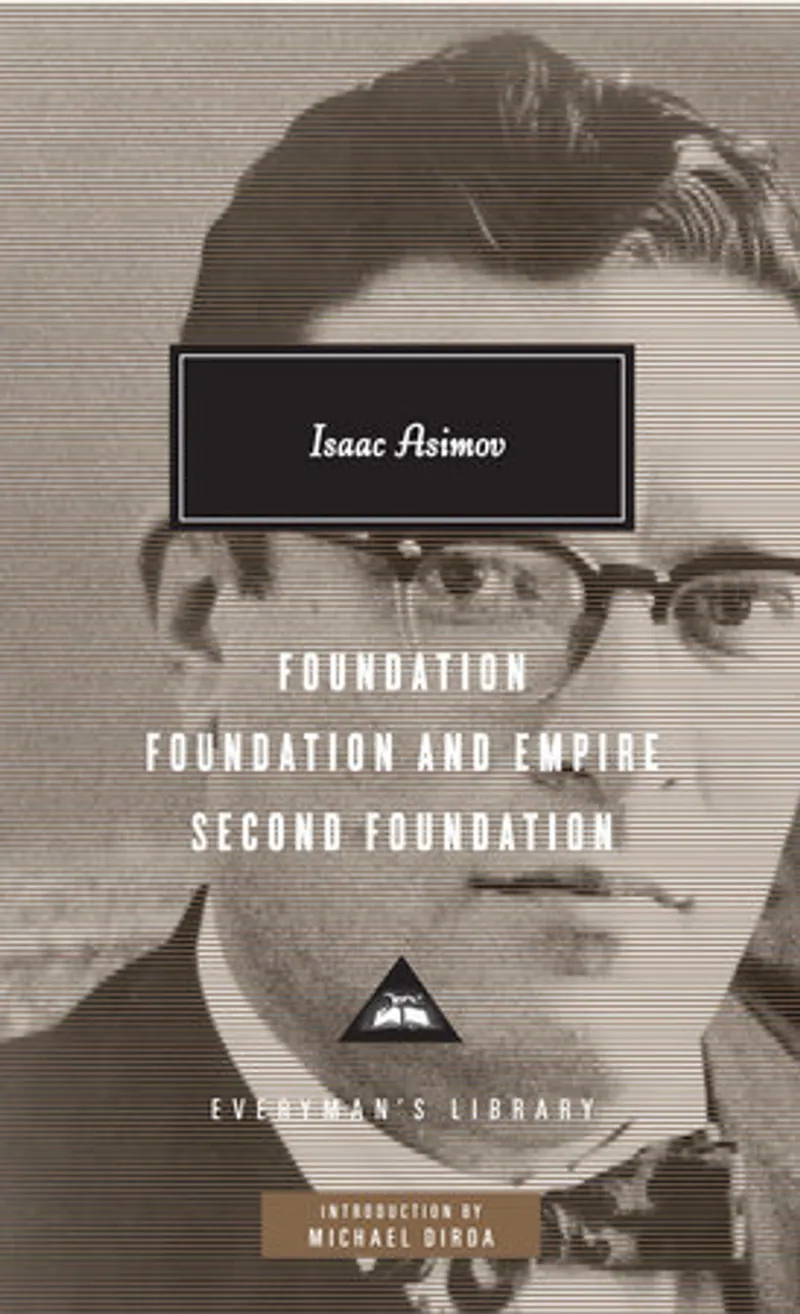
Foundation, Foundation and Empire, Second Foundation Author: Isaac AsimovPage Count: UnknownPublication Date: 2010-PRH Isaac Asimov’s Foundation trilogy is a masterpiece of speculative fiction, a sweeping epic that redefined the boundaries of science fiction by blending grand historical vision with the precision of mathematical prophecy. More than just a tale of empires and collapse, it is a meditation on the fragility of civilization and the enduring power of ideas. At its core, the trilogy explores the tension between inevitability and human agency—can the tides of history be bent, or are we doomed to repeat the same cycles of rise and fall? Asimov answers with a resounding yes, but only through the cold, unfeeling calculus of psychohistory, a science that predicts the future with the inevitability of a falling star. The story begins with Foundation, where Hari Seldon, a mathematician of unparalleled insight, foresees the imminent collapse of the Galactic Empire—a sprawling, decadent civilization that has ruled for twelve thousand years. Rather than futilely resist the coming dark age, Seldon devises a plan to shorten its duration from thirty thousand years to just one. He establishes two Foundations at opposite ends of the galaxy, populated by the brightest minds, tasked with preserving knowledge and accelerating the rebirth of civilization. The first Foundation, located on the remote planet Terminus, is a fragile experiment in controlled evolution, where science and religion will merge to guide humanity through the chaos. Asimov’s genius lies in his ability to make the abstract feel tangible. Psychohistory is not just a plot device; it is a fully realized concept, a fusion of sociology, statistics, and mathematics that operates like a cosmic clockwork. The Foundation’s survival hinges on Seldon’s calculations, but the real drama unfolds in the gaps—where human ambition, ego, and unpredictability threaten to derail even the most meticulous plans. The first book follows the Foundation’s early struggles as it navigates political intrigue, religious manipulation, and the first cracks in Seldon’s grand design. Asimov’s prose is lean and efficient, devoid of unnecessary ornamentation, yet it crackles with tension as each crisis unfolds with the inevitability of a Greek tragedy. Foundation and Empire escalates the stakes, introducing two formidable threats to Seldon’s plan. The first is the Mule, a mutant with the power to alter the emotions of entire populations, a wildcard that psychohistory cannot account for. The Mule’s rise shatters the illusion of inevitability, forcing the Foundation to confront the limits of Seldon’s science. The second threat is the Empire itself, now in its death throes, its decay accelerating as internal strife and external pressures push it toward collapse. Asimov masterfully weaves these threads together, showing how even the most brilliant plans can unravel when faced with the unpredictable nature of human nature. The final installment, Second Foundation, is where Asimov’s intellectual audacity truly shines. The mystery of the Second Foundation’s location becomes a puzzle that forces readers—and the characters—to question everything they thought they knew. Is the Second Foundation a hidden cabal of mentalics, or is it something far more insidious? Asimov plays with perspective, subverting expectations and delivering a climax that is as intellectually satisfying as it is narratively thrilling. The trilogy’s resolution is not just about saving civilization; it’s about redefining what civilization means in the face of an uncertain future. Asimov’s style is deceptively simple, yet it carries a weight that lingers long after the last page. His dialogue is sharp and purposeful, his world-building expansive yet grounded in plausible science. He avoids the pitfalls of excessive exposition, trusting the reader to piece together the implications of psychohistory and the Foundation’s role in the grand scheme. The result is a narrative that feels both intimate and epic, where the fate of millions hinges on the decisions of a few. The Foundation trilogy is more than a story; it is a philosophical inquiry into the nature of progress, power, and human resilience. It asks whether we are mere pawns of history or architects of our destiny. Asimov’s answer is a resounding both—and neither. The Foundation endures not because its plans are flawless, but because its people adapt, improvise, and ultimately prove that even in the darkest ages, the light of knowledge can never be fully extinguished. For anyone who has ever wondered about the rise and fall of civilizations, or who seeks a science fiction saga that challenges the mind as much as it entertains, Asimov’s Foundation is essential reading. It is a testament to the power of ideas—and the enduring human spirit that refuses to be confined by them. #AsimovFoundation #ScienceFictionClassic #Psychohistory #GalacticEmpire #SciFiEpic #FoundationTrilogy Related InsightsDracula Book Review and Summary Island of the Blue Dolphins Book Review and Summary Broken Throne Book Review and Summary{ "@context": "https://schema.org", "@type": "FAQPage", "mainEntity": [ { "@type": "Question", "name": "What is the main focus of Foundation Book Review and Summary?", "acceptedAnswer": { "@type": "Answer", "text": "Everything you need to know about Foundation with our detailed review." } }, { "@type": "Question", "name": "Who authored the comprehensive guide on Foundation Book Review and Summary?", "acceptedAnswer": { "@type": "Answer", "text": "This detailed article and its insights were carefully researched and authored by Isaac Asimov." } }, { "@type": "Question", "name": "Where can I find more related content about Books?", "acceptedAnswer": { "@type": "Answer", "text": "You can explore more articles, detailed reviews, and similar insights by browsing the Related Insights section at the bottom of this article or visiting our dedicated Books category page." } } ] }