Showing Posts From
Fourteen days
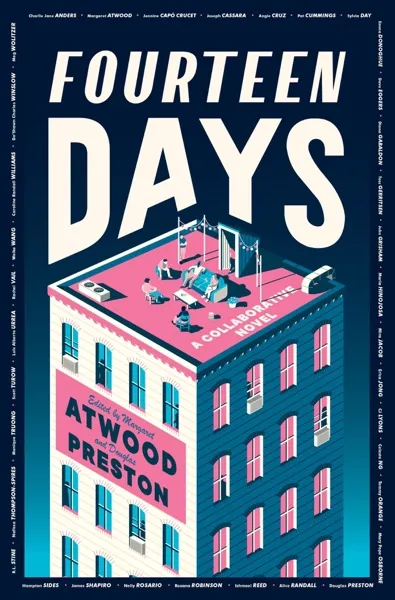
Fourteen Days Author: Margaret AtwoodPage Count: UnknownPublication Year: 2022-GB Fourteen Days: Margaret Atwood’s Masterful Satire of Human Nature in Crisis Margaret Atwood has long been a literary force, crafting dystopian worlds that feel eerily plausible and stories that linger long after the last page. With Fourteen Days, she delivers another triumph—a novel that blends sharp social commentary with dark humor, all while exploring the fragility of human connection in the face of catastrophe. Set against the backdrop of a pandemic-stricken New York City, this book isn’t just a pandemic novel; it’s a mirror held up to society, reflecting our fears, hypocrisies, and unexpected acts of kindness. At its core, Fourteen Days is a character-driven ensemble piece, bringing together a diverse cast of New Yorkers who find themselves quarantined in a high-rise apartment building. The narrative unfolds over two weeks, a compressed timeline that heightens tension and forces characters into close quarters—both literally and emotionally. Atwood excels at creating flawed, deeply human characters, each representing different facets of society. There’s the idealistic young writer, the cynical journalist, the elderly woman clinging to memories of a bygone era, and the conspiracy theorist whose paranoia grows with every passing day. Their interactions are fraught with conflict, but also moments of unexpected solidarity, making the story feel both painfully real and darkly comedic. One of the novel’s most compelling themes is the erosion of trust in times of crisis. Atwood doesn’t shy away from depicting how fear can bring out the worst in people—hoarding, suspicion, and self-preservation at all costs. Yet, she also highlights the resilience of the human spirit, showing how strangers can become allies when faced with shared adversity. The building itself becomes a microcosm of society, with its own hierarchies, power struggles, and quiet acts of heroism. It’s a brilliant narrative device that allows Atwood to dissect societal issues without ever feeling preachy. Atwood’s writing style in Fourteen Days is as sharp and incisive as ever. Her prose is economical yet rich with detail, painting vivid scenes that immerse the reader in the claustrophobic reality of lockdown life. The dialogue crackles with wit and tension, revealing character motivations in every exchange. There’s a dark humor that permeates the story, a testament to Atwood’s ability to find levity even in the bleakest situations. Her use of irony and satire is particularly effective, skewering everything from media sensationalism to the performative activism of the privileged. What makes Fourteen Days stand out is its refusal to offer easy answers. Atwood doesn’t provide a neat resolution or a tidy moral lesson—instead, she leaves the reader with more questions than answers, challenging them to reflect on their own responses to crisis. The novel’s open-ended nature is both frustrating and brilliant, mirroring the uncertainty of real-life pandemics and societal upheavals. For fans of Atwood’s work, Fourteen Days will feel like a natural evolution of her themes, blending the speculative with the contemporary. For newcomers, it’s a masterclass in how to write a pandemic novel that transcends the genre, offering something far more profound. Whether you’re drawn to its social commentary, its rich characterizations, or its biting humor, this book is a must-read. Margaret Atwood has once again proven why she remains one of the most vital voices in literature today. Fourteen Days isn’t just a story about a building under quarantine—it’s a story about humanity itself, and the choices we make when the world feels like it’s falling apart. #MargaretAtwood #FourteenDays #LiteraryFiction #PandemicNovel #BookReview Related InsightsCity of God Book Review and Summary Sweet Vengeance (The Calder Academy, #3) Book Review and Summary If We Were Villains Book Review and Summary{ "@context": "https://schema.org", "@type": "FAQPage", "mainEntity": [ { "@type": "Question", "name": "What is the main focus of **Fourteen Days** Book Review and Summary?", "acceptedAnswer": { "@type": "Answer", "text": "Everything you need to know about **Fourteen Days** with our detailed review." } }, { "@type": "Question", "name": "Who authored the comprehensive guide on **Fourteen Days** Book Review and Summary?", "acceptedAnswer": { "@type": "Answer", "text": "This detailed article and its insights were carefully researched and authored by Emma Thompson." } }, { "@type": "Question", "name": "Where can I find more related content about Books?", "acceptedAnswer": { "@type": "Answer", "text": "You can explore more articles, detailed reviews, and similar insights by browsing the Related Insights section at the bottom of this article or visiting our dedicated Books category page." } } ] }