Showing Posts From
Frankenstein the 181
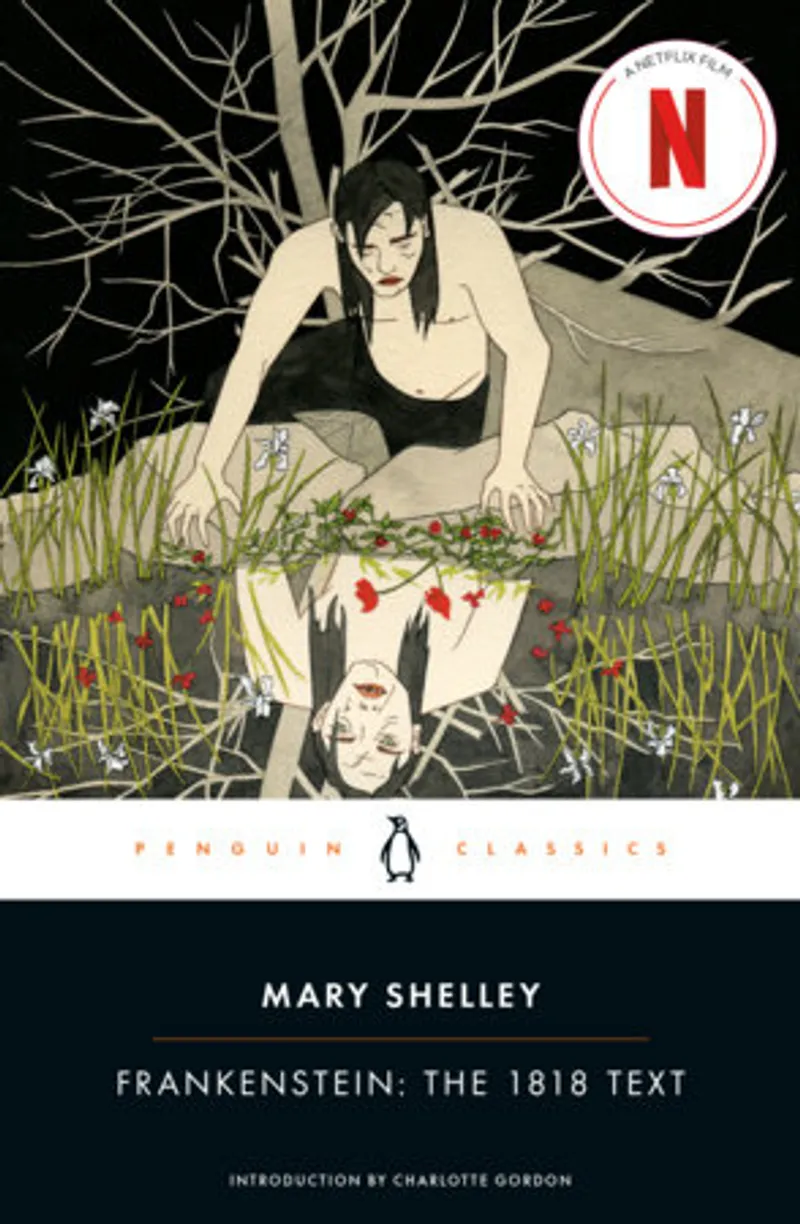
Frankenstein: The 1818 Text Author: Mary ShelleyPage Count: UnknownPublication Date: 2018-PRH Mary Shelley’s Frankenstein: The 1818 Text is not merely a gothic tale of a mad scientist and his monstrous creation—it is a searing meditation on the dangers of unchecked ambition, the fragility of human connection, and the ethical consequences of playing God. Presented in its original 1818 form, this edition strips away later revisions to reveal the raw, politically charged prose of a young woman grappling with the weight of her own genius. Here, Shelley’s voice is unfiltered: sharp, subversive, and unapologetically feminist, a far cry from the passive stereotypes often imposed on her by history. At its core, Frankenstein is a story about creation and abandonment, but it is also a damning indictment of patriarchal society. Victor Frankenstein, that archetypal Byronic figure, is less a hero than a cautionary tale—a man who seeks glory in defying natural law but recoils in horror when his experiment comes to life. His rejection of the Creature is not just personal cowardice; it is a reflection of the era’s disdain for the "unnatural" and the "other." Shelley, the daughter of Mary Wollstonecraft, the mother of modern feminism, imbues her narrative with a feminist lens that exposes the hypocrisy of men who claim enlightenment while denying agency to women and the marginalized. The Creature’s plea for companionship—his demand for a voice—echoes Wollstonecraft’s own arguments in A Vindication of the Rights of Woman, making Frankenstein not just a horror story, but a radical manifesto. Shelley’s prose is deceptively simple, yet it crackles with intellectual rigor. The novel unfolds through nested narratives—Captain Walton’s letters, Victor’s confession, the Creature’s own account—each layer deepening the tragedy. Her descriptions are vivid but never gratuitous; the Arctic wastes are not just a setting but a metaphor for isolation and despair. The Creature’s eloquence, his self-education through stolen books and observations, challenges the notion that monstrosity is inherent rather than constructed by society. When he laments, "I was benevolent; misery made me a fiend," the line cuts to the bone, forcing readers to confront their own complicity in cruelty. What makes this 1818 text so vital is its unflinching political edge. Later editions softened Shelley’s critique of colonialism, class oppression, and scientific hubris, but here, the original rawness remains. Victor’s experiment is not just a personal folly but a symbol of industrial and imperial excess—man’s attempt to dominate nature, only to be consumed by his own creation. The Creature, rejected by his creator and humanity alike, becomes a mirror held up to society, reflecting back its own monstrosities. Shelley’s genius lies in her refusal to offer easy answers. Is the Creature evil, or is he made so by rejection? Is Victor a tragic figure or a selfish coward? The novel resists moral absolutes, instead forcing readers to sit with ambiguity—a rare feat in Gothic literature. Charlotte Gordon’s introduction and Robinson’s scholarly notes further illuminate Shelley’s feminist legacy, positioning her not as a lone female voice in a sea of male poets, but as a inheritor of Wollstonecraft’s revolutionary ideals. This edition is a triumph for readers who crave authenticity. The 1818 text preserves Shelley’s wit, her biting social commentary, and her refusal to romanticize suffering. It is a book that demands to be read slowly, savored like a fine wine, because its themes are timeless: the cost of knowledge, the terror of difference, and the desperate human need for belonging. Frankenstein is more than a classic—it is a warning. And in an age of artificial intelligence, genetic engineering, and societal fragmentation, Shelley’s tale feels more urgent than ever. This is not a book to be feared, but to be reckoned with. #Frankenstein #MaryShelley #GothicLiterature #FeministFiction #ScienceFiction #ClassicNovel Related InsightsThree Kings Book Review and Summary Ella Enchanted Book Review and Summary Local Woman Missing Book Review and Summary{ "@context": "https://schema.org", "@type": "FAQPage", "mainEntity": [ { "@type": "Question", "name": "What is the main focus of Frankenstein: The 1818 Text Book Review and Summary?", "acceptedAnswer": { "@type": "Answer", "text": "Everything you need to know about Frankenstein: The 1818 Text with our detailed review." } }, { "@type": "Question", "name": "Who authored the comprehensive guide on Frankenstein: The 1818 Text Book Review and Summary?", "acceptedAnswer": { "@type": "Answer", "text": "This detailed article and its insights were carefully researched and authored by Mary Wollstonecraft Shelley." } }, { "@type": "Question", "name": "Where can I find more related content about Books?", "acceptedAnswer": { "@type": "Answer", "text": "You can explore more articles, detailed reviews, and similar insights by browsing the Related Insights section at the bottom of this article or visiting our dedicated Books category page." } } ] }