Showing Posts From
Gates of athens
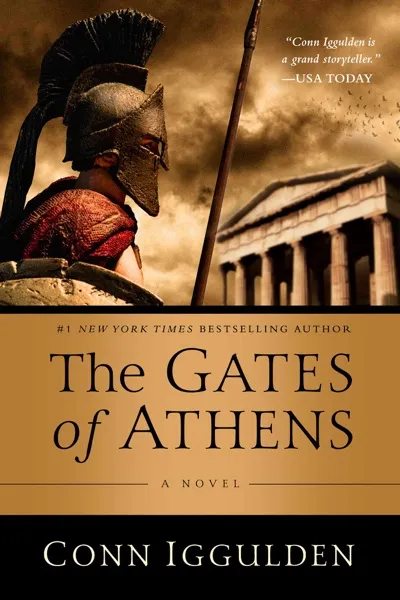

Gates of Athens Author: Conn IgguldenPage Count: UnknownPublication Year: 2020-GB A Blood-Soaked Epic of War, Power, and the Birth of Democracy Gates of Athens by Conn Iggulden is a thunderous reimagining of the Persian Wars, a conflict that reshaped the ancient world—and whose echoes still resonate in modern geopolitics. Iggulden, the master storyteller behind bestsellers like The Dangerous Book for Boys and his Emperor series on Julius Caesar, once again proves his ability to transform history into a gripping, cinematic narrative. This novel isn’t just a retelling; it’s a visceral, character-driven epic where the stakes are life and death, and the fate of an idea—democracy—hangs in the balance. At its core, Gates of Athens explores the tension between tyranny and freedom, not as abstract ideals but as lived realities on the battlefield and in the streets. The story centers on two men: Themistocles, the cunning Athenian general whose ambition borders on genius, and Xerxes, the Persian king whose hubris could drown an empire. Their rivalry is the engine of the novel, a clash of cultures where brute force meets strategic brilliance. Iggulden doesn’t glorify war; he exposes its brutality, its chaos, and its cost. The battles—Marathon, Thermopylae, Salamis—are not just set pieces but visceral experiences, where the stench of sweat and blood lingers long after the clash of spears fades. Iggulden’s greatest strength is his ability to humanize history. Themistocles isn’t a one-dimensional hero; he’s a man of contradictions—brilliant yet paranoid, charismatic yet ruthless. His speeches to the Athenian assembly crackle with urgency, his mind racing ahead while his body stands still. Meanwhile, Xerxes is portrayed not as a mustache-twirling villain but as a man trapped by his own grandeur, his empire’s might both his shield and his curse. The supporting cast, from the stoic Spartan Leonidas to the scheming Persian queen Atossa, are equally vivid, their motivations as complex as their historical counterparts. The novel’s pacing is relentless. Iggulden wastes no time, plunging the reader into the chaos of the battlefield almost immediately. His prose is muscular and direct, favoring action over florid descriptions. Yet, when he slows down, it’s to dissect the political machinations behind the war—the backroom deals, the shifting alliances, the fragile trust between allies. The depiction of Athens itself is particularly masterful; Iggulden captures the city’s raw, democratic spirit, where every citizen has a voice (or at least believes they do). The contrast between the fledgling democracy and the monolithic Persian Empire is stark, making the eventual Greek victories feel like miracles won by sheer willpower. What makes Gates of Athens more than just a war story is its meditation on legacy. Themistocles’ greatest fear isn’t death—it’s irrelevance. He knows that the true battle isn’t just against Persia but against time, against the erosion of memory. His obsession with building a navy, with ensuring Athens’ survival, speaks to a deeper truth: empires rise and fall, but ideas endure. The novel’s title itself is a nod to this—Athens’ gates aren’t just physical barriers; they’re the threshold of a new world order. Iggulden’s style is deceptively simple. He avoids the trap of over-romanticizing antiquity, grounding his characters in very human desires—pride, greed, love, fear. The dialogue crackles with authenticity, whether it’s the clipped exchanges of soldiers or the ornate rhetoric of orators. His research is meticulous (though never heavy-handed), and his ability to weave fact with fiction is seamless. By the final pages, when the tide turns at Salamis, the reader feels the weight of every oar stroke, every misplaced order, every soldier’s last breath. If there’s a criticism to be leveled, it’s that the novel occasionally races through pivotal moments, leaving some emotional beats underdeveloped. The death of a major character, for instance, arrives with a bluntness that might leave some readers wanting more. But this is a minor quibble in an otherwise flawlessly executed story. Gates of Athens isn’t just a historical novel—it’s a reminder that the past is never truly past. The questions it raises—about leadership, sacrifice, and the cost of freedom—are as urgent today as they were 2,500 years ago. Conn Iggulden has crafted a book that both entertains and enlightens, a rare achievement in historical fiction. Gates of Athens is more than a tale of war; it’s a story about what it means to build something lasting in a world that constantly tries to tear it down. #GatesOfAthens #ConnIggulden #HistoricalFiction #AncientGreece #PersianWars #Themistocles Related InsightsInnkeeper Chronicles Book Review and Summary The Strangers Book Review and Summary Last Exit to Brooklyn Book Review and Summary{ "@context": "https://schema.org", "@type": "FAQPage", "mainEntity": [ { "@type": "Question", "name": "What is the main focus of Gates of Athens Book Review and Summary?", "acceptedAnswer": { "@type": "Answer", "text": "Everything you need to know about Gates of Athens with our detailed review." } }, { "@type": "Question", "name": "Who authored the comprehensive guide on Gates of Athens Book Review and Summary?", "acceptedAnswer": { "@type": "Answer", "text": "This detailed article and its insights were carefully researched and authored by James Miller." } }, { "@type": "Question", "name": "Where can I find more related content about Books?", "acceptedAnswer": { "@type": "Answer", "text": "You can explore more articles, detailed reviews, and similar insights by browsing the Related Insights section at the bottom of this article or visiting our dedicated Books category page." } } ] }