Showing Posts From
Geek love
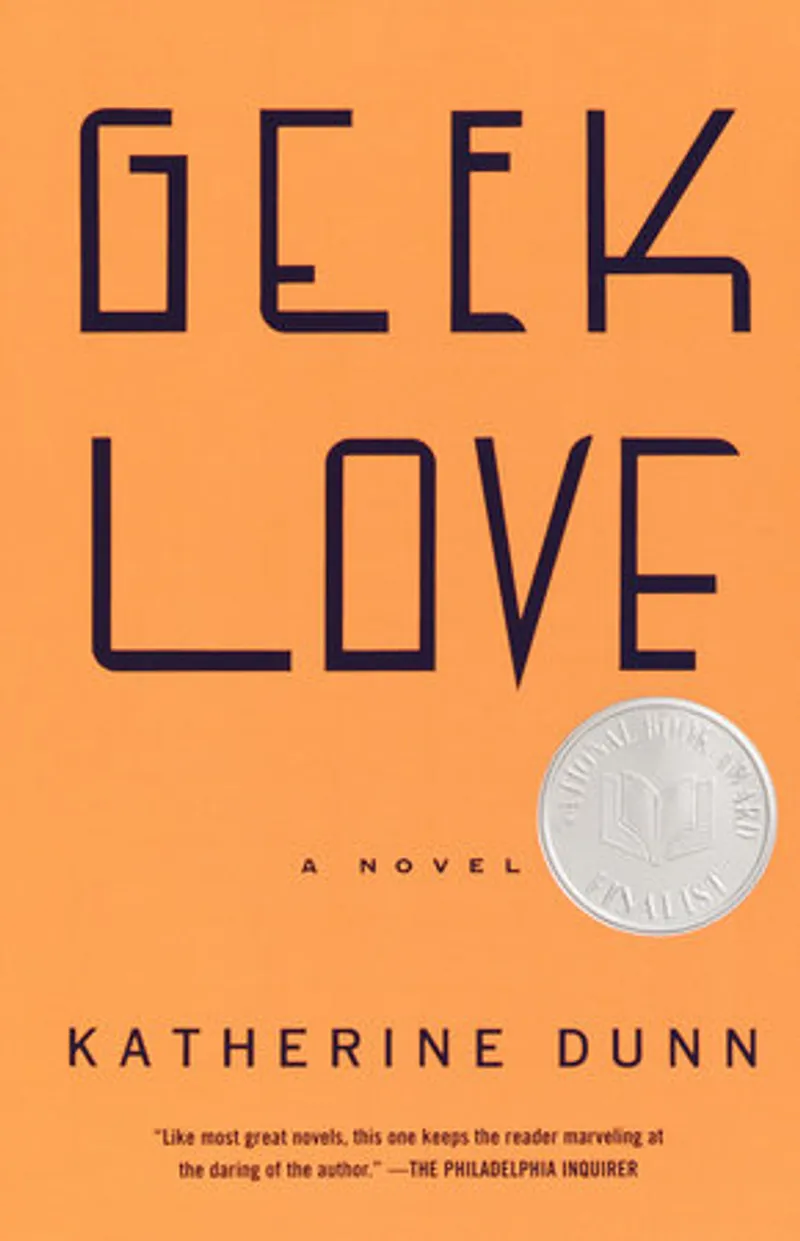
Geek Love Author: Katherine DunnPage Count: UnknownPublication Date: 2002-PRH Katherine Dunn’s Geek Love is a grotesque, brilliant, and utterly unforgettable novel that dares to ask: What if the freaks are the ones who see the world clearly? Published in 1989 (though often cited with a 2002 edition due to reprints), this National Book Award finalist is a carnival of the bizarre, a family saga that flips the script on normalcy, love, and ambition. It’s a book that doesn’t just push boundaries—it incinerates them, leaving behind a scorched landscape of human oddities and moral chaos. At its core, Geek Love is a twisted exploration of identity, family, and the grotesque as a form of truth. The Binewski family—Al, the ruthless patriarch with a god complex, and Crystal Lil, his amphetamine-fueled matriarch—decide to breed their own freak show. Using a cocktail of drugs, radiation, and sheer will, they create Arturo the Aqua Boy (a flippered, egomaniacal messiah), Iphy and Elly (Siamese twins bound in both body and mind), Oly (the albino hunchback narrator with a razor-sharp wit), and Chick (the seemingly normal son whose supernatural luck makes him both a blessing and a curse). The novel follows their rise and fall as a traveling circus act, where devotion and revulsion blur into something disturbingly human. Dunn’s genius lies in her unflinching, darkly comic prose and her refusal to sanitize the Binewskis’ world. This is not a story about outsiders yearning to fit in; it’s about a family that rejects normalcy as a prison and instead embraces the monstrous as a kind of liberation. The novel’s tone is a heady mix of satire, horror, and pathos, with Oly’s narration serving as the perfect lens—a voice that’s equal parts cynical, tender, and utterly devoid of self-pity. Dunn doesn’t just describe the grotesque; she makes it glorious, forcing the reader to confront their own prejudices about beauty, deformity, and what it means to be "human." The themes of control and manipulation are ever-present, with the Binewskis’ acts of creation mirroring the way society polices and defines its own "freaks." Arturo, the Aqua Boy, is a particularly chilling figure—a cult leader who preaches his own divinity while exploiting his siblings. His megalomania is both absurd and terrifying, a dark parody of religious and political fanaticism. Meanwhile, Oly’s hunchback isn’t just a physical trait; it’s a metaphor for the burdens of perception, the way society’s gaze can warp a person’s soul. Chick, the "normal" son, is the most dangerous of all, his supernatural luck a stand-in for privilege and the arbitrary nature of fate. Dunn’s style is visceral and unapologetic, blending the surreal with the mundane in a way that feels both hallucinatory and deeply real. The novel’s structure—jumping between past and present, with Oly’s retrospective narration—adds to its unsettling power, as if the reader is peeling back layers of a family’s history that should never have been exposed. There’s a punk-rock energy to Geek Love, a defiance of literary conventions that mirrors the Binewskis’ own rejection of societal norms. What makes Geek Love so enduring is its refusal to offer easy answers. It doesn’t judge the Binewskis; it immerses the reader in their world, making us complicit in their crimes, their loves, their delusions. By the novel’s end, the line between freak and family, monster and human, has dissolved entirely. Dunn doesn’t just ask what it means to be a freak—she asks what it means to be alive. If you’re looking for a book that challenges, provokes, and lingers like a bad dream, Geek Love is a masterpiece of transgressive fiction. It’s not for the faint of heart, but for those willing to dive into its sulfurous depths, it’s a revelation. #GeekLove #KatherineDunn #FreakShowFiction #DarkComedy #CultClassic #BodyHorror Related InsightsYumi and the Nightmare Painter Book Review and Summary King of Envy Book Review and Summary El sueño de Sooley Book Review and Summary{ "@context": "https://schema.org", "@type": "FAQPage", "mainEntity": [ { "@type": "Question", "name": "What is the main focus of Geek Love Book Review and Summary?", "acceptedAnswer": { "@type": "Answer", "text": "Everything you need to know about Geek Love with our detailed review." } }, { "@type": "Question", "name": "Who authored the comprehensive guide on Geek Love Book Review and Summary?", "acceptedAnswer": { "@type": "Answer", "text": "This detailed article and its insights were carefully researched and authored by Katherine Dunn." } }, { "@type": "Question", "name": "Where can I find more related content about Books?", "acceptedAnswer": { "@type": "Answer", "text": "You can explore more articles, detailed reviews, and similar insights by browsing the Related Insights section at the bottom of this article or visiting our dedicated Books category page." } } ] }