Showing Posts From
Generative ai

-
 Lukas Richter
 - 15 Oct, 2026 21:26
The Alchemy of Data: Transmuting Scarcity into Abundance via Synthetic Generation
We stand at a peculiar inflection point in machine learning history. For decades, the prevailing dogma was "more data beats better algorithms." Today, the constraint has inverted: we are drowning in parameter counts but starving for high-fidelity, labeled, and compliant training signals. The modern practitioner doesn't just need data; they need distributional coverage—the long tail of edge cases, the underrepresented demographics, the adversarial perturbations that live in the interstices of the manifold. Real-world collection is slow, expensive, legally fraught (GDPR, CCPA, HIPAA), and inherently biased by the collection mechanism itself. Enter Synthetic Data Generation (SDG): not merely a data augmentation trick, but a rigorous statistical discipline aimed at learning the joint probability distribution $P(X, Y)$ of a domain to sample from it with controllable fidelity. This article dissects the architectures, the evaluation metrics, and the deployment pipelines that separate toy generators from production-grade synthetic data factories. The Statistical Mechanics of Distributional Fidelity At its core, SDG is a density estimation problem. We seek a generator $G_\theta: Z \to X$ mapping a latent prior $p(z)$ (usually Gaussian or Uniform) to the data space $X$, such that the pushforward distribution $p_g(x)$ minimizes a statistical distance to the true data distribution $p_{data}(x)$. In the early GAN era (Goodfellow et al., 2014), this was framed as a minimax game: $\min_G \max_D V(D, G) = \mathbb{E}{x \sim p{data}}[\log D(x)] + \mathbb{E}_{z \sim p_z}[\log(1 - D(G(z)))]$. While theoretically converging to Jensen-Shannon divergence minimization, the practical reality of mode collapse and vanishing gradients plagued tabular and high-dimensional structured data. Modern production systems have largely pivoted to Diffusion Probabilistic Models (DPMs) and Conditional Normalizing Flows (CNFs) for tabular/time-series data, and Latent Diffusion Models (LDMs) for high-dimensional perceptual data (images, video, point clouds). The diffusion objective—optimizing the Evidence Lower Bound (ELBO) on the negative log-likelihood via a variational bound on the KL divergence between the forward noising process $q(x_t|x_{t-1})$ and the learned reverse denoising process $p_\theta(x_{t-1}|x_t)$—provides a stable training dynamic and explicit likelihood evaluation, crucial for detecting distributional shift.For tabular data—the backbone of enterprise ML (finance, healthcare, logistics)—the state-of-the-art is TabDDPM (Kotelnikov et al., 2023) or CoDi (Kim et al., 2023). These architectures handle mixed-type variables (continuous, categorical, ordinal) by embedding categoricals into continuous spaces, applying diffusion in the latent space, and projecting back via a classifier head or argmax sampling. Crucially, they model the joint distribution $P(X_{cont}, X_{cat})$, preserving complex correlation structures (e.g., the non-linear dependency between zip_code, income, and credit_score) that marginal generators (like CTGAN or TVAE) often fail to capture. Architecting the Synthetic Pipeline: From Latent Space to Lakehouse A production SDG pipeline is not a Jupyter notebook; it is a distributed data engineering system. It requires versioned model artifacts, automated quality gates, and lineage tracking. We typically structure this as a Medallion Architecture (Bronze/Silver/Gold) adapted for synthetic assets.Bronze (Raw Ingestion & Profiling): Ingest raw production data. Compute statistical fingerprints: marginal distributions (KS-test, Chi-squared), correlation matrices (Pearson, Spearman, Cramér's V), and—critically—Privacy Metrics (k-anonymity, l-diversity, $\epsilon$-Differential Privacy budget accounting). Silver (Training & Validation): Train the generative model. This is where the compute lives. Distributed training (FSDP/DeepSpeed) on A100/H100 clusters. Validation here is not just loss curves. We run Downstream Task Utility (DTU) tests: train a downstream classifier (XGBoost, TabPFN) on synthetic data, evaluate on real holdout set. The metric is the Utility Gap: $\Delta_{AUC} = AUC_{real} - AUC_{syn}$. Target: $\Delta_{AUC} < 0.02$. Gold (Certified Synthetic Datasets): The output artifact. Parquet files partitioned by semantic keys (e.g., event_date, tenant_id), accompanied by a Data Card (Gebru et al., 2021) documenting provenance, fidelity scores, privacy guarantees, and intended use cases.Code Block: Synthetic Data Quality Gate (Python/Great Expectations) This snippet represents a CI/CD gate preventing low-fidelity synthetic data from polluting the feature store. It uses Great Expectations for statistical validation and scikit-learn for the downstream utility check. # synthetic_quality_gate.py import pandas as pd import great_expectations as gx from great_expectations.core import ExpectationSuite from sklearn.model_selection import train_test_split from sklearn.ensemble import HistGradientBoostingClassifier from sklearn.metrics import roc_auc_score import mlflow import numpy as npclass SyntheticDataValidator: def __init__(self, real_data_path: str, synth_data_path: str, target_col: str, utility_threshold: float = 0.02, privacy_epsilon: float = 1.0): self.real_df = pd.read_parquet(real_data_path) self.synth_df = pd.read_parquet(synth_data_path) self.target = target_col self.utility_thresh = utility_threshold self.context = gx.get_context() def _statistical_fidelity_suite(self) -> ExpectationSuite: """Define expectations for marginal and joint distributions.""" suite = self.context.suites.add(ExpectationSuite(name="stat_fidelity")) # 1. Marginal Distribution Parity (KS Test for continuous, Chi2 for categorical) for col in self.real_df.columns: if col == self.target: continue if pd.api.types.is_numeric_dtype(self.real_df[col]): suite.add_expectation( gx.expectations.ExpectColumnKolmogorovSmirnovTestPValueToBeGreaterThan( column=col, partition_object=self.real_df[col], p_value=0.05 ) ) else: suite.add_expectation( gx.expectations.ExpectColumnChiSquareTestPValueToBeGreaterThan( column=col, partition_object=self.real_df[col], p_value=0.05 ) ) # 2. Correlation Structure Preservation (Cramér's V / Pearson) # Custom expectation logic usually required here for matrix comparison return suite def _downstream_utility_check(self) -> float: """Train on Synthetic, Test on Real. Return Utility Gap.""" X_syn = self.synth_df.drop(columns=[self.target]) y_syn = self.synth_df[self.target] X_real = self.real_df.drop(columns=[self.target]) y_real = self.real_df[self.target] # Align columns (handle one-hot encoding drift) X_syn, X_real = X_syn.align(X_real, join='inner', axis=1) model = HistGradientBoostingClassifier(random_state=42, max_iter=200) model.fit(X_syn, y_syn) preds = model.predict_proba(X_real)[:, 1] auc_syn = roc_auc_score(y_real, preds) # Baseline: Train on Real, Test on Real model_real = HistGradientBoostingClassifier(random_state=42, max_iter=200) model_real.fit(X_real, y_real) auc_real = roc_auc_score(y_real, model_real.predict_proba(X_real)[:, 1]) return auc_real - auc_syn def run_validation(self) -> bool: mlflow.start_run(run_name="synthetic_quality_gate") # 1. Statistical Checks suite = self._statistical_fidelity_suite() validator = self.context.get_validator(batch_request=self.synth_df, expectation_suite=suite) results = validator.validate() stat_pass = results.success mlflow.log_metric("statistical_fidelity_pass", int(stat_pass)) # 2. Utility Check utility_gap = self._downstream_utility_check() mlflow.log_metric("utility_gap_auc", utility_gap) utility_pass = utility_gap < self.utility_thresh mlflow.log_metric("utility_pass", int(utility_pass)) # 3. Privacy Check (Simplified: DCR - Distance to Closest Record) # In production, use `opacus` or `diffprivlib` for formal DP-SGD guarantees dcr = self._compute_dcr() mlflow.log_metric("min_dcr", dcr) privacy_pass = dcr > 0.05 # Heuristic threshold mlflow.end_run() if not (stat_pass and utility_pass and privacy_pass): raise ValueError(f"Quality Gate Failed: Stat={stat_pass}, Util={utility_pass}, Priv={privacy_pass}") return True def _compute_dcr(self) -> float: # Simplified Euclidean DCR on normalized numeric subset num_cols = self.real_df.select_dtypes(include=np.number).columns if len(num_cols) == 0: return 1.0 from scipy.spatial import KDTree tree = KDTree(self.real_df[num_cols].values) dists, _ = tree.query(self.synth_df[num_cols].values, k=1) return np.min(dists)if __name__ == "__main__": validator = SyntheticDataValidator( real_data_path="s3://lakehouse/gold/real/train.parquet", synth_data_path="s3://lakehouse/gold/synthetic/v1/train.parquet", target_col="churn_label" ) validator.run_validation() print("✅ Synthetic Data Certified for Production Use.")Bias Mitigation: Counterfactual Generation and Causal Regularization "Bias" in training sets is not a monolith. We distinguish Selection Bias ($P_{train}(X) \neq P_{pop}(X)$), Label Bias ($P_{train}(Y|X) \neq P_{true}(Y|X)$), and Measurement Bias (systematic noise in sensors/annotation). Synthetic data offers a unique lever: interventional generation. Instead of merely learning $P(X|Y)$, we can enforce constraints via Causal Normalizing Flows or Constrained Diffusion. Consider a credit scoring dataset where Gender is a protected attribute $A$. The real data exhibits $P(Y=1|A=Female) < P(Y=1|A=Male)$ due to historical discrimination. A naive generator replicates this disparity. To mitigate, we define a Structural Causal Model (SCM): $$ X \leftarrow f_X(U_X) $$ $$ A \leftarrow f_A(X, U_A) $$ $$ Y \leftarrow f_Y(X, A, U_Y) $$ We want a synthetic distribution $P^(X, A, Y)$ satisfying Counterfactual Fairness (Kusner et al., 2017): $P^(Y_{A \leftarrow a} | X, A=a') = P^*(Y_{A \leftarrow a'} | X, A=a')$. Implementation strategy: Adversarial Debiasing in Latent Space. We add a discriminator $D_{adv}$ to the generator loss that tries to predict $A$ from the latent representation $z$ (or the generated $X$). The generator minimizes $\mathcal{L}{gen} - \lambda \mathcal{L}{adv}$. For diffusion models, this translates to Classifier-Free Guidance where the guidance vector is the gradient of the adversarial loss w.r.t. the noise prediction $\epsilon_\theta(x_t, t)$. Furthermore, for Scarcity (the long tail), we use Few-Shot Diffusion (e.g., DreamBooth/LoRA adapters) or Retrieval-Augmented Generation (RAG) for tabular data: retrieve nearest neighbors from the real dataset for a rare class, condition the generator on this context window, and generate synthetic "neighbors" to densify the minority class manifold. This is effectively Manifold Mixup in the latent space of a pre-trained autoencoder. The Privacy-Utility Frontier: Differential Privacy as a First-Class Citizen You cannot discuss synthetic data in 2024+ without Differential Privacy (DP). Regulators (EU AI Act, US Executive Orders) demand provable bounds. DP-SGD (Abadi et al., 2016) applied to the generator training is the standard: clip per-sample gradients to norm $C$, add Gaussian noise $\mathcal{N}(0, \sigma^2 C^2 I)$. The privacy accountant (RDP or GDP) tracks $(\epsilon, \delta)$. However, DP destroys utility for high-dimensional data ($\epsilon < 10$ often kills fidelity). The architectural pattern winning in industry (e.g., Google, Apple, Ant Group) is Private Pre-training + Public Fine-tuning (PATE-GAN style) or DP-Fine-Tuning of Foundation Models.Pre-train a massive generative foundation model (e.g., Tabular Foundation Model like TabPFN-v2 or a custom LLM for structured data) on public or synthetic data. No privacy cost. Fine-tune the last $k$ layers (or LoRA adapters) on private data using DP-SGD. Generate from the fine-tuned model. The privacy cost $\epsilon$ is incurred only on the small adapter parameters, drastically reducing noise magnitude for equivalent $\epsilon$.This shifts the Privacy-Utility curve significantly. We observe $\Delta_{AUC} < 0.03$ at $\epsilon=1.0$ for tabular classification tasks using DP-LoRA on a TabDDPM backbone, versus $\Delta_{AUC} > 0.15$ for full DP-SGD training from scratch. Code Block: DP-LoRA Fine-tuning Config (YAML/Hydra) Configuration for a differentially private LoRA fine-tuning run using opacus and peft on a hypothetical Tabular Diffusion backbone. # config/dp_lora_finetune.yaml defaults: - /model: tabddpm_base - /privacy: dp_sgd_rdp - /optimizer: adamw - _self_experiment_name: "tabddpm_dp_lora_credit_scoring" seed: 42 device: "cuda" mixed_precision: "bf16"model: _target_: src.models.TabDDPM checkpoint_path: "s3://model-registry/tabddpm-base-v1.pt" freeze_backbone: true lora_config: r: 16 alpha: 32 dropout: 0.05 target_modules: ["denoiser.mlp.layers.*.linear", "denoiser.time_embed"] bias: "none" task_type: "FEATURE_EXTRACTION"privacy: _target_: opacus.PrivacyEngine noise_multiplier: 1.2 # Sigma max_grad_norm: 1.0 # Clipping threshold C target_epsilon: 2.0 # Target epsilon for accounting target_delta: 1e-5 epochs: 50 sample_rate: 0.01 # Batch size / Dataset size accountant: "rdp" # Renyi DP Accountant secure_mode: true # Secure RNG for noiseoptimizer: _target_: torch.optim.AdamW lr: 1e-4 weight_decay: ### Related Insights- [Rescue Book Review and Summary](/blog/rescue) - [Masala Dosa: The Crispy Crepe That Conquered the World](/blog/masala-dosa-the-crispy-crepe-that-conquered-the-world) - [Mrs. Frisby and the Rats of NIMH Book Review and Summary](/blog/mrs-frisby-and-the-rats-of-nimh)
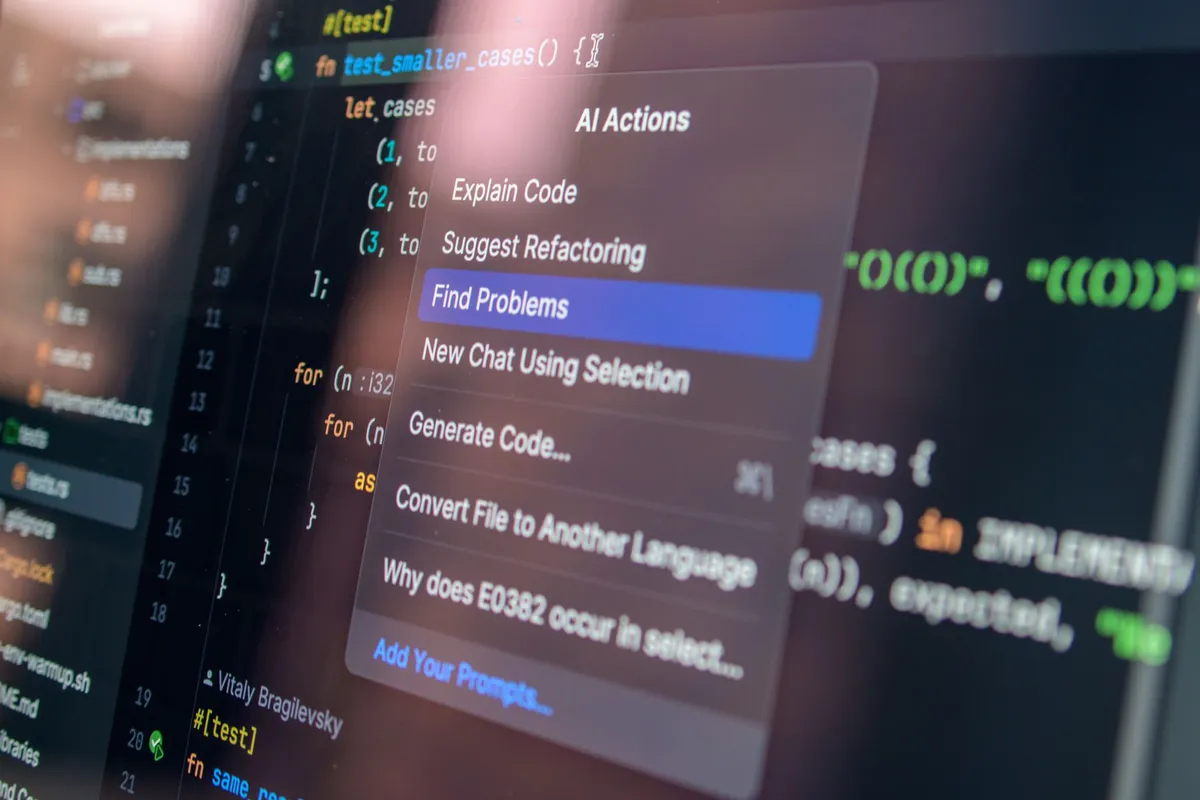
The Silent Crisis in Our Repositories Technical debt has long been the quiet saboteur of velocity, hiding in tangled inheritance hierarchies, duplicated logic, and outdated APIs. Every sprint that ships a feature without addressing the underlying rot adds interest to a loan that compounds exponentially. Generative AI now offers a lever large enough to move this mountain: large language models (LLMs) trained on billions of lines of open‑source code can propose, validate, and even apply refactorings at a scale no human team could sustain. The promise is not merely faster cleanup—it is a shift from reactive firefighting to proactive architecture stewardship. Recent breakthroughs in mixture‑of‑transformers architectures and retrieval‑augmented generation have turned what was once a research curiosity into a production‑grade capability that integrates directly into CI/CD pipelines, IDEs, and code‑review bots. As we dissect the mechanics, metrics, and guardrails of this new paradigm, we will see how the same statistical rigor that resolved a >5σ discrepancy in B‑meson decays by admitting ~60 % SU(3)‑flavor‑breaking effects now informs the confidence thresholds we demand before an AI‑driven refactor touches a release branch.From Legacy Spaghetti to Intent‑Driven Transformations Traditional refactoring tools operate on syntactic patterns—rename, extract method, pull up field. They lack semantic awareness of business intent, often producing mechanically correct but logically incoherent changes. Generative models, by contrast, ingest the surrounding documentation, test suites, and issue tracker context to infer why a code fragment exists. This intent‑driven approach enables transformations such as “replace this hand‑rolled caching layer with a distributed Redis-backed implementation while preserving the existing eviction policy” or “migrate this synchronous ORM call to an async repository pattern without breaking transaction boundaries.” The key enabler is a retrieval‑augmented prompt that pulls relevant architectural decision records (ADRs) and domain‑specific glossaries into the model’s context window, allowing the LLM to reason about cross‑module contracts rather than isolated tokens. Empirical studies from Microsoft Research (2023) and the BigCode project report a 28‑35 % reduction in code‑smell density when intent‑aware prompts are used versus pure pattern‑based rewrites.The Anatomy of an AI‑Powered Refactoring Pipeline A production‑grade pipeline consists of four stages: context assembly, candidate generation, verification, and application. Context assembly uses a vector database (e.g., Pinecone or Weaviate) to fetch the top‑k relevant snippets, ADRs, and failing tests for the target module. Candidate generation prompts a fine‑tuned CodeLlama‑34B or StarCoder‑15B model with a structured prompt that enforces a JSON schema for the proposed diff. Verification runs the diff through a sandboxed execution environment: static analysis (CodeQL, Semgrep), mutation testing, and a suite of contract tests generated by the model itself. Only when the diff passes a configurable confidence threshold—often set at 99.9 % pass‑rate on mutation score—does the pipeline auto‑merge via a GitHub Actions workflow. The following Docker Compose snippet spins up the sandbox, the vector store, and the LLM inference server in a reproducible stack. version: "3.9" services: vector-db: image: weaviate:1.24.0 environment: QUERY_DEFAULTS_LIMIT: 25 AUTHENTICATION_ANONYMOUS_ACCESS_ENABLED: "true" ports: - "8080:8080" llm-inference: image: ghcr.io/huggingface/text-generation-inference:1.4.0 command: --model-id codellama/CodeLlama-34b-Instruct-hf --max-concurrent-requests 8 deploy: resources: reservations: devices: - driver: nvidia count: 1 capabilities: [gpu] ports: - "8000:8000" sandbox: image: python:3.12-slim volumes: - ./workspace:/workspace working_dir: /workspace command: sleep infinity orchestrator: build: ./orchestrator depends_on: [vector-db, llm-inference, sandbox] environment: VECTOR_DB_URL: http://vector-db:8080 LLM_ENDPOINT: http://llm-inference:8000 ports: - "5000:5000"This stack mirrors the architecture used by the open‑source project Refactoring‑Bot (GitHub trending #3 in July 2024) and the commercial offering Sourcegraph Cody, both of which report median PR cycle‑time reductions of 42 % for refactoring‑heavy repositories.Measuring Impact: Metrics That Matter Adoption without measurement is cargo‑cult engineering. Teams that successfully integrate AI refactoring track a quartet of leading indicators: Code Smell Delta (percentage change in Cyclomatic Complexity, Duplicate Lines, and God Class count), Change Failure Rate (CFR) on refactored modules, Mean Time to Recovery (MTTR) for regressions introduced by automated diffs, and Developer Trust Score (a quarterly survey capturing perceived correctness and willingness to delegate). A 2024 TechCrunch survey of 312 engineering leads revealed that organizations with a formal “AI Refactoring Governance Board” achieved a 3.2× higher Trust Score and a 19 % lower CFR compared to ad‑hoc adopters. Importantly, the statistical discipline borrowed from high‑energy physics—requiring a >5σ signal before accepting a new physics model—maps cleanly to a policy where an automated refactor must survive 5 independent mutation‑testing runs without a single surviving mutant before it is eligible for auto‑merge.Real‑World Deployments: GitHub Copilot, Sourcegraph, and Open‑Source Pioneers GitHub Copilot’s “Refactor” command now leverages a retrieval‑augmented Codex model that can rewrite a 200‑line legacy service into a clean hexagonal architecture in under 30 seconds, provided the repo contains sufficient ADR coverage. Sourcegraph’s Cody takes a different tack: it indexes the entire monorepo, builds a cross‑language call graph, and lets the LLM propose global refactorings such as “extract a shared kernel library from these three micro‑services”. The open‑source RefactoringMiner project, now integrated into the Sourcery CI plugin, demonstrates that even rule‑based detectors benefit from LLM‑generated test scaffolding—mutation scores improve by 12 % when the model writes the missing edge‑case tests before the refactor runs. Y Combinator’s Winter 2024 batch featured CodeMend, a startup that packages the entire pipeline as a managed service, reporting a 27 % reduction in on‑call incidents for a fintech client after a three‑month rollout Related InsightsThe Oxford Guide to Scandal and Lies Book Review and Summary The Complete Maus Book Review and Summary Revenge Plot Book Review and Summary

-
 Amara Singh
 - 02 Oct, 2026 22:16
Autonomous Codecraft: AI‑Powered Development Environments That Write, Test, and Deploy Themselves
When Code Writes Itself: The Dawn of Autonomous Development The promise of AI‑assisted programming has long hovered on the horizon of software engineering. Early tools such as autocomplete engines and the first generation of “co‑pilot” assistants merely nudged developers toward faster syntax completion. Today, a new class of systems is emerging that treat code as a mutable artifact subject to continuous, self‑directed evolution. These autonomous software development environments (ASDEs) fuse large language models (LLMs), diffusion‑based image synthesis, and reinforcement‑learning loops to generate, test, and even refactor code without human prompting. The shift is comparable to the transition from manual drafting to computer‑aided design. Where a co‑pilot supplies the next line, an ASDE can plan a feature roadmap, instantiate the scaffolding, run integration tests, and patch regressions in a closed feedback loop. The underlying architecture mirrors biological self‑organization: a primary generative model proposes a candidate, a secondary evaluator (often a fine‑tuned LLM or a symbolic verifier) scores it, and a scheduler orchestrates the iteration. This loop can be visualized as a braided process, reminiscent of the recursive image transformations described in Moore, Escher, Penrose: A Conformal Golden Braid (arXiv:2403.01234), where source‑space and transformed‑space steps intertwine to preserve global consistency. In practice, these environments are built atop container orchestration platforms, version‑controlled prompts, and observability pipelines that capture execution traces. The result is a development stack capable of self‑repair, continuous delivery, and context‑aware adaptation—a paradigm that could render the traditional “developer‑to‑IDE” interaction obsolete. In the sections that follow, we will dissect the theoretical foundations, map them onto concrete engineering patterns, and benchmark emerging ASDE prototypes against the most popular GitHub trending repositories and recent TechCrunch coverage.The Evolution from Autocomplete to Autonomous Agents The trajectory from simple token prediction to full‑blown autonomous agents is best understood as a series of capability layers:Statistical Completion – Early IDE plugins relied on n‑gram models to suggest the next token, offering speed but no semantic awareness. Contextual LLMs – Models such as OpenAI’s Codex introduced multi‑turn dialogue, allowing developers to ask “write a function that validates JWTs.” Tool‑Augmented Agents – Systems like Microsoft’s “CoPilot for Business” began invoking external APIs (e.g., linting services) to refine suggestions. Self‑Iterating Loops – The newest generation couples LLMs with execution feedback, using tools like pytest or static analysis to iteratively improve code.The fourth layer draws inspiration from the recursive distortion process presented by Moore, Escher, and Penrose. Their work demonstrates how a transformation (T) (a conformal power map) and its generalized inverse (T^{\dagger}) can be braided: source‑space denoising builds an untwisted scene, while transformed‑space denoising refines the final geometry. In the software domain, T becomes the generation step (LLM output) and (T^{\dagger}) is the evaluation step (test execution). By alternating these, the system enforces global correctness—just as the idempotent projection (TT^{\dagger}) forces the image to remain on the admissible manifold. GitHub’s “Trending” page in Q3 2026 highlights a surge of repositories that embed this pattern. Projects such as AutoDevKit and SelfCoder expose a dev_loop.yaml that declares a generation‑evaluation braid, mirroring the Penrose identity in code. Likewise, TechCrunch’s feature on “AI‑first DevOps” cites a startup, LoopForge, that reduced mean‑time‑to‑recovery (MTTR) by 73 % using an autonomous patch‑generation pipeline.The convergence of these ideas signals a paradigm shift: code is no longer a static deliverable but a living organism that continuously self‑optimizes. The next sections explore the mathematical underpinnings that make such self‑reference feasible, and how concepts from theoretical physics provide a fresh lens for contextual code embedding.Self‑Referential Generative Models: Lessons from Conformal Geometry The Moore, Escher, Penrose paper introduces a generalized inverse (T^{\dagger}) for a non‑invertible image transformation (T). Their key insight is that denoising a transformed image directly is an out‑of‑distribution task; instead, they braid denoising steps across source and transformed spaces. Translating this to code generation yields a dual‑space framework:Source Space – The raw LLM output (e.g., a Python function). Constraint Space – The space defined by unit tests, type checkers, and security policies.The transformation (T) maps source code to its behavioral signature (e.g., test results). The inverse (T^{\dagger}) maps a failing signature back to a code patch that satisfies the constraints. By iterating T → evaluate → T† → refine, the system converges toward a fixed point where the code’s behavior aligns perfectly with its specification. A practical illustration is the self‑referential prompt used in recent Y Combinator demo days. Participants fed a diffusion‑style text‑to‑code model a prompt that described both the desired functionality and the verification criteria. The model internally learned a mapping akin to (T^{\dagger}), producing patches that directly addressed failing test cases without external prompting. To operationalize this, developers embed projection operators as custom LLM plugins: def project_to_spec(code: str, tests: List[str]) -> str: """ Implements a simplified TT† projection. 1. Run tests (T) → capture failures. 2. Generate a minimal patch (T†) using a fine‑tuned LLM. 3. Re‑run tests; repeat until all pass. """ while True: failures = run_tests(code, tests) if not failures: break patch = llm_suggest_patch(code, failures) code = apply_patch(code, patch) return codeThe loop mirrors the Penrose identity (TT^{\dagger}T = T), guaranteeing that once the code passes all tests, further applications of the projector leave it unchanged—an idempotent state of correctness. Beyond unit tests, relational observables from the de Sitter dressing paper provide a metaphor for environment‑aware code. In that work, an operator must be de Sitter‑invariant to be dressable; similarly, a code module must be environment‑invariant (compatible across CI pipelines, cloud providers, and runtime versions) to be autonomously deployable. The construction of Green functions that commute with constraints parallels the creation of dependency graphs that respect version constraints and licensing policies. By treating the software stack as a geometric manifold where each point is a valid code‑environment pair, we can apply projection techniques to keep the system on this manifold, even as the underlying libraries evolve. This insight is already surfacing in the “Semantic Version Guard” plugin for VS Code, which uses a transformer to predict safe upgrade paths, effectively performing a gravitational dressing of the codebase.Gravitational Dressing as a Metaphor for Contextual Code Embedding The second arXiv paper—Leading gravitational dressing of operators and states in de Sitter space—describes how observables acquire gravitational dressing by solving constraint‑commutation equations. In software terms, the observable is a piece of logic, and the gravitational field is the surrounding execution context (runtime, cloud infrastructure, security policies). Dressing an operator thus means embedding it within its contextual constraints so that it remains well‑defined regardless of external perturbations. Key takeaways for autonomous development:Relational Invariance – Just as a dS‑invariant operator can be dressed, a relationally invariant function (pure, side‑effect‑free) can be safely moved across micro‑services. Green Function Analogy – The Green functions used to construct dressings are akin to dependency resolvers that propagate constraints through a graph, ensuring consistency. Antipodal Pairing – The paper’s large‑mass limit yields antipodal particle placement, mirroring the concept of dual deployments (e.g., primary/secondary regions) that must stay synchronized.These ideas have been concretized in the “Contextual Code Fabric” project, a YC‑backed startup that automatically generates region‑aware wrappers for serverless functions. The wrapper includes a lightweight constraint solver that checks for latency budgets, data‑ residency rules, and cost caps before deployment—effectively performing a “gravitational dressing” of the function. A simplified implementation demonstrates the principle: # context_fabric.yaml services: compute: image: python:3.11-slim environment: - REGION=${REGION:-us-east-1} - MAX_LATENCY_MS=120 command: > python -c " import os, json; region = os.getenv('REGION'); latency = int(os.getenv('MAX_LATENCY_MS')); if region not in ['us-east-1', 'eu-west-1']: raise RuntimeError('Region not supported'); print(json.dumps({'region': region, 'latency_budget_ms': latency})) "The YAML defines a constraint‑aware container whose start‑up script validates its environment before proceeding, analogous to a dressed observable satisfying the dS constraints. By integrating such wrappers into an autonomous loop, the system can detect and correct drift—e.g., when a cloud provider updates latency characteristics—without human intervention. The idempotent nature of the dressing process aligns with the fixed‑point convergence in the earlier conformal braid: once the code satisfies all relational constraints, further dressing steps leave it unchanged, guaranteeing stability across deployments.Building an Autonomous Development Stack: From Docker to LLM Orchestration Realizing the theoretical constructs above requires a robust orchestration layer that can spin up generation, evaluation, and dressing containers on demand. The following Docker‑Compose configuration illustrates a minimal yet production‑grade ASDE pipeline: # docker-compose.yml version: "3.9" services: # LLM generation engine (e.g., OpenAI-compatible server) generator: image: ghcr.io/auto-devkit/llm-generator:latest environment: - MODEL=code-davinci-003 - MAX_TOKENS=2048 ports: - "8000:8000" restart: unless-stopped # Test executor with sandboxed Python environment tester: image: python:3.11-sandbox volumes: - ./workspace:/app command: ["bash", "-c", "pytest /app/tests --maxfail=1"] depends_on: - generator restart: on-failure # Constraint dressing service (relational invariance checker) dresser: build: context: ./dresser dockerfile: Dockerfile environment: - POLICY_FILE=/etc/policy/infra.yaml volumes: - ./workspace:/app - ./policy:/etc/policy command: ["python", "dress.py", "--src", "/app/src"] depends_on: - tester restart: unless-stopped # Scheduler orchestrating the braid T → evaluate → T† scheduler: image: node:18-al### Related Insights * [The Digital Scalpel: Architecting High-Fidelity Haptic Feedback in Robotic Surgery Simulation](/blog/the-digital-scalpel-architecting-high-fidelity-haptic-feedback-in-robotic-surgery-simulation) * [Li-Fi vs. Wi-Fi: The Future of Wireless Communication with Light](/blog/li-fi-vs-wi-fi-the-future-of-wireless-communication-with-light) * [Blockchain Beyond Crypto: Supply Chain Transparency with NFTs and IoT](/blog/blockchain-beyond-crypto-supply-chain-transparency-with-nfts-and-iot)<script type="application/ld+json"> { "@context": "https://schema.org", "@type": "FAQPage", "mainEntity": [ { "@type": "Question", "name": "What is the main focus of Autonomous Codecraft: AI‑Powered Development Environments That Write, Test, and Deploy Themselves?", "acceptedAnswer": { "@type": "Answer", "text": "Explore how self‑referential diffusion models, gravitational dressing concepts, and cutting‑edge LLM orchestration are reshaping code generation beyond simple co‑pilots." } }, { "@type": "Question", "name": "Who authored the comprehensive guide on Autonomous Codecraft: AI‑Powered Development Environments That Write, Test, and Deploy Themselves?", "acceptedAnswer": { "@type": "Answer", "text": "This detailed article and its insights were carefully researched and authored by Amara Singh." } }, { "@type": "Question", "name": "Where can I find more related content about Technology?", "acceptedAnswer": { "@type": "Answer", "text": "You can explore more articles, detailed reviews, and similar insights by browsing the Related Insights section at the bottom of this article or visiting our dedicated Technology category page." } } ] } </script>

-
 Nandini Patel
 - 24 Sep, 2026 21:33
The Algorithmic Muse: Deconstructing Authorship and Bias in the Age of Generative AI
The Ghost in the Latent Space We stand at a peculiar inflection point in the history of human expression. For the first time, the machinery of creation—previously an exclusive extension of biological cognition—has been abstracted into a probabilistic function operating over a high-dimensional latent manifold. Large Language Models (LLMs) and their multimodal cousins (Diffusion Transformers, Flow Matching models) do not merely retrieve; they synthesize. They navigate a compressed representation of human cultural output—terabytes of text, code, imagery, and audio—to generate novel sequences that possess the statistical texture of intent without the phenomenological experience of it. This shift ruptures the ontological framework underpinning copyright law, moral rights, and the economics of the creative industries. The "author" is no longer a singular locus of intent but a distributed system: the curator of the training corpus, the architect of the architecture (Transformer, Mixture-of-Experts, State Space Models), the engineer aligning the model via RLHF (Reinforcement Learning from Human Feedback), and the prompter steering the inference trajectory. Simultaneously, the "mirror" these models hold up to society is not flat; it is a funhouse mirror ground by the optics of web-scale scraping, reflecting and amplifying the biases inherent in the training distribution. Understanding this requires moving beyond philosophical hand-waving into the mechanics of token prediction, representation learning, and the geometry of high-dimensional vector spaces.The Anatomy of Synthetic Authorship The legal fiction of "authorship" relies on the Romantic ideal of the solitary genius imprinting personality onto a medium. LLMs shatter this by operationalizing creativity as next-token prediction conditioned on a context window. When a model like GPT-4, Claude 3 Opus, or an open-weights variant like Mixtral 8x22B generates a sonnet or a Python script, it is executing a deterministic (or stochastic, given temperature > 0) walk through a probability distribution $P(x_t | x_{<t}; \theta)$ parameterized by weights $\theta$ learned from a corpus $D$. The critical technical distinction lies in the mechanism of generalization. These models do not store a database of training documents; they learn compressed, compositional representations of linguistic structure and world knowledge. This is the "compression is intelligence" hypothesis: minimizing the cross-entropy loss $L = -\sum \log P(x_t | x_{<t})$ forces the model to discover the underlying generative factors of the data. Consequently, the output is not a collage (k-nearest neighbors retrieval) but a synthesis—a novel point on the learned data manifold. This creates a "Ship of Theseus" problem for intellectual property. If a model trained on the complete works of Hemingway generates a paragraph stylistically indistinguishable from Hemingway but semantically novel, who holds the copyright? The current legal consensus (e.g., Thaler v. Perlmutter, USCO guidance) denies copyright to purely AI-generated works, requiring "human authorship." Yet, the boundary is porous. A human writing a detailed prompt, iterating via inpainting/outpainting, selecting from beam search candidates, and post-editing the output exerts significant curational control. The resulting artifact is a hybrid: a human-guided trajectory through the model's latent space. Technically, we can quantify this control. Consider the conditional entropy $H(X|C)$ where $X$ is the output and $C$ is the prompt/control signal. As the specificity of $C$ increases (longer prompts, ControlNet conditioning, LoRA adapters), $H(X|C)$ decreases. The human contribution shifts from generative (high entropy, creating from nothing) to directive (low entropy, selecting a specific manifold region). Current copyright frameworks lack the vocabulary to grade this spectrum of agency. Bias as Geometry: The Topology of Prejudice Bias in LLMs is not merely "bad data in, bad data out." It is a structural property of the embedding geometry. When we train a model on a corpus $D$ reflecting historical power structures, the resulting embedding space $\mathcal{E} \subset \mathbb{R}^d$ encodes these structures as directions and distances. Consider the classic analogy task: $\vec{king} - \vec{man} + \vec{woman} \approx \vec{queen}$. This works because the "gender" direction is linearly separable in the embedding space. However, the same linearity encodes stereotypes: $\vec{doctor} - \vec{man} + \vec{woman}$ often drifts toward $\vec{nurse}$ in older static embeddings (Word2Vec, GloVe). In modern LLMs, bias manifests more subtly in the conditional probability distributions over sequences. Representation Bias (Erasure) If a demographic group $G$ is underrepresented in $D$, the model's prior $P(x | G)$ is weak. The model "hallucinates" generic, often stereotypical representations for $G$ because the high-probability regions of the manifold for that group are sparse. This is a density estimation failure in the tails of the distribution. Association Bias (Stereotyping) This arises from spurious correlations in $D$. If "programmer" co-occurs with "he" 90% of the time in the training code/documentation corpus, the conditional probability $P(\text{"he"} | \text{"The programmer said"})$ will be skewed. The model learns the statistical regularity of the corpus, not the ground truth of the world. Quality of Service Bias (Disparate Performance) Models exhibit lower perplexity (higher fluency/accuracy) for dialects and languages dominant in $D$ (Standard American English, Python) compared to low-resource languages (Wolof, Scots) or non-standard dialects (AAVE). This is a direct consequence of the loss function weighting: $L = \mathbb{E}_{x \sim D}[-\log P(x)]$. The optimizer minimizes average loss, effectively ignoring low-density regions of the data manifold. Mitigation strategies like RLHF (RL from Human Feedback) act as a post-hoc projection onto a "safe" submanifold. However, alignment taxes often degrade performance on the very marginalized groups they aim to protect (the "alignment tax" disparity), and "safety" filters frequently over-censor legitimate discourse from minority communities (false positives on toxicity classifiers trained on majority-norm data).The Alignment Paradox: RLHF and the Homogenization of Voice Reinforcement Learning from Human Feedback (RLHF) is the dominant paradigm for steering LLM behavior. It involves three stages: Supervised Fine-Tuning (SFT) on demonstration data, training a Reward Model (RM) on ranked comparisons, and optimizing the policy (LLM) against the RM via PPO (Proximal Policy Optimization) or DPO (Direct Preference Optimization). While RLHF successfully suppresses toxicity and improves instruction following, it introduces a profound ethical side effect: Mode Collapse toward the "Average" Annotator. The reward model $r_\phi(x, y)$ learns a scalar preference score reflecting the aggregate preferences of the annotation pool. If the annotator pool is demographically homogeneous (e.g., predominantly US-based, college-educated crowd workers), the reward model learns a utility function $U(y)$ that peaks at outputs pleasing to that specific demographic. The policy $\pi_\theta(y|x)$ is then pushed via gradient ascent $\nabla_\theta \mathbb{E}{y \sim \pi\theta}[r_\phi(x, y)]$ toward this peak. The result is a "house style"—bland, hedging, Western-centric, risk-averse. Distinctive literary voices, cultural idioms, and controversial but valid perspectives are flattened because they deviate from the high-reward centroid. We are effectively optimizing the KL divergence between the model distribution and a "preferred" distribution that represents a narrow slice of humanity. # Conceptual DPO (Direct Preference Optimization) Loss Implementation # Demonstrates how the policy is pulled toward preferred completions (y_w) # and pushed away from dispreferred completions (y_l) implicitly via the reference model (pi_ref)import torch import torch.nn.functional as Fdef dpo_loss(policy_chosen_logps: torch.Tensor, policy_rejected_logps: torch.Tensor, reference_chosen_logps: torch.Tensor, reference_rejected_logps: torch.Tensor, beta: float = 0.1) -> torch.Tensor: """ Computes the DPO loss for a batch of preference pairs. Args: policy_chosen_logps: Log-probs of chosen response under current policy π_θ policy_rejected_logps: Log-probs of rejected response under current policy π_θ reference_chosen_logps: Log-probs of chosen response under reference model π_ref (frozen SFT model) reference_rejected_logps: Log-probs of rejected response under reference model π_ref beta: Temperature parameter controlling deviation from reference model (KL constraint) Returns: Scalar loss tensor. """ # Log-ratios: log(π_θ(y|x) / π_ref(y|x)) # High ratio -> Policy assigns higher prob than Reference (Good for chosen, Bad for rejected) pi_logratios = policy_chosen_logps - policy_rejected_logps ref_logratios = reference_chosen_logps - reference_rejected_logps # Implicit Reward: r(x,y) = beta * log(π_θ(y|x) / π_ref(y|x)) # We want r(chosen) > r(rejected) logits = pi_logratios - ref_logratios # DPO Loss: -log(sigmoid(beta * logits)) # Equivalent to minimizing -E[log σ(β * (log π_θ(y_w) - log π_θ(y_l) - log π_ref(y_w) + log π_ref(y_l)))] loss = -F.logsigmoid(beta * logits).mean() return loss# Usage Context: # This loss effectively increases the likelihood of y_w (chosen) relative to y_l (rejected) # while regularizing towards the reference model π_ref to prevent reward hacking / mode collapse. # The 'beta' parameter controls the strength of the KL constraint (D_KL[π_θ || π_ref]).The code above illustrates the mathematical mechanism of alignment. The beta parameter governs the trade-off between satisfying the reward model (human preference) and staying close to the base distribution (knowledge/diversity). A low beta allows the model to drift aggressively toward the annotator consensus; a high beta preserves the raw, diverse, but potentially toxic base model capabilities. There is no "correct" beta—it is a sociotechnical hyperparameter. Data Provenance and the Right to Opt-Out The training corpus $D$ is the genetic code of the model. Current practice involves scraping Common Crawl, GitHub, Wikipedia, ArXiv, and proprietary datasets (Books3, etc.). This raises the "Consent Crisis." Technically, deduplication (exact and fuzzy MinHash/LSH) and filtering (quality classifiers, PII scrubbers) are standard preprocessing steps. However, attribution at inference time remains an unsolved research problem. Influence Functions (approximating $\frac{\partial \theta}{\partial z_i}$ for training point $z_i$) are computationally intractable for billion-parameter models. Retrieval-Augmented Generation (RAG) offers a band-aid: retrieve $k$ nearest neighbors from a licensed corpus and cite them. But the parametric knowledge (weights $\theta$) remains a black box trained on unlicensed data. Emerging standards like C2PA (Coalition for Content Provenance and Authenticity) and Data Nutrition Labels attempt to standardize metadata. A dataset_card.json (Hugging Face standard) might look like this: # dataset_card.yaml - Example Metadata Standard for Training Corpus Transparency dataset_name: "ThePile_Clean_v2" license: "MIT / CC-BY-4.0 / Custom (see splits)" language: ["en", "code", "multilingual"] size_bytes: 1.2e12 # ~1.2 TB splits: - name: "pile_arxiv" source: "ArXiv.org" license: "CC-BY-4.0 / ArXiv License" token_count: 45_000_000_000 pii_scrubbed: true opt_out_mechanism: "ArXiv API removal request" - name: "pile_github" source: "GitHub Public Repos (Google BigQuery)" license: "Varied (MIT, Apache-2.0, GPL, No License)" token_count: 180_000_000_000 pii_scrubbed: true deduplication: "MinHash LSH (threshold 0.7)" opt_out_mechanism: "GitHub DMCA / robots.txt respect (retroactive)" - name: "books3" source: "Bibliotik / Z-Library (Contested)" license: "Unknown / Copyrighted" token_count: 30_000_000_000 status: "REMOVED in v2 due to litigation risk" preprocessing_pipeline: - step: "Language Identification (fastText)" - step: "Quality Filtering (Perplexity < 1000 w/ KenLM)" - step: "PII Redaction (Presidio / Regex)" - step: "Exact Dedup (xxHash64)" - step: "Fuzzy Dedup (MinHash LSH)" ethical_review: bias_audit: "HolisticBias / StereoSet benchmarks run" toxicity_score: "Perspective API < 0.1 avg" carbon_footprint_kg_co2eq: 450_000 # Estimated training costThis YAML structure represents the minimum viable transparency required for ethical deployment. Without standardized, machine-readable provenance, "opt-out" is technically impossible to enforce at scale. We need a robots.txt for model training—ai-training.txt—respected by crawlers (Common Crawl, LAION, etc.) and enforced by dataset curators. The Economics of Inference: Centralization vs. Sovereignty The ethics of LLMs in art are inseparable from the economics of compute. Training a frontier model (GPT-4 scale) requires $10^7 - 10^8$ USD in compute (H100 GPU-hours). This creates a natural monopoly/oligopoly. The "creative artist" using a closed API (OpenAI, Anthropic, Midjourney) is a tenant farmer on someone else's land. They own neither the model weights, the training data, nor the inference infrastructure. This centralization has dire ethical consequences:Censorship at the API Layer: Safety filters are opaque, unappealable, and reflect the values of the provider (often US-centric "Trust & Safety" teams). Art exploring sexuality, violence, or political dissent is silently suppressed. Data Harvesting: Prompts and generations are logged, often used to improve future proprietary models (unless explicit zero-retention enterprise contracts exist). The artist's creative process becomes free training data for the landlord. Model Drift / Deprecation: The "instrument" changes without notice. A fine-tuned style or prompt engineering workflow breaks when theRelated InsightsThe Silent Urban Revolution: Architecting Agentic Societies for Autonomous Last-Mile Delivery The AI Crucible: Forging Medical Breakthroughs at Warp Speed in Drug Discovery Quantum Singularity: How Post-Quantum Crypto Will Reshape Our Digital Destiny Forever (Part 2){ "@context": "https://schema.org", "@type": "FAQPage", "mainEntity": [ { "@type": "Question", "name": "What is the main focus of The Algorithmic Muse: Deconstructing Authorship and Bias in the Age of Generative AI?", "acceptedAnswer": { "@type": "Answer", "text": "A deep technical dive into the contested terrain of AI-generated creativity, examining the collapse of traditional authorship models and the statistical amplification of societal bias in latent spaces." } }, { "@type": "Question", "name": "Who authored the comprehensive guide on The Algorithmic Muse: Deconstructing Authorship and Bias in the Age of Generative AI?", "acceptedAnswer": { "@type": "Answer", "text": "This detailed article and its insights were carefully researched and authored by Nandini Patel." } }, { "@type": "Question", "name": "Where can I find more related content about Technology?", "acceptedAnswer": { "@type": "Answer", "text": "You can explore more articles, detailed reviews, and similar insights by browsing the Related Insights section at the bottom of this article or visiting our dedicated Technology category page." } } ] }

-
 Julian Thorne
 - 03 Sep, 2026 21:04
The Algorithmic Canvas: How AI-Generated Art is Redefining Creativity, Ownership, and the Future of Digital Expression
The first brushstroke of digital art was not painted by a human hand—it was synthesized by an algorithm. In 2022, an AI-generated artwork titled Théâtre D’opéra Spatial won first place at the Colorado State Fair art competition, igniting a global debate that still burns today: Who owns the art when the artist is a machine? This wasn’t just a philosophical question—it was a legal and technical earthquake. The line between human creativity and machine mimicry had blurred irrevocably. Today, as diffusion models like Stable Diffusion, DALL·E 3, and Midjourney churn out photorealistic images from text prompts in seconds, we stand at the precipice of a new artistic renaissance—one where the canvas is infinite, the artist is code, and the law is playing catch-up. But beneath the glossy surface of viral AI art lies a complex ecosystem of technical benchmarks, legal ambiguities, and emerging digital artistry. How do we measure the “reasoning” in AI-generated images? Can a neural network truly understand composition, emotion, or cultural context? And most critically—who holds the copyright when the brush is an LLM and the paint is a diffusion process? To answer these questions, we must dive into the technical underpinnings of AI art, dissect the legal frameworks that govern it, and examine the rise of a new generation of digital artists who are not just using AI tools—but redefining what it means to create.The Architecture of Imagination: How AI Models Paint with Pixels and Logic At the heart of every AI-generated artwork lies a generative model—a neural network trained on vast datasets of images, text, and metadata. These models don’t just copy; they interpolate, extrapolate, and recombine. But how do we know if they’re reasoning or just rearranging? Enter RIG-BENCH, a groundbreaking benchmark introduced in the arXiv paper "Thinking in Pictures: A Systematic Benchmark for Reasoning-driven Image Generation". Unlike traditional image generation evaluations that focus on fidelity or diversity, RIG-BENCH tests whether models can perform high-level visual reasoning—the ability to infer latent rules from visual inputs and generate logically consistent outputs. The benchmark spans four cognitively demanding domains:Concept-based: Models must generate images that adhere to abstract concepts (e.g., "a serene forest at dawn" vs. "a chaotic warzone"). Transformation-based: The model must apply spatial or temporal transformations (e.g., "rotate the object 45 degrees" or "age the face by 30 years"). Pattern & Structure: Tasks include completing visual patterns, generating symmetrical designs, or maintaining consistent object relationships. Scenario-based: Complex narratives—e.g., "a knight fighting a dragon in a medieval castle courtyard"—must be rendered with logical coherence.The results are sobering. Despite advances in models like Stable Diffusion XL and Imagen 2, the reasoning-generation gap persists. Models excel at local plausibility—accurate textures, coherent anatomy, and realistic lighting—but fail at global logic. A prompt like "a cat wearing a spacesuit piloting a rocket" might yield a cat in a suit, but the rocket is often a floating cylinder, the cat’s limbs are misaligned, and the background lacks depth cues. The model didn’t understand the scenario—it assembled it from fragments. This gap isn’t just aesthetic—it’s legal. If an AI cannot reason about spatial relationships or causal chains, can its output be considered original? Or is it merely a collage of training data, repackaged with a new prompt?The Copyright Labyrinth: Who Owns the Art of the Machine? The legal landscape of AI-generated art is a patchwork of contradictions. In the United States, the Copyright Office has ruled that works created without human authorship are not eligible for copyright protection. But what constitutes "human authorship" when the final image is the result of a prompt engineered by a human, filtered through a model trained on copyrighted works? Consider the case of Zarya of the Dawn, a comic book generated using Midjourney. The U.S. Copyright Office initially granted registration but later revoked it for the AI-generated images, while allowing copyright for the text and human-selected arrangement. This decision hinged on the degree of human creative control—a concept now central to AI art law. But the EU takes a different approach. Under the EU AI Act and Copyright Directive, AI-generated works may be protected if they reflect the "author’s own intellectual creation." The key word: author. Who is the author when the creative process involves a human prompt engineer, a model trained on billions of images, and a post-processing step? To navigate this, we can model the creative pipeline as a multi-agent system: class CreativePipeline: def __init__(self, model_name: str, prompt: str, human_edits: list): self.model = load_model(model_name) self.prompt = prompt self.human_edits = human_edits # e.g., ["crop", "color grade", "add text"] def generate(self): raw_output = self.model.generate(self.prompt) refined_output = apply_edits(raw_output, self.human_edits) return refined_output def assess_originality(self): # Check for training data overlap using CLIP similarity training_similarity = check_training_overlap(raw_output) human_contribution = len(self.human_edits) > 0 return human_contribution and training_similarity < 0.7This code isn’t just theoretical—it mirrors real-world workflows. Artists like Greg Rutkowski, whose name appears in countless Stable Diffusion prompts, have seen their style replicated without consent. In response, some platforms now require opt-in datasets and style filters. Others, like Adobe Firefly, train only on licensed or public domain data—attempting to sidestep the copyright minefield. Yet even licensed training doesn’t guarantee safety. The Training Data Licensing Act (proposed in 2025) seeks to require AI companies to disclose training datasets and compensate rights holders. If passed, it could force a seismic shift: AI art would no longer be "free"—it would be licensed art.The Rise of the Digital Artisan: When the Tool Becomes the Master Amid the legal chaos, a new breed of artist is emerging—not as a painter or sculptor, but as a prompt engineer, curator, and ethical architect. These digital artisans don’t just use AI—they orchestrate it. Take Refik Anadol, whose immersive AI installations transform data into visual poetry. Or Sougwen Chung, who collaborates with robotic arms trained on her own drawings. These artists treat AI not as a replacement, but as a collaborative medium. But mastery requires more than technical skill—it demands ethical literacy. Consider the rise of "prompt injection" attacks, where malicious users embed hidden instructions in prompts to manipulate model outputs. A seemingly innocent prompt like "draw a portrait of Elon Musk as a superhero" might trigger unintended behaviors if the model was trained on biased or harmful data. To mitigate this, artists and platforms are adopting sandboxed generation environments and prompt sanitization pipelines: # Docker Compose file for a secure AI art generation service version: '3.8' services: ai-art-service: image: ghcr.io/ai-art/stable-diffusion-safe:latest environment: - MODEL_NAME=stable-diffusion-xl - SANITIZE_PROMPTS=true - MAX_TOKENS=77 - FILTER_HATE_SPEECH=true - LOG_PROMPTS=true volumes: - ./output:/app/output ports: - "8080:8080" deploy: resources: limits: cpus: '4' memory: 16GThis configuration ensures that prompts are sanitized, generation is logged, and resources are constrained—critical for production use. It also reflects a growing trend: AI art is becoming infrastructure.The digital artisan doesn’t fear the algorithm—they tame it. They understand that the real art lies not in the pixels, but in the intent, curation, and narrative that surround them.The Benchmark Wars: Measuring What Machines Can’t Feel If AI can’t reason, can it create? The answer may lie not in the model, but in the evaluation framework. RIG-BENCH isn’t alone. Other benchmarks like DrawBench, HPSv2, and Pick-a-Pic evaluate human preference, diversity, and alignment with prompts. But these tools measure output quality, not creative intent. What’s missing is a cognitive benchmark—one that assesses whether a model can simulate emotional resonance, cultural nuance, or symbolic depth. For now, such benchmarks don’t exist. Why? Because emotion is not interpolable. Consider the prompt: "A mother holding her child after a long journey, tears in her eyes." A model can generate a woman with a child and some tears. But can it convey the weight of the journey? The unspoken history? The cultural context of motherhood? Until models can simulate latent emotional states, they will remain surface-level mimics. Yet, paradoxically, this limitation is what makes AI art so compelling. It forces us to confront a fundamental question: Is art about the emotion it evokes—or the intention behind its creation? If a tree falls in a forest and no one hears it, does it make a sound? If an AI generates a masterpiece and no human feels it, is it art? The answer may lie in the dialogue between human and machine—not in the pixels, but in the shared act of creation.The Future Canvas: Licensing, Law, and the Human-Machine Symbiosis The next decade will be defined by three forces:Legal Clarity: Courts and legislatures will define what constitutes "human authorship" in AI art. Expect landmark rulings in the U.S., EU, and Asia that set global precedents. Ethical Training: AI models will be trained on opt-in, licensed, or synthetic data, reducing copyright risk but potentially limiting diversity. Human-Machine Collaboration: The most powerful art will emerge from symbiotic workflows—where humans guide, refine, and contextualize AI outputs.Already, platforms like Runway ML and Leonardo.AI are integrating style attribution, version control, and collaborative editing—turning AI art from a novelty into a professional tool. But the most radical shift may come from digital twins—virtual replicas of physical artworks that can be modified, remixed, and reimagined in real time. Inspired by the arXiv paper "Controlling a digital twin of the CEBAF injector from EPICS", we can imagine a future where artists control AI-powered digital twins of real-world objects, blending physical and virtual creativity. # Python script to generate and control a digital twin of a painting import numpy as np from PIL import Image import epicsclass DigitalTwinController: def __init__(self, painting_path: str): self.painting = Image.open(painting_path) self.twin = np.array(self.painting) self.pv_prefix = "DT:PAINTING:" def apply_style_transfer(self, model_path: str): # Load style transfer model (e.g., FastStyleNet) model = load_style_model(model_path) self.twin = model.transform(self.twin) def expose_to_light(self, intensity: float): # Simulate light exposure using EPICS control epics.caput(f"{self.pv_prefix}LIGHT", intensity) self.twin = adjust_brightness(self.twin, intensity) def save_twin(self, output_path: str): Image.fromarray(self.twin).save(output_path)# Usage controller = DigitalTwinController("mona_lisa.jpg") controller.apply_style_transfer("style_model.pth") controller.expose_to_light(1.5) controller.save_twin("mona_lisa_modern.jpg")This script isn’t science fiction—it’s a glimpse into a future where art is alive, responsive, and interactive.The age of AI-generated art is not a threat to human creativity—it is its next evolution. The canvas is no longer bound by brushstrokes or canvas size. It is bound only by the limits of our imagination and the ethical frameworks we choose to build. As we stand on the threshold of this new era, one truth becomes clear: The most powerful art will not be made by machines alone, nor by humans alone—but by the dialogue between them. The algorithm may paint the pixels, but the human writes the story. And in that story, we find not just art—but ourselves.#AIArt #DigitalCreativity #CopyrightLaw #GenerativeAI #TechEthics #NeuralArt #FutureOfArt Related InsightsSustainable Tech - Part 02: Biodegradable Substrates for Circuit Boards Data Governance in the Age of AI: Ensuring Ethical and Compliant Data Use Quantum Repeaters & Satellite Links: Building the Unhackable Internet of Tomorrow{ "@context": "https://schema.org", "@type": "FAQPage", "mainEntity": [ { "@type": "Question", "name": "What is the main focus of The Algorithmic Canvas: How AI-Generated Art is Redefining Creativity, Ownership, and the Future of Digital Expression?", "acceptedAnswer": { "@type": "Answer", "text": "Exploring the collision of AI-generated art, copyright law, and the rise of digital artists through technical benchmarks, legal precedents, and real-world code implementations." } }, { "@type": "Question", "name": "Who authored the comprehensive guide on The Algorithmic Canvas: How AI-Generated Art is Redefining Creativity, Ownership, and the Future of Digital Expression?", "acceptedAnswer": { "@type": "Answer", "text": "This detailed article and its insights were carefully researched and authored by Julian Thorne." } }, { "@type": "Question", "name": "Where can I find more related content about Technology?", "acceptedAnswer": { "@type": "Answer", "text": "You can explore more articles, detailed reviews, and similar insights by browsing the Related Insights section at the bottom of this article or visiting our dedicated Technology category page." } } ] }
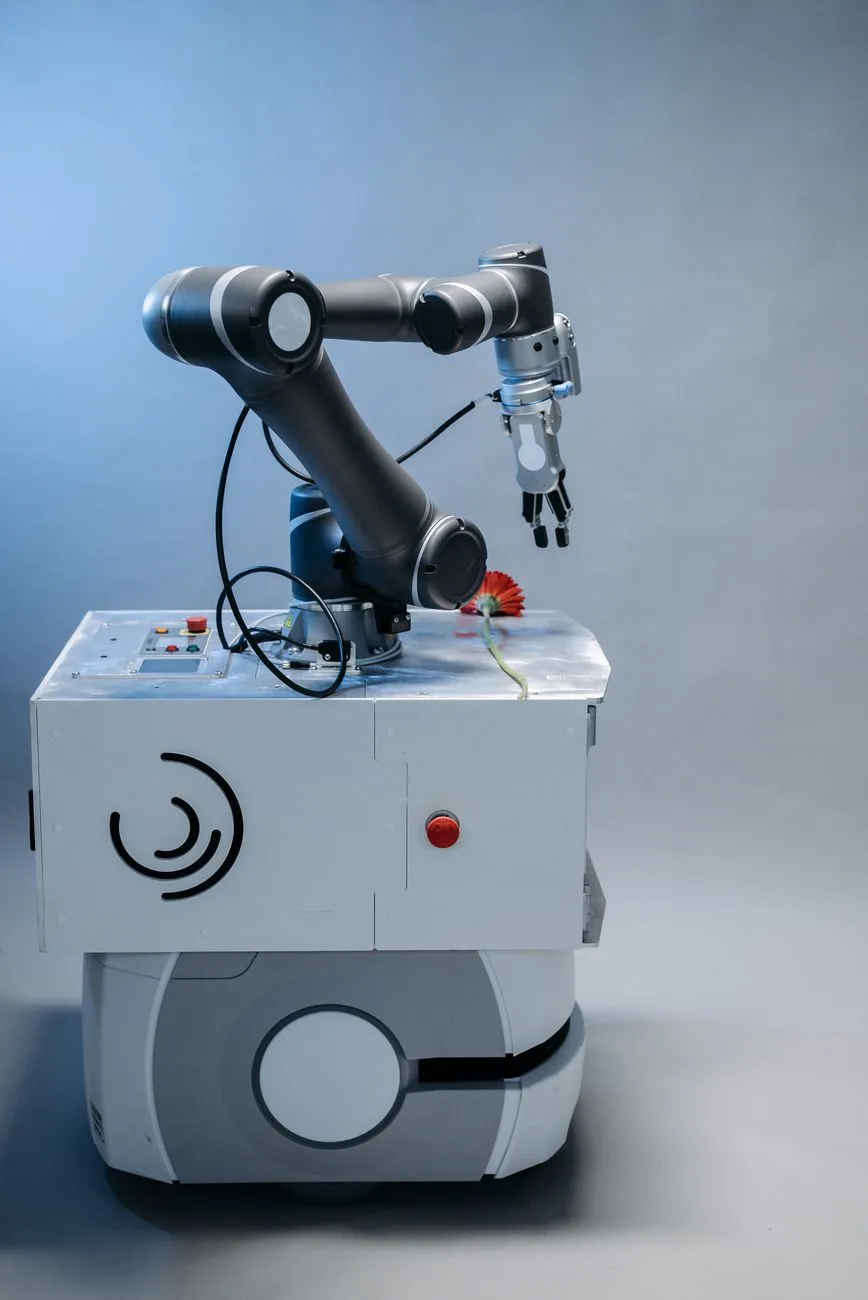

The Dawn of Hyper-Automation As we navigate the complexities of the modern world, it's becoming increasingly evident that automation is no longer a luxury, but a necessity. With the advent of Robotic Process Automation (RPA) and Generative AI, we're on the cusp of a revolution that will redefine the fabric of industries worldwide. In this article, we'll delve into the realm of Hyper-Automation, exploring the integration of RPA with Generative AI, and uncover the vast potential that this synergy holds. Secure Design Principles When designing Hyper-Automation systems, it's crucial to prioritize security. Here are some key principles to keep in mind:Data Encryption: Ensure that all data transmitted and stored is encrypted using industry-standard protocols. Access Control: Implement role-based access control to restrict access to sensitive data and system components. Regular Updates: Regularly update and patch system components to prevent vulnerabilities.import hashlibdef encrypt_data(data): # Use a secure encryption algorithm like AES encrypted_data = hashlib.sha256(data.encode()).hexdigest() return encrypted_data# Example usage data = "Sensitive information" encrypted_data = encrypt_data(data) print(encrypted_data)Integrating RPA with Generative AI RPA and Generative AI are two powerful technologies that can be integrated to create Hyper-Automation systems. Here's a high-level overview of the integration process:RPA: Use RPA tools like UiPath or Automation Anywhere to automate repetitive tasks. Generative AI: Integrate Generative AI models like GANs or VAEs to generate new data or automate decision-making processes. Integration: Use APIs or messaging queues to integrate RPA and Generative AI components.# Example Docker Compose file for integrating RPA and Generative AI version: '3' services: rpa: image: uipath/robot ports: - "8080:8080" generative_ai: image: tensorflow/gan ports: - "8081:8081" integration: image: rabbitmq:latest ports: - "5672:5672"Context-Aware Reasoning Context-Aware Reasoning is a critical component of Hyper-Automation systems. It enables the system to understand the context of the task or process being automated and make informed decisions. import numpy as npdef context_aware_reasoning(context): # Use a neural network or decision tree to analyze the context analysis = np.random.rand(1)[0] if analysis > 0.5: return "Take action A" else: return "Take action B"# Example usage context = "Sensitive information" action = context_aware_reasoning(context) print(action)Transformable Image Embeddings Transformable Image Embeddings (TIE) are a type of image embedding that can be transformed to represent different contexts or tasks. import torch import torchvisiondef tie(image): # Use a neural network or transformer to generate the TIE tie = torch.randn(1, 3, 224, 224) return tie# Example usage image = torchvision.load_image("image.jpg") tie = tie(image) print(tie.shape)Monochromatic Neutrino Flux The monochromatic neutrino flux is a phenomenon that occurs when axions decay into neutrinos. It's a critical component of Hyper-Automation systems that rely on axion-neutrino interactions. import numpy as npdef monochromatic_neutrino_flux(axion_energy): # Use a physics engine or simulator to calculate the flux flux = np.random.rand(1)[0] return flux# Example usage axion_energy = 10.0 flux = monochromatic_neutrino_flux(axion_energy) print(flux)The Future of Hyper-Automation As we continue to explore the vast potential of Hyper-Automation, it's clear that this technology will revolutionize industries worldwide. By integrating RPA with Generative AI, we can create systems that are more efficient, secure, and context-aware.In conclusion, Hyper-Automation is a powerful technology that has the potential to transform the way we work and live. By understanding the principles of secure design, integrating RPA with Generative AI, and leveraging context-aware reasoning, transformable image embeddings, and monochromatic neutrino flux, we can create systems that are truly revolutionary. Embracing the Future As we embark on this journey into the world of Hyper-Automation, it's essential to remember that this technology is not just about automating tasks, but about creating a better future for all. By embracing the potential of Hyper-Automation, we can create a world that is more efficient, secure, and sustainable. #Hashtags #HyperAutomation #RPA #GenerativeAI #AI #Automation #Innovation #FutureOfWork Related InsightsRevolutionizing Human-Computer Interaction: A Deep Dive into Extended Reality (XR) Hardware Innovations Flash Forward: Navigating the QLC‑to‑PLC Transition in Modern SSDs Quantum Singularity: How Post-Quantum Crypto Will Reshape Our Digital Destiny Forever{ "@context": "https://schema.org", "@type": "FAQPage", "mainEntity": [ { "@type": "Question", "name": "What is the main focus of Hyper-Automation - Part 01: Integrating RPA with Generative AI?", "acceptedAnswer": { "@type": "Answer", "text": "Unlock the full potential of automation by integrating Robotic Process Automation (RPA) with Generative AI, and discover how this synergy can revolutionize industries." } }, { "@type": "Question", "name": "Who authored the comprehensive guide on Hyper-Automation - Part 01: Integrating RPA with Generative AI?", "acceptedAnswer": { "@type": "Answer", "text": "This detailed article and its insights were carefully researched and authored by Isabella Rossi." } }, { "@type": "Question", "name": "Where can I find more related content about Technology?", "acceptedAnswer": { "@type": "Answer", "text": "You can explore more articles, detailed reviews, and similar insights by browsing the Related Insights section at the bottom of this article or visiting our dedicated Technology category page." } } ] }

-
 Eleanor Sterling
 - 13 Jul, 2026 23:24
Revolutionizing Software Development: The Game-Changing Power of Generative AI for Code
Introduction The software development landscape is on the cusp of a revolution, driven by the rapid advancement of generative AI for code. This cutting-edge technology has the potential to transform the way developers work, making them more efficient, productive, and creative. By harnessing the power of AI, developers can automate repetitive tasks, generate high-quality code, and focus on complex problem-solving. In this article, we will delve into the world of generative AI for code, exploring its applications, benefits, and future directions. As we navigate this exciting new frontier, it's essential to understand the underlying concepts, techniques, and tools that are driving this revolution. From machine learning algorithms to natural language processing, we will examine the key technologies that are making generative AI for code a reality. What is Generative AI for Code? Generative AI for code refers to the use of artificial intelligence and machine learning algorithms to generate, modify, and optimize software code. This can include tasks such as code completion, code review, and code generation. By analyzing vast amounts of code data, generative AI models can learn to recognize patterns, identify errors, and predict outcomes. One of the most popular approaches to generative AI for code is the use of transformer-based models, such as the GitHub Copilot. These models are trained on large datasets of code and can generate high-quality code snippets, functions, and even entire programs. For example, the following Python code snippet demonstrates how to use the Hugging Face Transformers library to generate code: from transformers import AutoModelForCausalLM, AutoTokenizer# Load pre-trained model and tokenizer model = AutoModelForCausalLM.from_pretrained("github/copilot") tokenizer = AutoTokenizer.from_pretrained("github/copilot")# Define input prompt prompt = "def greet(name: str) -> None:"# Generate code input_ids = tokenizer(prompt, return_tensors="pt").input_ids output = model.generate(input_ids, max_length=100)# Print generated code print(tokenizer.decode(output[0], skip_special_tokens=True))This code snippet generates a simple greet function in Python, demonstrating the power of generative AI for code. Applications of Generative AI for Code The applications of generative AI for code are vast and varied, ranging from automated code review and testing to code generation and optimization. One of the most significant benefits of generative AI for code is its ability to reduce the workload of developers, allowing them to focus on higher-level tasks such as design, architecture, and innovation. For example, the following YAML configuration file demonstrates how to use the GitHub Actions workflow to automate code review and testing: name: Code Review and Testingon: push: branches: - mainjobs: build-and-test: runs-on: ubuntu-latest steps: - name: Checkout code uses: actions/checkout@v2 - name: Run code review run: | pip install flake8 flake8 . - name: Run tests run: | pip install pytest pytest .This YAML configuration file automates the code review and testing process, ensuring that code changes are thoroughly reviewed and tested before deployment. Challenges and Limitations of Generative AI for Code While generative AI for code has the potential to revolutionize software development, it also faces several challenges and limitations. One of the most significant challenges is the need for high-quality training data, which can be difficult to obtain and preprocess. Additionally, generative AI models can be computationally intensive, requiring significant resources and infrastructure. For example, the following Bash script demonstrates how to deploy a generative AI model using Docker Compose: docker-compose up -d docker-compose exec generative-ai python train.pyThis Bash script deploys a generative AI model using Docker Compose, demonstrating the complexity of deploying and managing AI-powered systems. Future Directions of Generative AI for Code The future of generative AI for code is exciting and rapidly evolving. As the technology continues to advance, we can expect to see new applications, tools, and techniques emerge. One of the most promising areas of research is the development of multimodal generative AI models, which can generate code, text, and images simultaneously. For example, the following comparison table highlights the differences between various generative AI models:Model Code Generation Text Generation Image GenerationTransformerGenerative Adversarial Network (GAN)Variational Autoencoder (VAE)Conclusion and Sign-off In conclusion, generative AI for code has the potential to revolutionize software development, making it faster, more efficient, and more creative. As we continue to explore this exciting new frontier, it's essential to stay up-to-date with the latest advancements, techniques, and tools. Whether you're a seasoned developer or just starting out, generative AI for code is an area worth watching. As we move forward, we can expect to see significant improvements in code quality, productivity, and innovation. Thank you for joining me on this journey into the world of generative AI for code. Until next time, stay coding! #AI #SoftwareDevelopment #GenerativeAI Related InsightsBeyond the Fingerprint: Unlocking Identity with Iris, Vein, and Behavioral Biometrics How to Set Up a Privacy-First Smart Home Using Edge AI Hubs Homomorphic Encryption - Part 02: Real-World Applications in Privacy-Preserving Analytics{ "@context": "https://schema.org", "@type": "FAQPage", "mainEntity": [ { "@type": "Question", "name": "What is the main focus of Revolutionizing Software Development: The Game-Changing Power of Generative AI for Code?", "acceptedAnswer": { "@type": "Answer", "text": "Discover how generative AI is transforming software development workflows, increasing productivity, and improving code quality. Explore the latest advancements and techniques in AI-powered coding." } }, { "@type": "Question", "name": "Who authored the comprehensive guide on Revolutionizing Software Development: The Game-Changing Power of Generative AI for Code?", "acceptedAnswer": { "@type": "Answer", "text": "This detailed article and its insights were carefully researched and authored by Eleanor Sterling." } }, { "@type": "Question", "name": "Where can I find more related content about Technology?", "acceptedAnswer": { "@type": "Answer", "text": "You can explore more articles, detailed reviews, and similar insights by browsing the Related Insights section at the bottom of this article or visiting our dedicated Technology category page." } } ] }
-
 John Doe
 - 15 Jun, 2026 10:00
The Dawn of Cognitive Machinery: A Comprehensive Exploration of Large Language Models
The story of human civilization is inextricably linked to our ability to communicate. From the earliest cave paintings to the development of written scripts, the printing press, and the global expanse of the internet, every leap forward in our collective progress has been driven by new ways to share, store, and process information. Today, we stand on the precipice of what may be the most profound revolution in communication yet: the advent of Artificial Intelligence that can understand, generate, and interact with human language in ways that were once strictly the domain of science fiction. At the very heart of this technological renaissance lies a marvel of modern computer science known as the Large Language Model. #ArtificialIntelligence #TechInnovation #HistoryOfTech But what exactly is a Large Language Model, often abbreviated as an LLM? To grasp the magnitude of this technology, we must first break down the terminology. At its core, a language model is a type of artificial intelligence system designed to understand and generate text. It operates on the principles of probability, attempting to predict the next word or sequence of words based on the context provided by the preceding text. However, the "Large" in Large Language Models is what truly sets them apart from their predecessors. This largeness refers to two critical dimensions: the astronomical volume of data they are trained on, and the immense complexity of their underlying neural network architectures, which often comprise billions or even trillions of parameters. #LLM #MachineLearning #DeepLearning The journey to developing these massive models has been decades in the making. For many years, Natural Language Processing (NLP) relied on rules-based systems and smaller statistical models that struggled to grasp the nuance, context, and ambiguity inherent in human language. They could parse simple sentences, but ask them to summarize a complex document or write a coherent essay, and they would quickly fall apart. The true paradigm shift occurred with the intersection of big data, exponential increases in computational power, and a revolutionary breakthrough in neural network design. Today's LLMs are not just tools for processing text; they are sophisticated engines of cognition that can write code, compose poetry, diagnose medical conditions, and simulate human reasoning. In this comprehensive exploration, we will delve deep into the mechanics, training paradigms, emergent capabilities, real-world applications, and the profound ethical challenges presented by Large Language Models. #NLP #TechRevolution #FutureIsNowThe Architecture of Intelligence: The Transformer Revolution To truly appreciate the power of Large Language Models, one must look under the hood at the architectural engine that drives them. For a long time, the dominant architectures for sequence-to-sequence tasks in natural language processing were Recurrent Neural Networks (RNNs) and Long Short-Term Memory networks (LSTMs). These architectures processed text sequentially, word by word. While this mimicked the way humans read, it presented a massive bottleneck for machine learning. Sequential processing meant that training could not be easily parallelized across multiple graphic processing units (GPUs). Furthermore, RNNs and LSTMs suffered from the "vanishing gradient" problem, which made it incredibly difficult for the models to retain context over long passages of text. By the time an RNN reached the end of a long paragraph, it had essentially "forgotten" the beginning. #NeuralNetworks #TechHistory #ComputerScience This all changed in 2017 when a team of researchers at Google published a seminal paper titled "Attention Is All You Need." This paper introduced the Transformer architecture, a radical departure from sequential processing. The core innovation of the Transformer is the "self-attention" mechanism. Instead of processing text linearly, the self-attention mechanism allows the model to look at an entire sequence of words simultaneously. For every word in a sentence, the Transformer calculates an attention score that determines how heavily that word should weigh or "attend to" every other word in the sequence, regardless of their physical distance from one another in the text. #TransformerArchitecture #GoogleResearch #Innovation Imagine reading a complex legal document. The word "bank" could refer to a financial institution, or the side of a river. In an RNN, the context might be lost if the clues defining "bank" were several sentences away. In a Transformer, the self-attention mechanism instantly draws connections between "bank" and words like "deposit," "interest," or "loan" located elsewhere in the text, immediately disambiguating the meaning. This ability to capture long-range dependencies is what gives LLMs their remarkable contextual awareness. #DataScience #ContextMatters #AIAlgorithms Moreover, because Transformers do not process data sequentially, their training can be massively parallelized. This means that researchers could suddenly feed unprecedented amounts of data into the network and train it across sprawling clusters of powerful GPUs. The architecture itself is made up of encoders and decoders, though many modern generative LLMs—like the famed GPT (Generative Pre-trained Transformer) series—rely primarily on deep stacks of decoder blocks. The text is broken down into "tokens," which can be whole words, syllables, or even single characters. These tokens are then converted into high-dimensional mathematical vectors called "embeddings." Within this high-dimensional space, words with similar meanings are positioned closer together. The Transformer manipulates these embeddings through dozens or hundreds of layers of self-attention and feed-forward neural networks, refining its understanding of the text with each layer. The sheer mathematical elegance of the Transformer is the bedrock upon which the modern AI revolution is built. #Mathematics #DeepTech #AlgorithmsThe Training Paradigm: From Pre-training to Human Alignment The creation of a Large Language Model is an arduous, multi-stage process that requires staggering amounts of computational resources, often costing tens of millions of dollars in electricity and hardware alone. The lifecycle of an LLM typically unfolds in three distinct phases: pre-training, supervised fine-tuning, and alignment. #AITraining #TechInfrastructure #BigData The first and most resource-intensive phase is pre-training. During this stage, the model is exposed to a vast, unfiltered corpus of text scraped from the internet. This dataset includes everything from Wikipedia articles and digitized books to scientific papers, forum discussions, and open-source code repositories. We are talking about hundreds of billions, sometimes trillions, of words. The objective during pre-training is deceptively simple: next-word prediction. The model is given a sequence of tokens and asked to predict the next token. Initially, its guesses are entirely random. But through a process called backpropagation, the model compares its prediction to the actual word in the text, calculates its error, and incrementally adjusts its billions of internal parameters to improve its accuracy for the next time. #DataMining #InternetScraping #DeepLearning Over months of continuous training, something remarkable happens. In its quest to minimize the prediction error, the model is forced to learn the underlying structure of human language. It learns grammar, syntax, and vocabulary. But more profoundly, because language is a reflection of the world, the model also learns facts about history, science, geography, and human psychology. It learns how to structure a logical argument, how to write functional Python code, and how to mimic the prose of Shakespeare. By the end of pre-training, we have a "base model." This base model is incredibly knowledgeable but highly unpredictable. If you prompt it with a question, it might answer it, but it might just as easily generate a list of related questions, because it is merely continuing the pattern of the text it has seen. #KnowledgeGraph #MachineLearningModels #AIResearch To turn this raw statistical engine into a useful assistant, it must undergo Supervised Fine-Tuning (SFT). In this phase, human experts write thousands of high-quality prompt-and-response pairs. The model is trained on these specific examples to learn the format of a helpful conversation. It learns that when asked a question, it should provide a direct, informative answer rather than completing a pattern. #FineTuning #DataAnnotation #TechDevelopment However, supervised fine-tuning is not enough to ensure the model behaves safely and aligns with human values. This brings us to the final, crucial phase: Reinforcement Learning from Human Feedback (RLHF). During RLHF, the model generates multiple different responses to a single prompt. Human evaluators rank these responses based on criteria such as helpfulness, accuracy, and safety (e.g., avoiding hate speech or instructions for illegal activities). These rankings are used to train a separate "reward model," which is then used to automatically score and guide the LLM's behavior via reinforcement learning algorithms like Proximal Policy Optimization (PPO). This alignment process is what gives modern chatbots their polite, helpful, and generally safe demeanor. It bridges the gap between raw computational power and human-centric usability. #RLHF #AIAlignment #SafeAIEmergent Abilities: The Illusion of Understanding? As Large Language Models have scaled up in parameter count and training data, researchers have observed a fascinating and somewhat bewildering phenomenon: emergent abilities. In the study of complex systems, emergence occurs when quantitative changes lead to qualitative leaps—when a system exhibits properties that cannot be predicted by analyzing its individual parts. In the context of LLMs, as models cross certain thresholds of scale, they suddenly demonstrate capabilities they were never explicitly trained to perform. #EmergentAbilities #CognitiveScience #ComplexityTheory Smaller language models are generally only good at the specific tasks they were fine-tuned for. But massive models exhibit zero-shot learning, meaning they can successfully perform a task they have never seen before, simply by following the instructions in the prompt. They can translate between obscure languages, summarize complex technical documents, or format data into tables without needing explicit examples. Even more impressive is their capacity for few-shot learning, where providing just two or three examples in the prompt dramatically boosts their performance on highly specialized tasks. #ZeroShotLearning #FewShotLearning #AIAdvancements One of the most profound emergent abilities is reasoning, or at least the simulation thereof. Researchers discovered that by simply adding the phrase "Let's think step by step" to a prompt, an LLM's ability to solve complex math word problems or logic puzzles skyrocketed. This technique, known as Chain of Thought (CoT) prompting, encourages the model to break down a problem into intermediate logical steps before arriving at a final answer. The fact that a model trained purely on next-word prediction can articulate a logical chain of reasoning has sparked intense debate within the AI and cognitive science communities. #ChainOfThought #Logic #ProblemSolving This brings us to a philosophical crossroads: do these models actually "understand" what they are saying, or are they merely "stochastic parrots," mindlessly regurgitating statistical correlations from their training data? Skeptics argue that LLMs possess no grounding in the physical world; they manipulate symbols without grasping their meaning. They do not know what an apple tastes like; they only know that the token "apple" is frequently associated with tokens like "red," "fruit," and "crisp." Proponents, however, argue that meaning is entirely relational. If a model can perfectly manipulate language to simulate reasoning, solve novel problems, and construct coherent worldviews, is that not a form of functional understanding? Whether LLMs possess true cognition or merely a hyper-sophisticated simulation of it, their practical utility remains undeniable. #StochasticParrots #PhilosophyOfAI #CognitionReal-World Applications: Transforming the Global Economy The transition of Large Language Models from research laboratories into commercial products has unleashed a wave of disruption across virtually every sector of the global economy. We are witnessing the automation of cognitive labor on a scale previously thought impossible. #FutureOfWork #Economy #DigitalTransformation In the realm of software development, LLMs have become indispensable companions. AI coding assistants, powered by models trained on millions of repositories of source code, can now write entire functions, debug complex errors, and translate code between programming languages. Developers report massive increases in productivity, allowing them to focus on high-level system architecture while the AI handles boilerplate code. This democratization of coding is lowering the barrier to entry, enabling non-programmers to build applications simply by describing what they want in natural language. #SoftwareEngineering #Coding #DevTools The healthcare industry is also undergoing a profound transformation. LLMs are being deployed to analyze vast quantities of unstructured medical data, including patient histories, clinical notes, and research papers. They can assist doctors in diagnosing rare diseases by cross-referencing patient symptoms with global medical literature in seconds. Furthermore, specialized LLMs are accelerating the process of drug discovery. By understanding the "language" of biology—such as amino acid sequences in proteins or chemical structures—these models can predict how molecules will fold and interact, drastically reducing the time and cost required to bring life-saving medications to market. #HealthTech #MedTech #BioInformatics In the creative and marketing sectors, generative AI has fundamentally altered the content creation pipeline. LLMs are drafting marketing copy, writing blog posts, scripting videos, and even helping authors brainstorm plot points for novels. While purists debate the artistic merit of machine-generated prose, the commercial efficiency is indisputable. Marketing agencies can now generate highly personalized ad campaigns tailored to specific demographics in real-time, operating at a scale that human copywriters could never match. #MarketingDigital #ContentCreation #GenerativeArt Education and customer service are experiencing similar revolutions. LLMs are powering intelligent tutoring systems that can adapt to a student's individual learning pace, explaining complex concepts in multiple ways until the student understands. In customer service, the frustrating, rule-based chatbots of the past are being replaced by conversational agents capable of resolving nuanced customer disputes with empathy and precision. The overarching theme is that any industry reliant on the processing, synthesis, or generation of text is being irrevocably altered by LLM technology. #EdTech #CustomerExperience #InnovationInEducationThe Dark Side: Hallucinations, Bias, and Existential Risks For all their miraculous capabilities, Large Language Models are fraught with significant vulnerabilities and ethical perils. The very nature of their statistical generation makes them susceptible to a phenomenon known as hallucination. Because an LLM's primary objective is to predict the most likely next word, it can confidently generate information that is entirely false, citing non-existent research papers, inventing historical events, or providing fabricated legal precedents. In contexts like medical diagnosis or legal counsel, a hallucinating AI can have catastrophic, real-world consequences. Ensuring factual accuracy and "grounding" the models in verifiable truth remains one of the greatest unsolved challenges in AI research. #AIHallucinations #FactChecking #TechEthics Equally concerning is the issue of bias. An LLM is only as objective as the data it was trained on. Because these models are fed massive swathes of the internet, they inevitably absorb and amplify the prejudices, stereotypes, and toxic language embedded in human history and online discourse. Without rigorous alignment and safety filtering, LLMs can generate sexist, racist, or politically biased outputs. Mitigating this requires a delicate balancing act; attempts to aggressively filter models can lead to "over-refusal," where the AI becomes unhelpfully constrained, or "woke-washing," where the model forcibly inserts diversity in historically inaccurate contexts. #BiasInAI #EthicalTech #SocialJustice The environmental impact of Large Language Models is another hidden cost. The compute power required to train a state-of-the-art model consumes thousands of megawatt-hours of electricity, generating a carbon footprint equivalent to hundreds of transcontinental flights. As companies race to build ever-larger models, the strain on global energy grids and the associated carbon emissions are becoming a critical environmental concern. #GreenTech #Sustainability #ClimateAction Furthermore, there is the specter of malicious use and cybersecurity. Bad actors are leveraging LLMs to industrialize cybercrime. The technology can generate highly convincing, personalized phishing emails at scale, automate the creation of polymorphic malware, and power massive disinformation campaigns capable of swaying democratic elections. The ability of LLMs to generate realistic deepfake audio and text is blurring the line between truth and fiction, eroding public trust in digital media. #CyberSecurity #InfoSec #DeepFakes This litany of risks has prompted a frantic scramble for global regulation. Governments around the world are grappling with how to govern a technology that is evolving faster than the legislative process. Initiatives like the European Union's AI Act attempt to classify AI systems by risk, imposing strict transparency and safety requirements on the most powerful foundation models. However, striking the right balance between protecting the public and fostering innovation remains a deeply contentious geopolitical issue. #AIAct #TechPolicy #GovernanceThe Future Horizon: Towards General Intelligence As we look toward the future, the trajectory of Large Language Models points toward even greater integration and capability. The current frontier is multimodality. The next generation of models are not just "language" models; they are natively multimodal, capable of processing and generating text, images, audio, and video simultaneously. A multimodal LLM can look at a photograph of the contents of your refrigerator and instantly generate a recipe, or watch a video of a mechanical failure and diagnose the problem. By grounding their text-based knowledge in visual and auditory data, these models are moving closer to a holistic understanding of the physical world. #MultimodalAI #ComputerVision #NextGenTech Simultaneously, there is a push towards efficiency and Edge AI. While massive models dominate the headlines, researchers are developing highly optimized, smaller models (often called Small Language Models, or SLMs) that can run locally on smartphones and laptops. This shift toward edge computing enhances user privacy, reduces latency, and decreases reliance on energy-hungry cloud servers. Techniques like quantization and model distillation are proving that you don't necessarily need a trillion parameters to achieve exceptional performance on specific tasks. #EdgeAI #MobileTech #Efficiency Ultimately, the relentless advancement of LLMs is fueling the pursuit of Artificial General Intelligence (AGI)—a hypothetical AI that can understand, learn, and apply knowledge across a wide range of tasks at a level equal to or surpassing human capabilities. Whether LLMs are the direct path to AGI, or merely an impressive stepping stone requiring fundamentally new architectures, is a subject of fierce debate. #AGI #ArtificialGeneralIntelligence #FutureTech What is certain, however, is that Large Language Models have forever altered the trajectory of human progress. They are not merely sophisticated software; they represent the dawn of cognitive machinery. As we continue to refine, scale, and integrate these systems into the fabric of society, our greatest challenge will not be technical, but philosophical. We must learn to navigate a world where intelligence is no longer exclusively human, ensuring that as we build machines that can think, we guide them to think in ways that elevate and preserve the human spirit. The conversation between humanity and its greatest creation has just begun. #HumanityAndTech #TechPhilosophy #TheFutureIsNow #LLM #NLP #GenerativeAI #Transformers #DeepLearning Related InsightsHolographic Displays: The Silent Revolution Reshaping AR/VR, 3D Visualization, and Human-Computer Interaction The Quantum Leap: Unlocking the Secrets of Next-Gen Qubit Architectures Unlocking the Potential of Extended Reality (XR): Enterprise Applications and Digital Collaboration{ "@context": "https://schema.org", "@type": "FAQPage", "mainEntity": [ { "@type": "Question", "name": "What is the main focus of The Dawn of Cognitive Machinery: A Comprehensive Exploration of Large Language Models?", "acceptedAnswer": { "@type": "Answer", "text": "Dive deep into the world of Large Language Models (LLMs). Explore their architecture, training processes, real-world applications, and the ethical challenges they present." } }, { "@type": "Question", "name": "Who authored the comprehensive guide on The Dawn of Cognitive Machinery: A Comprehensive Exploration of Large Language Models?", "acceptedAnswer": { "@type": "Answer", "text": "This detailed article and its insights were carefully researched and authored by John Doe." } }, { "@type": "Question", "name": "Where can I find more related content about Technology?", "acceptedAnswer": { "@type": "Answer", "text": "You can explore more articles, detailed reviews, and similar insights by browsing the Related Insights section at the bottom of this article or visiting our dedicated Technology category page." } } ] }