Showing Posts From
Georgiatravel
-
 Chloe Tremblay
 - 04 Sep, 2026 20:58
Beyond the Clouds: Unveiling the Eternal Spirit of Georgia’s Caucasus
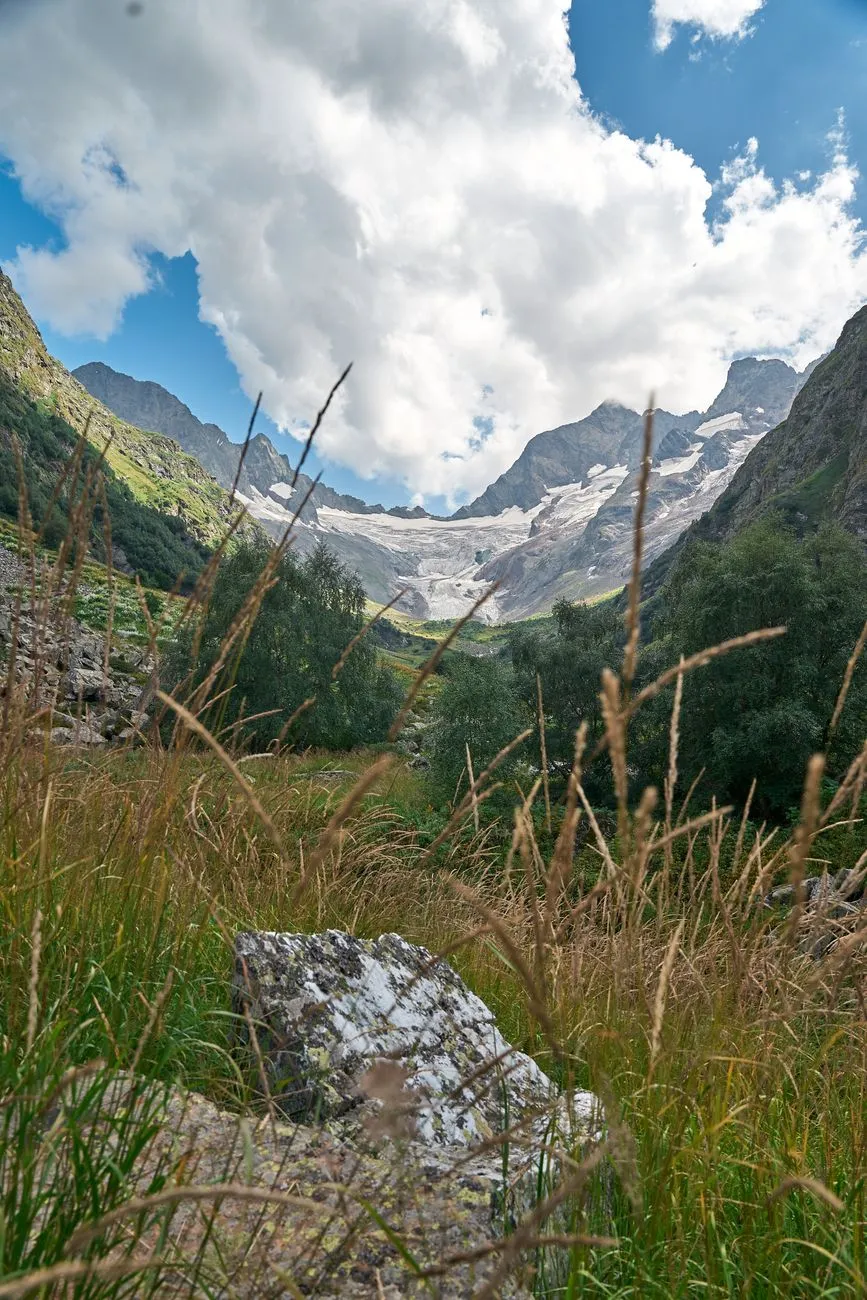
Where the Gods Cast Their Shadows Across the Peaks The Caucasus Mountains are not merely a geographical barrier; they are a living, breathing testament to the resilience of human culture at the edge of the sky. As I stand on the precipice of a ridge overlooking the Svaneti region, the silence is so profound it feels prehistoric. This is the heart of Georgia, a nation that has spent millennia perfecting the art of existence between the peaks. For the modern traveler, Georgia offers something increasingly rare: an authentic encounter with history that hasn't been polished away by mass tourism. The jagged silhouettes of Mount Shkhara and Mount Kazbek dominate the horizon, creating a dramatic backdrop for the stone towers that have guarded these valleys for centuries. Visiting Georgia requires a shift in perspective. It is not a place to check off a list, but a place to inhabit. With the country’s liberal visa policies—offering a full year of visa-free access to citizens of dozens of countries—Georgia has transformed from a hidden gem into a sanctuary for digital nomads and long-term explorers. It is a country that understands the value of time, reflected in its 8,000-year-old tradition of qvevri winemaking. Here, the wine is not just a commodity; it is a sacred element of the dinner table, an ancient liquid timeline that connects the Neolithic era to your glass tonight. As you traverse the winding mountain passes, you will find that the hospitality of the high-altitude villages is as intense as the elevation itself. Whether you are trekking the Transcaucasian Trail or searching for the perfect Tbilisi café to log into your workday, the sheer gravity of Georgia’s spirit will pull you into its orbit, making a short trip feel like a lifetime.The Symphony of Stone and Sky in Svaneti Svaneti is the jewel in the crown of the High Caucasus, a region so isolated by its treacherous mountain terrain that it managed to preserve its unique language and customs even as empires rose and fell below it. The iconic Svan towers, or "koshki," rise from the earth like granite sentinels. Originally built during the Middle Ages as fortified dwellings to protect families from both invading armies and blood feuds, these towers now stand as iconic silhouettes against the massive glaciers. Trekking from Mestia to Ushguli is the quintessential Georgian experience. Ushguli, one of the highest permanently inhabited settlements in Europe, sits at the base of the Shkhara glacier. Here, the road ends, and the true wilderness begins. For the serious hiker, the trails here are unforgiving yet immensely rewarding. The path is marked by high mountain passes—often exceeding 2,500 meters—that test your lung capacity and spirit. But the effort is rewarded with scenes of wild, unmanicured beauty: meadows saturated with wildflowers, glacial rivers running turquoise with silt, and the constant, thundering presence of peaks that pierce the clouds. Living here, even for a few weeks, demands a change in your daily rhythm. There is no urgency in the mountains. The locals, the Svans, are known for their fierce independence and their legendary hospitality. You will find yourself invited into homes for a glass of homemade wine or chacha (a potent grape brandy) before you even realize you’ve been walking for six hours. This is the pulse of the Caucasus—a place where the physical challenge of the terrain is balanced by the warmth of the hearth. For a remote worker, the stability of mobile connectivity is improving, but the real benefit is the forced disconnection that allows you to rediscover your own creative clarity. A Toast to Eight Millennia of Viticulture To understand Georgia is to understand the Qvevri. These massive, egg-shaped clay vessels, buried deep underground, are the heart of a winemaking tradition that has survived virtually unchanged for eight thousand years. This is not the sterile, stainless-steel-tank wine production found in Bordeaux or Napa; this is raw, earthy, and profound. When you drink amber wine—produced by fermenting white grapes with their skins in the Qvevri—you are tasting history. The tannins, the color, and the depth of flavor are derived from the very earth of Georgia. In the mountain regions, the grapes grow in microclimates that are as dramatic as the peaks themselves, creating wines that are crisp, mineral-forward, and entirely distinct. Visiting a cellar in a remote valley is a masterclass in patience. The winemakers speak of their Qvevri as if they are living members of the family. Because of the natural temperature control of the earth, the wine matures at a steady, slow pace, resulting in a product that is complex and unfiltered. In Tbilisi, the capital, this tradition is being revitalized by a new generation of winemakers who are blending modern entrepreneurial spirit with ancient secrets. You can sit in a sleek, modern wine bar in the Sololaki district, sipping a 2024 vintage that was made exactly the same way as a 6000 BCE find discovered by archaeologists. This continuity is what makes Georgia so compelling. As a digital nomad, integrating into this culture means participating in the "supra," the traditional Georgian feast. It is a marathon of storytelling, polyphonic singing, and endless toasts led by a "tamada" (toastmaster). It is an experience that breaks down barriers faster than any business meeting ever could.Navigating the Nomad's Economic Frontier Georgia has quietly become the premier destination for remote workers who want to balance high-quality living with low overhead. Utilizing data aggregated from platforms like Numbeo, we can see why it attracts the global freelance community. While inflation has impacted global travel, Georgia remains a highly accessible "best-kept secret." The cost of living in Tbilisi, when compared to Western European capitals or major North American hubs, allows for a significantly higher quality of life on a modest budget. You aren't just surviving here; you are living in a historic city with a world-class culinary scene, an affordable network of coworking spaces, and a vibrant nightlife that rivals Berlin. Beyond the raw numbers, the lifestyle value is found in the ease of integration. The "Remotely from Georgia" visa program, combined with the general one-year visa-free stay, provides a level of legal certainty that is rare. For those looking to set up a base, the housing market in Tbilisi ranges from renovated Soviet-era apartments with soaring ceilings to ultra-modern lofts. However, the true savvy nomad spends their summer in the mountains and their shoulder season in the city. When you factor in the efficiency of the "Marshrutka" (the ubiquitous minibus transport system) and the plummeting costs of local food—characterized by fresh sulguni cheese, organic produce, and world-class bread—you realize that Georgia offers a masterclass in economic mobility. It is a place where you can afford to invest in your own health, your own wine collection, and your own professional development simultaneously.Expense Category Average Monthly Cost (USD) Comparison to Western EuropeStudio Apartment (City Center) $550 - $800 ~60% LowerCoworking Desk Space $120 - $200 ~50% LowerGrocery Budget (Fresh Market) $200 - $300 ~45% LowerHigh-Speed Internet/Utility Bill $40 - $60 ~30% LowerMonthly Restaurant Spend $300 - $450 ~55% LowerThe Art of the Slow Migration To live in Georgia is to practice the art of the slow migration. As the summer heat climbs in the Tbilisi streets, the pulse of the country moves upward. You follow it, winding your way through the Georgian Military Highway toward the mountain sanctuary of Kazbegi. The road itself is a historical marvel, cutting through the high passes that have defined trade and conflict for centuries. Once you arrive, the air changes. It is sharper, thinner, and clearer. This is where your workday shifts; you find yourself answering emails while staring at the Gergeti Trinity Church, perched precariously against the massive flank of Mt. Kazbek. The infrastructure for digital nomads in these remote regions is surprisingly robust. Small guesthouses in Stepantsminda have adapted to the influx of remote professionals, offering high-speed satellite internet alongside traditional mountain breakfasts. It is not uncommon to see a software developer, a trekking guide, and a local winemaker sharing a terrace. This intersection of cultures is where the true value of your stay lies. You learn to negotiate the pace of your professional life with the immutable pace of the mountains. You learn that a local storm might delay your commute, but it also provides the perfect excuse to spend the afternoon diving into the complexities of Georgian history. The isolation of the peaks acts as a catalyst for focus. When there are no distractions but the sound of the wind through the Caucasian pines, your output—whether it be code, prose, or strategic planning—takes on a new dimension of depth.Where Your Story Becomes Part of the Landscape The allure of Georgia is not that it caters to you, but that it invites you to join it. It is a land of paradoxes: fiercely traditional yet incredibly welcoming to the outsider, geographically isolated yet culturally central to the historic Silk Road. As you pack your gear to leave the mountain ridges or close your laptop after a month in a Tbilisi café, you realize that you aren't leaving a destination—you are leaving a community. The friendships formed over a shared bowl of Khinkali or a long, wine-soaked evening are deep and often lasting. You have become, for a fleeting moment, a part of the long, intricate tapestry of the Caucasus. If you are a traveler looking for the next frontier, look no further than these jagged, ancient heights. The mountains are waiting, and the wine is already poured. Georgia doesn't ask you to change it, but it will inevitably change you. You will return to your home country with a different standard for what constitutes a mountain, a different palate for what defines wine, and a different understanding of what it means to be truly free in a modern, connected world. The peaks of the Caucasus will remain, silent and immutable, long after your flight has departed, but the memory of the light hitting the glaciers at dusk will remain even longer. Do not wait for the perfect time to visit; in the land of 8,000 vintages, the perfect time is always now. Pack your boots, bring your curiosity, and prepare to be humbled by one of the most magnificent landscapes on this earth. The mountain path is open, and your story in Georgia is waiting to be written. #GeorgiaTravel #DigitalNomadLife #CaucasusMountains #TravelDeep #AncientTraditions Related InsightsExploring Ani, City of 1001 Churches Ethiopia's Danakil Depression: The Hottest Place on Earth's Alien Landscapes (Part 3) The Purple Gold of Provence: Exploring the Lavender Fields{ "@context": "https://schema.org", "@type": "FAQPage", "mainEntity": [ { "@type": "Question", "name": "What is the main focus of Beyond the Clouds: Unveiling the Eternal Spirit of Georgia’s Caucasus?", "acceptedAnswer": { "@type": "Answer", "text": "Discover why Georgia is the ultimate frontier for adventurers and digital nomads, blending 8,000-year-old wine traditions with the world’s most dramatic alpine scenery." } }, { "@type": "Question", "name": "Who authored the comprehensive guide on Beyond the Clouds: Unveiling the Eternal Spirit of Georgia’s Caucasus?", "acceptedAnswer": { "@type": "Answer", "text": "This detailed article and its insights were carefully researched and authored by Chloe Tremblay." } }, { "@type": "Question", "name": "Where can I find more related content about Travel?", "acceptedAnswer": { "@type": "Answer", "text": "You can explore more articles, detailed reviews, and similar insights by browsing the Related Insights section at the bottom of this article or visiting our dedicated Travel category page." } } ] }
-
 John Explorer
 - 03 Jul, 2026 01:15
Beyond the Watchtowers: Unearthing Svaneti's Hidden Star-Stone Calendar
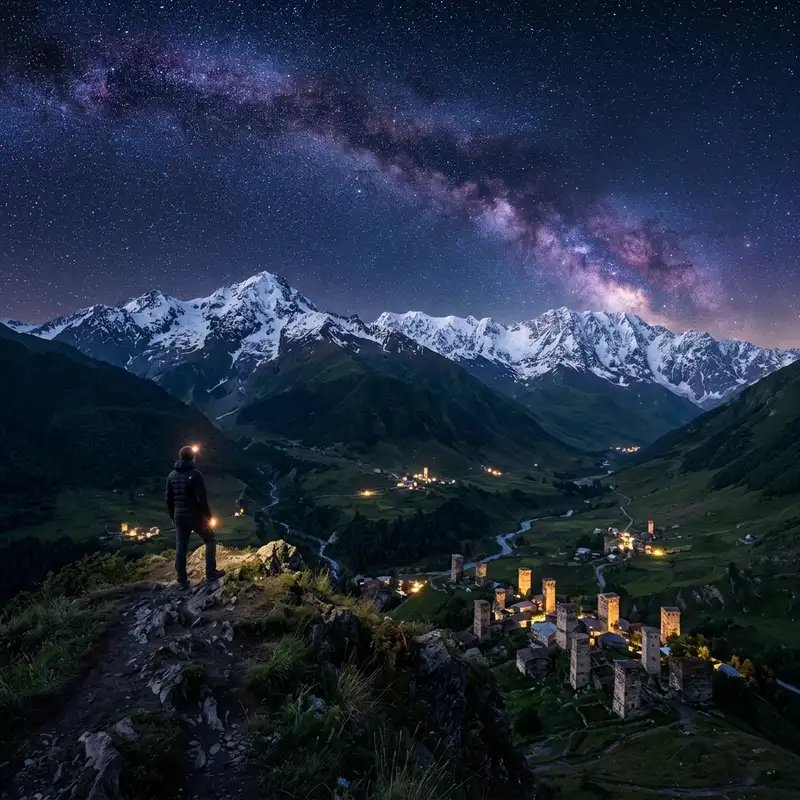
There are places on Earth where time doesn't merely slow; it calcifies, hardening into the very stone of the mountains, the timber of #ancient homes, the wrinkles on the faces of its oldest inhabitants. Svaneti, a fortress of a region tucked high in the Greater Caucasus of Georgia, is one such place. Its iconic defensive towers, or koshki, pierce the sky like ancient sentinels, silent witnesses to millennia of fierce independence. Yet, beneath their watchful gaze, and beyond the well-trodden paths to these architectural wonders, lies a secret far older, far more enigmatic than any medieval fortification: a celestial calendar etched not in parchment or clay, but in the very bedrock of the Earth, a scattered constellation of megaliths known only to a precious few. My #journey began not with a #travel brochure, but with a forgotten footnote in a faded, Georgian-language ethnography from the early 20th century. The text, a dense academic tome on Svan customs and folklore, briefly alluded to 'heaven-touching stones' – Tsiskhela Kvani – said to mark the passages of the sun and stars for purposes now lost to memory. The author dismissed them as mere local superstitions, perhaps misidentified boundary markers. But the phrase lodged itself in my mind, a splinter of intrigue in a vast landscape of known #history. 'Heaven-touching.' What could that mean in a land already so close to the heavens? The Whisper of a Forgotten Cosmology Svaneti has always captivated me. Its isolation, its unique unwritten language (Svan, a distinct Kartvelian tongue), its fierce warrior traditions, and its profound adherence to ancient customs speak of a cultural crucible forged in extreme conditions. The Svans, with their deep reverence for their ancestors and the mountainous terrain, seemed like the perfect candidates for having preserved such an archaic astronomical practice. My initial research was a frustrating tangle of dead ends. Modern Georgian archaeology has largely focused on more accessible, better-documented sites. The concept of a widespread megalithic astronomical complex in Svaneti was met with polite skepticism, or outright bewilderment. No official maps noted them; no tourist guides mentioned them. They existed, if at all, purely in the realm of local oral tradition, or perhaps, simply didn't exist. But the spark of an idea, once ignited, becomes a bonfire for the explorer. I imagined ancient Svans, in their high mountain valleys, gazing up at the impossibly clear, star-strewn skies, their lives intimately linked to the cycles of the sun and moon, the rhythms of planting and harvest dictated by celestial movements. It was more than a practical need; it was a spiritual imperative, a way to connect their earthly existence to the cosmic order. My quest, then, was not merely to find stones, but to uncover a lost cosmology, to understand how a civilization, isolated by formidable peaks, understood its place in the universe. It felt less like a travel blog entry and more like an archaeological detective story, one where the clues were written in stone and the archives were held in the memories of a people fiercely protective of their heritage. Navigating the Labyrinth of Svaneti's Peaks and Perceptions The road to Svaneti is an adventure in itself. From Zugdidi, the drive winds through increasingly dramatic gorges, past emerald valleys, until the true scale of the Caucasus reveals itself. Mestia, the regional capital, bustles with a growing, albeit still nascent, tourism industry. But my interest lay far beyond Mestia, in the more remote villages that cling precariously to the mountain slopes, where electricity is intermittent and paved roads are a luxury. My first weeks were spent traversing the upper reaches of the Enguri valley, visiting villages like Ushguli (a #UNESCO World Heritage site known for its concentration of koshki), Adishi, and Khalde. I spoke with elders, often through multiple layers of translation, seeking any mention of Tsiskhela Kvani. Most conversations were cordial but fruitless. There were stories of powerful spirits, of sacred groves, of boundary markers, but nothing that definitively pointed to astronomical observatories. The Svans, renowned for their hospitality, are also reserved, their ancient ways not easily shared with outsiders. I encountered the usual challenges of remote travel: treacherous mountain paths, sudden changes in weather, the occasional territorial shepherd dog. More significantly, I faced the challenge of translating a deeply ingrained, almost instinctual connection to the land and sky into something comprehensible to a modern, scientific mind. The concept of 'astronomy' as we understand it didn't quite fit. What I was looking for was a system, a set of markers that served a calendrical or observational purpose, however rudimentary. Then, in a tiny, almost forgotten hamlet beyond Ushguli, nestled against a backdrop of snow-capped giants, I met Khatuna. She was a woman in her late seventies, with eyes that seemed to hold the wisdom of generations and hands calloused from a lifetime of working the land. Her grandson, a young man named Temo who had studied some English in Kutaisi, became my crucial interpreter. Khatuna, unlike others, didn’t immediately dismiss my questions. She listened, her gaze distant, as if sifting through long-buried memories. “The old ones… they watched the sky,” she finally said, her voice raspy but clear. “Not for telling stories, not just for seeing God. But for knowing when the snow would melt, when the earth would wake, when the mravaljamieri (feasts) should be held. The stones… they helped them see.” The Unveiling: A Glimmer of Celestial Alignment Khatuna described a specific stone, not far from her village, one her own grandfather had shown her, warning her to respect its 'old power.' It wasn't a grand monument, she cautioned, but a simple, standing stone, largely overgrown. With Temo as my guide and Khatuna's cryptic directions, we set out early one misty morning. The path was barely discernible, a faint deer trail winding through dense rhododendron thickets and ancient pine forests. The air was cool and crisp, scented with damp earth and wild herbs. After an arduous two-hour trek uphill, breaking through thorny bushes and clambering over moss-slicked boulders, Temo pointed. "There," he whispered, his voice hushed with reverence. And there it was. Not a towering obelisk, but a single, rough-hewn slab of granite, perhaps two meters tall, half-hidden by a tangle of ivy and ferns. It stood sentinel on a small, windswept plateau, offering an unobstructed view of the eastern horizon and, more importantly, a distant notch in the mountain range. The stone itself was unremarkable at first glance. No elaborate carvings, no obvious inscriptions. It was simply… there. But as I cleared away the overgrowth, I noticed a subtle detail: a series of small, shallow depressions, almost like cup-marks, on its northern face. They were eroded, barely visible, but they were definitely deliberate. I took out my compass and GPS. The stone was oriented almost perfectly along a north-south axis. My initial excitement was cautious. This could still be a boundary marker, a monument of unknown purpose. But then, Temo, who had been quietly observing, spoke. "My grandmother said, when the sun first touches this stone on the longest day, it means the hay will be good." The longest day – the summer solstice. My heart quickened. Could this be it? Could this unassuming stone be a marker for a crucial agricultural date, aligned with a specific astronomical event? I spent the next few hours there, sketching, taking measurements, noting the topography. The view from the stone was strategic, framing a particular peak on the eastern horizon. I imagined the ancient Svan priests or elders, standing here at dawn on the solstice, watching for the first ray of sunlight to strike the stone at a precise point, confirming the turn of the cosmic wheel. The Network: Unravelling Svaneti's Celestial Tapestry This single stone, however compelling, was merely a thread. Khatuna, encouraged by my genuine interest, revealed that there were 'others,' though she couldn't pinpoint their exact locations. She spoke of them as a scattered family, each with its own story, its own purpose. This implied a network, not just isolated markers. My investigation shifted. With Temo's invaluable help, I began cross-referencing Khatuna's vague descriptions with old maps, local legends, and even the natural geography of the valleys. We spent weeks trekking, often following goat trails, sometimes forging our own path through untouched wilderness. The discoveries were slow, arduous, and interspersed with many false leads. We found a second stone, much larger, near the ruins of an ancient watchtower, positioned on a ridge overlooking a confluence of rivers. This one had a more pronounced, almost altar-like top, with a deep, circular basin carved into it. Its alignment, after careful observation over several days, seemed to point towards the setting sun during the winter solstice – the shortest day, a critical marker for the depth of winter and the promise of spring's return. The Anatomy of an Ancient Observatory The pattern began to emerge. These weren't random rocks; they were precisely placed, deliberately oriented megaliths, each acting as a gnomon, a foresight, or a backsight for celestial observations. Some marked solstices, others equinoxes. One smaller stone, almost entirely buried, appeared to align with the rising of certain prominent stars or constellations that would have been visible to ancient Svans – perhaps Sirius, or the Pleiades, critical for predicting seasons in pre-telescopic societies. I started to reconstruct a rudimentary calendar system, one that would have allowed the Svans to predict seasonal changes with remarkable accuracy. Imagine the immense intellectual effort involved: centuries of meticulous observation, passed down orally, generation after generation, until these specific points on the landscape were identified and marked with enduring stone. This wasn't merely practical agriculture; it was a profound scientific and spiritual endeavor.The stones weren't just about marking time; they were central to the Svan worldview. They provided a tangible connection between their earthly toil and the cosmic dance above. Rituals, prayers, and community gatherings would undoubtedly have taken place at these sites, reinforcing the community's connection to the land and the heavens. The cup-marks on the first stone? Perhaps offerings, or points for pouring libations to the celestial deities, or even simpler, mnemonic devices for tracking lunar cycles or star positions. What struck me most was the sheer ingenuity. Without sophisticated instruments, without written language for scientific notation, these ancient Svans had charted the heavens with an accuracy that rivals many early civilizations. Their 'observatory' was not a grand #temple, but the entire sweeping mountain landscape, dotted with these humble yet powerful markers. The Keepers of the Knowledge and the Urgency of Preservation Khatuna and Temo were not the only ones with fragments of this knowledge. As word of my quest spread (and my genuine respect for their #culture became apparent), other elders would occasionally share a story, a memory, a half-forgotten rhyme about a 'watching stone' or a 'star-point.' Each piece of information was like a precious shard, helping to reconstruct a shattered mosaic. It became clear that the full understanding of this star-stone calendar had faded over centuries. The arrival of Christianity, the shifting agricultural practices, and the simple passage of time had eroded the practical necessity and spiritual reverence for these sites. Many stones were likely lost to natural erosion, landslides, or simply re-purposed for construction. The few that remained were ghosts of a forgotten science, whispering secrets that fewer and fewer could hear. This is why their documentation and preservation are so critical. These Svaneti star-stones are not just archaeological curiosities; they are a testament to human ingenuity, resilience, and our universal urge to understand our place in the cosmos. They represent a unique contribution of Svan culture to the global history of astronomy and megalithic #architecture, a testament to a civilization that looked not only inward, to their fortified valleys, but also upward, to the infinite expanse above. My time in Svaneti became more than a physical journey; it was an intellectual and spiritual odyssey. Standing beside these ancient markers, feeling the immense weight of history, the silence broken only by the mountain wind, I felt a profound connection to those distant ancestors. They carved their understanding of the universe into the very fabric of their homeland, leaving behind a legacy that transcends time and language. The Enduring Allure of the Unseen Leaving Svaneti, I carried with me not just photographs and field notes, but a deeper appreciation for the hidden histories that lie just beneath the surface of the familiar. The koshki of Svaneti are impressive, drawing deserved attention, but it is the silent, weather-beaten Tsiskhela Kvani – the heaven-touching stones – that truly reveal the profound intellectual and spiritual depth of this ancient culture. They remind us that the greatest discoveries are often not found in grand museums or bustling tourist centers, but in the quiet, forgotten corners of the world, patiently waiting for a curious soul to listen. My journey to Svaneti was a powerful reminder that exploration isn't just about seeing what's there, but about unearthing what was, deciphering what's hidden, and preserving what might otherwise be lost forever. The mountains of Svaneti still hold countless secrets, waiting for the next adventurer to delve deeper, to listen more closely, and to piece together the fragments of a universe long observed and revered. These star-stones are not just an ancient calendar; they are an open invitation to look up, and wonder. #Svaneti #HiddenHistory #AncientAstronomy #MegalithicCulture #GeorgiaTravel Related InsightsLa Cathédrale de Reims : Le Sanctuaire des Rois de France Chasing the Endless Day: A Photographer’s Manual for Lofoten’s Midnight Sun Wandern in den Alpen{ "@context": "https://schema.org", "@type": "FAQPage", "mainEntity": [ { "@type": "Question", "name": "What is the main focus of Beyond the Watchtowers: Unearthing Svaneti's Hidden Star-Stone Calendar?", "acceptedAnswer": { "@type": "Answer", "text": "Join John Explorer on an arduous trek into Georgia's remote Svaneti region, where ancient megaliths whisper forgotten celestial secrets, revealing a civilization obsessed with the stars." } }, { "@type": "Question", "name": "Who authored the comprehensive guide on Beyond the Watchtowers: Unearthing Svaneti's Hidden Star-Stone Calendar?", "acceptedAnswer": { "@type": "Answer", "text": "This detailed article and its insights were carefully researched and authored by John Explorer." } }, { "@type": "Question", "name": "Where can I find more related content about Travel?", "acceptedAnswer": { "@type": "Answer", "text": "You can explore more articles, detailed reviews, and similar insights by browsing the Related Insights section at the bottom of this article or visiting our dedicated Travel category page." } } ] }