Showing Posts From
Graphicnovels
-
 Emily Page
 - 10 Jul, 2026 10:36
The Unfurling Tapestry: Tracing the Epochal Journey of the Graphic Novel
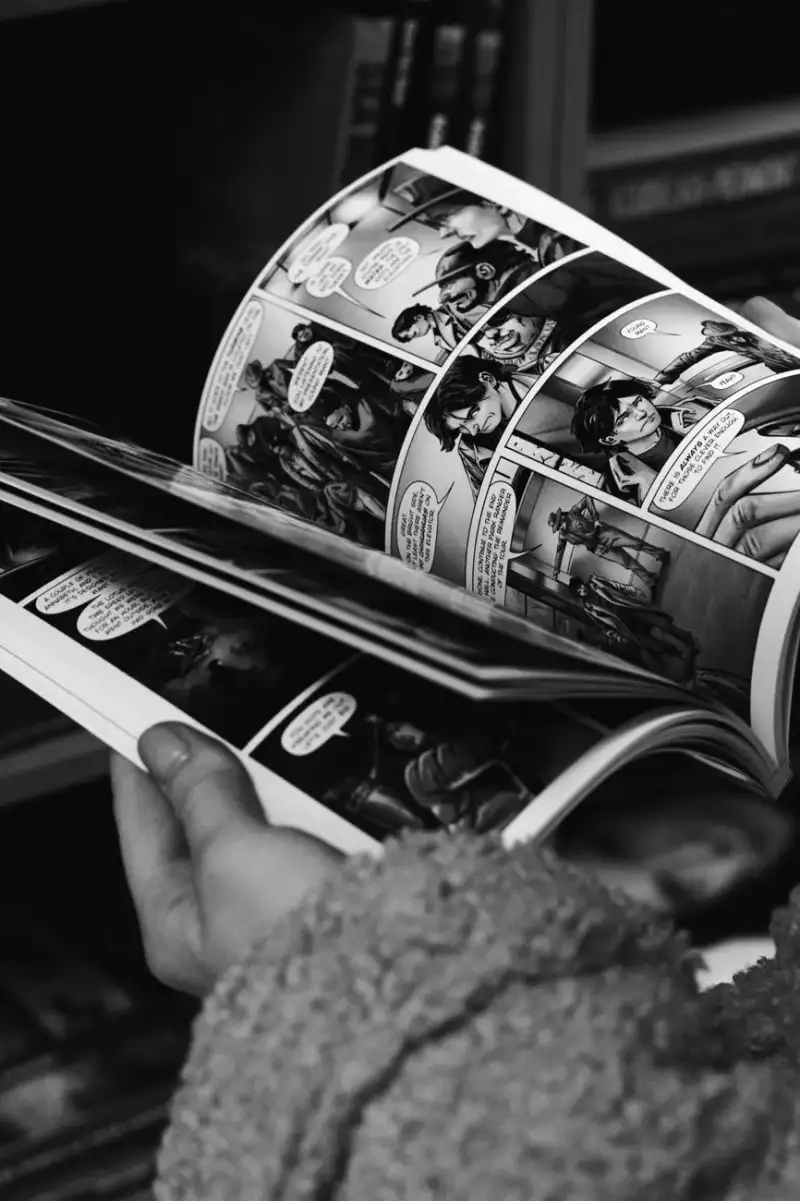
In the grand chronicle of human expression, where words dance with images to forge meaning, there exists a unique medium that defies simplistic categorization. It is a form that commands attention not merely with prose, but with the orchestrated symphony of line, color, and panel, weaving narratives that resonate with profound depth and complexity. This is the graphic novel – a literary force that has wrestled with its own definition, celebrated its rich lineage, and ultimately carved an indelible space within the hearts and minds of readers worldwide. Far more than mere comics, graphic novels represent a self-contained, book-length journey through sequential art, a testament to the boundless possibilities of visual storytelling. Yet, to truly appreciate its contemporary stature, one must delve into the intricate layers of its contested identity and its fascinating, often surprising, historical trajectory. The Elusive Essence: Defining a Dynamic Medium The term "graphic novel" itself, while now ubiquitous, remains a subject of considerable debate, a chameleon-like descriptor that adapts to the context in which it is used. At its core, Merriam-Webster provides a concise, functional understanding: "a fictional story that is presented in comic-strip format and published as a book." This definition offers a vital starting point, anchoring the concept to its dual nature – sequential art as its format and book-length storytelling as its ambition. However, as is often the case with evolving art forms, practice often outpaces rigid definitions. Industry professionals and comics scholars frequently find themselves at odds over the term's broad application. While its purest interpretation might suggest a single, continuous narrative crafted specifically for the book format, the market, and indeed, many libraries and bookstores, embrace a far more inclusive understanding. Here, the umbrella of "graphic novel" often extends to encompass collections of comic books that, while perhaps not forming one continuous story in their original serialization, are compiled into book form. This includes anthologies, collections of loosely related pieces, and even works of non-fiction, mirroring a flexibility seen in traditional literature where dramatic stories might find their way into broader "comic" book classifications. The distinction, particularly in the United States, often lies in its contrast with "comic book," a term typically reserved for periodicals – the monthly or bi-weekly issues that comprise ongoing series – and their compiled "trade paperbacks." The graphic novel, in this context, aims for a perceived higher literary ground, a standalone artistic statement designed from the outset for an expansive, uninterrupted reading experience. Indeed, some have succinctly, if controversially, described it as primarily a marketing term, a label designed to elevate the perception of sequential art beyond its pulp origins and into the realm of respected literature. Across continental Europe, the landscape has long presented a different paradigm. Since the late 19th century, both original book-length narratives and collections of serial comics have been commonly published in sturdy hardcover volumes, often affectionately known as "albums." This tradition predates much of the American formalization of the graphic novel, with iconic Franco-Belgian series like The Adventures of Tintin, beginning in the 1930s, embodying this approach. Stories like Hugo Pratt's The Ballad of the Salty Sea (1967) and Guido Buzzelli's La rivolta dei racchi (1967) are prime examples of original, extensive sequential art narratives born directly into the European album format, demonstrating a long-standing appreciation for the book-length comic as a distinct and respected art form.Echoes of Antiquity: The Genesis of Sequential Art Given the fluidity of its definition, tracing the exact genesis of the graphic novel inevitably leads to a discussion of its precursors – the early, often overlooked, experiments in sequential art that laid the groundwork for what was to come. Its origins are, like many artistic evolutions, open to interpretation, a gradual blossoming rather than a singular invention. One of the earliest recognized American examples of comics utilized for a self-contained narrative purpose is The Adventures of Obadiah Oldbuck. This work, originally published as Histoire de Mr. Vieux Bois in 1828 by the Swiss caricaturist Rodolphe Töpffer, found its way into English translation in 1841 via London's Tilt & Bogue, building upon an 1833 Paris pirate edition. The first American edition followed swiftly in 1842, published by Wilson & Company in New York City, utilizing the original printing plates. Töpffer's influence was palpable, inspiring other early works such as Journey to the Gold Diggins by Jeremiah Saddlebags by brothers J. A. D. and D. F. Read, further cementing the idea of extended narratives told through a series of images. The concept of a "drawn novel" had even captivated the imagination of artists like Caran d'Ache, who in 1894 penned a letter to the newspaper Le Figaro, outlining his vision for such a work. He embarked on a monumental 360-page wordless book, though sadly, it was never published. These early stirrings demonstrate a persistent yearning among creators to tell expansive stories through the interplay of image and sequence. In the United States, a parallel tradition emerged: the reissuing of previously published comic strips in book form. This practice, a commercial precursor to the modern collected edition, saw significant success with the Hearst Syndicate's 1897 collection of The Yellow Kid by Richard Outcault, which quickly soared to bestseller status. While not original book-length narratives, these collections habituated audiences to the idea of sequential art bound between covers, priming the cultural consciousness for the deeper forms that would eventually emerge. The Twentieth Century's Canvas: Experimentation and Evolution The early to mid-20th century proved to be a fertile ground for experimentation, as artists and publishers pushed the boundaries of sequential art, often without the specific terminology we now employ. The 1920s witnessed a notable revival of the medieval woodcut tradition, a stark, powerful form of visual storytelling. Belgian artist Frans Masereel is rightfully lauded as "the undisputed king" of this resurgence, with works like his seminal Passionate Journey (1919) captivating audiences. American artist Lynd Ward followed suit, publishing his iconic Gods' Man in 1929 and continuing to produce similar works throughout the 1930s, showcasing the profound narrative potential of wordless sequential imagery. Other prototypical examples from this vibrant period continued to challenge conventional notions of narrative:Milt Gross's He Done Her Wrong (1930): A wordless comic, published in hardcover, further demonstrating the power of purely visual storytelling in a book format. Max Ernst's Une semaine de bonté (1934): A surrealist painter's venture into a novel composed of sequential collage images, blurring the lines between fine art and narrative sequence. Charlotte Salomon's Life? or Theater? (composed 1941–43): A profoundly personal work that integrated images, narrative text, and captions, creating a powerful autobiographical record.The 1940s introduced Classics Illustrated, a comic-book series that adapted notable, public domain novels into standalone comic books primarily for young readers. While these were individual issues, they represented a conscious effort to present complete stories derived from literary sources within a comic format. Alongside this, Citizen 13660 (1946) emerged as an illustrated, novel-length retelling of the deeply poignant Japanese internment during World War II, a powerful example of non-fiction sequential narrative. Fawcett Comics also contributed with Comics Novel #1: "Anarcho, Dictator of Death" (1947), a 52-page comic dedicated to a single, unbroken story. The 1950s marked a significant step forward in adult-oriented sequential art. St. John Publications unleashed It Rhymes with Lust (1950), a digest-sized, 128-page "picture novel" that proudly proclaimed itself "an original full-length novel" on its cover. This film noir-influenced tale of "steeltown life," starring the manipulative redhead Rust, by pseudonymous writer "Drake Waller" (Arnold Drake and Leslie Waller), penciler Matt Baker, and inker Ray Osrin, was a commercial success, prompting an unrelated follow-up, The Case of the Winking Buddha. In the same year, Gold Medal Books released Mansion of Evil by Joseph Millard. Presaging Will Eisner's later multi-story structure, cartoonist Harvey Kurtzman offered Harvey Kurtzman's Jungle Book (1959), a four-story mass-market paperback, showcasing diverse narratives under one cover. By the late 1960s, American comic book creators were becoming increasingly audacious. Gil Kane and Archie Goodwin independently published His Name Is... Savage (1968), a 40-page, magazine-format comics novel. In the same year, Marvel Comics experimented with a similar format for two issues of The Spectacular Spider-Man. Critical voices began to identify early examples of what might now be termed graphic novels within ongoing serials: columnist Steven Grant argued that Stan Lee and Steve Ditko's Doctor Strange story in Strange Tales #130–146 (1965–1966), despite its serial publication, functioned as "the first American graphic novel." Similarly, critic Jason Sacks pointed to the 13-issue "Panther's Rage" arc in Marvel's Black Panther series (Jungle Action, 1973–1975) as "Marvel's first graphic novel," recognizing it as comics' inaugural titled, self-contained, multi-issue story arc. Meanwhile, on the European continent, the established tradition of collecting popular serials, such as The Adventures of Tintin or Asterix, continued to flourish, fostering long-form narratives that were initially serialized but destined for collected, hardcover album editions. In a poignant example from Argentina, Vida del Che (1968), a graphic novel penned by Héctor Germán Oesterheld and illustrated by Alberto Breccia, recounted the story of Che Guevara. Its powerful narrative, however, led to its confiscation and destruction by the military dictatorship, though it was later re-released in corrected versions – a testament to the medium's capacity for political and historical commentary. The growing recognition of sequential art's narrative power was even noted in broader literary circles. In 1969, the acclaimed author John Updike, who had harbored youthful aspirations of becoming a cartoonist, addressed the Bristol Literary Society on "the death of the novel." In his discourse, Updike presciently offered examples of new avenues for novelists, declaring that he saw "no intrinsic reason why a doubly talented man, or group of men, could not produce a book now and then, if not a steady output, of a length and thickness to be called a novel, that would be a total artistic triumph." He was, perhaps unknowingly, articulating the precise potential that the graphic novel was beginning to realize.A Name and a Revolution: The Graphic Novel's Ascendancy The term "graphic novel" did not spontaneously emerge into the public consciousness fully formed. Its journey from an academic suggestion to a widely accepted literary category is marked by specific moments and landmark publications that irrevocably altered its trajectory. The phrase itself was first explicitly coined by fan historian Richard Kyle in an essay published in the November 1964 issue of the comics fanzine Capa-Alpha. This was a crucial intellectual step, providing a specific label for an emerging, yet unnamed, form of sequential art storytelling. However, it would take more than a decade for the term to truly gain traction within the broader comics community and, eventually, with the general public. The pivotal moment arrived with the publication of Will Eisner's A Contract with God in 1978. Eisner, a legendary figure in comics, delivered a powerful, poignant collection of four loosely interconnected stories centered around a tenement building, presenting it as a cohesive literary work. Its artistic merit and the sheer audacity of its presentation significantly propelled the term "graphic novel" into wider discourse, lending it an air of serious literary intent. The momentum continued to build in the early 1980s. Marvel Comics, recognizing the burgeoning potential and the need for a distinct format, launched its "Marvel Graphic Novel" line in 1982. These were original, self-contained stories presented in a larger format, further cementing the concept of a book-length comic as a commercial and artistic entity separate from monthly periodicals. However, it was the latter half of the 1980s that witnessed the true commercial and critical explosion, catapulting the graphic novel into public familiarity. Three titles, in particular, stand as monumental achievements that redefined the landscape:Art Spiegelman's Maus (first volume published in 1986): A harrowing and profoundly personal account of the Holocaust, told through anthropomorphic animals, Maus shattered preconceptions about what comics could achieve. Its unflinching historical narrative and deeply emotional storytelling earned it a special Pulitzer Prize in 1992, marking an unprecedented literary recognition for the medium. Frank Miller's The Dark Knight Returns (collected editions published in 1986): This gritty, dystopian reimagining of Batman showcased the mature and complex storytelling capabilities of superheroes, pushing the boundaries of the genre and appealing to a sophisticated adult audience. Alan Moore and Dave Gibbons' Watchmen (1987): A deconstructionist masterpiece, Watchmen challenged the very tropes of the superhero genre, offering a nuanced, philosophical, and morally ambiguous narrative that redefined storytelling in comics. Its intricate structure and literary depth garnered widespread critical acclaim.These works, each groundbreaking in its own right, demonstrated the immense narrative potential, artistic sophistication, and emotional resonance that sequential art could command. Their commercial successes were undeniable, leading to a profound shift in perception. By 2001, the institutional recognition arrived when the Book Industry Study Group (BISG) officially began using "graphic novel" as a distinct category in bookstores. This formal classification marked the ultimate triumph of the term, signaling the medium's full integration into the mainstream literary world, no longer an anomaly but a vital and celebrated form of book-length visual storytelling. The journey of the graphic novel is a testament to perseverance, artistic vision, and the evolving nature of literary definition. From its debated origins in early sequential art to its formal categorization, it has proven itself a robust and versatile medium, capable of exploring the full spectrum of human experience with unparalleled depth and artistry. It continues to expand its boundaries, inviting readers into worlds where words and images intertwine, creating narratives that are both intensely personal and universally resonant.#GraphicNovels #SequentialArt #ComicHistory #LiteraryEvolution #VisualStorytelling Related InsightsReign Book Review and Summary Mockingjay Book Review and Summary Fried Green Tomatoes at the Whistle Stop Cafe Book Review and Summary{ "@context": "https://schema.org", "@type": "FAQPage", "mainEntity": [ { "@type": "Question", "name": "What is the main focus of The Unfurling Tapestry: Tracing the Epochal Journey of the Graphic Novel?", "acceptedAnswer": { "@type": "Answer", "text": "Uncover the rich, debated history and evolving definition of the graphic novel, from its contested origins to its modern literary ascendancy and cultural impact." } }, { "@type": "Question", "name": "Who authored the comprehensive guide on The Unfurling Tapestry: Tracing the Epochal Journey of the Graphic Novel?", "acceptedAnswer": { "@type": "Answer", "text": "This detailed article and its insights were carefully researched and authored by Emily Page." } }, { "@type": "Question", "name": "Where can I find more related content about Books?", "acceptedAnswer": { "@type": "Answer", "text": "You can explore more articles, detailed reviews, and similar insights by browsing the Related Insights section at the bottom of this article or visiting our dedicated Books category page." } } ] }