Showing Posts From
Grimm s fairy tales
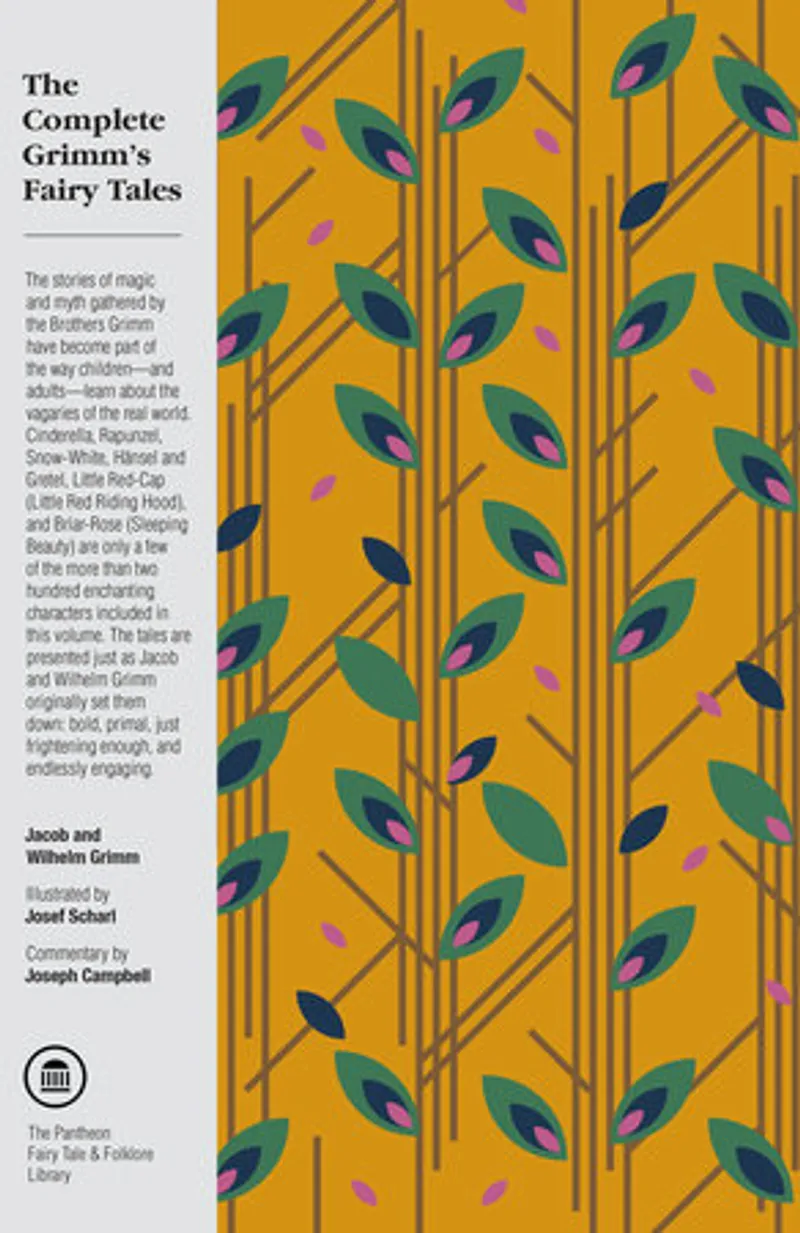
The Complete Grimm's Fairy Tales Author: Brothers GrimmPage Count: UnknownPublication Date: 1976-PRH The Complete Grimm’s Fairy Tales is not merely a collection of stories—it is a dark, glittering mirror held up to human nature, reflecting both its most tender hopes and its most terrifying fears. Compiled by Jacob and Wilhelm Grimm in the early 19th century and later refined into the edition we hold today, this volume is a foundational text of Western folklore, a work that has shaped generations of readers, writers, and dreamers. With its raw, unfiltered narratives and haunting illustrations by Josef Schari, this book is less a children’s anthology and more a mythic tapestry—one that demands to be read with both wonder and caution. At its core, The Complete Grimm’s Fairy Tales explores the universal human experience through the lens of the supernatural. The stories are not just tales of magic and morality; they are psychological landscapes where virtue is tested, innocence is endangered, and justice is often brutal but always inevitable. The Brothers Grimm did not write for the faint of heart. Their tales—such as Hansel and Gretel, where children are abandoned in the woods and must outwit a cannibalistic witch, or The Juniper Tree, a chilling tale of murder and resurrection—are steeped in primal emotions: fear, jealousy, betrayal, and redemption. These are not sanitized fables but visceral, unflinching narratives that reveal the darker corners of the human soul. What makes this collection so enduring is the Grimm brothers’ uncompromising style. Unlike later adaptations that softened the edges for younger audiences, the original tales are stark, direct, and often shocking. There is no gentle preamble, no moral spoon-feeding. The stories begin abruptly, with a sense of inevitability: “Once upon a time…” is not an invitation to comfort, but a signal that something strange and unsettling is about to unfold. The language is simple, almost austere, yet it carries a weight that lingers long after the last page. This economy of prose gives the tales their power—they feel like oral traditions passed down through generations, not polished literary works. The inclusion of Joseph Campbell’s commentary adds another layer of depth to this edition. Campbell, renowned for his work on myth and archetype, frames the Grimm tales within a broader context of global storytelling. He highlights recurring motifs—stepmothers as symbols of repressed femininity, forests as places of transformation, and the recurring theme of the hero’s journey. His insights help readers see beyond the surface of the stories and recognize them as part of a larger mythic tradition. This commentary transforms the book from a mere collection into a scholarly exploration of how these tales reflect universal human experiences. The illustrations by Josef Schari further enhance the eerie atmosphere of the tales. His black-and-white drawings are not whimsical or cute; they are stark, almost gothic, capturing the unsettling essence of each story. In Schari’s hands, the witch in Hansel and Gretel is not a cartoonish hag but a terrifying figure of hunger and malice, and the forest in Little Red Riding Hood is a labyrinth of shadows where danger lurks in every rustling leaf. These images do not soften the tales—they intensify their impact, making the stories feel like relics from a time when the world was both more magical and more dangerous. One of the most striking aspects of The Complete Grimm’s Fairy Tales is its refusal to offer easy resolutions. Many of the stories end not with a neat “happily ever after,” but with a sense of hard-won justice or tragic irony. In The Twelve Dancing Princesses, the king’s punishment of his daughters is severe and unrelenting. In The Robber Bridegroom, a bride outwits her murderous groom, but the victory comes at a cost. These endings remind us that life, in the world of the Grimms, is not fair—and that survival often requires cunning, sacrifice, or even cruelty. This realism, buried beneath layers of enchantment, is what makes the tales resonate so deeply with readers of all ages. For modern audiences, the Grimm tales can be both comforting and unsettling. They offer a glimpse into a pre-industrial world where magic was as real as hunger, where forests were places of both wonder and terror, and where morality was not a set of rules but a matter of life and death. In an age of digital distractions and sanitized entertainment, these stories feel raw and alive. They remind us that fairy tales are not just for children—they are for anyone who has ever stared into the dark and wondered what lurks beyond. The Complete Grimm’s Fairy Tales is more than a book; it is an experience. It challenges, frightens, and ultimately enriches the reader. It is a testament to the power of storytelling to capture the essence of human nature in all its complexity. Whether read as a historical artifact, a work of literature, or a source of primal fear and wonder, this collection remains indispensable. It is a book that should be read slowly, savored, and perhaps even feared—because once you step into the world of the Brothers Grimm, you may never see the world the same way again. #GrimmFairyTales #DarkFairyTales #Folklore #JosephCampbell #Mythology #ClassicLiterature Related InsightsHidden Bodies Book Review and Summary The Princess Bride Book Review and Summary Somewhere Beyond the Sea Book Review and Summary{ "@context": "https://schema.org", "@type": "FAQPage", "mainEntity": [ { "@type": "Question", "name": "What is the main focus of Grimm's Fairy Tales Book Review and Summary?", "acceptedAnswer": { "@type": "Answer", "text": "Everything you need to know about Grimm's Fairy Tales with our detailed review." } }, { "@type": "Question", "name": "Who authored the comprehensive guide on Grimm's Fairy Tales Book Review and Summary?", "acceptedAnswer": { "@type": "Answer", "text": "This detailed article and its insights were carefully researched and authored by Jacob Grimm." } }, { "@type": "Question", "name": "Where can I find more related content about Books?", "acceptedAnswer": { "@type": "Answer", "text": "You can explore more articles, detailed reviews, and similar insights by browsing the Related Insights section at the bottom of this article or visiting our dedicated Books category page." } } ] }